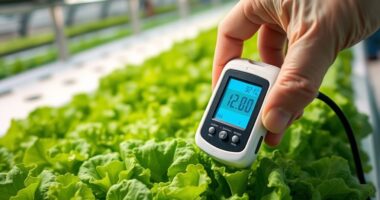
To catch greenhouse disease pressure early, regularly monitor soil moisture with a moisture meter and keep it within ideal ranges. Inspect plants carefully for subtle signs of disease before they become obvious. Manage environmental conditions by improving ventilation and reducing humidity to prevent pathogen growth. Using soil health assessments and observing environmental factors can help you spot early pathogen activity. Keep these practices in mind, and you’ll discover more ways to stay ahead of potential outbreaks.
Key Takeaways
- Regularly monitor soil moisture levels to detect early signs of pathogen activity.
- Conduct frequent plant inspections for subtle, initial disease symptoms.
- Use soil health assessments to identify early pathogen presence.
- Control environmental factors like humidity and airflow to reduce disease development.
- Implement crop rotation and resistant varieties to minimize pathogen buildup.
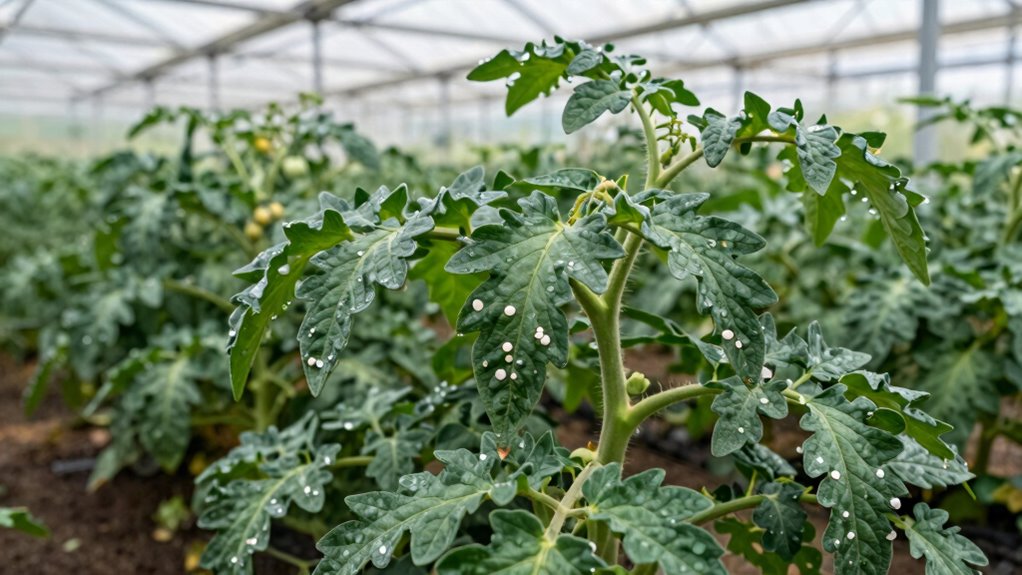
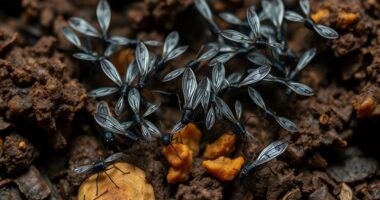
Detecting greenhouse disease pressure early is essential for maintaining a healthy and productive environment. When you stay alert to subtle signs, you can prevent outbreaks before they become visible and difficult to control. One of the key aspects to monitor is soil moisture. Too much water creates an ideal environment for pathogens like Pythium or Phytophthora, which thrive in wet conditions. You should regularly check your soil moisture levels, ensuring they stay within optimal ranges for your plants. Using a moisture meter can help you quickly identify areas that are too wet or too dry. Overly moist soil can lead to root rot and fungal growth, so adjusting your watering schedule accordingly is crucial. Remember, consistent watering practices promote healthy roots and reduce stress, which makes plants less susceptible to disease. Additionally, maintaining proper ventilation reduces humidity and discourages pathogen development. Improving air circulation can also help prevent the buildup of excess moisture, further reducing disease risk. Proper environmental management is essential to sustain optimal growing conditions and minimize disease outbreaks. Regularly monitoring soil health can also help you identify early signs of pathogen activity before symptoms appear on the plants. Incorporating preventative measures like crop rotation and resistant plant varieties can further strengthen your defense against greenhouse diseases.
soil moisture meter for greenhouse
As an affiliate, we earn on qualifying purchases.
As an affiliate, we earn on qualifying purchases.
Frequently Asked Questions
What Are the Early Signs of Greenhouse Disease Pressure?
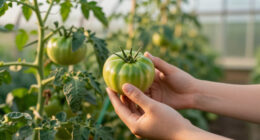
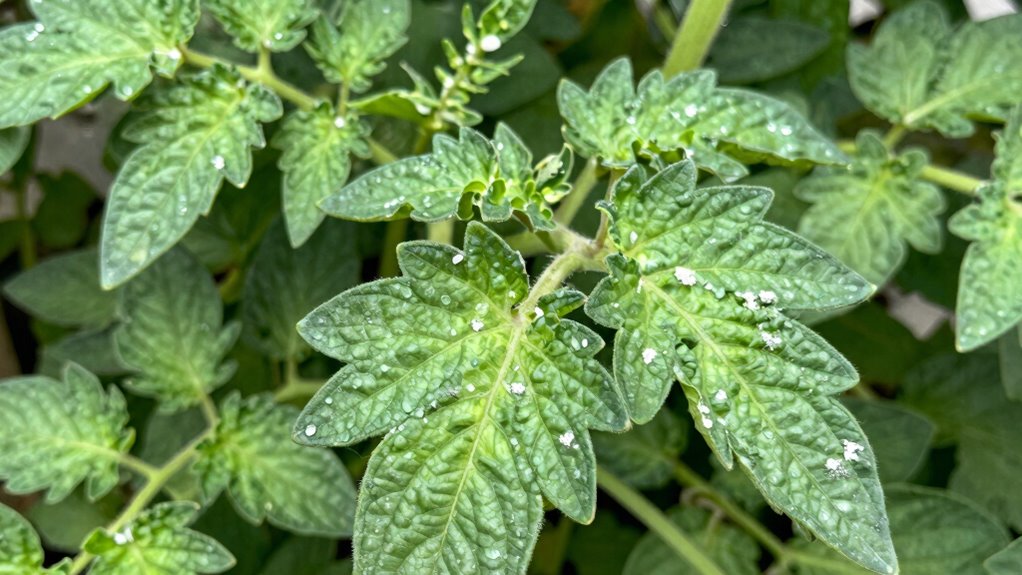
You can spot early greenhouse disease pressure through subtle disease symptom identification and plant health indicators. Look for slight yellowing, wilting, or spots on leaves that seem out of place. Keep an eye on abnormal growth patterns or changes in color and texture. By regularly monitoring these plant health indicators, you catch issues early, allowing you to address disease pressure before it spreads and causes significant damage.
Which Tools Are Best for Detecting Hidden Disease?
For detecting hidden disease, you should rely on effective monitoring tools like handheld magnifiers, moisture meters, and thermal imaging cameras. These tools help with disease detection by revealing subtle signs like tissue discoloration or temperature changes that aren’t visible to the naked eye. Regularly using these monitoring tools allows you to catch early infections, giving you a better chance to manage and prevent disease spread before it becomes visibly overwhelming.
How Often Should I Monitor for Disease Pressure?
You should regularly monitor your greenhouse at least weekly, especially during peak growing seasons. This consistent check helps catch subtle signs of disease pressure early, allowing you to act swiftly. Incorporate crop rotation and pest management practices into your routine to minimize risks. By staying vigilant and proactive, you prevent hidden issues from escalating, ensuring healthier plants and better yields. Consistent monitoring is your best defense.
Can Environmental Factors Predict Disease Outbreaks?
Yes, environmental factors can predict disease outbreaks. By using climate modeling, you can analyze temperature, humidity, and airflow patterns that influence disease development. Pest forecasting tools also help identify when conditions become favorable for pests and pathogens. Monitoring these factors enables you to anticipate outbreaks early, allowing for timely interventions. Staying informed on environmental trends and utilizing predictive tools greatly improves your ability to prevent disease from spreading unnoticed.
Are There Preventative Treatments for Early Disease Detection?
A stitch in time saves nine, so yes, there are preventative treatments for early disease detection. You can use biological controls, like beneficial microbes, to keep pathogens at bay. Crop rotation also plays an essential role in preventing disease buildup. By implementing these strategies early, you reduce the risk of outbreaks, ensuring healthier plants and better yields without waiting for visible signs of trouble.
Conclusion
If you pay close attention and catch early signs, you could prevent a full-blown outbreak. But the question is, will you recognize the subtle clues before it’s too late? Greenhouse diseases often hide in plain sight, waiting for the perfect moment to strike. Stay vigilant, monitor your plants daily, and trust your instincts. The next outbreak might already be brewing — are you prepared to act before it’s unstoppable? The choice is yours.