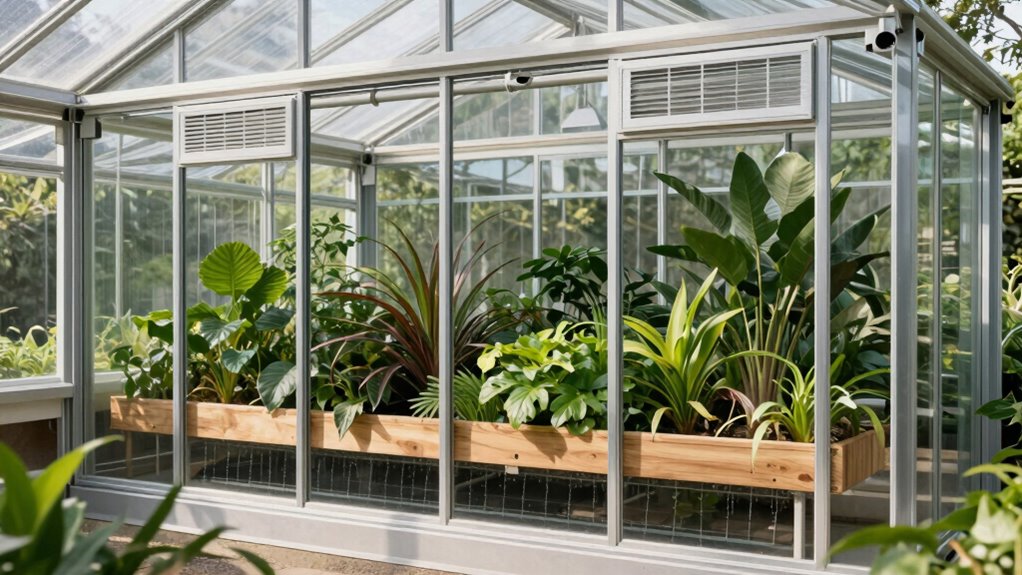
You can boost your greenhouse’s efficiency by focusing on simple, practical steps. Use well-placed vents and open windows to promote cross-ventilation and regulate temperature naturally. Add shading, like shade cloths, to prevent overheating during hot days. Regularly monitor temperature and humidity, then make small adjustments such as opening or closing vents and adding shade as needed. Keeping these methods consistent helps maintain the right environment without overcomplicating things—you’ll discover more helpful tips as you go.
Open a free Amazon Business account
Business pricing, bulk buying and tax-exempt orders.
As an affiliate, we earn on qualifying purchases.
Key Takeaways
- Use natural ventilation with well-placed vents and open windows for effective airflow.
- Incorporate simple shading like shade cloths during peak sunlight hours.
- Regularly monitor temperature and humidity to make small, targeted adjustments.
- Start with basic modifications such as opening vents or adding shading to improve conditions.
- Maintain consistent ventilation and shading practices to enhance efficiency and plant health.
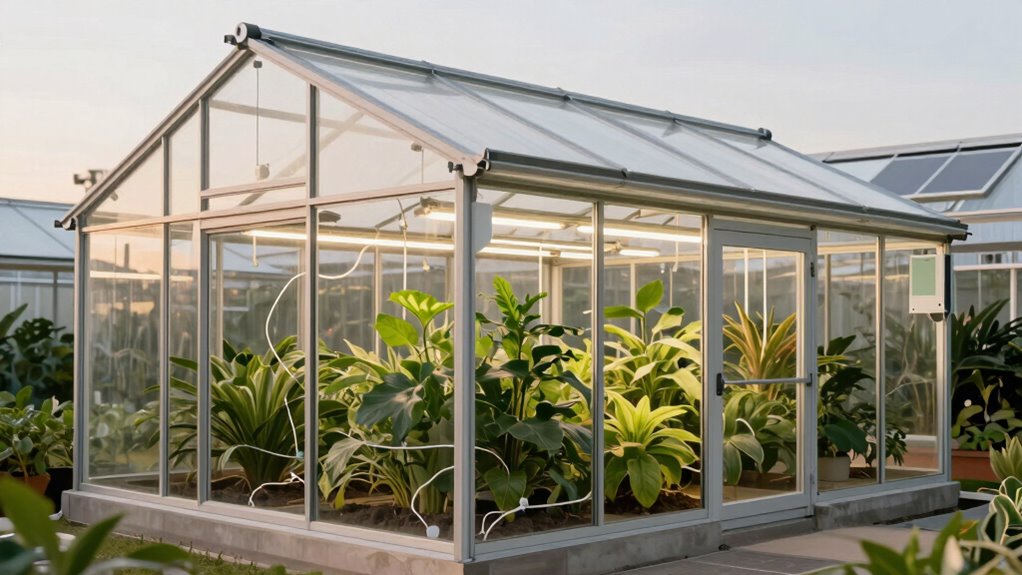
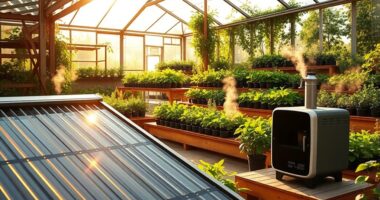
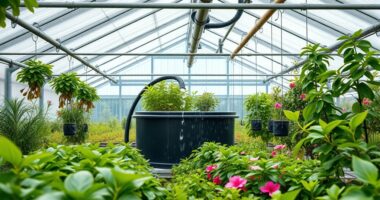
A greenhouse can only be as efficient as the strategies you implement to optimize its environment. To get the most out of your space without overcomplicating things, focus on simple yet effective methods like ventilation strategies and shading techniques. Proper ventilation is essential because it helps regulate temperature and humidity, preventing overheating on hot days and reducing the risk of fungal diseases. You don’t need complex systems; a few well-placed vents, exhaust fans, or even opening windows can do the trick. Make sure vents are positioned to promote cross-ventilation, allowing fresh air to flow in while stale air escapes. This natural airflow keeps the environment inside stable, promoting healthier plant growth and reducing the need for additional cooling measures. Effective ventilation is a key factor in maintaining optimal conditions within your greenhouse. Additionally, using simple shading methods can significantly impact the overall climate control, making your setup more efficient. Incorporating climate control strategies can further enhance the effectiveness of these simple methods.
Effective greenhouse management relies on simple ventilation and shading techniques to maintain optimal conditions.
By understanding the importance of airflow and its role in maintaining a balanced environment, you can better tailor your approach to your specific greenhouse conditions. Incorporating these strategies doesn’t mean you need to overhaul your entire setup. Start with basic adjustments—adding a few vents or opening windows during the hottest parts of the day, and using shade cloths during the most intense sunlight. Regularly monitor your greenhouse’s temperature and humidity levels to see how these measures are working and make small tweaks as needed. For example, if your greenhouse tends to overheat, consider increasing shade coverage or adding more ventilation points. Conversely, if it gets too cold at night, simple measures like closing vents or using thermal curtains can help retain heat. Monitoring environmental conditions is vital for ensuring your strategies are effective and can help you make informed adjustments over time.
The key is simplicity and consistency. You don’t have to invest heavily or adopt complex technology to improve efficiency. Small, strategic changes to ventilation and shading can markedly enhance your greenhouse’s environment. These adjustments promote healthier plants, higher yields, and more efficient use of energy—all without making the process complicated. As you get used to these practices, you’ll find managing your greenhouse becomes easier, and your plants will thrive in a more stable, controlled environment.
As an affiliate, we earn on qualifying purchases.
Frequently Asked Questions
What Materials Are Best for Greenhouse Insulation?
You should use insulation materials like bubble wrap, foam boards, or polycarbonate panels, as they’re excellent energy-efficient options. Bubble wrap is affordable and easy to install, providing good thermal insulation. Foam boards offer higher R-values for better heat retention, while polycarbonate panels combine insulation with durability. These materials help maintain consistent temperatures, reduce energy costs, and keep your greenhouse more efficient without complicating your setup.
How Often Should I Inspect Greenhouse Vents?
You should inspect your greenhouse vents at least once a month to guarantee ideal airflow. Regular ventilation maintenance is essential to prevent malfunctions that could compromise temperature control. Keep an eye out for debris or wear and tear during your inspection schedule, and address issues promptly. Neglecting this can lead to poor air circulation, affecting plant health. Consistent checks help you catch problems early, keeping your greenhouse running smoothly and efficiently.
Can I Automate Watering to Save Energy?
Yes, you can automate watering to save energy by using smart sensors and automated timers. Smart sensors monitor soil moisture levels, ensuring plants get just the right amount of water, reducing waste. Automated timers control watering schedules, so you don’t have to manually water your greenhouse. Together, these tools optimize water use, save energy, and keep your plants healthy without adding complexity to your greenhouse management.
What Are Cost-Effective Ways to Improve Airflow?
Did you know good airflow can increase plant growth by up to 20%? To improve airflow cost-effectively, focus on strategic vent placement to promote natural convection. Use simple exhaust or intake vents at different heights to encourage air movement. Consider installing small, energy-efficient fan types like oscillating or clip-on fans, which are affordable and easy to position. These methods can boost ventilation without complex systems, saving you money and optimizing plant health.
How Do I Prevent Pests Without Complicating the Design?
You can prevent pests simply by using companion planting and natural deterrents. Plant pest-repelling herbs like basil or marigolds alongside your vegetables to deter insects naturally. Incorporate companion plants that attract beneficial insects, like ladybugs, to keep pests in check. You don’t need complicated systems—just a few strategic plant choices and natural repellents to protect your greenhouse efficiently without adding complexity.
Conclusion
By tweaking your greenhouse with simple, clever adjustments, you’re turning it into a well-oiled machine that nurtures your plants like a gentle gardener’s touch. Think of it as tuning a musical instrument—small changes create a symphony of growth and bloom. With just a few smart steps, you’ll have a thriving oasis that’s efficient and effortless, letting your green thumb flourish without the hassle. Soon, your greenhouse will sing with life, all thanks to your simple, savvy improvements.
Fall yard work Picks
leaf blowers
As an affiliate, we earn on qualifying purchases.