Greenhouse growing changes how you think about seasons because it gives you full control over environmental conditions, allowing you to grow crops year-round. You’re no longer limited by outdoor weather or calendar dates—you can start early and harvest late, expanding your planting options. This flexibility lets you adapt to natural cycles and extend growing periods. If you want to discover how mastering climate control *unleashes* endless growing possibilities, keep exploring this fascinating approach.

Get garden gear delivered free — and shop member deals
- Fast, free delivery on millions of items
- Access to Prime Big Deal Days deals on October 6–7
- Prime Video, Amazon Music and more included
Key Takeaways
- Greenhouses enable continuous cultivation, removing dependence on outdoor seasonal cycles.
- Temperature and environmental controls allow flexible timing for planting and harvesting.
- Growing seasons become adaptable, shifting focus from fixed calendar dates to optimal conditions.
- Growers can stagger plantings and experiment with crops throughout the year.
- Mastering climate management turns seasons into flexible tools for year-round production.

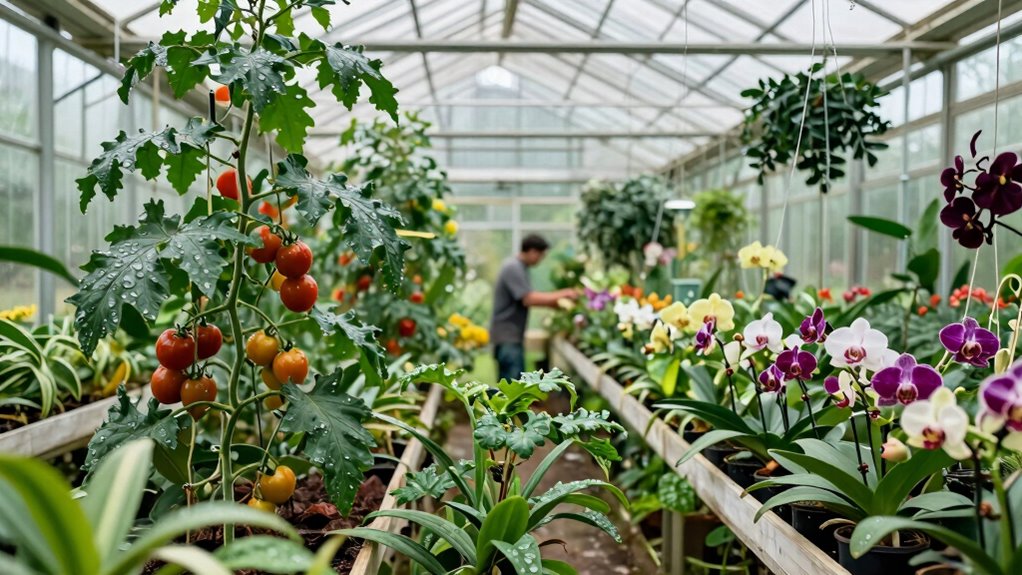
Growing plants in a greenhouse allows you to extend your growing season and control environmental conditions, giving you the flexibility to cultivate a variety of crops year-round. When you manage a greenhouse, you’re no longer bound by the traditional constraints of outdoor seasons. Instead, you can manipulate factors like light, humidity, and especially temperature regulation to match the needs of your plants. This means you can effectively influence their plant growth cycles, ensuring they develop perfectly regardless of the outside weather. Your ability to regulate temperature inside the greenhouse is vital; it allows you to create a stable environment that encourages growth during months when outdoor conditions would typically hinder it.
Because you control temperature, you begin to see seasons in a new light. Instead of waiting for spring or summer to grow certain plants, you can get an early start or extend the harvest well into fall and winter. This shift changes how you think about natural cycles, making them less rigid and more adaptable to your goals. Your greenhouse acts as a barrier against the unpredictability of weather, giving you the power to maintain ideal conditions regardless of outdoor temperature fluctuations. As a result, your perception of seasons transforms from fixed timeframes into flexible windows that you can expand or shorten based on your needs.
This control over environmental factors also impacts how you plan your planting schedule. You no longer need to follow the traditional calendar strictly; instead, you can stagger crops, experiment with different varieties, and even try multiple plantings within the same year. You realize that seasons are more about environmental conditions than just the calendar date. By mastering temperature regulation, you effectively manipulate the natural rhythms of plant growth cycles, making them more predictable and manageable. This ability to override nature’s typical seasonal patterns means you can enjoy a continuous supply of fresh produce, flowering plants, or seedlings, no matter what time of year it is outside.
Ultimately, greenhouse growing broadens your understanding of seasons. It shows you that they aren’t fixed periods, but adaptable timeframes that can be influenced through careful control of environmental conditions. As you refine your temperature regulation techniques and understand plant growth cycles more deeply, you start to see seasons as flexible tools rather than rigid boundaries. This perspective empowers you to grow smarter, longer, and more efficiently, turning your greenhouse into a year-round haven for your gardening ambitions. Additionally, climate control becomes an essential part of achieving this flexibility and success. Recognizing the importance of environmental management helps you optimize your greenhouse for consistent results.
greenhouse climate control system
As an affiliate, we earn on qualifying purchases.
As an affiliate, we earn on qualifying purchases.
Frequently Asked Questions
How Does Greenhouse Size Affect Seasonal Changes?
Greenhouse size directly impacts seasonal synchronization and space optimization. Larger greenhouses allow you to control temperature and humidity more effectively, minimizing seasonal fluctuations and extending growing seasons. They also provide better space for diverse crops, enabling you to optimize space and improve yield. Smaller greenhouses may struggle with seasonal changes, requiring more adjustments, but they’re easier to manage. Overall, size influences how well you can align your growing environment with seasonal needs.
Can Greenhouse Technology Extend Growing Seasons Indefinitely?
Greenhouse technology can extend growing seasons indefinitely by controlling environmental factors. You can use advanced systems for temperature, humidity, and light regulation, allowing year-round cultivation. Incorporate plant breeding techniques to develop resilient varieties, and implement pest management practices to protect crops. This combination means you’re not only extending your growing window but also optimizing plant health and productivity, making seasonal limitations a thing of the past.
What Are the Energy Costs Associated With Year-Round Greenhouse Growing?
Energy costs for year-round greenhouse growing can be high, but smart design boosts energy efficiency and cuts costs. You’ll need heating, cooling, and lighting, which can drain resources like a leaky faucet. However, investing in insulation, solar power, and energy-efficient systems helps reduce expenses over time. This way, you maintain control over the environment while keeping costs manageable, turning your greenhouse into a sustainable, year-round growing powerhouse.
How Do Greenhouse Conditions Influence Plant Genetics Over Time?
Greenhouse conditions drive genetic adaptation by creating stable, controlled environments where specific traits are favored. Over time, you’ll notice plants evolving through selective breeding, as you choose those with desirable characteristics like pest resistance or faster growth. This process accelerates genetic changes, allowing you to develop plant varieties better suited to greenhouse life, which can differ markedly from their outdoor counterparts.
Are There Environmental Impacts of Prolonged Greenhouse Cultivation?
Prolonged greenhouse cultivation can cast a shadow on the environment, affecting local ecosystems and increasing your environmental footprint. But by adopting sustainable practices, you can turn this impact into a positive ripple—reducing energy use, recycling water, and choosing eco-friendly materials. Think of your greenhouse as a garden of hope, where mindful choices nurture not just plants but the planet itself, creating a brighter, greener future.
Conclusion
Greenhouse growing truly shifts how you experience seasons. With a greenhouse, you can enjoy fresh produce year-round, regardless of outdoor weather. Did you know that according to recent studies, greenhouse farmers can extend their growing season by up to 50%? This means you get to enjoy seasonal fruits and vegetables even when they’re out of season outside. Embracing greenhouse gardening not only changes your perspective on seasons but also puts fresh, homegrown food within your reach anytime.
Halloween Picks
halloween
As an affiliate, we earn on qualifying purchases.