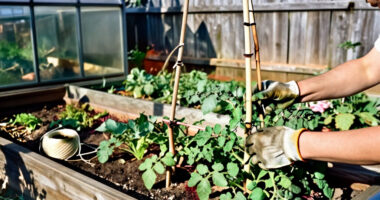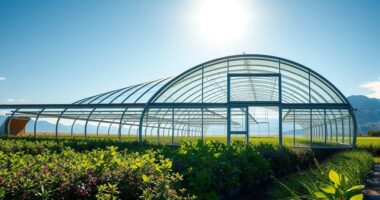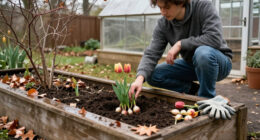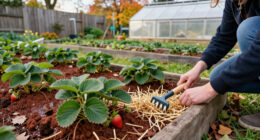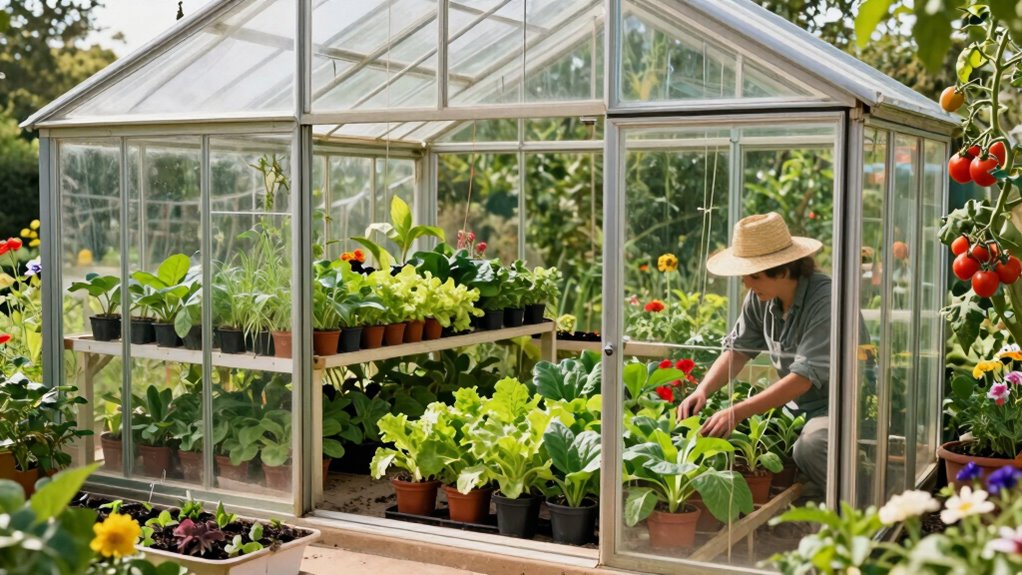
To support a more resilient household with a greenhouse, you can grow food year-round, reducing dependence on store supplies, especially during emergencies. Use renewable energy sources like solar panels to power climate control systems, ensuring your crops thrive despite weather changes. Designing your greenhouse for efficiency and adaptability helps you manage extreme conditions and improve sustainability. If you continue exploring, you’ll discover practical strategies to maximize your greenhouse’s resilience and secure your household’s food future.

Get garden gear delivered free with Prime
- Fast, free delivery on millions of items
- Prime Video, Amazon Music and more included
- Member-only deals all year
Key Takeaways
- Utilize greenhouses for year-round crop cultivation, ensuring a continuous food supply during disruptions.
- Integrate renewable energy sources like solar panels to power greenhouse systems and enhance energy resilience.
- Implement climate control technologies to maintain optimal growing conditions despite extreme weather events.
- Design energy-efficient greenhouses that minimize resource use and support sustainable household practices.
- Develop adaptability strategies within the greenhouse to grow diverse crops suited to changing climate conditions.
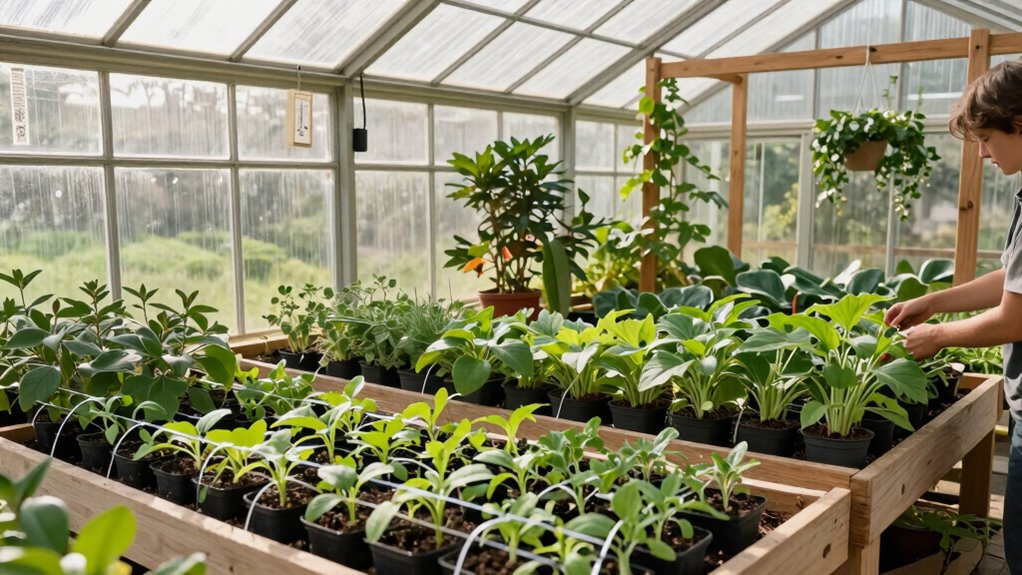
Have you ever considered how a greenhouse can make your household more resilient? It’s not just a place to grow plants; it’s a powerful tool to enhance your self-sufficiency and reduce reliance on external systems. By integrating urban farming practices into your greenhouse, you can produce fresh vegetables and herbs right in your backyard or on your balcony, making your household more food-secure. Urban farming in a greenhouse allows you to grow crops year-round, regardless of weather conditions, which means fewer trips to the store and less dependence on supply chains that can be disrupted during emergencies or shortages. Plus, you control the growing environment, minimizing the use of pesticides and synthetic fertilizers, guaranteeing healthier food for your family. Incorporating renewable energy sources like solar panels or small wind turbines can further enhance your greenhouse’s sustainability. Using renewable energy sources to power your greenhouse further boosts your household’s resilience. Solar panels or small wind turbines can supply electricity for lighting, ventilation, and watering systems, reducing your reliance on the grid. When your greenhouse is powered by renewable energy, you create a sustainable cycle that can operate independently during outages or grid failures. This setup not only cuts energy costs but also decreases your household’s carbon footprint, aligning with eco-friendly principles and contributing to a more resilient environment overall. The energy-efficient design of your greenhouse, combined with renewable power, guarantees that you can maintain ideal conditions for your plants without excessive resource consumption. Additionally, you can experiment with growing different crops, including those that might not typically survive in your local climate, by adjusting the internal environment. Developing climate adaptability strategies can make your household more prepared for climate variability and local disruptions. This adaptability makes your household more prepared for climate variability and local disruptions. Sustainable design practices can further optimize resource use and minimize environmental impact, supporting long-term resilience. Incorporating climate control technologies can also help maintain optimal conditions, especially during extreme weather events. Moreover, understanding and implementing climate resilience strategies can help your household better withstand the impacts of unpredictable weather patterns.
Products Worth Considering

AMERLIFE 10 × 44 ft Walk-In Tunnel Greenhouse with Watering System

EGO POWER+ 21 Cordless Electric Lawn Mower Kit, Self-Propelled

EGO POWER+ Cordless Electric Leaf Blower, 530 CFM, with 2.5Ah Battery (LB5302)
As an affiliate, we earn on qualifying purchases.
Frequently Asked Questions
How Much Does It Cost to Set up a Greenhouse at Home?
Setting up a greenhouse at home can cost between $500 and $5,000, depending on size and materials. You’ll need garden insulation to improve heat retention and consider solar heating options to cut energy costs. DIY kits are budget-friendly, but custom setups offer better insulation. Remember, investing in good insulation and solar heating can reduce long-term energy expenses, making your greenhouse more resilient and cost-effective over time.
What Permits Are Needed to Build a Greenhouse Locally?
You’ll need to check local zoning regulations and building codes before building your greenhouse. Most areas require permits if the structure exceeds a certain size or is permanently installed. Visit your city or county’s planning department or website to find specific requirements. Obtain necessary approvals beforehand to avoid fines or having to dismantle your greenhouse later. Ensuring compliance helps you build safely and legally, supporting your resilient household goals.
How Do I Choose the Right Size Greenhouse for My Household?
You should choose a greenhouse size based on your household’s space and plant needs. Consider your plant selection strategies, like growing vegetables or herbs, to determine how much space they require. Select greenhouse materials that suit your climate and budget, such as polycarbonate or glass. Make certain the size allows for proper ventilation, easy access, and future expansion, making your setup both functional and adaptable for ongoing resilience.
What Are the Best Plants for Year-Round Greenhouse Cultivation?
You can grow tropical plants and exotic herbs year-round in your greenhouse. Opt for resilient tropical varieties like bananas, ginger, and orchids, which thrive in warm, humid conditions. Exotic herbs such as lemongrass, Thai basil, and kaffir lime can also flourish indoors. Maintain consistent temperatures, proper humidity, and adequate light to guarantee healthy growth, making your greenhouse a reliable source of fresh, diverse produce throughout the year.
How Can I Automate Greenhouse Climate Control Effectively?
You can automate your greenhouse climate control effectively by installing climate sensors that monitor temperature, humidity, and light levels continuously. Connect these sensors to an automated watering system to ensure plants get consistent moisture. Use smart controllers that adjust heating, cooling, and ventilation based on sensor data, maintaining ideal conditions. This setup reduces manual effort, prevents environmental stress on plants, and boosts your greenhouse’s resilience and productivity.
Conclusion
By embracing your greenhouse, you’ll turn your home into a modern sanctuary, much like a Swiss Family Robinson’s treehouse—self-sufficient and prepared for anything. With careful planning and a bit of elbow grease, you’ll cultivate fresh food, extend your growing season, and build resilience against unpredictable times. Think of it as your own secret fortress, a timeless haven where you control the elements and nurture your family’s future amid today’s chaos, just like heroes from a classic adventure novel.