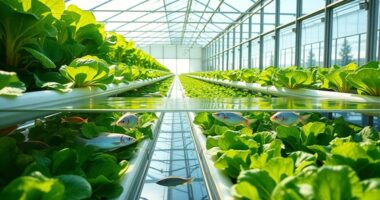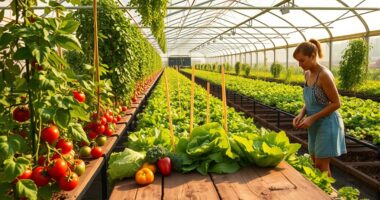
Thriving urban greenhouse projects can inspire you to start your own small-scale farm, showing how sustainable design and community effort transform limited spaces into productive environments. By using recycled materials, rainwater collection, and energy-efficient systems, these projects prove eco-friendly food grows nearby. They motivate neighbors to grow herbs or vegetables, creating a greener neighborhood and fostering a sense of possibility. Keep exploring to discover how you can turn your space into an inspiring, sustainable farm of your own.

Get garden gear delivered free with Prime
- Fast, free delivery on millions of items
- Prime Video, Amazon Music and more included
- Member-only deals all year
Key Takeaways
- Thriving greenhouses in urban areas showcase sustainable design and productivity, motivating neighbors to start their own small-scale urban farms.
- Demonstrating eco-friendly practices like rainwater harvesting and recycled materials encourages community members to adopt sustainable gardening methods.
- Visual success stories of greenhouses foster neighborhood conversations about food security, inspiring collective action toward local food production.
- Shared knowledge and community engagement around greenhouse projects turn individual efforts into a grassroots movement for greener neighborhoods.
- Greenhouse projects exemplify environmental responsibility, inspiring neighbors to embrace sustainable living and ecological stewardship.
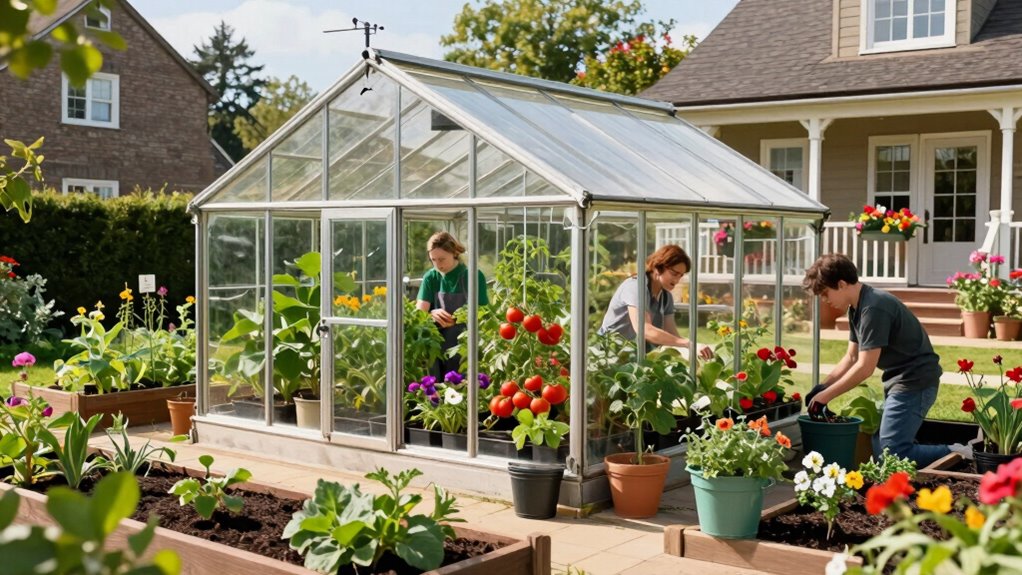
When neighbors see a thriving greenhouse in your yard, it often sparks their curiosity and enthusiasm for growing their own plants. Your greenhouse isn’t just a space for plants; it’s a visual testament to what’s possible with dedication and smart design. As you cultivate a lush environment, you inspire others to explore urban farming—transforming small city spaces into productive, green havens. Your success demonstrates that even limited outdoor space can become a productive garden with the right planning and effort. It encourages neighbors to think beyond traditional gardening, fostering a sense of possibility that resonates deeply in urban settings where space is often tight.
Your greenhouse embodies sustainable design, showing that eco-friendly practices can be both beautiful and practical. By using recycled materials, rainwater collection systems, or energy-efficient heating, you set an example that sustainable urban farming is achievable without sacrificing comfort or aesthetics. Neighbors who observe your setup start to see that their own yards can become sustainable micro-farms, reducing reliance on store-bought produce and minimizing environmental impact. Your initiative becomes a catalyst, inspiring others to adopt eco-conscious techniques, whether through composting, organic pest management, or solar-powered systems. This ripple effect can inspire the community to prioritize environmental responsibility in their outdoor projects. Additionally, demonstrating how innovative design can optimize limited space encourages neighbors to think creatively about their own gardening setups.
The visual impact of your greenhouse makes it clear that growing your own food isn’t just a hobby — it’s a lifestyle choice aligned with sustainability and community health. Seeing your thriving plants and lush greenery encourages neighbors to consider their own planting projects, perhaps starting small with herbs or vegetables on a balcony or patio. The more they see how manageable and rewarding urban farming can be, the more motivated they become to try it themselves. Your project sparks conversations about food security, sustainable living, and the benefits of locally grown produce, which can motivate neighbors to take the first step.
Furthermore, your greenhouse fosters a sense of community. When neighbors observe your success, they may reach out for advice or share seeds and tips. This creates a ripple effect, turning individual efforts into a collective movement toward greener, more sustainable neighborhoods. Your project exemplifies how thoughtful design and commitment can change perceptions about urban farming. It shows that sustainability isn’t just a buzzword but a practical, achievable goal that benefits everyone. In doing so, you inspire your neighbors not only to grow more plants but to embrace a mindset that values environmental responsibility and community resilience. Your greenhouse becomes more than a garden—it becomes a beacon of inspiration that encourages others to cultivate their own green spaces. Recognizing that urban farming can significantly contribute to local food security and ecological health can motivate even more neighbors to get involved.
Products Worth Considering

EGO POWER+ 21 Cordless Electric Lawn Mower Kit, Self-Propelled

Husqvarna Power Axe 350i 18-Inch Cordless Chainsaw Kit

VEVOR 14-Pack Polycarbonate Greenhouse Panels, 2 × 4 ft
As an affiliate, we earn on qualifying purchases.
Frequently Asked Questions
How Much Does It Cost to Start a Greenhouse Project?
Starting a greenhouse project typically costs between $500 and $5,000, depending on size and materials. You should conduct a thorough cost analysis and plan your budget carefully to avoid overspending. Consider factors like framing, glazing, ventilation, and heating systems. By doing budget planning upfront, you’ll know what fits your financial situation and can make informed decisions, ensuring your greenhouse project is both affordable and successful from the start.
What Are the Best Plants to Grow in a Community Greenhouse?
You should choose easy-to-grow, popular plants like tomatoes, lettuce, herbs, and peppers for your community greenhouse. Focus on plant selection that thrives in your climate and season. Use gardening tips such as proper watering, good soil, and adequate light to guarantee healthy growth. These plants are rewarding and quick to yield, encouraging community involvement and fostering a shared passion for sustainable gardening.
How Do I Find Funding or Grants for My Greenhouse Project?
You can find funding sources by researching local government programs, nonprofits, and environmental grants. Keep an eye out for community development funds or agricultural grants that support green initiatives. Craft a compelling grant application, emphasizing your project’s community impact and sustainability. Don’t hesitate to reach out to potential sponsors or partners, as their support can make your greenhouse project a reality. The key is persistence—funding opportunities are often just a well-prepared application away.
What Permits or Regulations Are Needed for Building a Greenhouse?
You need to check local zoning restrictions and building codes before building your greenhouse. Contact your city or county planning department to understand zoning laws, setbacks, and allowed structures. You’ll likely need a building permit, especially for larger or permanent greenhouses. Make sure your plans comply with safety standards, electrical codes, and any other regulations. Doing this early helps avoid costly delays or modifications later.
How Can I Involve Children or Schools in Greenhouse Activities?
Think of planting seeds as planting future leaders. You can involve children or schools in greenhouse activities through children’s gardening programs, where they learn about plant growth and responsibility. Incorporate lessons on school sustainability to foster environmental awareness. Organize hands-on workshops, school projects, or field trips to make it engaging. Encouraging kids to care for plants not only teaches them about nature but also builds a lifelong respect for sustainability.
Conclusion
As you watch your neighbors’ greenhouses flourish, it’s no surprise that their newfound passion sparks your own curiosity. One sunny afternoon, you notice a neighbor’s seedlings peeking through the soil, just as your own garden begins to sprout. It’s a gentle reminder that inspiration often comes unexpectedly, woven into everyday moments. Before you know it, your backyard might become a vibrant haven, all because a simple greenhouse project sparked a chain reaction of growth and connection.