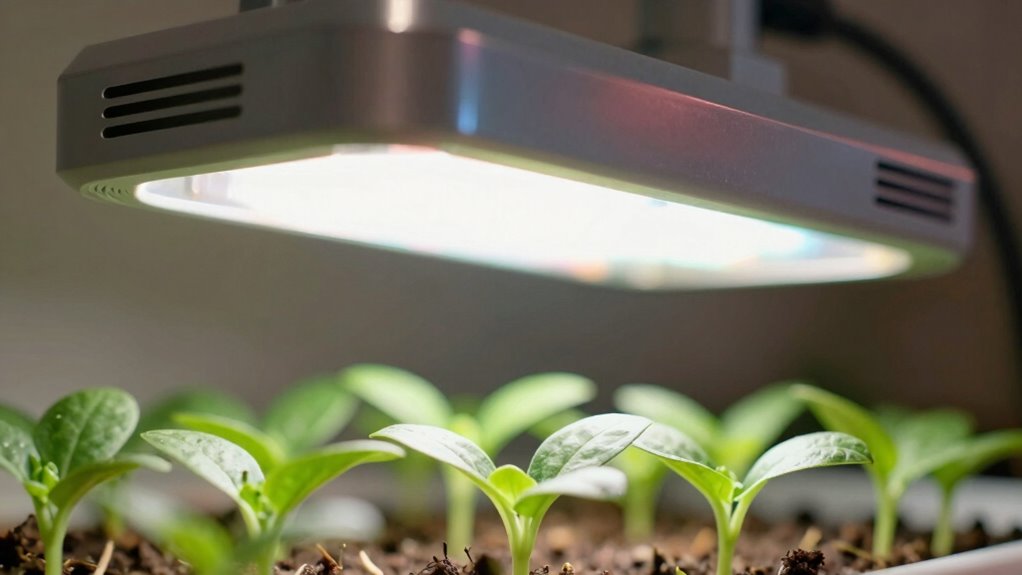

Many gardeners get confused by grow light specifications like lumens and wattage. Lumens measure brightness for human eyes, not plant growth, which can be misleading. Wattage shows energy consumed but doesn’t reflect how well a light promotes photosynthesis. Instead, focus on metrics like PAR, which indicates usable light for plants. Once you understand these details, you’ll choose better lights that support healthy growth, and there’s still more to explore for ideal results.

Get garden gear delivered free — and shop member deals
- Fast, free delivery on millions of items
- Access to Prime Big Deal Days deals on October 6–7
- Prime Video, Amazon Music and more included
Key Takeaways
- PAR (Photosynthetically Active Radiation) can be confusing because it measures usable light for plants, not brightness to human eyes.
- Spectrum ratings often focus on single wavelengths (e.g., red or blue), ignoring the importance of full spectrum balance.
- Wattage alone is misleading, as it doesn’t reflect actual light efficiency or suitability for plant growth.
- Lumens are designed for human vision and don’t accurately indicate a grow light’s effectiveness for plants.
- Understanding the difference between spectrum, PAR, and efficiency metrics is crucial but often overlooked.
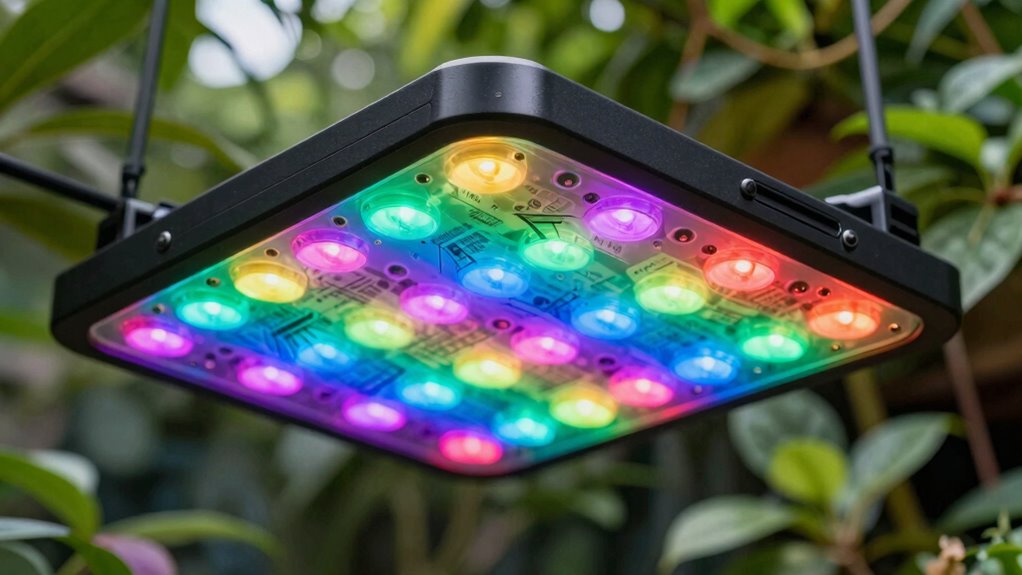
Choosing the right grow light is essential for successful gardening, especially when natural sunlight isn’t enough. One of the most confusing specifications for many gardeners is understanding the light spectrum. The light spectrum refers to the range of light wavelengths emitted by a grow light, and it directly affects how your plants grow. Some lights produce a broad spectrum that mimics natural sunlight, covering all visible wavelengths, while others focus on specific parts of the spectrum, like blue or red light. If you don’t grasp how the spectrum influences plant development, you might select a light that doesn’t promote healthy growth or flowering. For instance, blue light encourages vegetative growth, while red light stimulates flowering and fruiting. Knowing this helps you choose a light tailored to the plant’s current growth stage. But the spectrum isn’t the only tricky element; energy efficiency adds another layer of complexity. Energy efficiency measures how well a grow light converts electricity into usable light for your plants. A highly efficient light provides more usable light per watt, saving you money on electricity bills and reducing environmental impact. Sometimes, you’ll see specifications like lumens or PAR (photosynthetically active radiation), but these can be misleading if you don’t understand what they mean. Lumens, for example, measure brightness for human eyes and don’t necessarily reflect the light’s effectiveness for plants. PAR, on the other hand, measures the amount of light within the spectrum plants use for photosynthesis, making it more relevant when choosing grow lights. Many gardeners get confused because these metrics aren’t always clearly explained or comparable across products. It’s tempting to pick a light solely based on brightness or wattage, but doing so may lead you to choose a less efficient or less effective option. The challenge is finding a balance between the right light spectrum for your plant’s needs and energy-efficient performance. High-quality grow lights often combine a suitable spectrum with high energy efficiency, ensuring your plants get the light they need without wasting electricity. When shopping, focus on understanding these specifications rather than just the advertised wattage or price. A grow light with a good spectrum for your plant’s growth stage, coupled with high energy efficiency, will serve you better in the long run. Remember, the specs that seem confusing initially are actually tools to help you optimize your gardening efforts. By learning what these measurements mean, you can make smarter decisions, resulting in healthier plants and lower energy costs. Additionally, understanding biodiversity and sustainable practices can help you create a more eco-friendly gardening environment. Being aware of photobiology can further enhance your ability to select lights that support optimal plant development, and understanding light quality can help you choose lights that truly benefit your plants. Recognizing the importance of light spectrum can also guide you in selecting the most effective grow lights for your specific plants.
As an affiliate, we earn on qualifying purchases.
Frequently Asked Questions
How Do I Calculate the Coverage Area of a Grow Light?
To calculate your grow light’s coverage area, start by considering its light spectrum and power efficiency. Check the manufacturer’s specifications for recommended coverage, usually given in square feet or meters. Divide the light’s wattage by the area it effectively covers, factoring in spectrum performance. Remember, a higher power efficiency means more light output per watt, so you’ll get better coverage with less energy, making your plants thrive.
What Is the Ideal PAR Value for Different Plants?
For ideal photosynthesis efficiency, the optimal PAR value varies by plant type. Leafy greens thrive around 200-400 µmol/m²/sec, while fruiting plants like tomatoes prefer 600-900 µmol/m²/sec. To maximize growth, focus on light spectrum optimization by providing the right balance of blue and red wavelengths. Adjust your grow light’s PAR to match these needs, ensuring your plants receive the proper intensity for healthy development.
How Does Wattage Correlate With Light Intensity?
Wattage directly correlates with light intensity, meaning higher wattage delivers more light for your plants, encouraging better growth. But, remember, it’s not just about wattage—consider the light spectrum for specific plant needs and energy efficiency to avoid wasting power. More watts can mean more energy consumption, so choose a grow light with ideal wattage that matches your plants’ requirements and maximizes efficiency.
Are Higher Kelvin Ratings Better for Plant Growth?
Higher Kelvin ratings aren’t necessarily better for plant growth. They produce a cooler, bluish light that’s useful during vegetative stages, but a full spectrum with balanced Kelvin ratings supports all growth phases. LED efficiency varies across Kelvin ratings, affecting energy use and light output. So, choose a grow light with a spectrum that matches your plants’ needs, ensuring ideal growth without wasting energy on unnecessary wavelengths.
How Often Should I Replace My Grow Light?
You should replace your grow light every 12 to 18 months to guarantee ideal plant nutrition, as bulbs lose brightness and spectrum quality over time. Regularly check for signs of reduced light intensity, which can hinder growth. Replacing your light also helps prevent pest problems by maintaining healthy plant development. Keep in mind, a fresh light supports strong, vibrant plants and minimizes the need for pest prevention treatments.
Conclusion
Exploring grow light specs can feel like decoding ancient runes, but remember, even Da Vinci needed the right tools. As you decipher these details, envision yourself as the artist of your garden masterpiece, wielding light like a brush. With patience and knowledge, you’ll bring your plants to life, transforming your space into a vibrant Eden. So, keep learning, stay curious, and soon you’ll master the art of lighting your garden’s brightest future.
Fall yard work Picks
leaf blowers
As an affiliate, we earn on qualifying purchases.