
A well-designed greenhouse sensor stack puts you in full control of your environment by combining accurate, calibrated sensors for temperature, humidity, and soil moisture with secure, seamless data integration. It provides real-time insights, allowing you to make quick adjustments and prevent issues before they escalate. Prioritizing data security and proper setup guarantees reliable operation and better crop yields. Keep exploring to discover how this system can transform your greenhouse management and boost efficiency.

Get garden gear delivered free with Prime
- Fast, free delivery on millions of items
- Prime Video, Amazon Music and more included
- Member-only deals all year
Key Takeaways
- A layered sensor system provides real-time environmental data for precise greenhouse management.
- Proper calibration and placement ensure accurate readings, enabling effective control.
- Secure data transmission protects sensitive information and prevents tampering.
- Integration with dashboards allows instant alerts and automated adjustments.
- Durable, goal-specific sensors optimize environmental conditions and improve productivity.
greenhouse temperature humidity sensor kit
As an affiliate, we earn on qualifying purchases.
As an affiliate, we earn on qualifying purchases.
What Is a Greenhouse Sensor Stack and Why It Matters
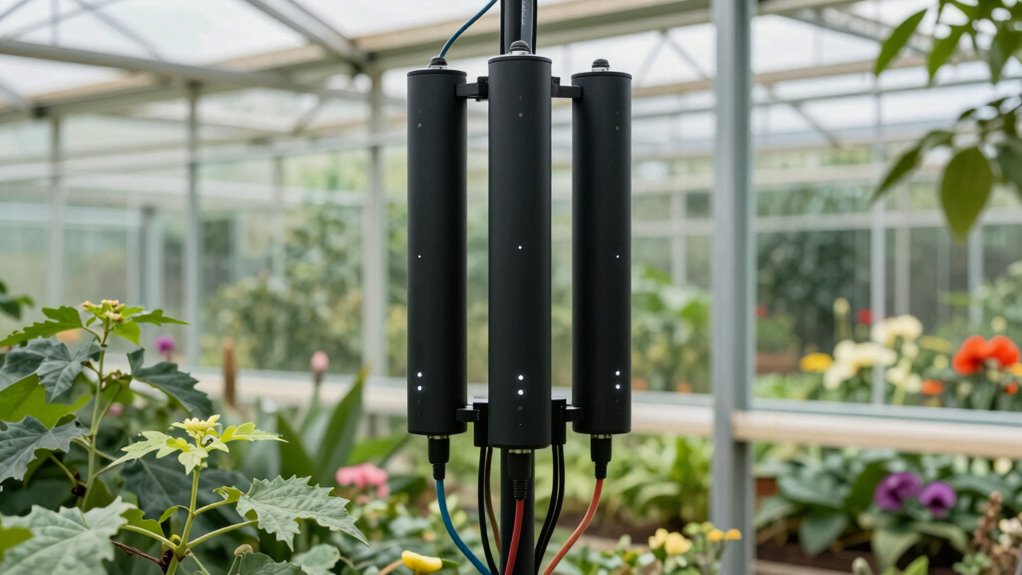
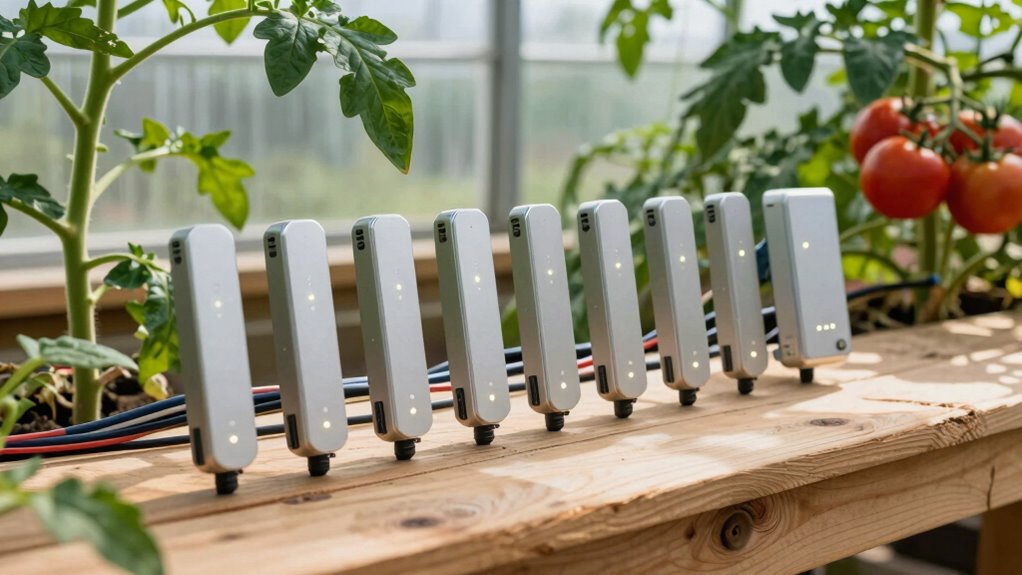
A greenhouse sensor stack is a layered system of sensors that work together to monitor and control environmental conditions inside a greenhouse. Proper sensor calibration is vital to guarantee accurate readings, preventing costly mistakes in climate management. When sensors are correctly calibrated, your system responds precisely to temperature, humidity, or light changes, maximizing plant growth. Data security is also essential; safeguarding your sensor data protects against tampering and guarantees reliable operation. A well-designed sensor stack integrates these elements seamlessly, giving you real-time insights and control. This layered approach simplifies complex environmental management, making it easier to maintain ideal conditions. Additionally, incorporating outdoor transformation essentials can enhance the overall environment, supporting your greenhouse’s ecosystem. Understanding the importance of sensor accuracy and calibration helps you make informed decisions and keeps your greenhouse running efficiently. Recognizing the significance of contrast ratio in projectors can be analogous to understanding how detailed and vivid your greenhouse visuals or displays need to be for optimal monitoring.
How to Choose the Right Sensors for Your Greenhouse Goals
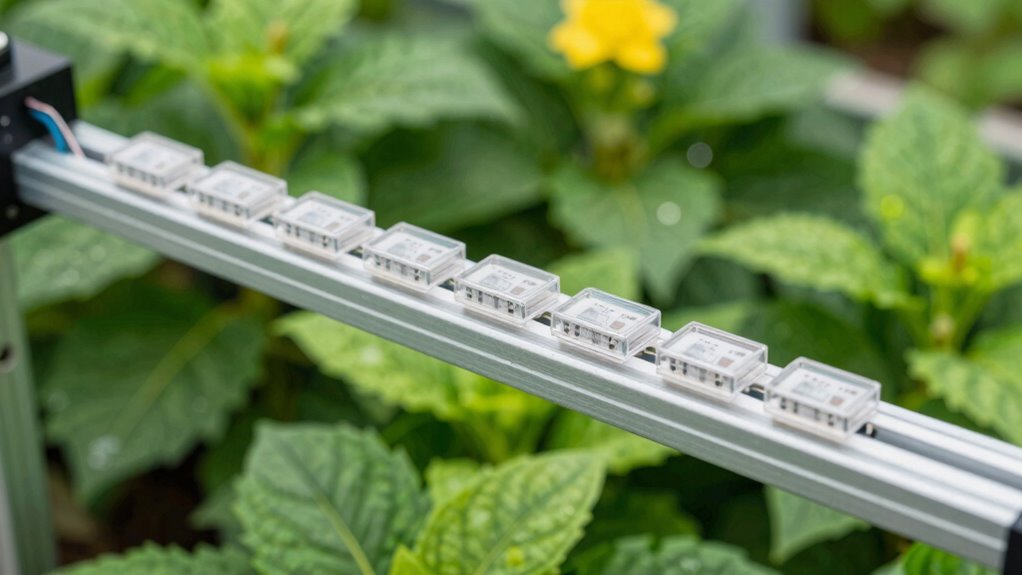
Choosing the right sensors for your greenhouse starts with clearly defining your goals. Are you focusing on temperature regulation, humidity control, or soil moisture? Your objectives will guide your sensor selection. Confirm the sensors you choose can be accurately calibrated, as sensor calibration is crucial for reliable data. Consider the data security features of your sensors—protecting your data from breaches is essential for maintaining control. Think about durability and how well sensors can withstand your greenhouse environment. Compatibility with your existing systems also matters, so look for sensors that integrate seamlessly. By aligning your sensor choices with your specific goals and prioritizing calibration and data security, you set a solid foundation for effective greenhouse management. Additionally, understanding the importance of content formats can help you better interpret and utilize the data collected.
Setting Up and Integrating Sensors for Automated Control
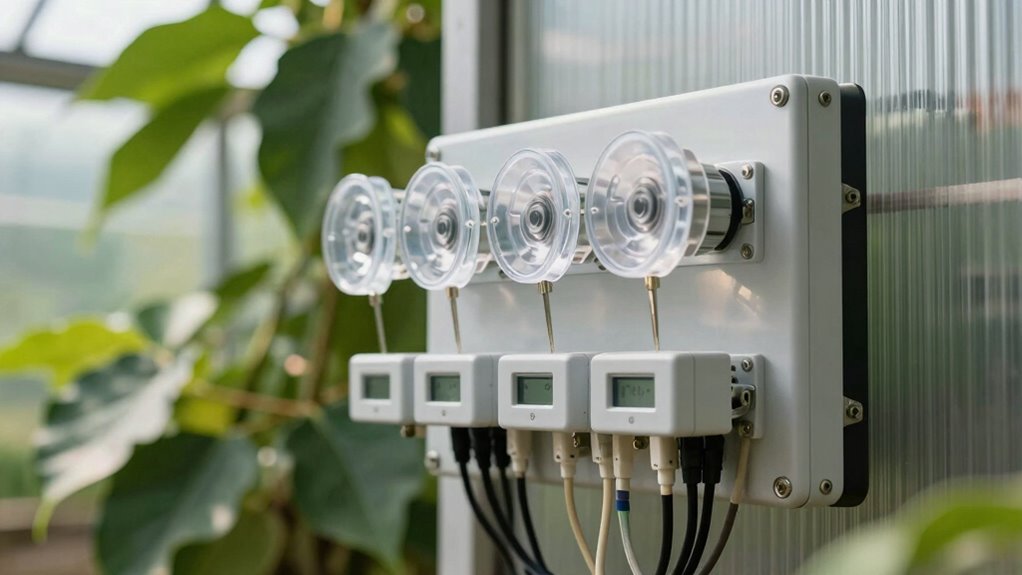
To successfully set up and integrate sensors for automated control in your greenhouse, start by planning your system layout carefully. Map out sensor placement to guarantee accurate data collection, considering factors like light exposure and airflow. Once installed, calibrate each sensor properly to ensure reliable readings; sensor calibration is vital for precise control. Connect the sensors to your control system, confirming compatibility and secure data transmission. Prioritize data security by encrypting wireless connections and restricting access to sensitive information. Regularly test the sensor network to identify any issues early and maintain peak performance. Proper setup and integration help you automate environmental adjustments effectively, providing your plants with the ideal growing conditions while safeguarding your system’s integrity. Effective sensor placement is crucial for gathering accurate environmental data and ensuring your automation system functions smoothly. Additionally, understanding the sensor calibration process is essential to maintain measurement accuracy over time. Incorporating knowledge about microplastics in dust can further improve indoor air quality, protecting your greenhouse environment. To enhance reliability, consider monitoring for environmental contaminants, which can influence sensor accuracy and plant health. Regular maintenance and understanding of potential cabling failures can also prevent system downtime and ensure continuous operation.
Monitoring Data in Real-Time to Keep Plants Healthy
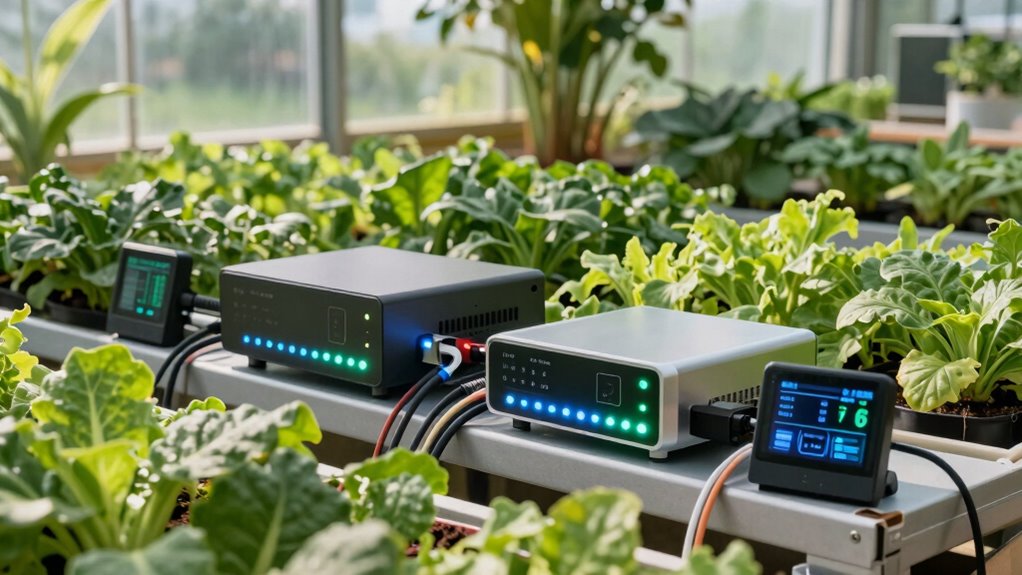
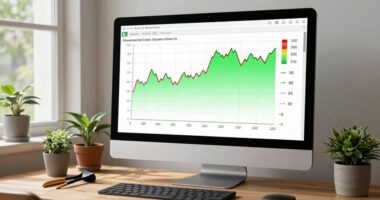
Monitoring data in real-time allows you to respond instantly to changing environmental conditions, ensuring your plants stay healthy and grow ideally. Accurate readings rely on proper sensor calibration, preventing false data from influencing decisions. Regular calibration maintains sensor precision, so your system reacts appropriately to temperature, humidity, and soil moisture changes. Protect your data with robust security measures to prevent tampering or breaches. Keep an eye on real-time dashboards for immediate alerts, enabling quick adjustments to ventilation, watering, or lighting. Use trusted sensors with secure data transmission to maintain integrity and privacy. This proactive approach minimizes stress on your plants, promotes steady growth, and enhances overall greenhouse management. Staying vigilant with real-time data is key to a thriving, healthy environment. Proper sensor calibration ensures your system remains accurate over time, and understanding air quality and humidity basics can further optimize your greenhouse conditions. Additionally, regular maintenance of sensors and monitoring equipment helps prevent malfunction or drift, ensuring continuous reliable data collection. Furthermore, implementing diverse sensor types can provide a more comprehensive picture of your greenhouse environment.
Benefits of a Robust Sensor Stack for Greenhouse Efficiency
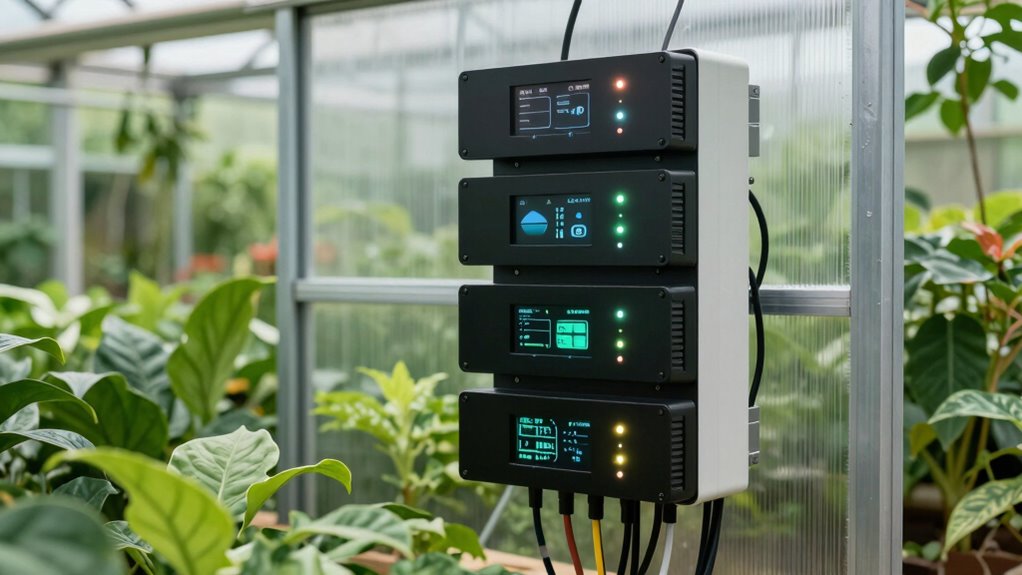
A robust sensor stack considerably enhances greenhouse efficiency by providing accurate, all-encompassing data that informs better decision-making. Proper sensor calibration guarantees your readings stay precise over time, preventing costly errors and optimizing conditions for plant growth. With a reliable sensor setup, you can swiftly identify issues like humidity or temperature fluctuations, adjusting systems proactively. Additionally, a strong sensor stack prioritizes data security, safeguarding your sensitive information from breaches and unauthorized access. This focus on security builds trust and maintains operational integrity. Furthermore, understanding the importance of sensor calibration ensures your system remains dependable and accurate over the long term. Recognizing how data security impacts operational trust can lead to more resilient greenhouse management. It’s equally essential to consider how system integration enables seamless data flow between different sensors and control systems, further enhancing overall efficiency. Integrating sensor networks can improve real-time monitoring and reduce response times, leading to better environmental control. Overall, by integrating well-calibrated sensors and robust security measures, you gain consistent, trustworthy insights that streamline management, reduce waste, and boost productivity—giving you complete control over your greenhouse environment. Understanding the mysteries of time and life can also inspire innovative ways to optimize your growing cycles and environmental controls.
Frequently Asked Questions
How Often Should I Calibrate My Greenhouse Sensors?
You should calibrate your greenhouse sensors regularly to maintain data accuracy, ideally every few weeks or monthly, depending on your specific sensors and environmental conditions. Frequent sensor calibration ensures that the data you collect remains reliable, helping you make informed decisions about temperature, humidity, and light levels. Keep an eye on sensor performance and recalibrate whenever you notice drifting readings or after any maintenance to ensure maximum control over your greenhouse environment.
What Are Common Sensor Maintenance Tips?
Your sensors are as essential as the heartbeat of your greenhouse, so maintaining them is critical. Regularly clean sensor surfaces to prevent dust buildup, and check connections to guarantee accuracy. Follow consistent maintenance schedules, calibrate sensors periodically, and replace batteries timely to maximize sensor longevity. Avoid neglect, as even small oversights can lead to significant data errors, jeopardizing your plant health and growth. Proper care keeps your sensor system reliable and precise.
Can Sensor Data Predict Plant Diseases?
Yes, sensor data can help predict plant diseases through plant disease early warning systems. By monitoring environmental factors like humidity, temperature, and soil conditions, sensors provide real-time data that can identify disease risk patterns. To guarantee accurate predictions, maintain sensor data accuracy through calibration and regular cleaning. This proactive approach allows you to address issues early, reducing crop loss and improving overall greenhouse health.
How Secure Is My Greenhouse Data From Cyber Threats?
Your greenhouse data’s security depends on strong cybersecurity measures. Think of it like locking your doors—data encryption acts as a sturdy lock, preventing unauthorized access. While vulnerabilities exist, using updated security protocols and regularly patching software greatly reduces risks. I once heard of a greenhouse that suffered a breach due to outdated security; it’s a reminder that proactive protection keeps your valuable data safe from cyber threats.
What Is the Cost Range for a Complete Sensor Stack?
A complete sensor stack typically costs between $500 to $2,500, depending on the sensor quality and features. You get high sensor accuracy for precise readings, which is vital for ideal plant growth. Data integration capabilities guarantee seamless communication between sensors and your control system. Investing in a reliable sensor stack allows you to monitor environmental conditions accurately and make informed decisions to maximize your greenhouse’s productivity.
Conclusion
By implementing a well-designed sensor stack, you gain precise control over your greenhouse environment. Did you know that automated systems can boost plant growth rates by up to 30%? With real-time data monitoring, you’ll catch issues early and optimize conditions effortlessly. This not only keeps your plants healthier but also increases efficiency and reduces waste. So, investing in a robust sensor setup truly empowers you to maximize your greenhouse’s potential and productivity.
Columbus Day / Indigenous Peoples' Day Picks
long weekend sales
As an affiliate, we earn on qualifying purchases.