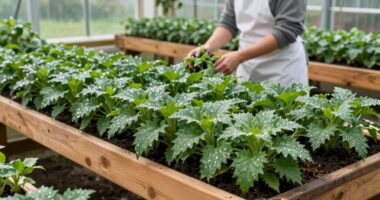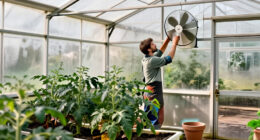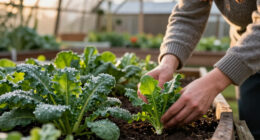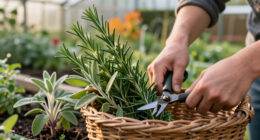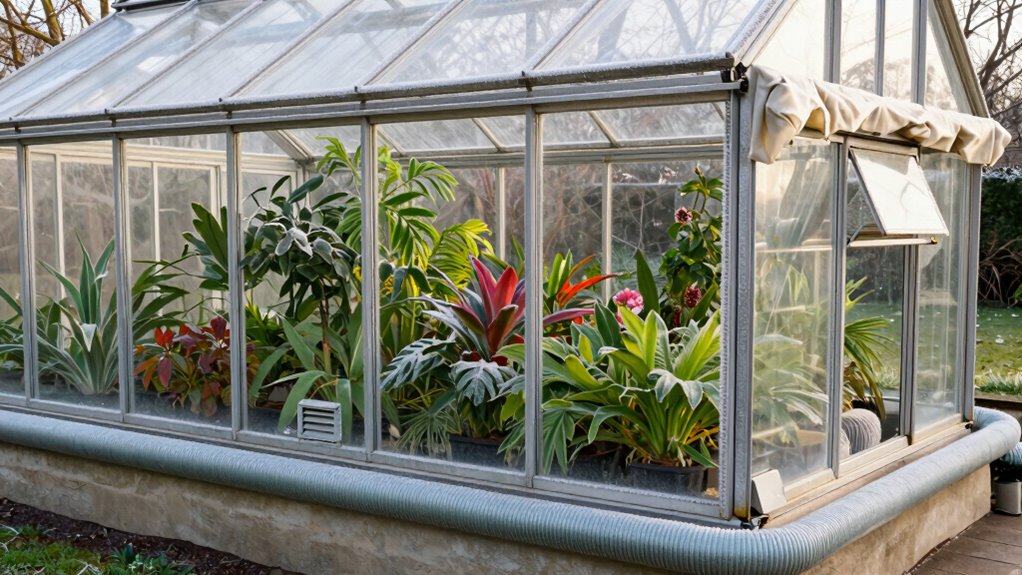

To winterize your greenhouse without overdoing it, focus on balancing insulation, ventilation, and heating. Check for gaps and add insulation materials like foam boards or bubble wrap to retain heat efficiently. Use coverings and thermal curtains to protect plants, but don’t block all airflow. Monitor temperature and humidity with gauges, and operate heaters safely to avoid overheating. Fine-tune these strategies to create a cozy, healthy environment—more tips are just a step away.

Get garden gear delivered free with Prime
- Fast, free delivery on millions of items
- Prime Video, Amazon Music and more included
- Member-only deals all year
Key Takeaways
- Insulate only critical areas to retain heat without overly sealing the greenhouse, ensuring proper ventilation and airflow.
- Use breathable coverings like frost blankets to protect plants, avoiding excessive insulation that can trap moisture.
- Monitor temperature and humidity regularly to adjust heating and ventilation precisely, preventing overheating or cold drafts.
- Seal gaps and drafts carefully, but leave some airflow to prevent moisture buildup and promote healthy plant growth.
- Maintain a balanced watering routine, reducing watering frequency but avoiding drought stress, to support plant health during winter.
greenhouse insulation foam boards
As an affiliate, we earn on qualifying purchases.
As an affiliate, we earn on qualifying purchases.
Understanding Greenhouse Winterization Basics
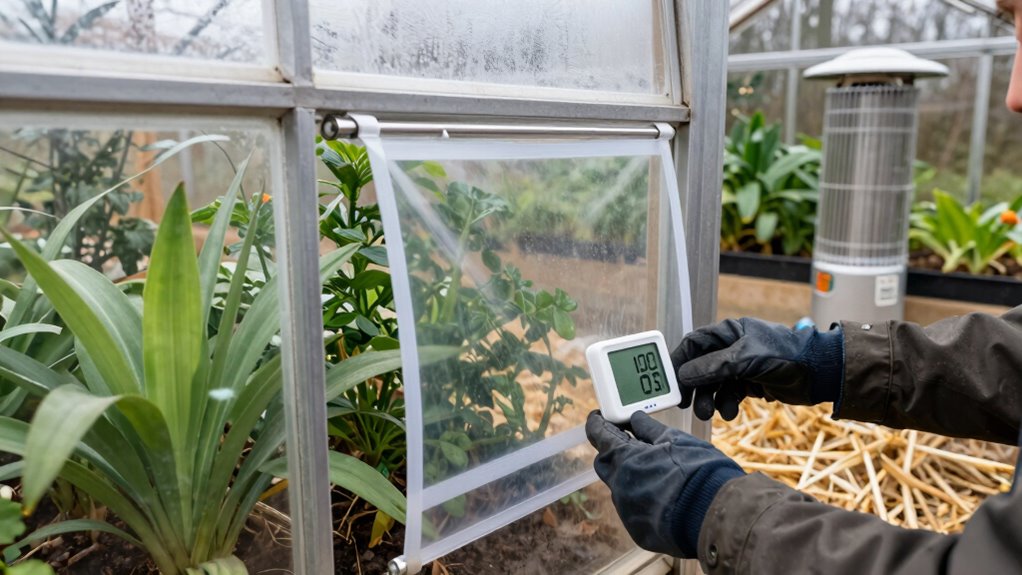
To effectively winterize your greenhouse, understanding the basics of how it functions during colder months is vital. Your greenhouse creates a controlled environment that supports plant propagation even when outside temperatures drop. Keeping the right temperature and humidity levels helps guarantee healthy plant growth. Proper insulation minimizes heat loss, reducing energy use, while ventilation prevents excess humidity that can lead to pests and diseases. Pest control becomes especially important in winter, as pests seek shelter inside warmer spaces, threatening your plants. Regularly inspecting plants and maintaining cleanliness can prevent infestations. Additionally, using air circulation techniques can help distribute heat evenly and prevent cold spots within the greenhouse. Ensuring you have the right DIY tools on hand can make these tasks easier and more efficient. Recognizing how greenhouse environment control impacts plant health is crucial for effective winterization. Understanding the importance of thermal insulation can help you select the best materials to keep your greenhouse warm. Incorporating microplastics in dust considerations can also improve indoor air quality, reducing potential health risks for both plants and humans. By grasping these fundamentals, you’ll be better prepared to adapt your greenhouse practices for winter, protecting your plants and maintaining a thriving environment throughout the colder months.
How to Assess Your Greenhouse’s Insulation and Heating Needs

Before winter hits, making certain to evaluate your greenhouse’s insulation and heating needs guarantees plants stay healthy and productive. Start by assessing how well your greenhouse retains heat; check for drafts and insulation gaps, especially around vents and doors. Consider your goals for plant propagation, which may require maintaining consistent temperatures, and adjust your heating system accordingly. Soil preparation also plays a role—healthy, well-prepared soil retains warmth better and supports root development during cold months. Measure your current insulation’s effectiveness and identify areas needing improvement. Understanding your greenhouse’s heat loss and insulation gaps helps you choose the right heating setup, preventing overuse and conserving energy. Additionally, incorporating natural insulation techniques can enhance overall efficiency and sustainability. Conducting a thorough insulation assessment allows you to pinpoint specific issues and implement targeted solutions. Monitoring your greenhouse’s heat retention over time can help you make ongoing adjustments and ensure optimal conditions. Recognizing how insulation quality influences heat conservation may offer creative ways to utilize natural resources for insulation or humidity control. This assessment ensures your greenhouse stays warm enough for your plants without overdoing it.
Choosing the Best Insulation Materials for Your Greenhouse

Choosing the right insulation materials is vital for keeping your greenhouse warm during winter. You need to take into account different types, installation methods, and how much they cost versus how long they last. Additionally, understanding smart yard care options, such as robot mowers and multi-mower setups, can help optimize your overall garden management and reduce maintenance efforts during colder months. Proper insulation can also improve water system efficiency, ensuring your plants stay hydrated without unnecessary heating costs. When selecting materials, consider their insulating values and how they interact with brewing science principles like heat retention and transfer to maintain a stable environment. Incorporating effective planning strategies can help ensure your greenhouse remains temperature-controlled without unnecessary expenses or over-insulation. Recognizing the importance of creative problem-solving can also aid in customizing insulation solutions to suit specific greenhouse designs and climates.
Types of Insulation Materials
Selecting the right insulation materials is essential for keeping your greenhouse warm during the cold months. There are various insulation types to weigh, each with its own advantages and drawbacks. Foam board insulation is lightweight, easy to install, and provides good thermal resistance, making it a popular choice. Bubble wrap offers a simple, affordable option that traps air to insulate plants effectively. Reflective insulation materials, like foil-backed products, reflect heat back into your greenhouse. Material comparisons show that while fiberglass insulation is highly effective, it can be cumbersome and needs proper handling. Ultimately, your choice depends on your budget, greenhouse size, and insulation needs. Carefully evaluate each option to find the best fit, ensuring your greenhouse stays warm without overdoing it. Considering the variety of insulation options available can help you make an informed decision tailored to your specific needs.
Insulation Installation Tips
When installing insulation in your greenhouse, taking careful steps guarantees you get the best thermal performance and durability. Start by ensuring the insulation material fits snugly without gaps, as gaps can reduce efficiency and create cold spots. Use vapor barriers where necessary to prevent moisture buildup, which can harm plants and promote pests. Proper insulation not only maintains ideal temperatures for plant propagation but also helps control pests by limiting their entry points. Secure the insulation firmly to withstand winter weather and prevent drafts. Avoid over-insulating, which can trap excess moisture and hinder ventilation. Regularly inspect your insulation for damage or wear, repairing it promptly to sustain energy efficiency and protect your plants throughout the cold season. Additionally, understanding the ethics in genetic testing can guide responsible choices in sustainable gardening practices. Ensuring proper insulation techniques can maximize your greenhouse’s thermal efficiency and extend your growing season. Incorporating ventilation strategies is also crucial to prevent excess humidity and ensure healthy plant growth during winter. Proper ventilation can also help mitigate issues related to moisture control, which is essential for maintaining optimal conditions inside your greenhouse. To enhance insulation effectiveness, consider using advanced insulation materials that provide better thermal resistance and durability.
Cost and Durability Factors
Balancing cost and durability is essential when selecting insulation for your greenhouse, as the right material can save you money in the long run while providing reliable protection against harsh winter conditions. Cheaper options like bubble wrap or polyethylene sheets may be easy on your budget but might wear out quickly, leading to potential plant disease or pest control issues. More durable materials, such as rigid foam panels or insulated panels, often cost more upfront but last longer and offer better thermal performance. Consider how insulation impacts airflow, as poor ventilation can promote mold, plant disease, and pest infestations. Investing in high-quality, long-lasting insulation can help maintain a stable environment, reducing the need for frequent repairs and lowering overall winterization costs.
How to Maximize Natural Light While Preventing Heat Loss
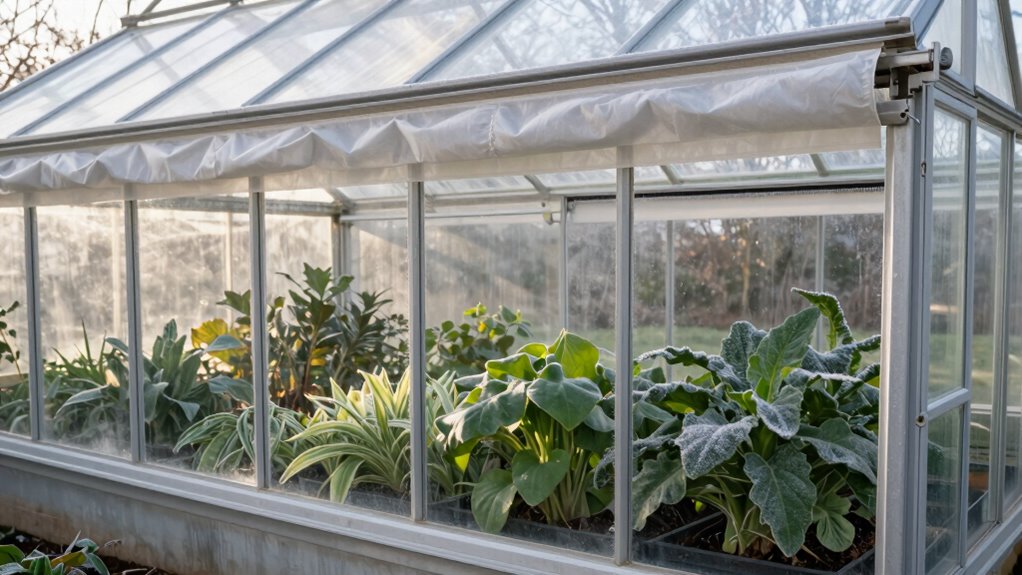
Maximizing natural light while preventing heat loss is essential for maintaining a healthy and productive greenhouse during winter. To achieve this, consider installing reflective surfaces that direct sunlight deeper into your space, reducing the need for artificial lighting. Solar panel integration can harness sunlight for energy, helping you operate temperature controls efficiently without losing heat. Use transparent or double-glazed glazing to trap warmth while allowing maximum sunlight entry. Keep pest control measures in mind; a well-lit, warm environment can attract pests, so seal cracks and vents thoroughly. By combining thoughtful glazing, reflective surfaces, and solar energy, you can optimize light and heat retention, ensuring your plants thrive throughout the winter months without overdoing insulation or risking pest issues.
Managing Greenhouse Ventilation in Winter
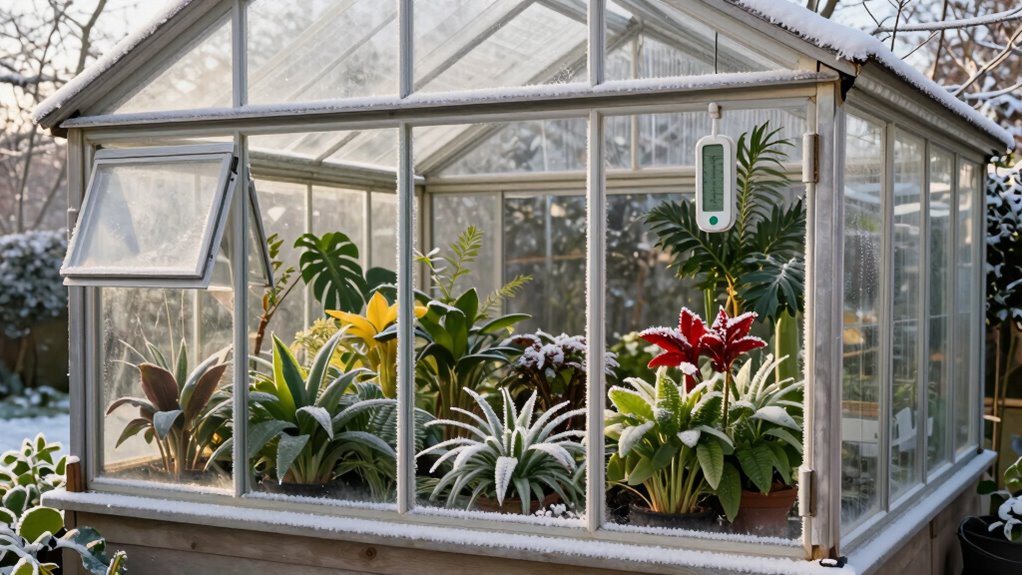
Properly timing your ventilation guarantees your plants stay healthy without losing too much heat. Keep an eye on when and how long you open vents to prevent cold air from rushing in unexpectedly. Managing cold air ingress is key to maintaining a stable environment during winter months. Using ventilation control devices can help automate this process and optimize temperature regulation. Incorporating environmental impact considerations when choosing your ventilation methods can also promote a more sustainable greenhouse. Monitoring commercial kitchen equipment that maintains precise climate conditions can inspire better practices for temperature management in your greenhouse. Additionally, understanding smart home privacy and security practices can help you safeguard any connected automation systems from unauthorized access.
Ventilation Timing and Duration
During winter, managing ventilation in your greenhouse requires careful attention to timing and duration to prevent temperature drops and maintain healthy plant growth. Properly timed ventilation ensures good air circulation, which helps remove excess humidity and reduces the risk of mold or disease. You should open vents during the warmest parts of the day to promote fresh air exchange and close them during colder periods to retain heat. Short, frequent ventilation periods are more effective than long, infrequent ones. Keep an eye on humidity levels, adjusting ventilation to prevent excessive moisture buildup. Consistent airflow keeps plants healthy and prevents cold spots. By monitoring weather conditions and adjusting your ventilation schedule accordingly, you can uphold a stable environment and support robust winter growth.
Managing Cold Air Ingress
Are you aware of how cold air can sneak into your greenhouse and disrupt your winter environment? Managing cold air ingress is vital for maintaining consistent temperatures. You need to control ventilation airflow to prevent drafts that can cause temperature fluctuations and stress your plants. Start by sealing gaps around vents, doors, and windows to block unwanted drafts. Use draft stoppers or weather stripping where possible. When ventilating, open vents gradually to avoid sudden temperature drops. Make sure ventilation pathways are well-designed to allow air exchange without creating direct drafts on your plants. Proper draft prevention helps keep your greenhouse warm and stable during winter, reducing the risk of cold damage. Regularly check for new leaks and adjust your ventilation strategy accordingly.
How to Seal Drafts and Gaps in Your Greenhouse
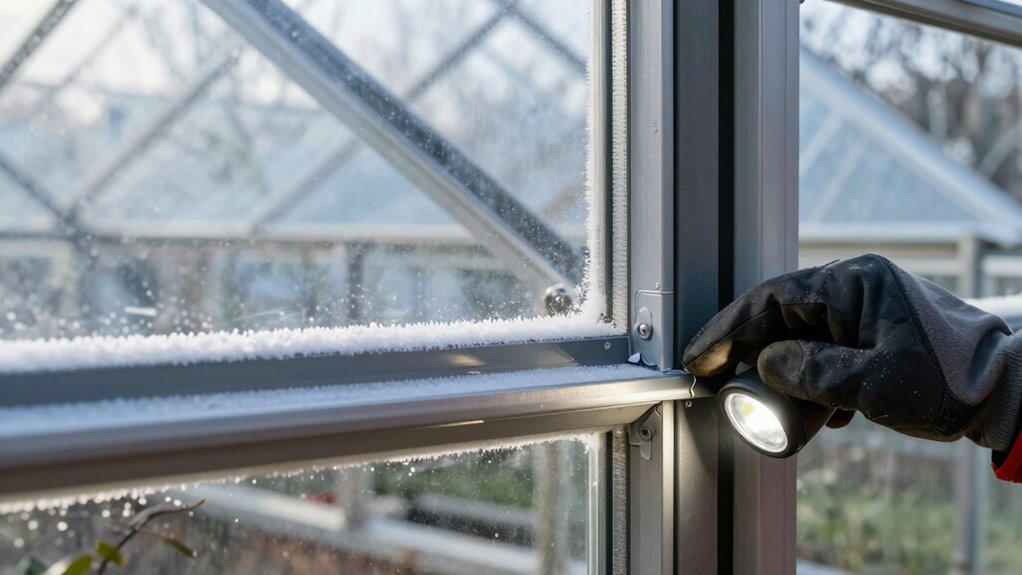
Sealing drafts and gaps is a crucial step in winterizing your greenhouse, as even small openings can let in cold air and cause temperature fluctuations. To achieve effective draft prevention, inspect all seams, vents, and entry points thoroughly. Use weatherstripping around doors and windows to block gaps and prevent cold drafts. Seal cracks with caulk or foam insulation to keep warm air in and cold air out. Proper sealing also helps with pest control by limiting access for insects and rodents seeking shelter from winter. Remember, the goal is to create a tight barrier without restricting necessary ventilation. Regularly check and maintain these seals throughout winter to guarantee your greenhouse stays warm and protected against the elements.
Using Thermometers and Humidistats to Monitor Climate

To keep your greenhouse climate stable, you need reliable thermometers and humidistats. Make sure you select accurate instruments that suit your space, and check them regularly. Consistent monitoring helps you respond quickly to temperature and humidity changes during winter.
Choosing Accurate Instruments
Choosing accurate instruments is essential for effectively monitoring your greenhouse’s climate during winter. Precise thermometers and humidistats help you maintain ideal temperature control, preventing conditions that could encourage pests or plant stress. Invest in digital or analog tools known for reliability, and place them in spots that reflect the general environment, avoiding direct sunlight or drafts. Accurate readings allow you to adjust heating or ventilation quickly, ensuring your plants stay healthy. Proper monitoring also aids in pest prevention by helping you spot temperature fluctuations that might create favorable conditions for unwelcome visitors. Regularly calibrate your instruments to keep readings precise. With the right tools, you’ll better manage your greenhouse’s winter climate, avoiding over or under-heating while promoting a stable environment for your plants.
Regular Climate Monitoring
Regularly monitoring your greenhouse’s climate helps you catch small changes before they become major problems. Use thermometers and humidistats to track temperature and humidity levels consistently. Stable conditions are essential for successful plant propagation and healthy growth. If you notice temperature drops, you can adjust heating or insulation promptly, preventing stress on your plants. Maintaining proper humidity levels also helps minimize pest control issues by creating an environment less hospitable to pests. Regular checks allow you to spot fluctuations early, so you can take swift action without overdoing it. Accurate climate data keeps your greenhouse stable, ensuring plants thrive through winter and reducing the risk of disease or pest outbreaks caused by improper humidity or temperature.
When and How to Use Heating Devices Safely
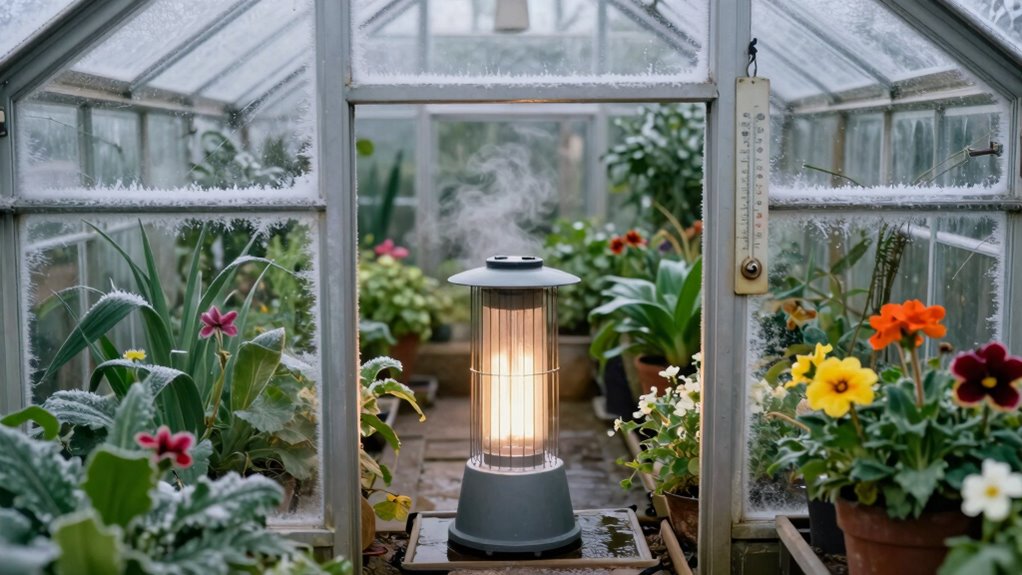
When temperatures drop, using heating devices becomes essential to keep your greenhouse warm and protect your plants. Proper use of heaters supports plant propagation and helps prevent pests that thrive in cold, damp conditions. Always follow manufacturer instructions for installation and operation, ensuring proper ventilation to avoid carbon monoxide buildup. Use thermostats or timers to regulate temperature, preventing overheating or unnecessary energy use. Keep heaters away from water to avoid electrical hazards. Regularly inspect equipment for damage or wear. Remember, safety is key—never leave heating devices unattended for long periods. By applying these precautions, you’ll maintain a safe, warm environment that promotes healthy plant growth and keeps pests at bay without risking your greenhouse or its inhabitants.
Using Coverings and Curtains for Winter Protection
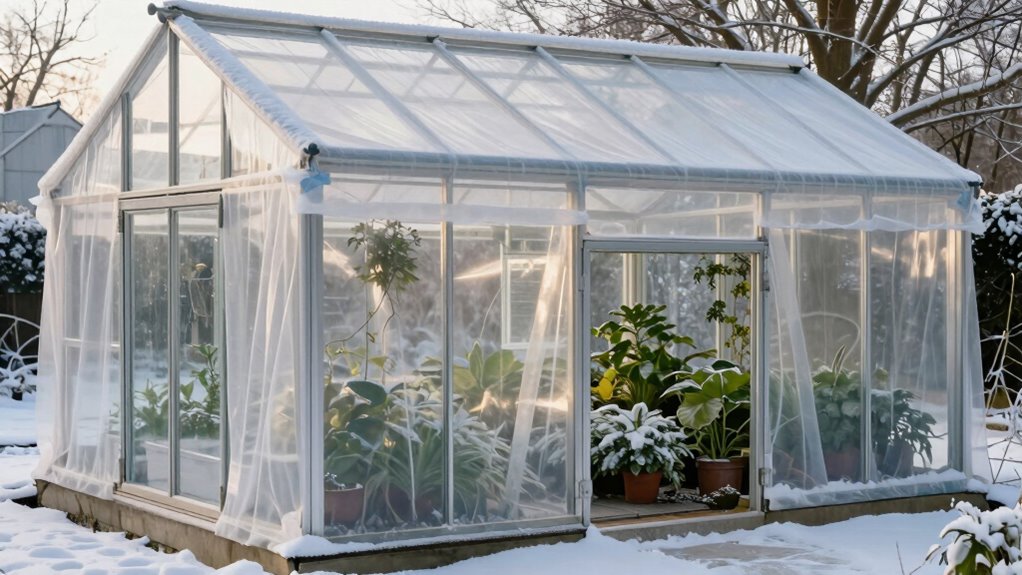
As winter approaches, using coverings and curtains becomes an essential strategy to insulate your greenhouse and protect your plants from the cold. Covering plants with frost blankets or row covers helps retain heat and shields them from harsh winds. Curtain installation is straightforward: hang thermal curtains or heavy fabrics along the greenhouse walls or doorways to trap warm air inside. Make sure the curtains are easy to open during the day to allow sunlight in and close at night for insulation. Properly covering plants and sealing gaps with curtains prevents heat loss and maintains a stable environment. Regularly check the coverings for tears or gaps and adjust as needed to guarantee your plants stay warm and healthy throughout winter.
Final Tips for Maintaining Your Greenhouse in Winter
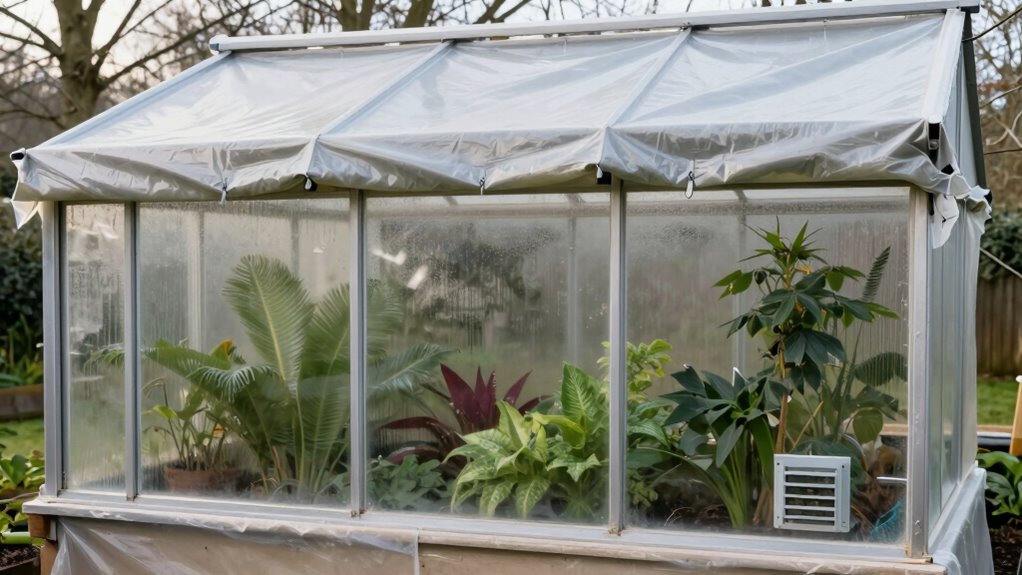
Are you prepared to keep your greenhouse thriving throughout the winter months? Consistent winter plant care is essential to prevent damage and promote healthy growth. Regularly check for signs of pests and implement greenhouse pest control measures to keep unwanted insects at bay. Maintain proper ventilation to avoid humidity buildup, which can foster mold or diseases. Keep your temperature steady with heaters or insulation, but avoid overdoing it to prevent overheating. Water plants cautiously, as winter evaporation slows, and ensure they aren’t overwatered. Clean and disinfect tools and surfaces to reduce disease spread. Ultimately, monitor your plants closely, adjusting your care routine as needed. Staying vigilant and proactive ensures your greenhouse remains a healthy, productive space all winter long.
Frequently Asked Questions
How Often Should I Check My Greenhouse’s Winter Insulation?
You should check your greenhouse’s winter insulation at least once a week to guarantee it’s working effectively. During these checks, monitor soil moisture levels to prevent overwatering or dryness that can stress plants. Also, inspect for pests, as winter conditions can hide issues. Adjust insulation if you notice drafts or moisture buildup, and keep pest control measures in place to protect your plants throughout the colder months.
Can I Use Solar Heaters for Winter Heating?
Imagine the warm glow of solar heaters soaking up winter sunlight, transforming your greenhouse into a cozy haven. Yes, you can use solar heating for winter, enhancing your greenhouse insulation naturally. These eco-friendly systems harness daylight, helping maintain ideal temperatures without overdoing it. As winter winds blow outside, your greenhouse stays comfortably warm, protected by the combined power of solar energy and good insulation, ensuring your plants thrive all season long.
What Are Common Signs of Insufficient Winter Insulation?
You’ll notice signs of insufficient winter insulation through leaf condensation and frost damage on plants. Excessive leaf condensation indicates poor humidity control, while frost damage shows temperatures drop too low inside your greenhouse. If you see these signs, it’s a clear warning that your insulation isn’t enough. To protect your plants, consider adding more insulation, sealing leaks, or using supplemental heating methods like solar heaters to maintain a stable environment.
How Can I Prevent Mold and Condensation During Winter?
Did you know that poor ventilation causes up to 70% of mold issues in greenhouses? To prevent mold and condensation during winter, focus on proper ventilation techniques like opening vents during the day and using exhaust fans. Additionally, control humidity levels by using dehumidifiers or moisture-absorbing materials. This helps keep the air dry and circulating, reducing excess moisture that fosters mold growth. Proper airflow is key to a healthy, mold-free greenhouse winter.
Is It Necessary to Prune Plants Before Winterizing?
Yes, pruning plants before winterizing is necessary to promote healthy plant dormancy and prevent disease. You should time your pruning correctly, ideally in late fall, when plants enter dormancy. Removing dead or overgrown parts improves airflow, reduces mold risk, and prepares plants for winter. Proper pruning also helps maintain overall plant health during the cold months, ensuring they’re ready to bounce back in spring.
Conclusion
Winterizing your greenhouse is essential for a thriving garden, especially since studies show that properly insulated greenhouses can retain up to 70% more heat. By evaluating your needs, choosing the right materials, and monitoring the climate carefully, you can keep your plants safe without overdoing it. Remember, a well-maintained winterized greenhouse not only protects your plants but also extends your growing season, giving you fresh produce even in the coldest months. Stay proactive, and enjoy a lush winter garden!
Evergreen bestsellers Picks
bestsellers
As an affiliate, we earn on qualifying purchases.