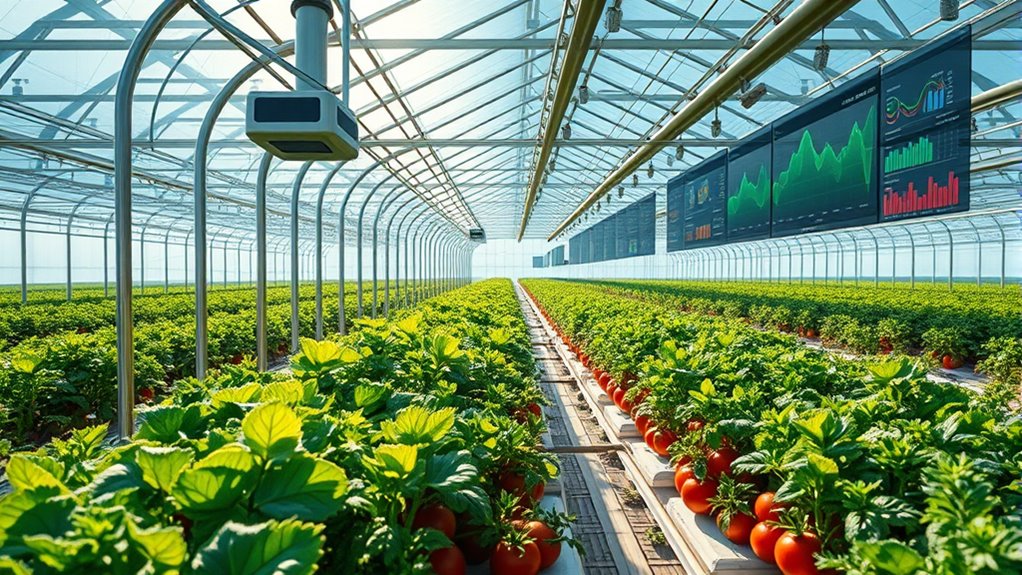

Predictive analytics in greenhouse yield forecasting allows you to use real-time sensor data, weather forecasts, and historical insights to accurately project crop outputs. By analyzing these inputs, you can make proactive decisions on planting, watering, and pest management, ultimately maximizing your crop potential. This approach helps you respond quickly to changing conditions and optimize your operations. If you want to explore how this technology can transform your greenhouse, there’s more valuable information ahead.
Key Takeaways
- Utilizes historical and real-time data to generate accurate crop yield predictions for better planning.
- Integrates soil, weather, and pest data to enhance forecast precision and operational decisions.
- Enables early detection of potential issues, allowing proactive interventions to maximize yield.
- Continuously improves accuracy through data accumulation and advanced analytical algorithms.
- Supports resource optimization by aligning planting, watering, and fertilization with predictive insights.
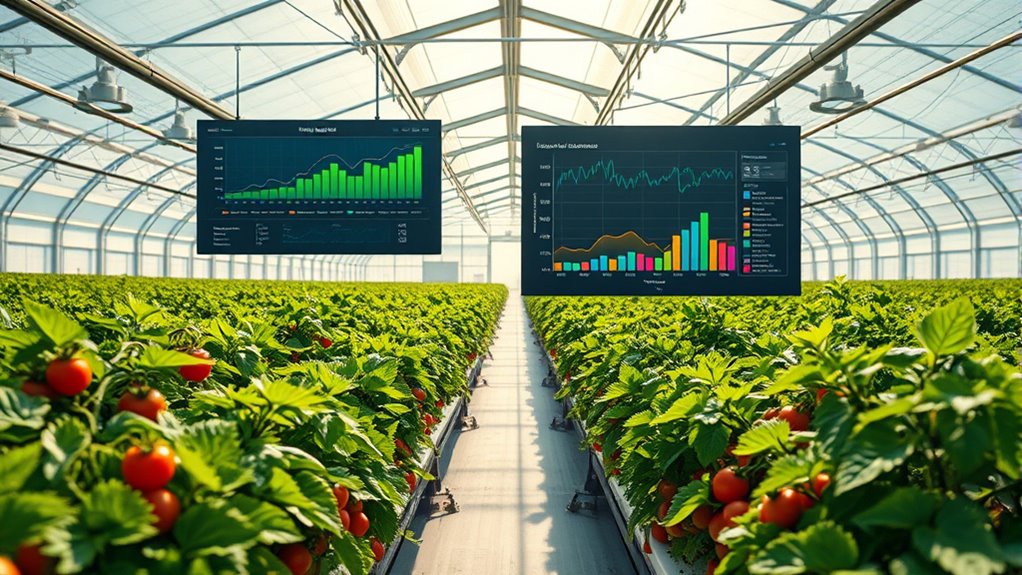
Predictive analytics is transforming how greenhouse operators forecast crop yields, enabling more accurate and timely decisions. By analyzing historical data and real-time sensor inputs, you can anticipate how your crops will grow, identify potential issues before they escalate, and optimize resource allocation. This approach offers a clear edge over traditional methods, which often rely on guesswork or outdated information. When it comes to soil health, predictive analytics helps you understand nutrient levels, moisture content, and microbial activity, giving you a thorough view of your soil’s condition. This insight allows you to adjust fertilization schedules, irrigation, and soil amendments proactively, ensuring that your plants have the ideal environment to thrive. Healthy soil is the foundation of high yields, and predictive models make it easier to maintain that foundation consistently, reducing the risk of nutrient deficiencies or over-fertilization that can harm your crops. Additionally, maintaining a clean and well-organized greenhouse environment supports these efforts by reducing the chance of disease and pest outbreak spread.
Pest management is another area where predictive analytics proves invaluable. Instead of reacting to pest outbreaks after they’ve caused damage, you can forecast pest populations based on environmental factors, past infestation patterns, and crop susceptibility. This foresight enables you to implement targeted interventions, such as introducing biological controls or applying pesticides precisely when needed, minimizing chemical use and environmental impact. By predicting pest pressure, you can also optimize your monitoring efforts, focusing on high-risk zones within your greenhouse, which saves time and resources. This proactive approach not only safeguards your yields but also promotes sustainable practices by reducing unnecessary chemical applications.
Integrating predictive analytics into your greenhouse operations requires collecting data from various sources, including soil sensors, weather stations, and pest traps. Advanced algorithms analyze this data to generate actionable insights, which you can use to make informed decisions about planting schedules, watering, fertilization, and pest control. Over time, as your dataset grows, the accuracy of these predictions improves, creating a cycle of continuous optimization. This means you’ll be better equipped to respond swiftly to changing conditions, mitigate risks, and maximize your crop potential. Focusing on soil health and maintaining optimal conditions through these predictive tools ensures a healthier, more productive greenhouse environment.
Frequently Asked Questions
What Are the Main Challenges in Implementing Predictive Analytics in Greenhouses?
You face challenges like data integration, where bringing together diverse sources can be complicated, and managing model complexity, which can make predictions less transparent and harder to optimize. Ensuring data quality and consistency is vital, but often difficult in greenhouse environments. Additionally, developing accurate models requires expertise and resources that might be limited, making it tough to implement predictive analytics seamlessly and gain reliable yield forecasts.
How Does Climate Change Impact Greenhouse Yield Forecasting Accuracy?
Climate change makes your greenhouse yield forecasting less reliable by increasing climate variability and temperature fluctuations. These unpredictable changes disrupt your models’ accuracy, leading to misjudgments in crop planning and resource management. You face the challenge of adapting your predictive tools continuously, accounting for shifting weather patterns and extreme events. To maintain precision, you need to incorporate real-time climate data, refine algorithms, and develop resilient strategies that respond to these environmental uncertainties.
What Are the Costs Associated With Deploying Predictive Analytics Systems?
You’ll need to conduct a thorough cost analysis to understand the expenses involved in deploying predictive analytics systems. Budget considerations include software licensing, hardware upgrades, and ongoing maintenance costs. Training staff and integrating systems also add to the overall investment. While initial costs might seem high, consider the long-term savings through improved accuracy and efficiency. Planning carefully helps you allocate resources wisely and maximize the value of your predictive analytics investment.
Can Predictive Analytics Improve Sustainability and Reduce Resource Use?
Yes, predictive analytics can substantially improve sustainability and reduce resource use. You can optimize water, energy, and fertilizer application through data-driven insights, making your farming practices more efficient. This supports sustainable farming by minimizing waste and environmental impact. By leveraging predictive models, you’ll make smarter decisions, conserve resources, and promote eco-friendly practices, ultimately leading to a more sustainable greenhouse operation that’s better for the planet and your bottom line.
How Do Data Privacy Concerns Affect Greenhouse Data Collection?
Imagine your greenhouse data as a precious seed that needs protection. Data privacy concerns mean you must prioritize data security and comply with privacy regulations, like GDPR, which act as fences around your field. These rules ensure sensitive information stays safe, but they can slow data collection and sharing. You need to balance innovation with safeguarding your data, so your yield forecasts remain accurate without risking privacy breaches.
Conclusion
By leveraging predictive analytics, you can boost greenhouse yields with up to 20% greater accuracy than traditional methods. This technology helps you anticipate crop performance, optimize resource use, and reduce waste. Imagine knowing exactly how much you’ll harvest before the season even begins—that’s the power of data-driven forecasting. Embrace these insights, and you’ll not only improve productivity but also enjoy more consistent, profitable harvests year-round.