The best grow light setup depends on what your greenhouse can’t handle alone, like compensating for limited sunlight or providing the ideal light spectrum. You’ll need lights that extend daylight hours, support flowering, and adjust to seasonal changes. Additionally, combining your lighting with environmental controls ensures proper temperature, humidity, and watering. This integrated approach creates the perfect environment for healthy plant growth. Keep exploring to discover how to maximize your setup even further.

Get garden gear delivered free with Prime
- Fast, free delivery on millions of items
- Prime Video, Amazon Music and more included
- Member-only deals all year
Key Takeaways
- Supplement natural sunlight during seasons or weather conditions that limit outdoor light availability.
- Provide targeted, adjustable light spectra to support specific growth stages like flowering or vegetative development.
- Compensate for shaded or low-light areas within the greenhouse to ensure uniform plant growth.
- Enhance environmental control by integrating lighting with temperature, humidity, and watering systems.
- Extend growing hours beyond natural daylight to maximize productivity and crop cycles.
Setting up the best grow light system is essential for healthy plant growth, whether you’re cultivating indoors or in a controlled environment. While natural sunlight offers an ideal light source, it’s not always sufficient or consistent, especially in winter months or shaded locations. That’s where grow lights come into play, supplementing or replacing sunlight to guarantee your plants receive the light they need for photosynthesis and growth. The key is to select a setup that complements what your greenhouse cannot do alone — which often includes managing light exposure and optimizing watering systems.
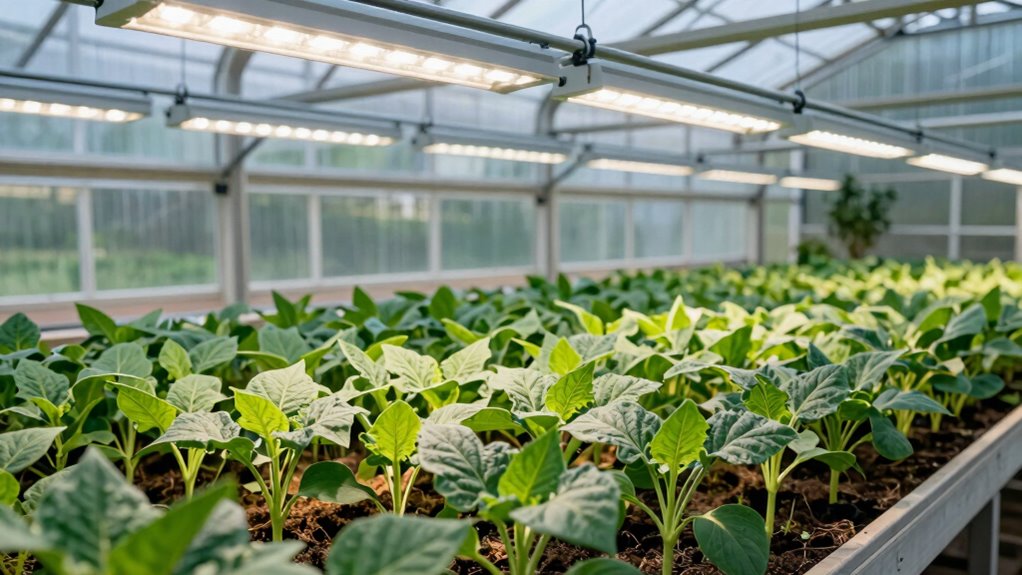
Natural sunlight is generally the best light source for plants, but it’s unpredictable and fluctuates with weather, seasons, and location. Grow lights fill this gap, providing a steady, adjustable light spectrum that promotes healthy development. You want a setup that mimics natural conditions as closely as possible, but also adapts to your specific environment. For example, if your greenhouse gets limited sunlight during certain times of the year, your grow lights should be capable of extending the daylight hours or providing the necessary light spectrum for flowering and vegetative growth.
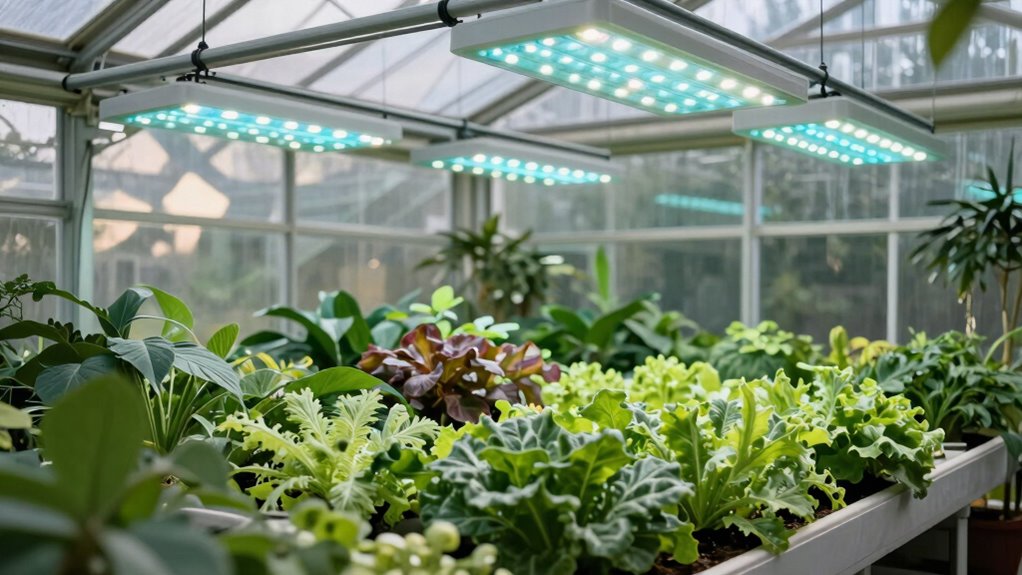
Grow lights mimic natural sunlight, extending daylight and supporting healthy plant development year-round.
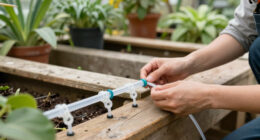
Equally important is how your watering systems integrate with your grow light setup. Plants under artificial lights often need more precise watering schedules because the light can influence their transpiration rates. Overwatering or underwatering can stunt growth or cause disease, so your watering systems should be smart and adaptable. Automated drip systems or moisture sensors can help maintain consistent soil moisture levels, ensuring your plants aren’t stressed by irregular watering. When combined with a reliable grow light setup, these watering systems create a controlled environment that maximizes plant health. Environmental controls like temperature and humidity management further enhance this balance, ensuring optimal conditions for plant development. Implementing climate control systems can further streamline this process and reduce manual effort.
To make the most of your grow light setup, consider how the light interacts with your watering systems. For example, some grow lights emit heat that can dry out soil faster, requiring adjustments in watering frequency. Conversely, if your grow lights are low-heat LEDs, you might need to water more often to compensate for the reduced evaporation. Your goal should be to create a balanced environment where light and water work together seamlessly, minimizing stress and encouraging vigorous growth. Light spectrum control and other environmental adjustments can further optimize plant development. This integrated approach allows you to control your environment precisely, leading to healthier, more productive plants. Incorporating environmental sensors can help monitor and fine-tune these conditions automatically, making the setup more efficient and less labor-intensive.
full spectrum LED grow lights for greenhouse
As an affiliate, we earn on qualifying purchases.
As an affiliate, we earn on qualifying purchases.
Frequently Asked Questions
How Do I Determine the Right Light Intensity for My Greenhouse?
To determine the right light intensity, observe your plants’ plant height and leaf color. If plants are stretching tall with pale leaves, they need more light. If leaves are dark green and compact, they’re getting enough. Adjust the grow light until plants maintain healthy height and vibrant leaf color. Regularly monitor and fine-tune to guarantee ideal growth, avoiding too much or too little light.
Can Grow Lights Replace Natural Sunlight Entirely?
Grow lights can’t fully replace natural sunlight because they lack the complete light spectrum that plants need for ideal growth. Sunlight activates plant photoreceptors essential for flowering and photosynthesis, which grow lights often imitate but rarely match entirely. While grow lights supplement sunlight effectively, especially indoors, relying solely on them isn’t advisable. A balanced approach, combining natural light with tailored grow lights, ensures your plants receive the full spectrum they need.
What Are the Energy Costs Associated With Different Grow Light Types?
You’ll find that LED grow lights are the most energy-efficient, offering lower energy costs compared to HID and fluorescent options. HID lights, while effective, consume more power and have higher operating costs. Fluorescent lights are less efficient but cheaper upfront. When considering cost comparison, LED grow lights save you money long-term through reduced energy consumption and longer lifespan, making them a smart choice for sustainable, cost-effective greenhouse lighting.
How Often Should I Adjust My Grow Light Settings During Plant Growth?
You should adjust your grow light settings regularly based on your plants’ growth stage. Keep the light duration appropriate—longer during vegetative growth and shorter during flowering. Also, monitor and modify light placement to prevent stretching or sunburn. As your plants grow, increase or decrease the intensity and duration accordingly. Consistently observing and fine-tuning these factors guarantees healthy development and maximizes yield.
Are There Specific Grow Lights for Different Plant Species?
Did you know different plant species respond best to specific light spectra? Yes, there are plant-specific grow lights designed to enhance growth for particular plants. For example, leafy greens thrive under blue light, while flowering plants need more red spectrum. Choosing the right light spectrum for each plant helps maximize health and yield. So, always consider your plant’s unique needs when selecting grow lights to guarantee ideal growth.
Conclusion
Remember, the best grow light setup hinges on what your greenhouse can’t do alone. Think of it like a trusty steed, much like the noble horses of yore—lifting your plants’ potential to new heights. Don’t settle for a one-size-fits-all solution; tailor your lighting to your greenhouse’s unique needs. With the right setup, you’ll cultivate a thriving, lush oasis that even Romeo would envy. Keep evolving your approach—your garden’s future depends on it.
Fall yard work Picks
leaf blowers
As an affiliate, we earn on qualifying purchases.