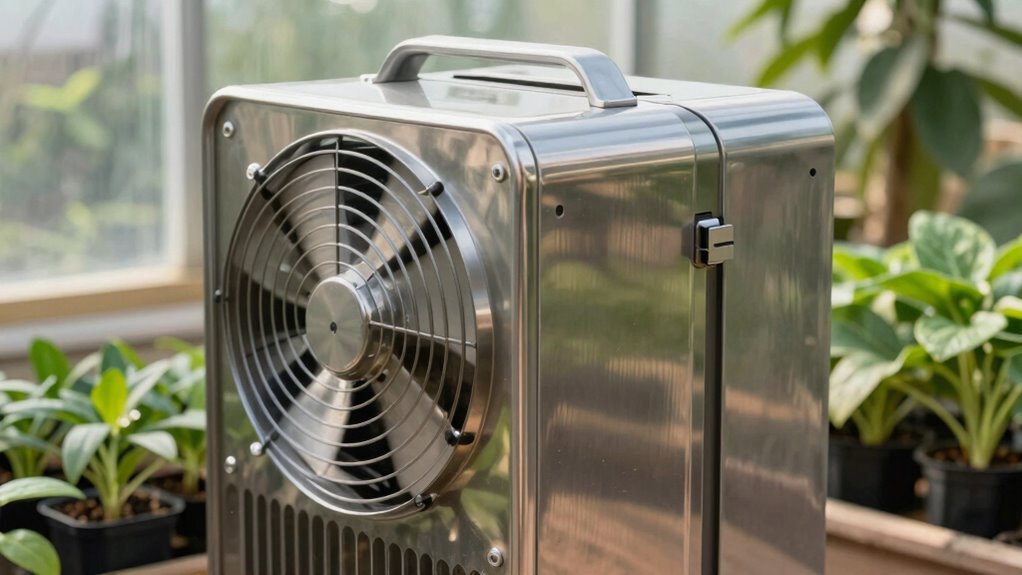

Pairing a heater with a fan helps you create a steady environment in your small greenhouse by evenly distributing warmth and controlling humidity. The heater provides consistent warmth during cold days, while the fan circulates air to prevent hot or cold spots and reduce excess moisture. This combination guarantees your plants stay healthy and protected from temperature swings. Keep exploring to discover how integrating solar power and automation can make this system even more efficient.

Get garden gear delivered free with Prime
- Fast, free delivery on millions of items
- Prime Video, Amazon Music and more included
- Member-only deals all year
Key Takeaways
- Pairing heaters and fans ensures even heat distribution, preventing hot or cold spots in small greenhouses.
- The combination maintains consistent temperature and humidity levels, reducing plant stress and promoting healthy growth.
- Fans improve moisture control by dispersing humid air, reducing mold and mildew risks.
- Solar integration with this pairing enhances energy efficiency and reduces operational costs.
- Automated climate controls optimize heater and fan operation for a stable, predictable environment.
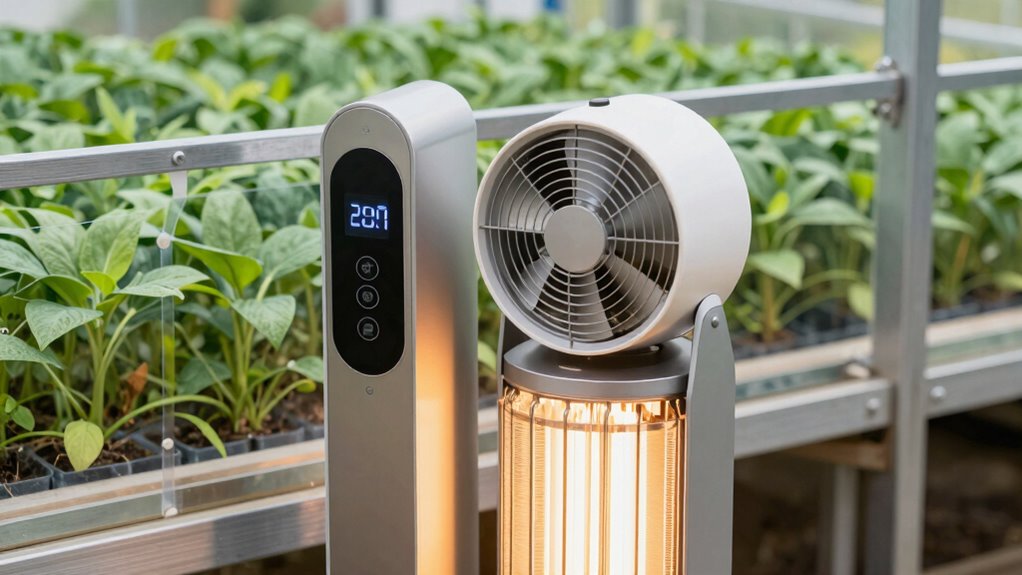
Have you ever wondered how to maintain ideal temperature and humidity levels in your greenhouse? If you’re growing plants in a small space, you know that temperature swings and moisture issues can quickly hinder your plants’ health. The key lies in pairing a good heater with an effective fan. This combination creates a stable environment, giving your plants the best chance to thrive. When you choose the right heater-and-fan pairing, you’re not just addressing temperature; you’re also improving moisture control and supporting solar integration, which can further optimize your greenhouse’s climate.
Pairing a heater with a fan stabilizes temperature, improves moisture control, and enhances solar efficiency for healthier greenhouse plants.
A reliable heater provides consistent warmth during chilly days and nights, preventing cold stress that can stunt plant growth. But without proper airflow, heat can become uneven, creating hot spots or cold corners. That’s where a well-placed fan makes a difference. It circulates warm air evenly around your greenhouse, ensuring every plant benefits from stable temperatures. This active circulation also helps in moisture control by reducing excess humidity, which can lead to mold or mildew. Proper airflow prevents condensation buildup on leaves and surfaces, promoting healthier plants and reducing disease risk.
Integrating a fan with your heater isn’t just about temperature; it’s also about how your greenhouse interacts with sunlight. Solar integration plays a crucial role here. By optimizing airflow and heat distribution, you make better use of the sunlight hitting your greenhouse during the day. When the sun warms your space naturally, your heater doesn’t have to work as hard, saving energy and reducing costs. Plus, the fan can help distribute that natural heat efficiently, maintaining a steady environment even when the sun fades. This synergy between solar energy and climate control ensures your greenhouse remains more energy-efficient and environmentally friendly.
You’ll find that controlling moisture is just as important as managing temperature. Excess moisture can create a humid environment that encourages pests and diseases. A good pairing of heater and fan helps regulate humidity levels, especially during rainy or humid days. The fan disperses moist air, preventing damp spots and promoting a balanced atmosphere. This moisture control is essential for delicate seedlings and plants that require consistent humidity levels to grow properly. Additionally, using climate control devices can further enhance the stability of your greenhouse environment. Incorporating smart thermostats can also help maintain precise temperature settings and reduce manual adjustments. Moreover, choosing the right equipment with energy-efficient features can significantly reduce your operational costs over time. Implementing automatic ventilation systems can further improve airflow management and environmental stability.
In essence, a smart heater-and-fan pairing stabilizes your small greenhouse’s environment by balancing temperature, moisture, and solar input. It’s about creating a climate that adapts to changing weather while maximizing energy efficiency. When you harness the right combination, your plants will grow healthier, your energy costs will decrease, and you’ll enjoy a more predictable, productive gardening experience.
small greenhouse heater and fan combo
As an affiliate, we earn on qualifying purchases.
As an affiliate, we earn on qualifying purchases.
Frequently Asked Questions
How Does the Heater-And-Fan System Impact Greenhouse Energy Efficiency?
You’ll see improved energy savings with a heater-and-fan system because it enhances thermal regulation. The fan distributes warm air evenly, reducing hot and cold spots, so your heater doesn’t need to work as hard. This efficient pairing maintains a stable temperature, lowering energy consumption. By optimizing climate control, you get better greenhouse conditions while using less power, making your setup more sustainable and cost-effective.
What Maintenance Is Required for the Heater and Fan Components?
You should regularly check your heater and fan for proper functioning to guarantee ventilation optimization. Clean dust and debris from the fan blades and vents to maintain airflow, and verify heater calibration to keep temperature levels accurate. Schedule seasonal inspections, and replace filters or worn parts as needed. Proper maintenance extends equipment life, enhances energy efficiency, and keeps your greenhouse environment stable and healthy for your plants.
Can This Pairing Be Used in All Climate Types?
You might think this pairing suits every climate, but surprise—it’s not foolproof everywhere. Climate adaptability varies, so in extreme cold or heat, you’ll need additional solutions. While the setup is cost-effective in moderate zones, in harsher environments, costs can rise with extra equipment. So, yes, it works broadly, but be prepared for adjustments and extra expenses if you want a truly stable greenhouse year-round.
How Does the System Affect Humidity Control Inside the Greenhouse?
This system improves humidity regulation by promoting even heat distribution and air circulation, helping you maintain a consistent moisture balance inside your greenhouse. The fan’s airflow reduces excess humidity that could lead to mold, while the heater prevents overly dry conditions. As a result, you gain better control over environmental conditions, making it easier to keep plants healthy and thriving regardless of outside weather fluctuations.
Are There Specific Brands or Models Recommended for This Setup?
Think of your greenhouse like a finely tuned orchestra—each part must work harmoniously. For this setup, I recommend brands like Vornado or Honeywell, known for compatibility and reliability. Look for models like the Vornado AVH10 or Honeywell True HEPA, which offer precise temperature control and easy integration with heaters and fans. Always check model recommendations to guarantee compatibility and peak performance for your small greenhouse.
Conclusion
By embracing the gentle dance of heater and fan, you create a more harmonious environment for your greenhouse. This subtle partnership helps maintain stability, ensuring your plants flourish quietly and steadily. With this thoughtful approach, you’re nurturing not just your crops, but a sense of calm that fosters growth and resilience. In tending to this delicate balance, you’re quietly cultivating a sanctuary where nature’s potential can unfold with grace and assurance.
Halloween Picks
halloween
As an affiliate, we earn on qualifying purchases.