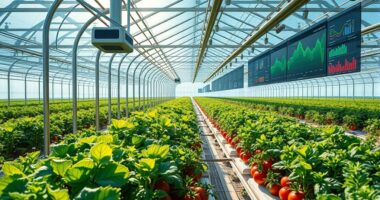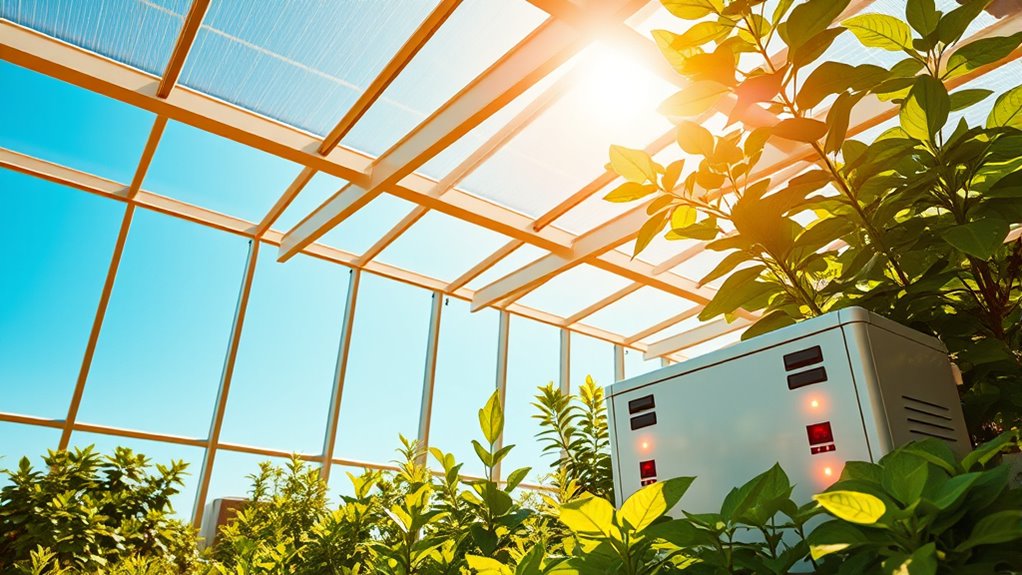

By integrating renewable energy storage with your greenhouse, you can maximize energy efficiency, maintain stable climate conditions, and lower operational costs. High-efficiency solar panels capture more sunlight, while thermal regulation and storage solutions guarantee consistent temperature control even during cloudy days or at night. Combining these systems reduces reliance on external power, boosts crop yields, and promotes sustainability. To discover how to optimize this integration for your greenhouse, continue exploring the key strategies and benefits.
Key Takeaways
- Combining solar panels with thermal and electrical storage ensures a reliable energy supply for greenhouse climate control.
- Energy storage buffers solar energy, enabling consistent temperature regulation during cloudy days or nighttime.
- Optimizing solar panel efficiency reduces energy demands on thermal regulation systems, increasing overall sustainability.
- Integrating storage solutions minimizes operational costs and enhances resilience against energy supply fluctuations.
- Proper system design promotes eco-friendly practices and enhances crop growth by maintaining stable environmental conditions.
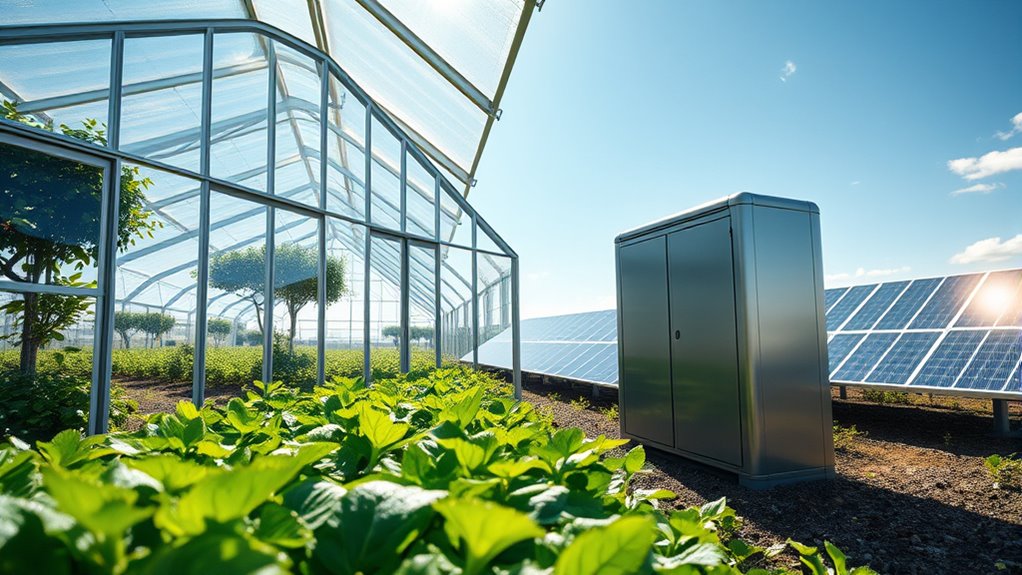
Have you ever wondered how greenhouses can operate sustainably while managing their energy needs? The answer often lies in integrating renewable energy storage systems that maximize efficiency and guarantee consistent climate control. Solar panels play a vital role here, and their efficiency is a key factor in maximizing energy production. When you choose high-efficiency solar panels, you capture more sunlight and generate greater amounts of electricity, which can then be stored for later use. This reduces reliance on external power sources and makes your greenhouse more eco-friendly. But capturing sunlight isn’t enough; managing how that energy is used indoors is equally important. That’s where thermal regulation comes into play. Proper thermal regulation helps maintain ideal temperatures inside the greenhouse, regardless of weather fluctuations, and it’s closely tied to how efficiently your energy is stored and utilized.
By combining efficient solar panels with smart thermal regulation systems, you can create a balanced environment that supports plant growth year-round. For instance, excess solar energy collected during sunny days can be stored in batteries or thermal storage units. These stored resources can then be tapped into during cloudy days or at night, ensuring your greenhouse stays within ideal temperature ranges without wasting energy. This synergy between solar panel efficiency and thermal regulation not only enhances sustainability but also reduces operational costs over time. When your solar panels are working at their best, they produce more energy, which means your thermal regulation systems don’t have to work as hard to heat or cool the space. You can also incorporate passive thermal regulation techniques, such as insulation or shading, to further reduce energy consumption and improve overall efficiency. Additionally, optimizing solar panel placement can significantly boost energy capture, further enhancing the system’s overall performance.
Moreover, modern energy storage solutions, like thermal batteries or advanced batteries, enable you to store surplus energy safely and reliably. This stored energy becomes a buffer, smoothing out supply and demand and preventing energy shortages during periods of low sunlight. As a result, you can maintain consistent growth conditions, avoid plant stress, and optimize crop yields. Integrating these systems requires careful planning, but the benefits are significant: you lower your greenhouse’s carbon footprint, reduce reliance on grid power, and create a more resilient operation. When you prioritize solar panel efficiency and thermal regulation, you’re not just making your greenhouse more sustainable—you’re setting a standard for innovative, eco-conscious agriculture. It’s a smart, effective way to harness renewable energy, improve climate control, and support healthy plant growth all year long.
Frequently Asked Questions
What Are the Cost Implications of Integrating Storage Systems?
Integrating storage systems increases upfront costs, but energy policies and market incentives can help mitigate these expenses. You might face higher capital investments initially, but incentives like tax credits or grants can reduce your financial burden. Over time, you save on energy costs and improve efficiency, making the investment worthwhile. Keep an eye on evolving policies and incentives to maximize benefits and ensure your greenhouse remains cost-effective.
How Does Storage Impact Greenhouse Climate Control?
Storage acts like a silent guardian for your greenhouse, stabilizing climate control and ensuring thermal efficiency. It smooths out energy fluctuations, so your plants stay cozy or cool as needed. By boosting energy reliability, storage helps maintain ideal conditions, even during cloudy days or at night. This seamless support allows you to focus on growth, knowing your climate control system is steady, efficient, and ready to meet your greenhouse’s needs.
What Maintenance Is Required for Renewable Energy Storage?
You need to regularly check your renewable energy storage system to guarantee ideal performance. Keep an eye on battery lifespan, as batteries typically need replacement or maintenance after several years. System monitoring helps detect issues early, like capacity loss or faults. Clean connections and vents periodically, and update software if applicable. Proper maintenance maximizes lifespan, efficiency, and safety, ensuring your greenhouse stays powered reliably and sustainably.
Are There Specific Storage Technologies Best Suited for Greenhouses?
You should consider thermal regulation and pest control when choosing storage technologies for your greenhouse. Lithium-ion batteries are excellent for energy storage, providing quick power and durability, which supports climate control systems. Thermal storage options, like phase change materials, help maintain ideal temperatures, reducing pests and disease risks. These technologies ensure your greenhouse stays efficient, healthy, and productive while integrating renewable energy seamlessly.
How Scalable Are Storage Solutions for Different Greenhouse Sizes?
While storage solutions face scalability challenges, they’re surprisingly adaptable for greenhouses of all sizes. Smaller greenhouses benefit from compact, modular systems that are easy to install, while larger operations require customized storage options to meet higher energy demands. This flexibility guarantees that, regardless of your greenhouse’s size, you can find scalable solutions tailored to your needs, helping you optimize energy use and efficiency without sacrificing growth potential.
Conclusion
By integrating renewable energy storage with greenhouses, you harness sustainable power, improve efficiency, and reduce costs. You embrace innovation, enhance productivity, and promote environmental stewardship. You create a resilient system, support your goals, and lead the way toward a greener future. With this integration, you not only cultivate plants but also cultivate hope, progress, and responsibility. Together, you turn renewable energy storage into an essential part of sustainable greenhouse success.