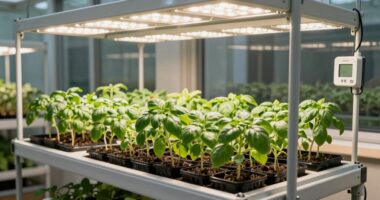
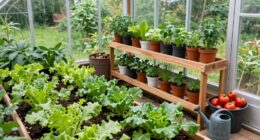
Vertical growing helps you maximize space in greenhouses by stacking plants and using hydroponic systems, allowing you to grow more in a limited area. It’s ideal for small or crowded spaces, promoting faster growth and reducing soil-borne pests. Vertical setups also improve airflow and make pest management easier, leading to healthier plants and better yields. Keep exploring to uncover how these techniques can transform your greenhouse into a highly efficient garden.

Get garden gear delivered free with Prime
- Fast, free delivery on millions of items
- Prime Video, Amazon Music and more included
- Member-only deals all year
Key Takeaways
- Vertical growing maximizes planting area without expanding the greenhouse footprint.
- Hydroponic systems support dense, soil-less cultivation suited for vertical setups.
- Vertical gardens facilitate easier maintenance, pest inspection, and harvesting.
- They improve airflow and reduce humidity, lowering mold and pest risks.
- Overall, vertical systems enhance productivity and sustainability in limited greenhouse space.
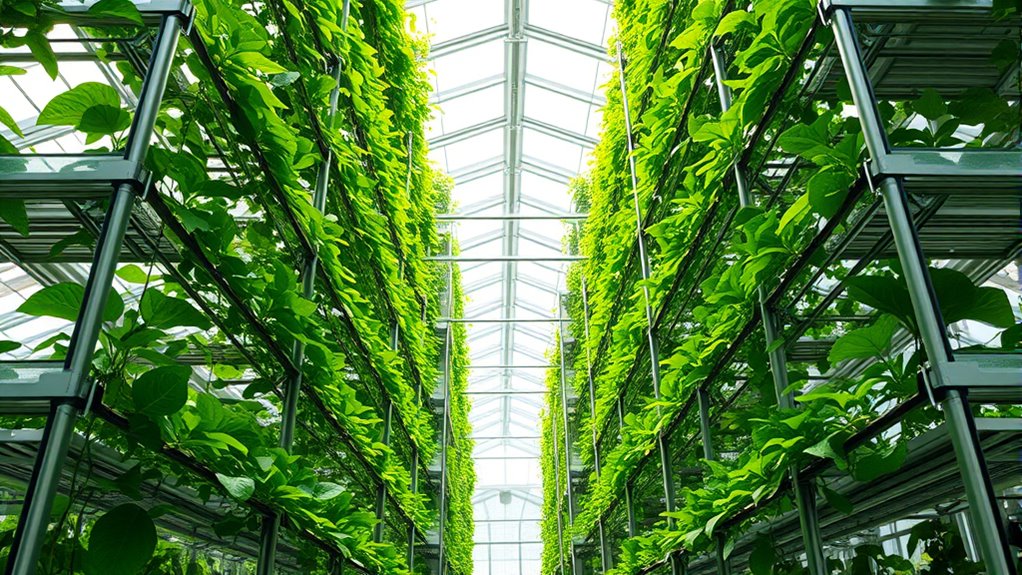
Have you ever wondered how to maximize limited space for growing plants? If you’re working within a greenhouse, vertical growing offers an innovative solution. By building upward instead of outward, you can dramatically increase your planting area without expanding your footprint. Vertical systems are ideal for small or crowded spaces, allowing you to grow a diverse range of plants efficiently. One of the most effective methods involves hydroponic systems, which deliver nutrients directly to plant roots through water-based solutions. These systems are perfect for vertical setups because they can be easily integrated into stacked or wall-mounted configurations, saving space while promoting rapid growth. Plus, hydroponic systems tend to reduce issues with soil-borne pests and diseases, simplifying pest management. With fewer soil pathogens lurking around, you’ve got fewer worries about pest infestations, and managing pests becomes more straightforward compared to traditional soil-based gardening.
As you set up your vertical garden, consider the design of your hydroponic systems carefully. You might opt for vertical towers, wall-mounted panels, or even hanging baskets that can be easily rotated or replaced. These setups not only optimize space but also make maintenance and harvesting more accessible. When plants are grown vertically, airflow improves, reducing humidity levels that often foster mold and pests. This natural airflow further assists in pest management by creating an environment less hospitable to common pests like aphids or spider mites. Additionally, because nutrients are delivered directly to roots in hydroponic systems, you can closely monitor and adjust feeding schedules, ensuring healthy plant development and minimizing stress that can attract pests.
Furthermore, vertical growing allows you to implement targeted pest management strategies. You can inspect plants more easily, quickly identifying early signs of pest issues before they spread. Using integrated pest management (IPM) techniques, you can apply biological controls or organic treatments precisely where needed, reducing chemical use and protecting your plants’ health. The compact nature of vertical systems also makes it easier to contain and prevent pest outbreaks, saving you time and resources. As you become more familiar with your setup, you’ll find that maintaining pest-free plants is more manageable and less labor-intensive than traditional methods.
In short, by leveraging hydroponic systems within a vertical growing framework, you maximize your greenhouse space effectively. You create a controlled environment that promotes healthy growth, simplifies pest management, and boosts overall productivity. Vertical growing isn’t just about saving space; it’s about cultivating smarter, more sustainable gardening practices that make the most of every inch. Additionally, incorporating tuning techniques can enhance your setup’s efficiency and plant health, ensuring optimal results over time.
vertical hydroponic garden system
As an affiliate, we earn on qualifying purchases.
As an affiliate, we earn on qualifying purchases.
Frequently Asked Questions
What Are the Best Plants for Vertical Greenhouse Gardening?
When choosing plants for vertical greenhouse gardening, focus on those that thrive in confined spaces and grow upwards. Your plant selection should prioritize space optimization, so consider vining plants like tomatoes, cucumbers, and peas, which naturally climb. Leafy greens such as lettuce and herbs also work well. These plants not only maximize your vertical space but also guarantee healthy growth, making your greenhouse more productive and efficient.
How Do I Prevent Pests in Vertical Growing Systems?
To prevent pests in your vertical growing system, start by selecting pest-resistant plants that naturally deter pests. Incorporate beneficial insect integration by introducing ladybugs or predatory mites to control pest populations organically. Keep your system clean, regularly inspect plants, and remove any affected foliage promptly. Using organic neem oil or insecticidal soap also helps. Combining these strategies creates a healthy environment, reducing pests and promoting robust growth.
What Lighting Is Optimal for Vertical Plant Growth?
For ideal vertical plant growth, you should use LED lighting with a full light spectrum. LED lights are energy-efficient, provide targeted wavelengths, and promote healthy growth at various stages. make certain your lights deliver the right spectrum—blue for vegetative growth and red for flowering. Position the LEDs close enough to the plants to maximize light absorption, but avoid burning. This setup encourages strong, uniform growth in your vertical system.
How Do I Maintain Proper Watering in Vertical Setups?
Did you know that proper watering can boost plant growth by up to 30%? To maintain the right moisture levels in your vertical setup, use drip irrigation for precise water delivery. Pair it with moisture sensors to monitor soil conditions continuously. This combo guarantees your plants get consistent hydration without overwatering, helping you optimize space and maximize yields efficiently. Stay attentive, and your plants will thrive!
Can Vertical Growing Methods Be Adapted for Outdoor Greenhouses?
You can definitely adapt vertical growing methods for outdoor greenhouses, especially for urban agriculture projects. By using outdoor installations, you maximize space and improve yields. Vertical setups work well outside, but you’ll need to contemplate weather conditions and protect your plants from extreme elements. With proper planning, you can create an efficient, space-saving system that boosts productivity and makes urban farming more accessible outside traditional greenhouses.
Conclusion
As you embrace vertical growing, you’re opening new possibilities for your greenhouse. But remember, every height you add brings unseen challenges—and rewards. Will you master the art of maximizing space, or let hidden obstacles hold you back? The future of your green oasis depends on what you choose next. Keep pushing upward, because the true potential of your greenhouse is only just beginning to reveal itself—if you’re willing to reach for it.
Fall yard work Picks
leaf blowers
As an affiliate, we earn on qualifying purchases.