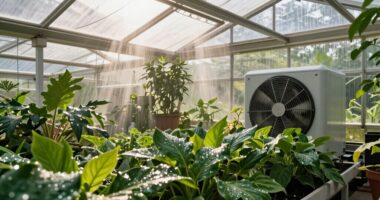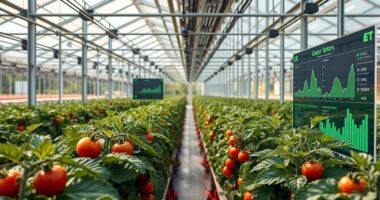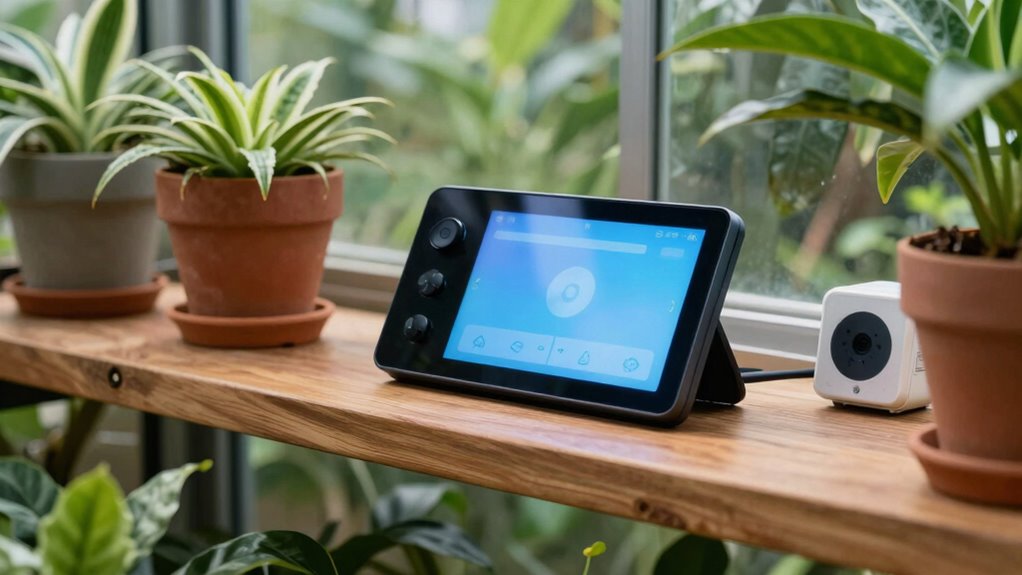

To create an automated greenhouse with a smart controller, you’ll need a microcontroller like Raspberry Pi or Arduino, sensors for temperature, humidity, and soil moisture, along with actuators such as fans, vents, and grow lights. These components work together to monitor conditions continuously and adjust climate, lighting, and watering automatically. Regular calibration and maintenance guarantee accuracy and reliability. If you keep exploring, you’ll discover how to optimize and troubleshoot your system for the best results.

Get garden gear delivered free with Prime
- Fast, free delivery on millions of items
- Prime Video, Amazon Music and more included
- Member-only deals all year
Key Takeaways
- Integrate microcontrollers like Raspberry Pi or Arduino to manage sensors, actuators, and environmental controls seamlessly.
- Use real-time data from calibrated sensors to automatically adjust temperature, humidity, lighting, and ventilation.
- Automate watering, lighting, and pest management systems based on sensor feedback for consistent optimal conditions.
- Enable remote monitoring and alerts through cloud platforms for continuous oversight and quick troubleshooting.
- Incorporate energy-efficient components and AI analytics for adaptive, sustainable, and highly responsive greenhouse automation.
Raspberry Pi greenhouse automation kit
As an affiliate, we earn on qualifying purchases.
As an affiliate, we earn on qualifying purchases.
Why Automate Your Greenhouse? Benefits and Opportunities
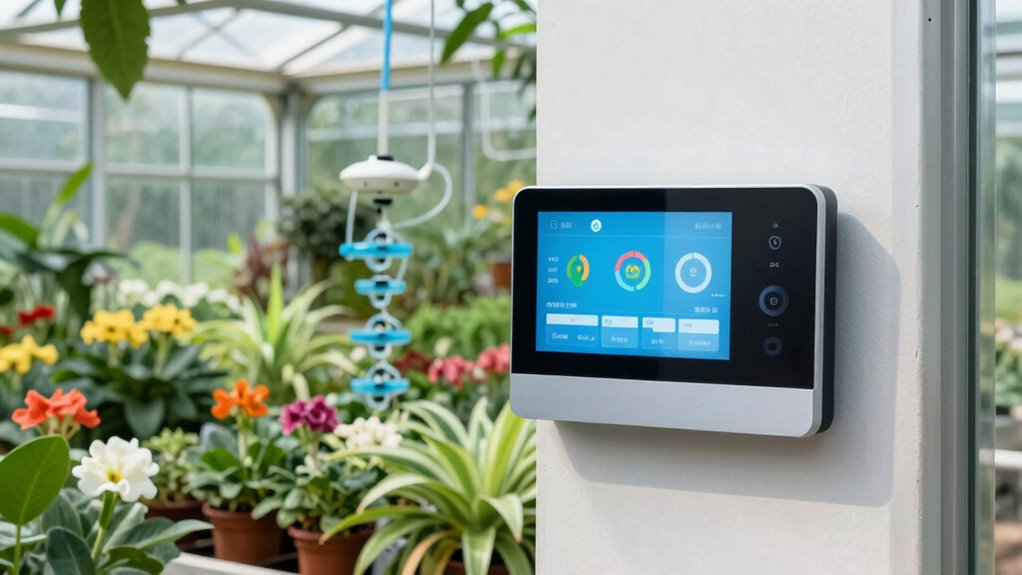
Automating your greenhouse offers numerous advantages that can considerably improve your gardening success. With automation, you can better manage crop rotation, ensuring plants grow in *best* conditions and reducing soil depletion. Automated systems help you plan and execute crop changes efficiently, leading to healthier plants and higher yields. Pest management becomes more effective too; sensors and timers can detect pest activity early and trigger targeted interventions, minimizing damage. Automation reduces manual labor and human error, making your greenhouse more sustainable and productive. It also enables environmental control to be maintained consistently, helping you maintain ideal temperature, humidity, and light levels. Incorporating climate management systems can further optimize conditions and adapt to changing weather patterns. Furthermore, automation allows for data-driven decisions which can improve overall plant health and productivity. Additionally, automation can provide real-time data that allows for better decision-making and resource efficiency, ultimately saving time and resources. Overall, automation creates a smarter, more resilient greenhouse, giving you better control over your crops and a greater chance of success.
Essential Hardware for Your Smart Greenhouse System
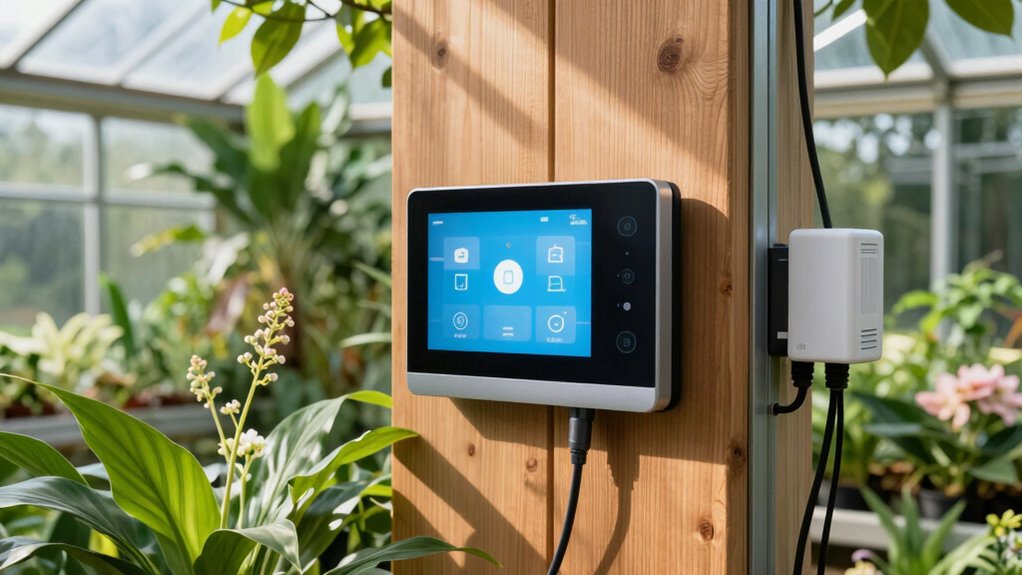
To build an effective smart greenhouse system, you’ll need to gather essential hardware components that enable automation and environmental control. These components support plant propagation and pest management by maintaining ideal conditions. A reliable controller, such as a Raspberry Pi or Arduino, serves as the system’s brain. You’ll also need actuators like fans, vents, and grow lights, which respond to environmental needs. Additionally, automation tools for watering and misting help maintain humidity levels. Here’s a quick overview:
| Hardware Component | Function | Benefit |
|---|---|---|
| Microcontroller | Control hub | Automates processes |
| Actuators | Ventilation, lighting | Regulates environment |
| Watering System | Irrigation | Supports propagation |
| Pest Management Devices | Repellents, traps | Reduces pests |
| Connectivity Modules | Data transfer | Ensures seamless operation |
An understanding of digital concepts can help optimize the system’s performance and integration. Developing a robust control system can further enhance reliability and responsiveness across all components. Incorporating sensor technology can provide real-time environmental data to fine-tune system responses. Gaining knowledge of network protocols is also beneficial for ensuring consistent data transfer and system stability. Moreover, familiarizing yourself with automated control algorithms can improve system efficiency and responsiveness.
How to Choose Sensors for Accurate Monitoring
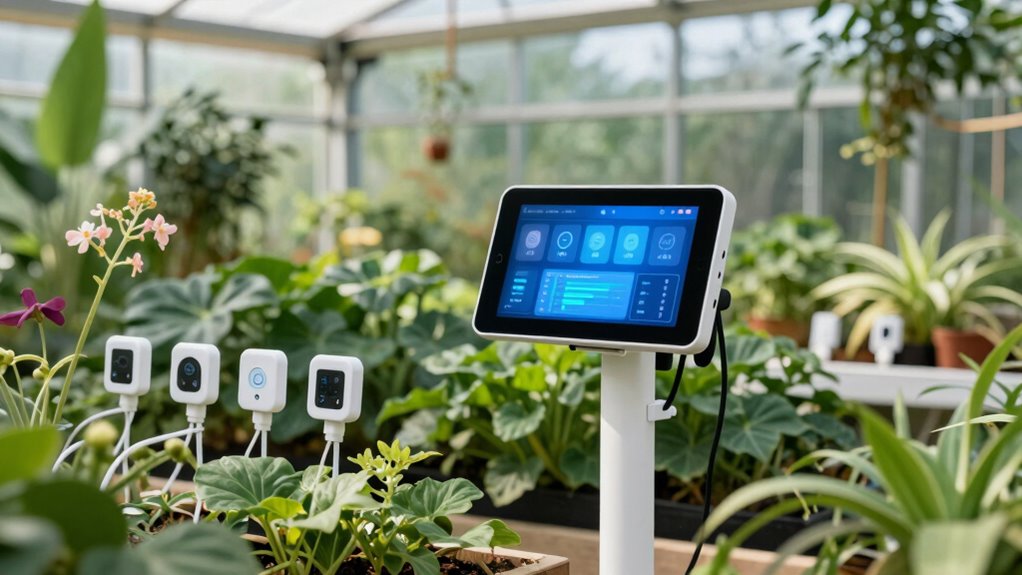
Selecting the right sensors is key to guaranteeing your smart greenhouse system accurately monitors environmental conditions. Focus on sensors with reliable sensor calibration to maintain data accuracy over time. Proper calibration ensures readings reflect real-world conditions, reducing errors that could affect your automation decisions. When choosing sensors, consider their precision, sensitivity, and durability in your specific environment. High-quality sensors provide consistent data, helping you make informed adjustments. Look for models with good reviews and proven performance in similar greenhouse setups. Remember, even the best sensors need periodic calibration to sustain data accuracy. Investing in well-calibrated, precise sensors assures your system responds correctly to changes, maintaining prime growing conditions and avoiding costly mistakes.
Setting Up Automated Climate Control Systems
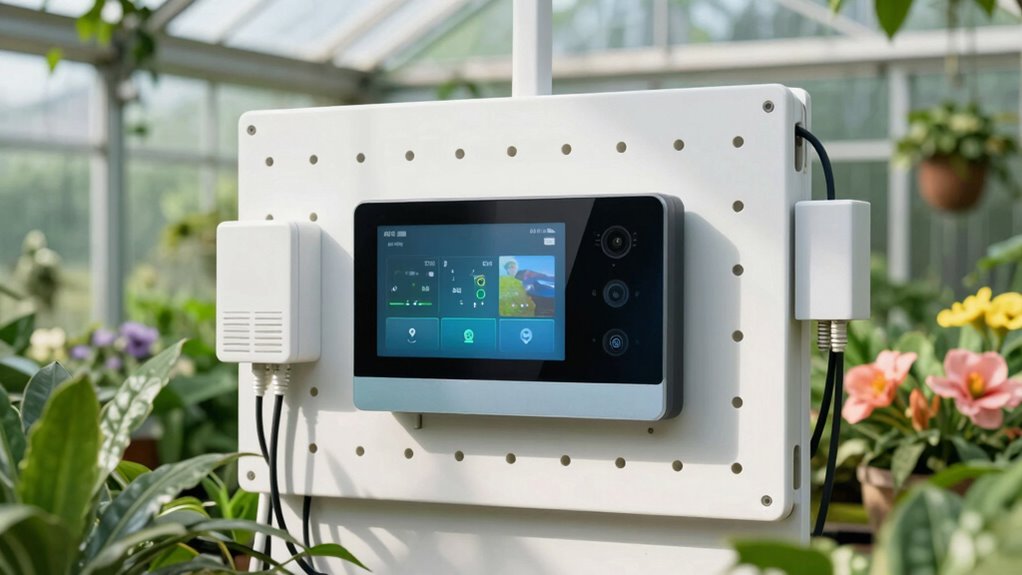
Have you ever wondered how to guarantee your greenhouse maintains the perfect climate automatically? Automated climate control systems adjust temperature, humidity, and airflow to support plant propagation and pest management. You’ll want sensors linked to a smart controller that reacts in real time. Use the following table to understand key climate parameters:
| Parameter | Ideal Range |
|---|---|
| Temperature | 70-80°F for propagation |
| Humidity | 50-70% for pest prevention |
| Airflow | Consistent circulation |
Maintaining proper indoor air quality is also essential for healthy plant growth and pest control. Ensuring proper ventilation is vital for regulating these conditions effectively. These settings ensure healthy plant growth while preventing pests. By automating climate adjustments, you reduce manual effort and create a stable environment that promotes healthy plants and minimizes pest issues. Proper setup is crucial for a truly smart greenhouse. Implementing automated climate control systems helps create cozy, wellness-focused spaces by maintaining optimal conditions effortlessly.
Integrating Lighting and Irrigation Seamlessly
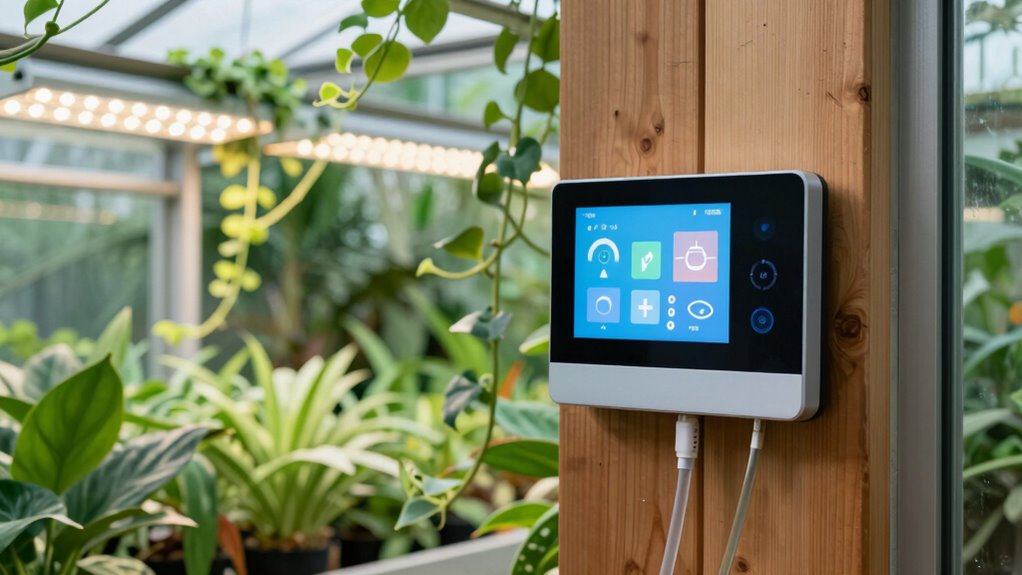
After setting up your automated climate control system, the next step is to guarantee your greenhouse’s lighting and irrigation work in harmony. Use LED lighting to provide consistent, energy-efficient illumination that can be scheduled or adjusted based on plant needs. Integrate water sensors into your irrigation system to monitor soil moisture levels in real-time. When sensors detect dryness, your controller can activate watering cycles automatically, ensuring plants receive the right amount of water without over- or under-watering. Syncing LED lighting with water sensors creates a seamless environment, optimizing growth conditions and saving energy and water. This integration allows your greenhouse to operate efficiently, giving plants the ideal light and moisture levels with minimal manual intervention. Additionally, incorporating support breakfast options can help keep your team energized during long setup days, ensuring everyone stays productive and focused.
To further enhance system efficiency, understanding the brine impact on your water quality and equipment longevity can help in maintaining optimal performance and reducing maintenance needs.
How to Program Your Greenhouse Controller for Optimal Growth
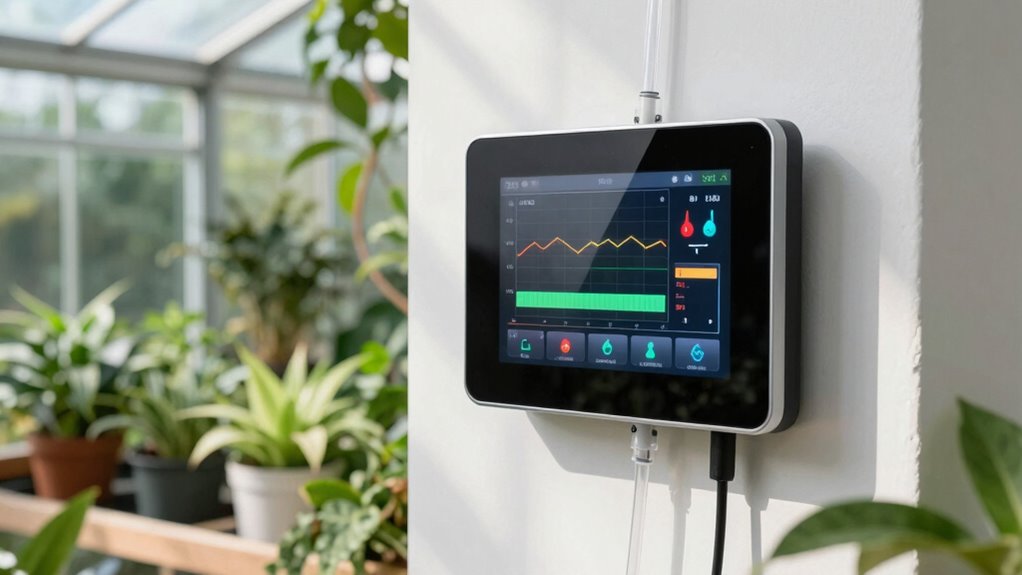
To program your greenhouse controller for ideal growth, you need to carefully set parameters that match your plants’ specific needs. Focus on key factors like temperature, humidity, and light cycles to optimize plant propagation and pest management. Start by:
- Adjusting temperature settings to promote healthy root development during propagation stages.
- Setting humidity levels that discourage pests while supporting plant growth.
- Programming light schedules that enhance photosynthesis and reduce stress.
- Incorporating water management strategies to ensure consistent moisture levels and prevent overwatering or drought stress. Using automated environmental controls can help maintain these conditions accurately and efficiently. Properly managing climate variables is essential for creating an optimal environment for various plant species. Understanding how to monitor environmental conditions allows for fine-tuning your settings and responding swiftly to changes. Additionally, understanding how sensor calibration impacts data accuracy can improve overall environmental management.
Monitoring these parameters ensures your plants thrive and pests stay at bay. Fine-tuning the controller helps create an environment tailored to your crops’ lifecycle, maximizing yields and minimizing issues. Proper programming not only accelerates plant propagation but also simplifies pest management, keeping your greenhouse productive and healthy.
Troubleshooting Common Smart Controller Problems
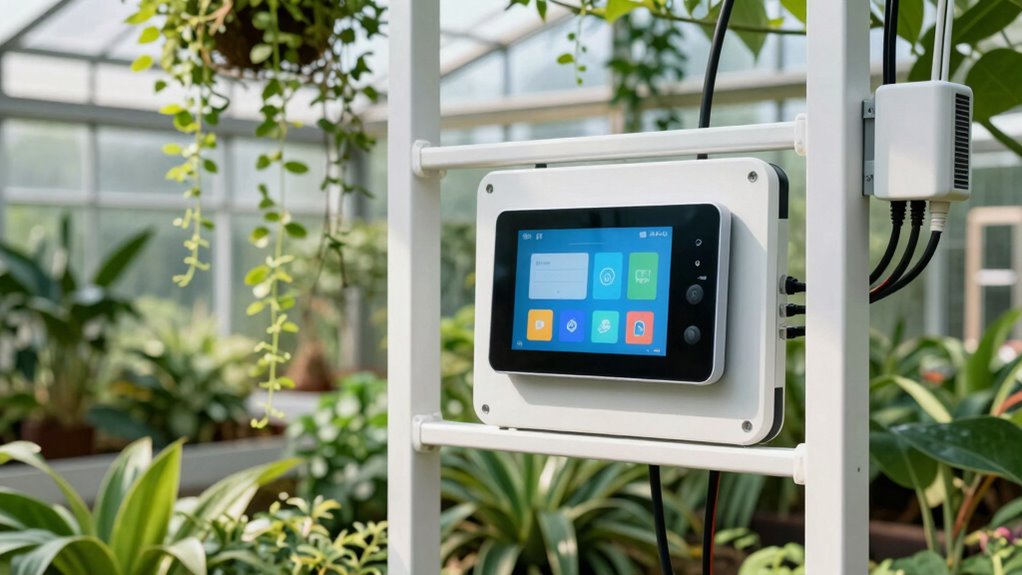
Even with careful programming, smart controllers can encounter issues that disrupt ideal greenhouse conditions. Common problems include sensor inaccuracies or power management failures. To troubleshoot, start with sensor calibration—verify sensors are clean and calibrated regularly for accurate readings. Power issues can cause controller malfunctions; check connections and backup power sources. Use this table to identify problems quickly:
| Issue | Solution | Prevention |
|---|---|---|
| Inaccurate sensor readings | Recalibrate sensors; clean regularly | Schedule routine calibration |
| Power interruptions | Inspect wiring; ensure stable power supply | Use backup power systems |
| Controller resets or errors | Check firmware updates; reset device | Regular software updates |
Addressing these areas keeps your greenhouse running smoothly. It’s also helpful to understand the importance of sensor reliability and how it impacts overall system performance. Regular maintenance and understanding system diagnostics can further enhance your troubleshooting effectiveness. Additionally, understanding arcade game history can inspire creative solutions in system design and troubleshooting, especially when considering system resilience.
How to Enable Remote Monitoring and Alerts
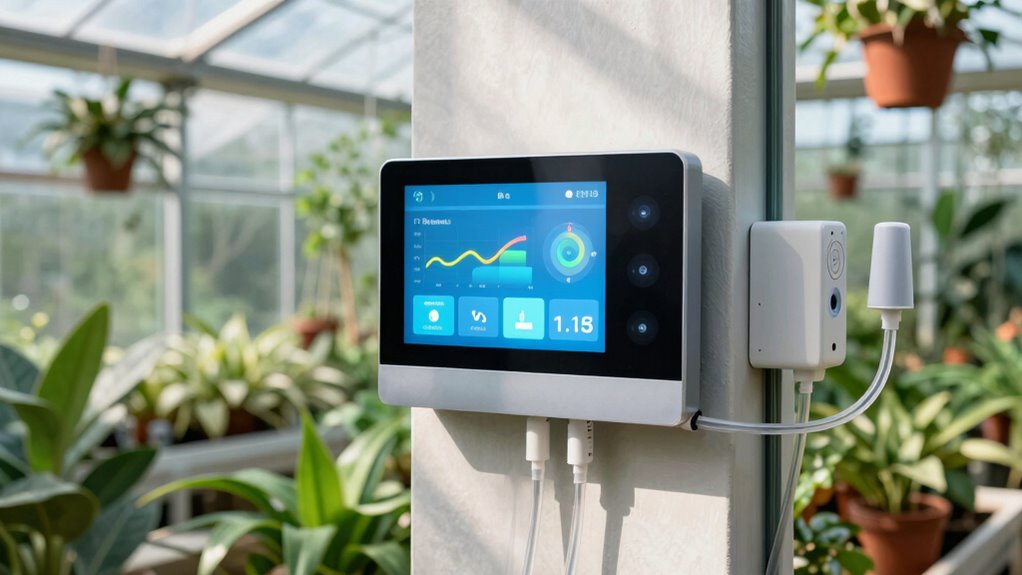
Enabling remote monitoring and alerts allows you to stay connected to your greenhouse conditions from anywhere, ensuring you can respond quickly to any issues. You can set up notifications for temperature fluctuations, humidity changes, or system malfunctions. To enhance your oversight, consider these steps:
- Use drone surveillance to visually inspect your greenhouse for pest detection or structural issues.
- Connect your smart controller to a cloud platform for real-time data and alerts.
- Implement sensors that send automatic notifications if pest activity is detected or environmental parameters fall outside *ideal* ranges.
- Ensure your power storage and backup systems meet extension cord standards to maintain reliable operation even during power interruptions.
These tools help you maintain *perfect* conditions, catch pest issues early, and quickly address concerns, making your greenhouse truly feel automated and under control.
The Benefits of Fully Automated Greenhouse Environments

With remote monitoring and alerts in place, your greenhouse can operate with minimal hands-on intervention, paving the way for a fully automated environment. This setup helps you respond quickly to issues like plant disease or pest management challenges before they escalate. Automated systems can adjust climate controls, watering schedules, and ventilation to optimize plant health and growth conditions. By continuously monitoring environmental factors, you reduce the risk of disease spread and pest outbreaks. You also gain peace of mind, knowing that potential problems are flagged early. Overall, a fully automated greenhouse enhances efficiency, reduces labor, and improves crop consistency. It allows you to focus more on strategic decisions and less on daily manual tasks, making your greenhouse more productive and resilient.
Future Trends in Greenhouse Automation Technology
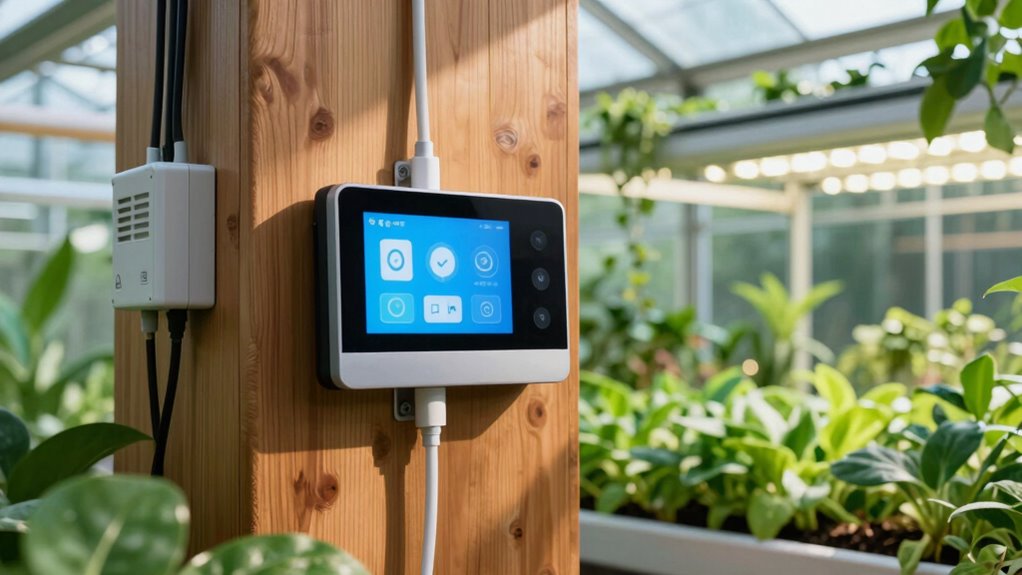
As technology continues to advance, greenhouse automation is poised to become more intelligent and interconnected, revolutionizing how you manage indoor environments. Future trends include:
- Integrating vertical farming systems, allowing you to maximize space and grow more crops efficiently.
- Using renewable energy sources, like solar panels, to power sensors and actuators sustainably.
- Employing AI-driven analytics to optimize climate control, watering schedules, and nutrient delivery in real-time.
These innovations will make your greenhouse smarter and more eco-friendly. Automation will adapt to changing conditions swiftly, reducing energy consumption and resource waste. As connectivity improves, you’ll manage your setup remotely with greater precision. The combination of vertical farming and renewable energy will help you create a more sustainable, productive, and resilient greenhouse environment.
Frequently Asked Questions
What Safety Features Should I Include in My Smart Greenhouse Setup?
You should include safety features like automatic shutoff systems for heating and watering to prevent accidents. Install sensors to monitor plant health, alerting you to issues early, and integrate pest control systems to automatically activate when pests are detected. Make certain your setup has backup power and proper ventilation to avoid overheating or power failures. These features help protect plant health, prevent damage, and keep your greenhouse safe and efficient.
How Energy-Efficient Are Automated Greenhouse Systems?
Automated greenhouse systems act like a finely tuned orchestra, harmonizing climate control for maximum energy efficiency. You’ll find they’re remarkably energy-efficient, reducing waste through precise regulation of heating, cooling, and ventilation. These systems adapt to weather changes, maximizing energy savings and minimizing costs. By continuously monitoring and adjusting, you, as a gardener, enjoy a stable environment, conserving energy while nurturing your plants with the gentle touch of technological mastery.
Can I Upgrade or Expand My Existing Greenhouse Automation?
Yes, you can upgrade or expand your existing greenhouse automation. You might add new features like plant watering systems to guarantee your plants stay hydrated and ventilation control to optimize airflow and temperature. Many smart controllers support integration with additional devices, making it easy to enhance your setup. Just check compatibility and follow manufacturer instructions to seamlessly upgrade, giving you more control and better growth conditions in your greenhouse.
What Are the Best Practices for Data Security in Smart Systems?
You should prioritize implementing strong cybersecurity protocols, like regular updates and strong passwords, to protect your smart system. Use data encryption to secure sensitive information transmitted between devices. Keep your firmware current and limit access to authorized users. Regularly monitor your network for unusual activity, and consider using VPNs for added security. These practices help guarantee your greenhouse automation remains safe from cyber threats and data breaches.
How Do I Ensure System Reliability During Power Outages?
To guarantee system reliability during power outages, you should install a battery backup to keep your smart controller running smoothly. Additionally, use surge protection devices to prevent damage from voltage spikes. Regularly test your backup system, and consider an uninterruptible power supply (UPS) for critical components. These steps help maintain automation, protect your equipment, and keep your greenhouse functioning seamlessly even when the power goes out.
Conclusion
By automating your greenhouse with a smart controller, you create a thriving environment with minimal effort. Imagine a hobbyist who set up sensors and climate controls—they now enjoy healthy plants year-round without daily manual adjustments. Whether you’re growing vegetables or exotic flowers, automation saves time and boosts productivity. Embrace these technologies, stay ahead of trends, and watch your greenhouse flourish effortlessly, just like a well-orchestrated symphony of nature and innovation.
Halloween Picks
halloween
As an affiliate, we earn on qualifying purchases.