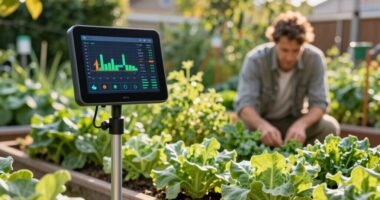
VPD talk often confuses gardeners because it emphasizes technical numbers over practical plant signals. You might worry about getting the perfect VPD level, but what truly matters is how your plants look and behave—wilting, leaf edges, and overall health. Focusing solely on numbers can distract you from these cues, leading to unnecessary adjustments. If you stick with observing your plants, you’ll find balancing humidity and temperature becomes clearer and more manageable. There’s more to uncover about maintaining that harmony.

Get garden gear delivered free with Prime
- Fast, free delivery on millions of items
- Prime Video, Amazon Music and more included
- Member-only deals all year
Key Takeaways
- VPD simplifies complex environmental factors into a single number, which can oversimplify plant needs and cause confusion.
- Focusing solely on VPD numbers overlooks the importance of plant responses and overall environmental balance.
- VPD calculations can be misunderstood or misapplied without considering temperature, humidity, and plant health indicators.
- Emphasizing VPD may distract growers from adjusting humidity and temperature based on actual plant stress signals.
- Prioritizing environmental harmony and plant health indicators is more effective than fixating on VPD metrics alone.

Have you ever heard gardeners talk about VPD and wondered what it really means? Vapor Pressure Deficit (VPD) can sound complicated, but it’s fundamentally about the relationship between humidity levels and plant transpiration. When you hear about VPD, it’s not just a fancy term; it’s a way to understand how well your plants can take up water and how much stress they endure. Many gardeners get confused because VPD combines temperature and humidity into a single measure, but what really matters is how these factors influence plant health. If humidity levels are too high, plants struggle to transpire, leading to increased disease risk. If humidity is too low, plants may transpire excessively, causing stress and dehydration.
Understanding VPD helps optimize plant health by balancing humidity and temperature to prevent stress and disease.
The key point is that VPD isn’t just a number to chase; it’s a reflection of the environment’s impact on your plants. When humidity levels fluctuate, so does the VPD, and that can either help or hinder your plants’ growth. Instead of getting lost in the technicalities, focus on understanding how humidity and temperature affect plant stress. For example, if your plants look wilted or have brown leaf edges, it might be a sign that the VPD isn’t ideal—either too high or too low. Maintaining the right balance helps your plants transpire efficiently, which keeps them healthy and resilient.
Many gardeners fixate on controlling humidity levels without considering the broader picture. They might increase humidity to prevent stress but inadvertently create a humid environment that fosters mold or pests. Conversely, lowering humidity to reduce disease risk can cause excessive transpiration, leading to plant stress and slowed growth. The trick is to find that sweet spot where humidity levels support proper transpiration without overwhelming or stressing your plants. That’s where understanding VPD becomes useful, but it shouldn’t be the sole focus. Understanding environmental balance can help guide better decisions rather than just relying on specific VPD numbers.
What truly matters is how your plants respond. Are they growing vigorously, or do they show signs of stress? Are their leaves healthy, or are they withering? These are better indicators than blindly chasing a VPD number. The goal is to create a stable environment where humidity and temperature work together to keep your plants in a comfortable state, reducing stress and promoting healthy growth. So don’t get caught up in the jargon. Instead, pay attention to your plants’ health and adjust your environment based on their needs. That’s what really matters—healthy, stress-free plants thriving in their ideal conditions. Recognizing the importance of metaphysical concepts, like plant health as a reflection of environmental balance, can help you better understand how to support your garden’s overall well-being.
As an affiliate, we earn on qualifying purchases.
Frequently Asked Questions
How Can I Measure VPD Accurately at Home?
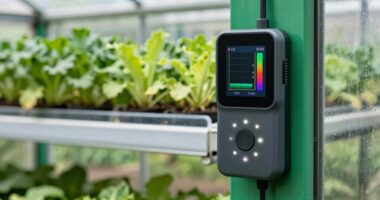
To measure VPD accurately at home, you’ll need a hygrometer and a thermometer to record humidity and temperature. Avoid VPD misconceptions by understanding that simple tools can give you reliable readings if used correctly. Place your measurement tools in your growing environment, wait a few minutes for readings to stabilize, and then record the data. Accurate measurements help you optimize plant health and avoid common VPD misconceptions.
Does VPD Vary With Different Plant Types?
Yes, VPD varies with different plant types because each plant has unique plant-specific conditions that influence their ideal VPD levels. For ideal VPD optimization, you need to take into account these specific needs, as some plants thrive in higher or lower humidity and temperature ranges. By understanding your plant’s particular requirements, you can better manage environmental conditions, ensuring healthier growth and maximizing yield.
Is VPD More Important Than Humidity or Temperature Alone?
Think of VPD as the secret handshake that truly reveals your plant’s watering needs, making it more important than humidity or temperature alone. VPD misconceptions often lead gardeners astray, ignoring how humidity relevance affects plant health. While temperature and humidity matter, understanding VPD provides a clearer picture of vapor pressure deficit, ensuring your plants stay healthy and thriving. It’s the key to mastering environmental control, beyond just basic readings.
Can VPD Help Prevent Plant Diseases?
Yes, VPD can help prevent plant diseases by maintaining ideal moisture levels in the air and on plant surfaces. When you monitor VPD, you’re promoting better plant health and reducing conditions that foster fungal and bacterial infections. By keeping VPD in the right range, you create a less hospitable environment for diseases, ensuring your plants stay healthy and resilient. Proper VPD management is a key part of effective plant disease prevention.
How Often Should I Monitor VPD Levels in My Garden?
You should monitor VPD levels daily, especially during significant climate fluctuations, to maintain ideal plant health. Consistent monitoring helps you adjust humidity and temperature, reducing stress and pest management issues. During rapid weather changes, more frequent checks are essential to prevent disease and promote growth. Staying aware of VPD variations allows you to respond promptly, ensuring your garden stays healthy and resilient despite environmental shifts.
Conclusion
So, next time you hear about VPD talk, remember it’s not about memorizing numbers but understanding how it affects your plants. Sometimes, the simplest approach, like paying attention to your garden’s unique needs, works best. Funny how a little coincidence—like your plants thriving just when you stopped overthinking VPD—can teach you more than complex charts. Keep it simple, stay observant, and let your garden guide you. After all, nature often knows best.
Halloween Picks
halloween
As an affiliate, we earn on qualifying purchases.