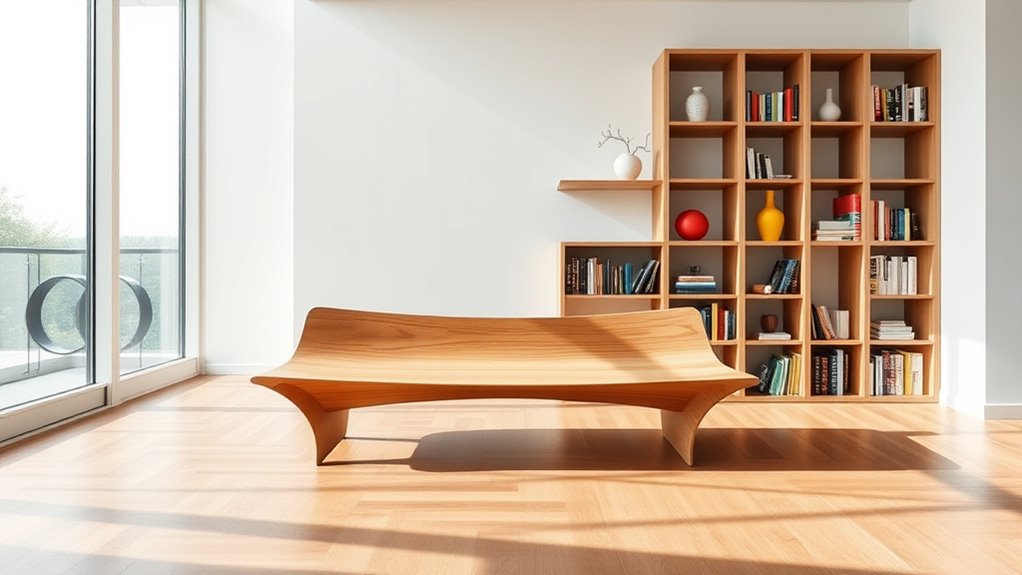

When designing benches and shelving layouts, focus on selecting durable, easy-to-clean materials that resist moisture and wear. Guarantee ergonomic features like adjustable heights and accessible reach for comfort and efficiency. Plan your space to minimize unnecessary movement, group related items, and keep pathways clear for safety. Test your layout for safety and usability before finalizing. If you keep these principles in mind, you’ll create a functional, safe, and durable environment that works for all users.
Key Takeaways
- Select durable, moisture-resistant materials like hardwoods or laminated surfaces for longevity and easy maintenance.
- Arrange shelving at accessible heights to minimize user strain and improve ergonomic comfort.
- Design layouts that group related items and position frequently used materials within easy reach to enhance efficiency.
- Ensure pathways are clear and unobstructed, reducing trip hazards and improving safety and accessibility.
- Test and visualize the layout to optimize space flow, comfort, safety, and overall functionality before finalizing.

Creating effective benches and shelving layouts is essential for maximizing space and ensuring functionality in any environment. When designing these elements, your first focus should be on material selection. The right materials can considerably influence durability, maintenance needs, and overall aesthetics. For example, in a workshop or industrial setting, sturdy metals or hardwoods might be necessary to withstand heavy use, while in a retail space, sleek laminated surfaces could provide a modern look. Think about moisture resistance, weight capacity, and ease of cleaning when choosing materials. Opting for high-quality, appropriate materials ensures longevity and reduces the need for frequent replacements or repairs, ultimately saving you time and money.
Beyond material selection, ergonomic considerations play a crucial role in creating efficient and user-friendly layouts. Your goal should be to design benches and shelving that promote comfort and ease of use. This means paying attention to height, reach, and accessibility. For instance, shelving should be installed at heights that minimize strain when reaching or bending, and benches should be comfortable to sit or work on for extended periods. In a workspace, ergonomics can help prevent fatigue and injury, boosting productivity and morale. When planning, think about the users’ needs and movement patterns. Incorporate adjustable features where possible, such as height-adjustable benches or shelving that can be easily repositioned. This flexibility allows the environment to adapt to different tasks or users, ensuring everyone can work comfortably. Additionally, considering cookie categories and user preferences can help in designing a space that also respects privacy and accessibility standards.
Another aspect to contemplate is the layout’s flow. Efficient placement of benches and shelves minimizes unnecessary movement, saving time and reducing physical strain. Group related items together and position frequently accessed materials within easy reach. This thoughtful arrangement not only enhances efficiency but also contributes to a safer environment by reducing clutter and trip hazards. When designing, also keep in mind the space available. Overcrowding can hinder ergonomic principles and create a cramped, unproductive environment. Leave enough clearance for movement and ensure that pathways are clear and unobstructed.
Finally, test your layout before finalizing it. Visualize how users will interact with the space and make adjustments as needed. Seek feedback from potential users to identify any ergonomic or practical issues. Remember, a well-designed bench and shelving layout doesn’t just maximize space—it creates an environment that supports comfort, safety, and productivity. By carefully selecting materials and prioritizing ergonomic considerations, you set the foundation for a functional, efficient, and durable setup that meets your specific needs.
Frequently Asked Questions
How Do I Choose the Right Materials for Outdoor Benches?
When choosing materials for outdoor benches, consider weather-resistant options like treated wood, metal, or composite materials. These withstand rain, sun, and temperature changes better than untreated wood. Think about durability, maintenance needs, and style to match your outdoor space. You want materials that last long and stay attractive with minimal upkeep. By selecting weather-resistant options, you guarantee your bench remains sturdy and beautiful through all seasons.
What Safety Considerations Should I Keep in Mind?
You should prioritize slip resistance and weatherproofing to guarantee safety. Choose materials with textured surfaces to prevent slips, especially in wet conditions. Make sure your benches and shelving are weatherproofed to withstand rain, snow, and sun exposure, reducing risks of deterioration and accidents. Regularly inspect and maintain the surfaces, fixing any damage promptly. These steps help create a safe, durable outdoor space for everyone.
How Can I Maximize Space in Small Rooms?
To maximize space in small rooms, focus on space-saving solutions like multi-functional furniture that combines seating with storage or beds with built-in drawers. Use vertical space by installing shelves and wall-mounted units, and opt for compact, streamlined designs. Keep pathways clear and avoid clutter, ensuring your furniture serves multiple purposes. This approach helps you create a functional, open environment without sacrificing style or comfort.
What Are Trendy Design Styles for Benches Currently?
Think of your space as a canvas, where trends paint your environment. Currently, you’re drawn to benches that blend current minimalist lines with rustic charm. These styles feel like a whisper of simplicity combined with warm, natural textures, creating a cozy yet sleek vibe. You’ll find that clean, uncluttered designs paired with raw wood finishes make your small room feel more open and inviting, perfectly balancing modern elegance with rustic comfort.
How Do I Ensure Easy Maintenance and Cleaning?
To guarantee easy maintenance and cleaning, you should choose materials with stain resistance and plan for regular cleaning frequency. Wipe down benches and shelving weekly with a damp cloth and mild cleaner to prevent dirt buildup. Opt for surfaces that resist stains and moisture, making cleaning effortless. Avoid harsh chemicals that could damage finishes. By maintaining a consistent cleaning routine and selecting durable, stain-resistant materials, you keep your spaces looking fresh and easy to care for.
Conclusion
By focusing on functionality, maximizing space, and maintaining flexibility, you create a workspace that works for you. Prioritize accessibility, consider flow, and keep your needs in mind. Design with purpose, plan with care, and organize with intention. When you do, your benches and shelving will not only serve their purpose but also inspire productivity. With thoughtful layout, you’ll enjoy a space that’s efficient, inviting, and tailored perfectly to your work style.