
In humid greenhouses, choosing drainage-friendly benches is essential because excess moisture can quickly lead to waterlogged soil, root rot, and plant health problems. Proper benches with features like sloped surfaces, drainage holes, and permeable materials help direct water away from roots and keep conditions balanced. Good drainage reduces disease risks and simplifies maintenance. Keep exploring how the right setup can make a real difference for your plants’ thriving environment.

Get garden gear delivered free with Prime
- Fast, free delivery on millions of items
- Prime Video, Amazon Music and more included
- Member-only deals all year
Key Takeaways
- Humid environments increase water retention, making efficient drainage essential to prevent root diseases.
- Proper drainage reduces the risk of fungal and bacterial growth common in high-moisture conditions.
- Drainage-friendly benches help maintain optimal soil moisture levels for healthy plant growth.
- They prevent water pooling, which can lead to oxygen deprivation and root rot in humid greenhouses.
- Effective bench design simplifies maintenance and supports sustainable plant health in moisture-rich environments.
In humid greenhouses, choosing the right bench setup is essential to prevent water accumulation and promote healthy plant growth. When the environment is moist and saturated, managing soil moisture becomes even more critical. Without proper drainage, excess water can linger around your plants’ roots, leading to oxygen deprivation, root rot, and overall decline in plant health. Your goal should be to create a system that allows water to flow away efficiently, maintaining ideal soil moisture levels that support vigorous growth without drowning the roots.
Proper drainage in humid greenhouses prevents water buildup, promoting healthy roots and vibrant plant growth.
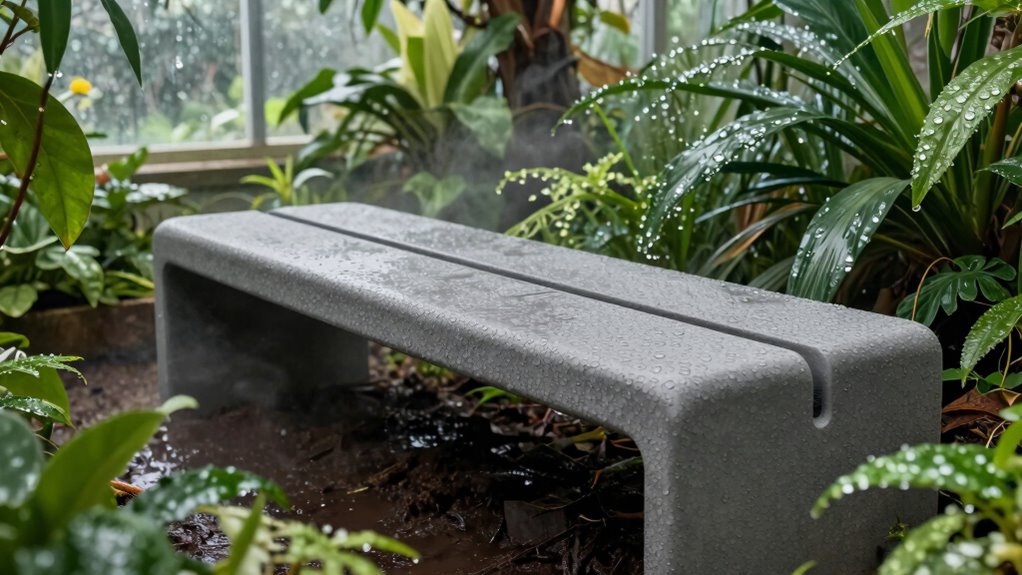
A drainage-friendly bench setup helps you control moisture levels, ensuring your plants aren’t sitting in waterlogged soil. In humid conditions, high ambient moisture already challenges plant roots, so it’s up to you to provide a structure that prevents additional water buildup. When water accumulates on or under your benches, it creates a breeding ground for fungi, bacteria, and pests that threaten plant health. By selecting benches with proper drainage features—such as sloped surfaces, integrated drainage holes, or permeable materials—you reduce the risk of standing water and keep the environment healthier overall.
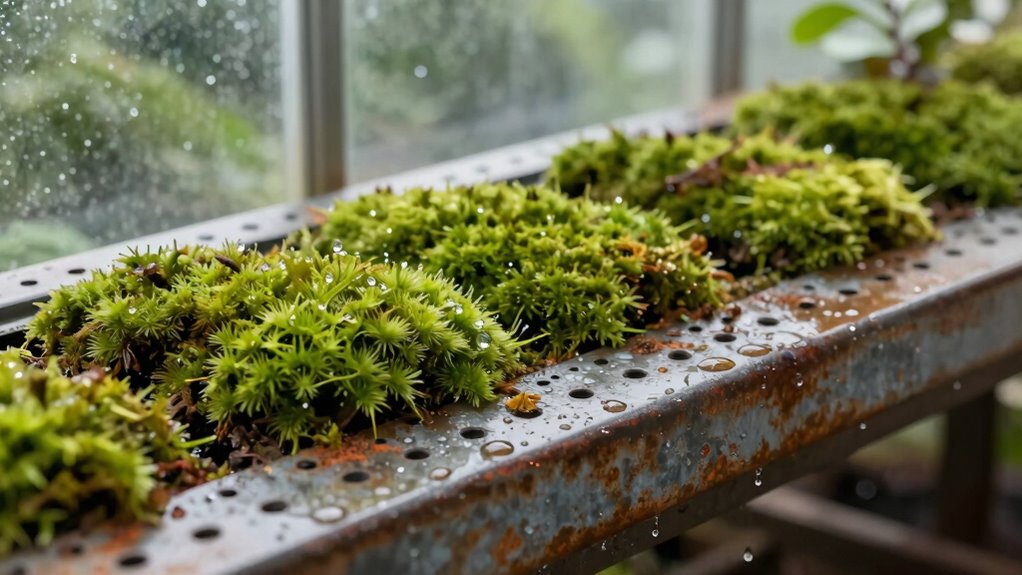
Your choice of bench material plays a crucial role in drainage efficiency. For example, metal or plastic benches with perforations or slats allow excess water to escape quickly, preventing pooling. Wooden benches, if not designed for drainage, can trap moisture, so consider treatments or modifications to enhance water flow. Additionally, elevating your benches slightly above the ground helps prevent water from seeping in from below, especially during heavy rains or overwatering. This elevation, combined with good drainage, helps you maintain consistent soil moisture levels that are just right—not too dry, not too wet—thus supporting healthy root development. Incorporating proper drainage features into your bench design can significantly improve water runoff and reduce maintenance needs.
In humid greenhouses, the key is to strike a balance between retaining enough moisture for your plants and avoiding excess water that can cause damage. Drainage-friendly benches make this easier by actively directing water away from the root zone. When you prioritize proper drainage, you’re actively reducing the risk of disease and ensuring your plants have a stable environment to thrive. Implementing effective drainage systems can significantly improve plant health and reduce maintenance efforts. Additionally, choosing benches with permeable surfaces allows excess water to filter through more effectively, further enhancing moisture control. When you understand and manage the moisture dynamics in your greenhouse, you create a healthier environment that promotes sustainable growth. Ultimately, choosing the right bench setup isn’t just about convenience; it’s about creating an ideal environment that respects the delicate balance of soil moisture and plant health in humid conditions.
drainage-friendly greenhouse benches
As an affiliate, we earn on qualifying purchases.
As an affiliate, we earn on qualifying purchases.
Frequently Asked Questions
How Often Should Drainage Systems Be Inspected in Humid Greenhouses?
You should inspect your drainage systems at least once a month in humid greenhouses. Regular checks help prevent water clogging and soil compaction, which can harm plant roots and cause drainage issues. Look for signs like standing water or slow drainage. Frequent inspections guarantee your system remains efficient, reducing the risk of damage caused by excess moisture and maintaining healthy plant growth in these humid environments.
Are There Specific Materials Better for Drainage in High Humidity?
Back in the day, you’d opt for materials like concrete or glazed ceramics, which are still top choices today. For high humidity, choose materials with excellent durability and low water retention, such as high-density polyethylene or certain composites. These materials resist mold and decay, ensuring your drainage stays effective. They also handle moisture well, reducing potential for water buildup and prolonging the lifespan of your benches.
Can Drainage Issues Lead to Plant Disease Outbreaks?
Yes, drainage issues can lead to plant disease outbreaks. Poor drainage creates excess moisture, which promotes root rot and mold proliferation. When water stagnates, roots can suffocate and decay, providing an ideal environment for fungi and mold to thrive. This increases the risk of widespread disease, affecting your plants’ health and yield. Ensuring proper drainage helps maintain a healthy, disease-resistant environment, especially in humid greenhouses where moisture levels are naturally high.
What Are Signs of Poor Drainage in Greenhouse Benches?
Signs of poor drainage in greenhouse benches include consistently soggy soil, water pooling after watering, and slow soil drying. You might notice plant roots rotting or fungal growth, indicating excess moisture. Regular drainage maintenance helps prevent these issues by managing soil moisture effectively. If you observe these signs, it’s time to improve your drainage system to keep your plants healthy and prevent disease outbreaks caused by excess water retention.
How Do Drainage Choices Affect Greenhouse Humidity Levels?
Your drainage choices directly impact greenhouse humidity levels by managing soil moisture and airflow circulation. Poor drainage causes excess water retention, increasing soil moisture and trapping humidity, which promotes mold and disease. Conversely, well-drained benches allow excess water to escape, reducing humidity buildup and improving airflow circulation. This balance helps maintain ideal conditions for plant health, preventing issues caused by excessive humidity and ensuring a stable, healthy greenhouse environment.
Conclusion
Choosing drainage-friendly benches in humid greenhouses is like giving your plants a fresh start—they thrive when their roots stay dry and happy. By prioritizing proper drainage, you’re preventing waterlogged soil and root rot, ensuring healthier, more vigorous growth. Don’t let poor drainage drown your plants’ potential. Instead, make smart bench choices that act as the foundation for a lush, thriving greenhouse. After all, good drainage isn’t just a detail — it’s the backbone of your greenhouse’s success.
Halloween Picks
halloween
As an affiliate, we earn on qualifying purchases.