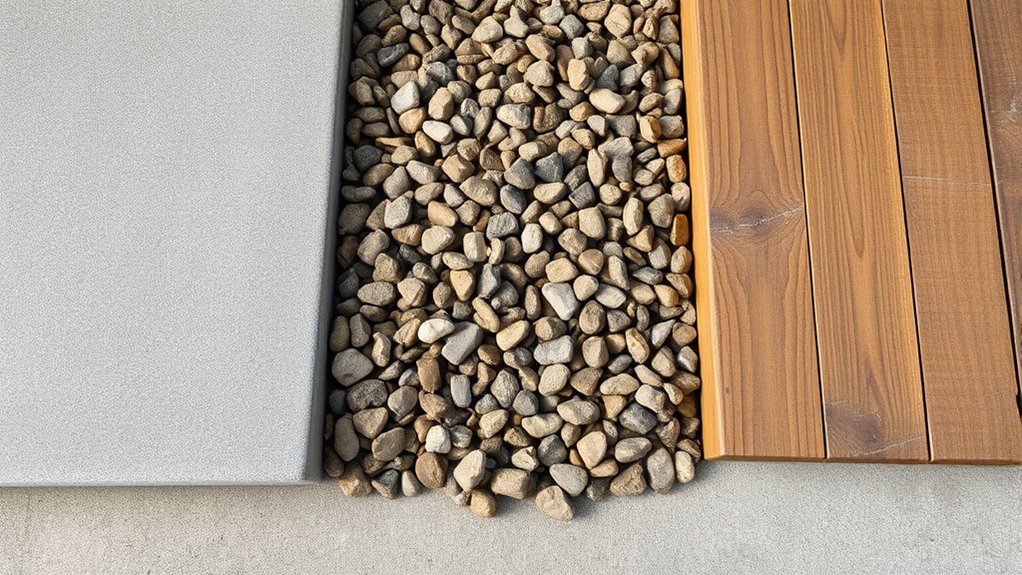

When choosing a foundation, consider concrete slabs for stability on well-drained, stable soils, but add drainage solutions if your soil is clay or shifting. Gravel foundations provide excellent drainage, ideal for high water tables or flood-prone areas, and are easier to modify later. Timber foundations are lightweight and suitable for temporary or small structures, but require proper moisture control to last. Exploring these options further helps you select the best foundation for your site conditions.
Key Takeaways
- Concrete slabs provide a stable, level foundation ideal for permanent structures on stable soil.
- Gravel foundations excel in drainage, preventing moisture buildup and suitable for unstable or high water table areas.
- Timber foundations are lightweight and suitable for temporary or small structures but require proper moisture management.
- Drainage solutions like gravel beds and sump pumps enhance foundation longevity across all types.
- Soil stability and site conditions determine the most appropriate foundation choice among concrete, gravel, or timber.
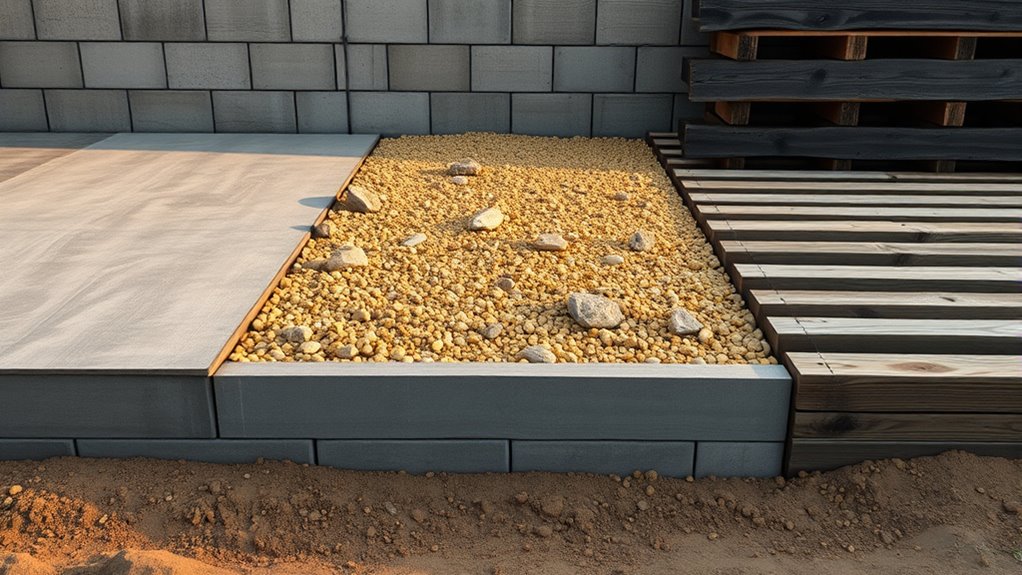
Are you unsure which foundation type best suits your building project? Choosing the right foundation is essential for ensuring your structure’s stability and longevity. Your decision will depend on several factors, including soil stability and drainage solutions in your area. Different foundations respond differently to these conditions, so understanding your site is the first step.
Choosing the right foundation depends on soil stability and drainage solutions for lasting stability.
If your soil has high stability and minimal moisture issues, a concrete slab foundation might be the most straightforward option. A slab is poured directly onto a prepared, level surface, creating a solid base for your building. It works well in areas with stable soil because it distributes the weight evenly, reducing the risk of settling or cracking over time. However, if your soil tends to shift or contains a lot of clay, which swells when wet, you may need to consider additional drainage solutions to prevent water from pooling beneath the slab. Proper drainage can help manage moisture levels, reducing pressure on the slab and avoiding future problems like cracks or uneven settling. Installing drainage solutions such as gravel beds or sump pumps beneath or around the slab can substantially improve its performance in less-than-ideal soil conditions.
On the other hand, gravel foundations offer excellent drainage solutions and are suitable for areas with poor soil stability or high water tables. Gravel allows water to flow freely through the foundation, preventing moisture buildup that could weaken the structure. This makes it ideal for locations where soil tends to retain water or when you need to elevate the foundation above flood-prone areas. Gravel foundations are also easier to modify or expand later on, providing flexibility for future building needs. Keep in mind, though, that gravel alone isn’t enough if the soil is particularly unstable. In such cases, you might need a combination of gravel and other foundation types or additional soil stabilization measures before laying the gravel base.
Timber foundations are less common but can be suitable in specific situations, such as lightweight structures or temporary buildings. They are generally more sensitive to soil stability and moisture conditions, requiring proper drainage solutions to keep the wood dry and prevent rot. Timber must be placed on a well-drained, stable base, often with gravel or other materials designed to minimize moisture exposure. If your site has fluctuating moisture levels or unstable soil, timber foundations could pose long-term risks unless properly protected and maintained. Additionally, modern waterproofing techniques can extend the lifespan of timber foundations in challenging conditions.
Ultimately, evaluating your soil stability and implementing effective drainage solutions will help determine the most suitable foundation type for your project. Taking the time to analyze these factors now can save you considerable time and money later, ensuring your building remains solid and durable for years to come.
Frequently Asked Questions
Which Foundation Type Is Most Eco-Friendly?
You’ll find that timber foundations are the most eco-friendly choice because they often use sustainable materials and have a lower environmental impact during production. Timber absorbs carbon dioxide, making it a renewable resource. By choosing timber, you reduce reliance on concrete or gravel, which require more energy to produce and can harm the environment. So, if sustainability matters most to you, timber provides an environmentally conscious foundation option.
How Does Climate Affect Foundation Choice?
Climate critically influences your foundation choice because it impacts climate-related expansion and moisture mitigation needs. In areas with freeze-thaw cycles, you should opt for a foundation that accommodates climate-related expansion, like a pier or elevated foundation. For humid regions, moisture mitigation is essential, so concrete slabs with proper drainage or gravel foundations work best. Understanding your climate helps you select a foundation that resists shifting and prevents moisture problems.
Can I Switch Foundation Types Later?
You can switch foundation types later, but it’s not always easy or cost-effective. Foundation flexibility depends on your current structure and future modifications. If you want to change, consider consulting a structural engineer to assess the feasibility. Some foundations are more adaptable, but most require significant work and expense to upgrade or replace. Planning ahead helps, but if you need to switch, be prepared for potential challenges.
What Is the Typical Lifespan of Each Foundation?
You might worry about the durability of different foundations, but each has a typical lifespan. Concrete slabs usually last 30-50 years with minimal maintenance, while gravel foundations can last 20-30 years but require regular upkeep to prevent shifting. Timber foundations, though less common, typically last 15-30 years and need more maintenance to prevent rot and pest damage. Proper care guarantees you maximize their lifespan.
Are There Specific Permits Required for Different Foundations?
You’ll need to check building codes and zoning regulations before choosing a foundation. Permits are generally required to guarantee your foundation meets safety standards and local laws. Contact your local building department to find out specific permit requirements for your project. They can guide you through the process, helping you avoid fines or delays. Always secure the necessary permissions before starting construction to stay compliant and ensure a smooth build.
Conclusion
Choosing the right foundation is like finding the perfect bed for your home—it sets the stage for everything to come. Whether you opt for sturdy concrete, versatile gravel, or warm timber, each has its strengths. Consider your budget, climate, and future plans. Remember, your foundation is the backbone of your dream space; get it right, and it’ll support your vision for years to come. Make an informed choice, and watch your project stand tall like a mighty oak.