
To build a greenhouse workflow that saves steps daily, start by designing a layout that groups related tasks like planting, watering, and harvesting in dedicated zones. Incorporate automation for watering and climate control to reduce manual effort. Keep tools and supplies organized and within reach, near your work areas. Schedule routines to match automation, minimizing unnecessary movement. By focusing on these strategies, you’ll streamline your routine and enhance efficiency—stay with us to discover how to implement these tips effectively.

Get garden gear delivered free with Prime
- Fast, free delivery on millions of items
- Prime Video, Amazon Music and more included
- Member-only deals all year
Key Takeaways
- Design an efficient layout that groups related tasks and minimizes movement between zones.
- Integrate automation for watering, ventilation, and temperature control to reduce manual effort.
- Organize tools and supplies logically near workstations for quick access.
- Develop and refine routines based on workflow observations to eliminate bottlenecks.
- Document processes regularly to identify improvements and adapt the system for maximum efficiency.
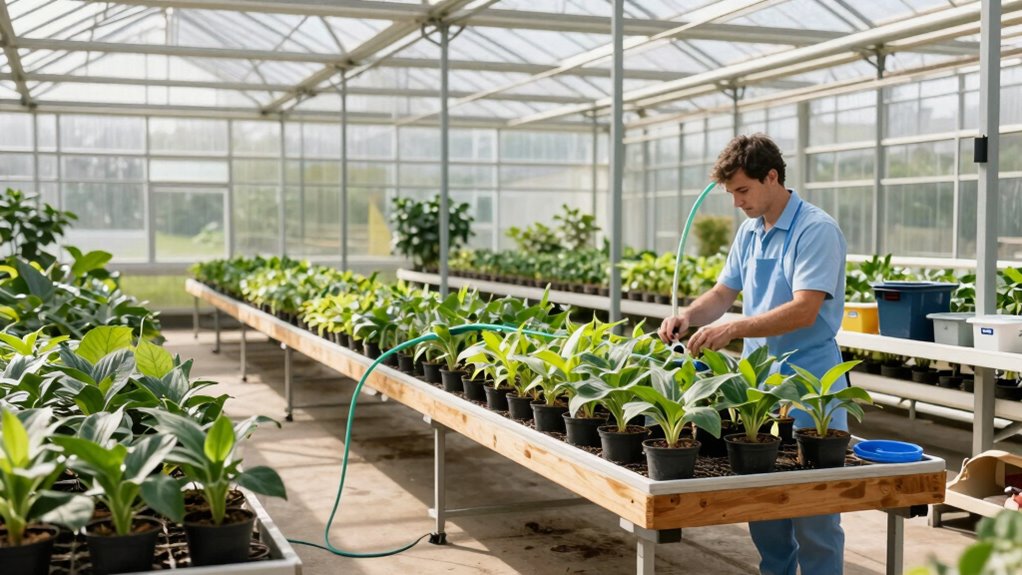
Building a greenhouse workflow begins with careful planning to guarantee your space is efficient and tailored to your gardening goals. You want a setup that minimizes wasted time and effort, so start by mapping out your workspace. Think about how you’ll move between planting, watering, and harvesting areas. Incorporate sustainable materials for your structures and tools whenever possible. Using recycled wood, bamboo, or other eco-friendly options not only reduces your environmental footprint but also creates a durable, cost-effective foundation for your greenhouse. The goal is to design a space that’s both functional and environmentally conscious, making your daily routines smoother.
Plan your greenhouse layout with sustainable materials to create an efficient, eco-friendly space that streamlines your gardening routines.
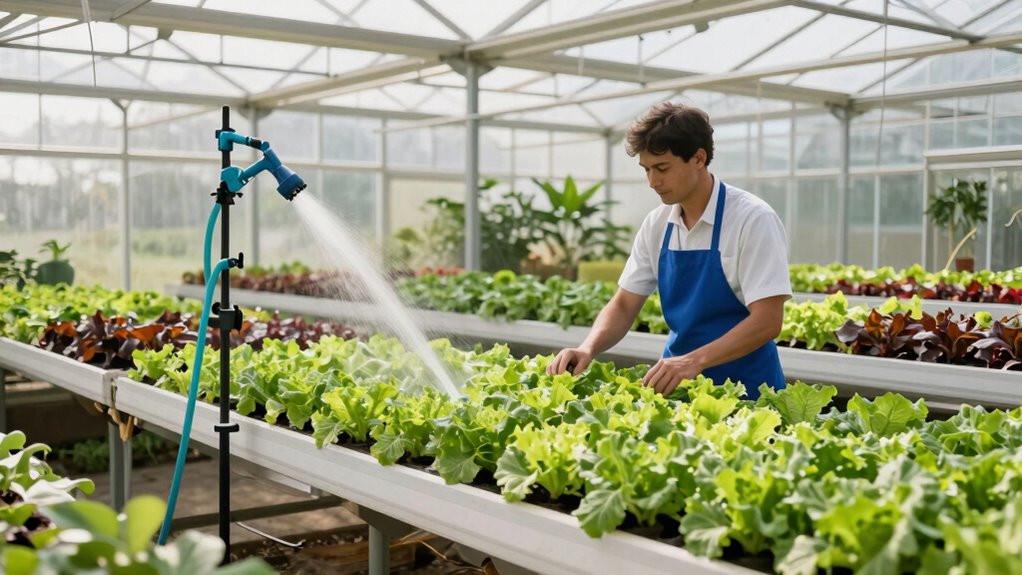
Once your layout is in place, focus on integrating automation into your workflow. Automation simplifies repetitive tasks like watering, ventilation, and temperature control. For example, installing drip irrigation systems connected to timers ensures your plants receive consistent moisture without manual effort. Automated vents and fans help regulate airflow, preventing overheating and humidity issues, which can otherwise slow down your work. These systems save you time and prevent problems before they arise, letting you concentrate on other essential gardening tasks. Automation integration also encourages a more predictable environment for your plants, which leads to healthier growth and less daily monitoring.
Next, organize your tools, supplies, and plant materials to streamline your process. Use labeled storage units and racks close to your work areas so you don’t waste time searching for what you need. Keep your watering cans, pruning shears, and fertilizers within arm’s reach, arranged logically to match your workflow. Setting up dedicated zones for planting, potting, and harvesting reduces unnecessary movement and helps you stay focused. With everything in its place, you’ll find yourself completing tasks faster and with less frustration. Incorporating sustainable materials into your setup supports eco-friendly gardening practices and enhances the longevity of your greenhouse infrastructure. Establishing a well-planned layout can also improve your overall efficiency by reducing the need for frequent adjustments. Additionally, understanding how to optimize your greenhouse environment can further improve your workflow and plant health. Implementing smart technology can further enhance your ability to monitor and control environmental conditions remotely.
Another way to save steps is to develop a routine that aligns with your greenhouse’s layout and automation features. For instance, schedule watering and ventilation during specific times to make the most of automation. Establish a regular cycle for plant care that minimizes unnecessary back-and-forth. As you become more familiar with your setup, you’ll identify bottlenecks and adjust your workflow to eliminate them. This continuous refinement ensures your daily routine remains efficient and sustainable over time.
Finally, document your workflow and review it periodically. Note what works well and where you encounter delays. Adjust your layout, automation, or routines accordingly. This proactive approach helps you maintain an optimized greenhouse workflow that saves steps, conserves energy, and supports your gardening ambitions. Building an efficient system takes effort upfront, but once in place, it’ll transform your daily gardening into a smoother, more sustainable experience.
automatic drip irrigation system with timer
As an affiliate, we earn on qualifying purchases.
As an affiliate, we earn on qualifying purchases.
Frequently Asked Questions
What Tools Are Essential for Greenhouse Automation?
You need essential tools like solar sensors to monitor sunlight levels and maximize plant growth. Automated watering schedules are vital for maintaining consistent moisture without manual effort. Integrating these tools allows you to automate climate control, ensuring ideal conditions. Using sensors and scheduling systems streamlines your workflow, saves time, and enhances plant health. With these tools, you can easily manage your greenhouse environment, making daily tasks more efficient and effective.
How Do I Optimize Climate Control Systems?
To optimize your climate control systems, start by integrating natural ventilation to reduce energy use and maintain consistent airflow. Combine this with effective water management to regulate humidity and prevent mold. Regularly monitor sensors for temperature and humidity, adjusting ventilation and watering schedules accordingly. Automate these processes where possible, ensuring your greenhouse stays within ideal conditions, saving you time and improving plant health daily.
What Are Common Workflow Mistakes to Avoid?
To avoid common workflow mistakes, don’t overlook thorough soil preparation; skipping this step can lead to poor plant health and increased pest issues. Also, neglecting integrated pest management can cause infestations that disrupt your workflow. Always plan ahead, streamline tasks, and double-check each step. Regularly monitor and adjust your processes, ensuring soil quality and pest control are prioritized, saving you time and preventing costly setbacks in your greenhouse operations.
How Can I Track Plant Growth Efficiently?
To track plant growth efficiently, start with clear plant labeling to identify each species easily. Use a consistent system for growth monitoring, like daily or weekly checklists, and record height, health, and any issues. Digital tools or apps can streamline this process, allowing you to update data quickly. Regularly reviewing this information helps you spot trends, adjust care routines promptly, and guarantee your plants thrive with minimal effort.
What Safety Protocols Should I Implement?
Imagine a shield of safety enveloping your workspace, ensuring peace of mind. You should implement essential safety protocols, like wearing proper safety equipment—gloves, goggles, and masks—and clearly posting emergency procedures. Regularly train yourself and staff on these procedures, conduct safety audits, and keep emergency exits unobstructed. This proactive approach creates a secure environment, preventing accidents and ensuring everyone knows how to respond swiftly in case of emergencies.
Conclusion
So, there you have it. Follow these simple steps, and you’ll be a greenhouse hero in no time—saving steps, time, and maybe even your sanity. Who knew that organizing your workflow could be so revolutionary? Just imagine, fewer trips, less chaos, and plants that thank you with perfect blooms. So go ahead, streamline like a pro, and turn those daily greenhouse chores into a well-oiled, step-saving machine. Your plants—and your future self—will thank you.
Fall yard work Picks
leaf blowers
As an affiliate, we earn on qualifying purchases.