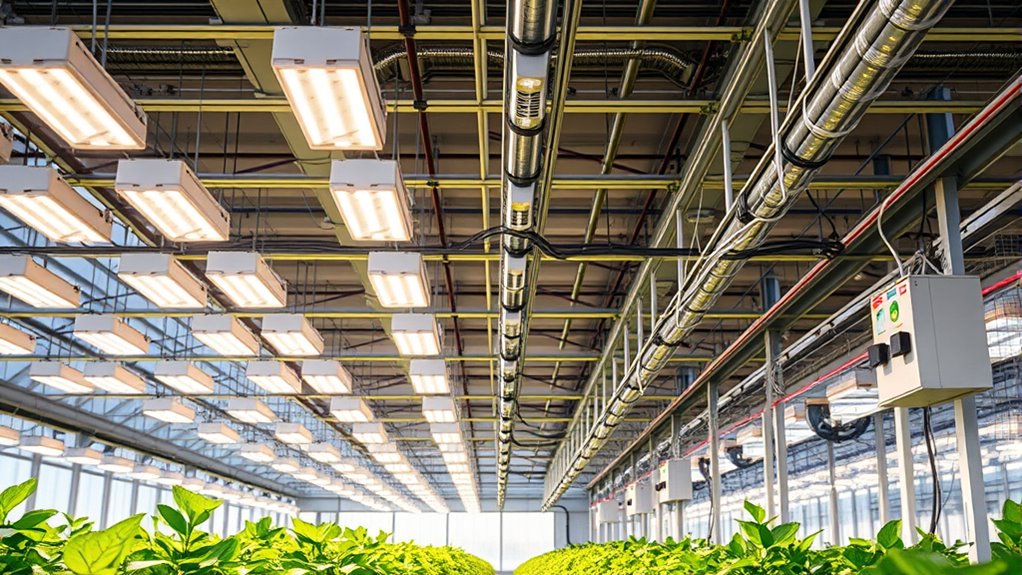

When planning your greenhouse electrical systems, prioritize installing solar panels for sustainable power and combine them with energy-efficient lighting and equipment to lower costs. Think about backup power options to keep critical systems running during outages and design circuits with safety features like grounding and surge protection. Confirm your system is scalable for future expansions and aligns with best practices in efficiency and safety. Keep exploring key strategies to build a reliable, eco-friendly setup that supports healthy plant growth.

Get garden gear delivered free with Prime
- Fast, free delivery on millions of items
- Prime Video, Amazon Music and more included
- Member-only deals all year
Key Takeaways
- Assess energy needs and prioritize solar panel integration for sustainable power supply.
- Optimize electrical layout for maximum efficiency, including LED lighting and automated control systems.
- Incorporate backup power solutions such as batteries or generators to ensure system reliability.
- Ensure electrical safety with proper grounding, surge protection, and circuit breakers.
- Design for future scalability, allowing easy expansion of solar capacity and equipment upgrades.

Greenhouse electrical systems are fundamental for maintaining ideal growing conditions and guaranteeing efficient operation. When you’re planning your system, one of the first considerations should be how to incorporate solar panel integration. Solar panels can be a game-changer, providing a sustainable and cost-effective power source that reduces reliance on the grid. By integrating solar energy, you not only cut down on long-term energy costs but also enhance the overall sustainability of your greenhouse. Proper placement and sizing of solar panels are essential; you want them positioned for maximum sunlight exposure, avoiding shading from structures or nearby trees. Additionally, choosing high-efficiency panels can maximize energy capture, guaranteeing your system generates enough power to meet your greenhouse’s needs. Solar panel integration works best when paired with smart energy management systems, allowing you to monitor and optimize power usage in real time.
Alongside solar, implementing energy efficiency strategies is imperative. You should evaluate your entire electrical setup to identify areas where energy can be conserved. For example, using LED lighting instead of traditional bulbs reduces energy consumption while providing the necessary light spectrum for plant growth. Installing timers and automated controls can help regulate lighting, heating, and ventilation systems, so they operate only when needed. Insulation also plays a role—well-insulated walls and roofs minimize heat loss, decreasing the demand on heating systems. When planning your electrical system, consider using energy-efficient equipment and appliances that carry ENERGY STAR ratings or similar certifications. This approach guarantees you’re not only reducing your environmental footprint but also lowering operational costs over time.
Another key part of planning involves integrating backup power solutions. Power outages can threaten your crops, so including backup batteries or generators can provide peace of mind. These should be sized appropriately to support critical systems, such as climate controls and irrigation, during outages. When you develop your electrical blueprint, make sure to prioritize safety by installing proper grounding, surge protection, and circuit breakers. This not only safeguards your equipment but also guarantees safe operation for you and your staff. Furthermore, researching affordable energy solutions can help you find options that fit your budget while maintaining system reliability.
Finally, as you plan, keep future expansion in mind. Design your electrical system with scalability in mind, so adding more solar panels or upgrading equipment down the line doesn’t require a complete overhaul. Incorporating renewable energy sources like solar panels, coupled with energy efficiency strategies, guarantees your greenhouse operates sustainably and efficiently for years to come. This thoughtful planning will help you create a resilient, cost-effective environment that supports healthy plant growth while minimizing environmental impact.
As an affiliate, we earn on qualifying purchases.
Frequently Asked Questions
What Is the Average Cost of Installing Greenhouse Electrical Systems?
The average cost of installing greenhouse electrical systems ranges from $2,000 to $10,000, depending on size and complexity. You should consider a detailed cost estimation to include installation expenses like wiring, fixtures, and controls. Smaller setups may cost less, while larger or more advanced systems with automation can increase expenses. Planning carefully helps you stay within budget and guarantees your greenhouse has reliable, efficient electrical infrastructure.
How Can I Ensure Safety Standards Are Met in Greenhouse Wiring?
To guarantee safety standards in greenhouse wiring, you should follow proper grounding techniques to prevent electrical shocks and fires. Regular electrical inspections are essential—they help identify potential hazards and confirm compliance with safety codes. Always hire a licensed electrician, use weatherproof wiring, and maintain your system properly. These steps will help you meet safety standards, protect your plants, and keep everyone safe in your greenhouse environment.
What Renewable Energy Options Are Suitable for Greenhouses?
Did you know that over 70% of greenhouses can benefit from renewable energy sources? You should consider installing solar panels to harness sunlight or wind turbines to generate power, reducing reliance on the grid. Solar panels work best in sunny climates, while wind turbines are ideal in windy areas. Combining both options can maximize energy efficiency, lowering costs and making your greenhouse more sustainable and environmentally friendly.
How Do I Plan for Future Expansion of My Greenhouse Electrical System?
To plan for future expansion, focus on future-proofing infrastructure by installing scalable electrical systems. Use modular wiring solutions that allow easy upgrades and additions without extensive rewiring. Consider leaving extra capacity in your main panels and wiring routes to accommodate new equipment. Regularly assess your current load, and consult with professionals to guarantee your system can handle future demands, making expansion smooth and cost-effective.
Are There Specific Electrical Codes for Greenhouse Environments?
Yes, there are specific electrical codes for greenhouse environments to guarantee safety and proper wiring. You should follow local electrical codes, such as the NEC, which include guidelines for greenhouse wiring and electrical safety. These codes address moisture, corrosion, and specialized equipment, helping you prevent hazards. Always consult a licensed electrician familiar with greenhouse requirements to ensure compliance and safety for your electrical system.
Conclusion
Just as a master gardener tends to each plant with care, designing your greenhouse electrical system requires careful planning and attention to detail. By ensuring safe, efficient wiring, you create a nurturing environment where your plants can thrive—like a lighthouse guiding ships safely ashore. When you approach your electrical setup with the same dedication, your greenhouse becomes a sanctuary of growth and productivity, shining brightly like a beacon in the night, inspiring success with every harvest.
Fall Picks
fall essentials
As an affiliate, we earn on qualifying purchases.