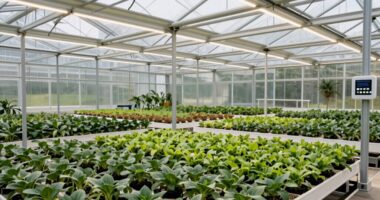

To build a greenhouse layout focused on your daily tasks, start by arranging zones for watering, planting, maintenance, and harvesting based on your workflow. Keep seed-starting near the potting area and position mature plants close to harvesting spots. Store tools and pest control supplies near their tasks, and design clear pathways for smooth movement. Incorporate seasonal flexibility and efficient storage to save time. More tips on planning your ideal layout come next.
Open a free Amazon Business account
Business pricing, bulk buying and tax-exempt orders.
As an affiliate, we earn on qualifying purchases.
Key Takeaways
- Design zones based on task flow, such as watering, planting, and harvesting, to minimize movement and increase efficiency.
- Place frequently used tools and supplies near their respective work areas to streamline daily routines.
- Arrange seed-starting, mature plants, and seasonal tasks for quick access and adaptability throughout the year.
- Create clear pathways that facilitate seamless transition between planting, maintenance, and harvesting zones.
- Incorporate centralized pest control and storage stations to enable rapid response without disrupting workflow.
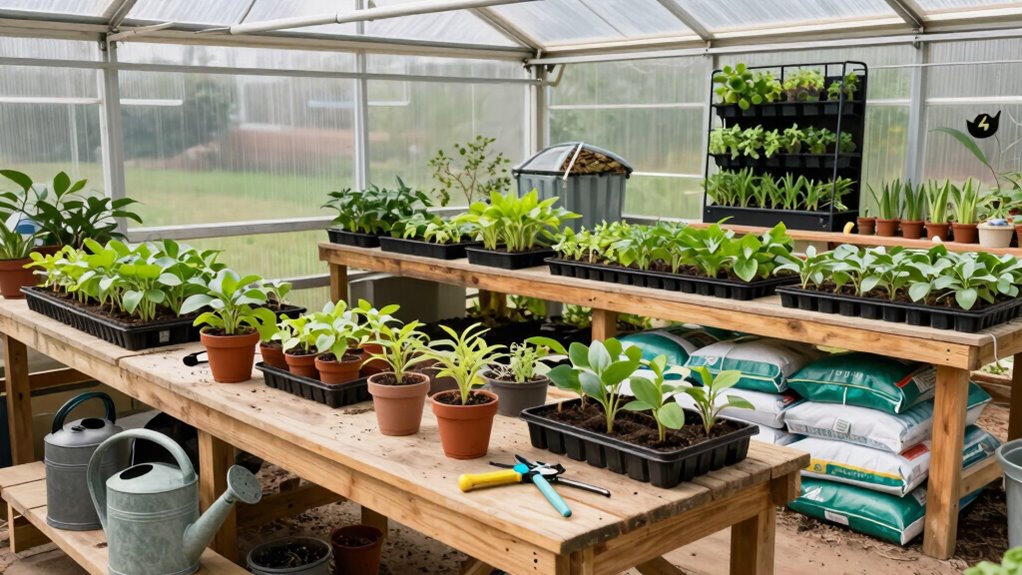
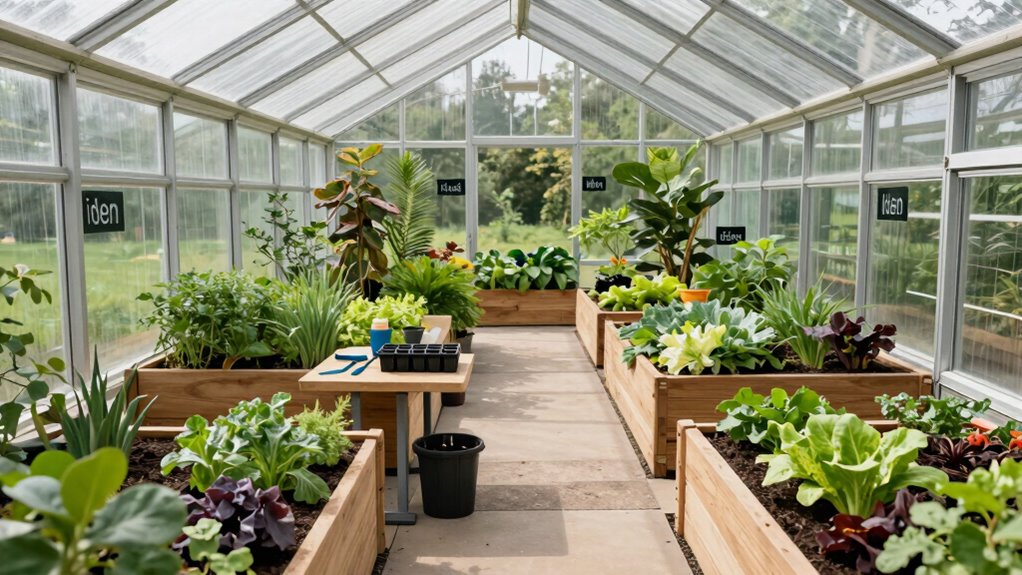
Creating a greenhouse layout tailored to your daily tasks can streamline your gardening routine and boost productivity. When planning your space, consider how you move through your chores, from watering to harvesting, and design your layout to support those routines efficiently. Think about how seasonal planning plays a role throughout the year; organize your plants and work zones so that tasks specific to each season are easy to access. For example, arrange your seed-starting area near your potting station and keep mature plants closer to your harvesting zones. This way, as the seasons change, you won’t waste time trekking across the greenhouse to tend to different crops.
Pest control is another critical factor to consider when designing your layout. Position your pest management stations and tools strategically so you can quickly address any issues without disrupting your workflow. For instance, keep your spray bottles, organic pest deterrents, and sticky traps in a centralized location that’s easy to reach from all plant areas. By doing so, you reduce the chances of pests spreading and minimize the time spent on treatment. Additionally, placing pest control resources near entry points allows you to inspect and treat plants as they come in, preventing infestations before they spread throughout your greenhouse. Incorporating pest management strategies into your layout can further enhance your garden’s health.
Your daily tasks should guide the placement of tools, supplies, and work zones. For example, if you spend a lot of time watering and pruning, position your watering cans, hoses, and pruning shears within arm’s reach of your main plant beds. Incorporate shelves or hooks for tools so you can grab what you need quickly without cluttering your workspace. Reflect on creating dedicated zones for planting, maintenance, and harvesting, and label these areas if needed. Properly storage solutions can help keep your workspace tidy and efficient. This organization minimizes unnecessary movement and helps you stay focused on each task, saving time and effort. Incorporating biodiversity principles into your layout can also attract beneficial insects and improve overall plant health, making your space more sustainable.
As you plan, think about the flow of your activities. Your layout should allow you to move seamlessly from one task to the next, reducing backtracking. For instance, place your compost bins near your planting area to dispose of waste efficiently and keep fertilizers or soil amendments nearby for quick access. Keep pathways clear to prevent accidents and make sure that your most-used items are stored within easy reach. This thoughtful arrangement means you’re working smarter, not harder, and your greenhouse becomes an extension of your efficient gardening routine. Considering workflow optimization can further enhance your productivity and reduce unnecessary steps. By integrating seasonal planning and pest control into your design, you create a space that’s both functional and adaptable, helping you maintain a productive and enjoyable gardening experience.
As an affiliate, we earn on qualifying purchases.
Frequently Asked Questions
What Are the Essential Tools for Greenhouse Maintenance?
You’ll need essential tools like a soil tester to monitor plant nutrition and guarantee ideal growth. Keep a pruning shear handy for trimming plants and managing soil health. A watering system helps maintain consistent moisture, while a pH meter ensures proper soil testing for plant nutrition. Use a hand trowel for planting and repotting, and have gloves to protect your hands. These tools streamline daily greenhouse tasks effectively.
How Can I Optimize Airflow in My Greenhouse?
You can optimize airflow in your greenhouse by improving airflow circulation through strategic placement of vents and fans. Use effective ventilation strategies like exhaust fans and side vents to promote continuous air movement, preventing hot spots and humidity buildup. Regularly open windows or vents during the day, and consider installing automatic systems for consistent airflow. Proper airflow enhances plant health, reduces disease risk, and creates a comfortable environment for both plants and you.
What Are Common Pest Control Methods?
You might worry about harmful chemicals, but biological control is a safe, effective method for pest management. Integrated Pest Management (IPM) combines cultural, mechanical, and biological controls to target pests without risking your plants or environment. Use beneficial insects like ladybugs and predatory mites, release them early, and monitor pest levels regularly. This proactive approach keeps pests in check while maintaining a healthy, sustainable greenhouse ecosystem.
How Do I Manage Watering Schedules Efficiently?
To manage watering schedules efficiently, you should set up automatic watering systems with moisture sensors. These sensors detect soil moisture levels and trigger watering only when necessary, preventing over- or under-watering. Regularly check and calibrate your sensors to guarantee accuracy. Combining automatic watering with a consistent monitoring routine saves time, conserves water, and keeps your plants healthy, allowing you to focus on other daily greenhouse tasks.
What Safety Precautions Should I Follow?
You should follow essential safety protocols like wearing gloves, goggles, and masks to prevent hazards. Keep pathways clear to avoid accidents, and guarantee proper ventilation to prevent mold and chemical buildup. Regularly inspect equipment for damage, and handle tools carefully. Use hazard prevention strategies, such as storing chemicals safely and labeling them clearly. By prioritizing safety protocols, you protect yourself and maintain a safe, productive greenhouse environment.
Conclusion
By designing your greenhouse layout around your daily tasks, you’ll save time and reduce stress, making gardening more enjoyable. It’s easy to think that prioritizing function over aesthetics might make your space less appealing, but with thoughtful planning, you can create a practical yet inviting environment. Remember, a well-organized greenhouse isn’t just efficient — it’s a space where you’ll love spending time, no matter how busy your schedule gets.
Flea & tick season Picks
flea and tick prevention
As an affiliate, we earn on qualifying purchases.