TL;DR

Get garden gear delivered free with Prime
- Fast, free delivery on millions of items
- Prime Video, Amazon Music and more included
- Member-only deals all year
A Gardening Know How report explains that home gardeners can grow saffron from Crocus sativus corms in sunny, well-drained soil, with flowers typically appearing in autumn. Harvests are small and the plant needs careful identification, summer dryness and time for its foliage to feed next year’s corms.
Home gardeners can grow saffron from autumn-flowering Crocus sativus corms, according to a Gardening Know How report, which says a sunny site with well-drained soil is the main requirement. The flowers provide the spice’s red stigmas, but each bloom yields only three threads, so a home planting is more likely to supply small amounts for cooking than a large harvest.
The report recommends planting corms around 4 to 6 inches deep and 3 to 4 inches apart, with the pointed end facing up. August or September is described as the usual planting period; October can also work. The plants are listed as hardy in zones 4 through 8, although zone 4 growers need especially well-drained soil. Corms should be planted soon after purchase because they can sprout while stored.
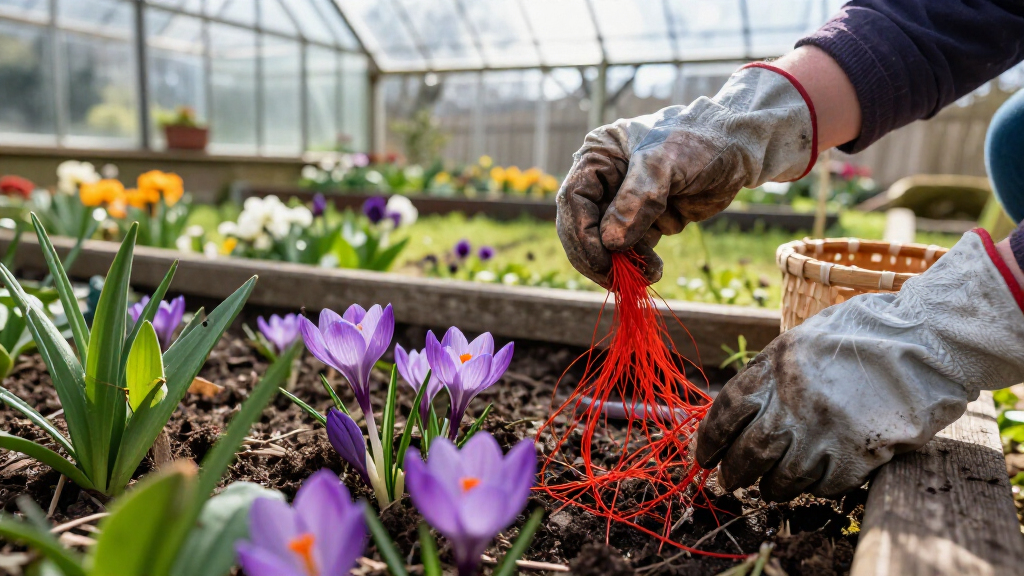
Crocus sativus typically flowers in October or November. Each flower has three red stigmas, which are picked and dried for saffron. The report says roughly 150 flowers produce one gram of dried threads, explaining why a household planting may yield only a modest quantity. It also notes that new corms multiply, and that some may not flower until their second year.
Gardeners can use a sunny bed or a container about 30 centimetres across, placed on the ground for winter. The report advises watering the corms once after planting and allowing rainfall to provide moisture if conditions permit. It cautions against prolonged wet soil, summer irrigation while the plants are dormant, cutting foliage before it yellows, and applying fresh manure or heavy nitrogen.
Small Harvest, High-Value Spice
Growing saffron at home offers gardeners a way to produce a small amount of a costly seasoning while adding purple autumn flowers to a yard. The hand-harvested stigmas mean the work and scale matter: each flower contributes only three threads, and the report’s estimate of about 150 flowers per gram gives readers a practical sense of the effort behind a jar of dried saffron.
The advice also highlights that success depends less on elaborate equipment than on choosing the right site and avoiding a few common mistakes. Drainage is particularly important, since corms can rot in soil that remains wet. Allowing leaves to die back naturally supports the corms that may flower in later seasons.
Products Worth Considering

Husqvarna Power Axe 350i 18-Inch Cordless Chainsaw Kit

Solo Stove Ranger 2.0 15-Inch Smokeless Fire Pit with Stand

EGO POWER+ LB6151 Cordless Leaf Blower with 2.5Ah Battery and Charger
As an affiliate, we earn on qualifying purchases.
Plant Identity and Growing Conditions
The report identifies saffron as the dried red stigmas of Crocus sativus, a fall-blooming crocus grown from corms. It warns that plants sometimes sold under names such as autumn crocus or meadow saffron may instead be Colchicum autumnale, which is poisonous. The report says saffron crocus flowers have three stamens, compared with six on a Colchicum, but recommends checking plant identity rather than relying on appearance alone.
Heavy clay soil that holds water may make a raised bed or container a better choice. Voles and squirrels may dig up corms, so the report suggests protective mesh; netting may help deter deer from winter foliage. Once flowers open, it recommends picking the red stigmas in the morning after dew has dried, then drying them fully and storing them in a sealed, light-protective container.
““Good drainage is the key to growing these corms successfully in all zones.””
— Gardening Know How report
Yield Depends on the Planting
The report does not give a guaranteed yield for a home garden. Flowering and harvest amounts will depend on the number and condition of corms, growing conditions and whether corms flower in their first year. Its estimate of about 150 flowers per gram is presented as a general production figure, not a promise of what any individual planting will produce.
Planting dates are described as usual or possible rather than fixed; local weather and soil conditions may affect timing. The report also gives general saffron safety cautions, including avoiding consumption during pregnancy and consulting a clinician about possible medication interactions. It does not provide individualized medical advice or establish a safe amount for every person.
Autumn Flowers and Harvest
For gardeners planting corms, the next development to watch for is the autumn bloom, generally expected in October or November in the report’s guidance. If flowers appear, harvest the red stigmas carefully and dry them completely before storage. After flowering, leave the foliage in place until it yellows naturally, then assess the planting again in a later season as corms multiply.
Before planting or picking, confirm that the corms are labelled Crocus sativus and keep them separate from other fall-flowering bulbs. The report does not announce a new cultivar, trial or change in gardening guidance; it offers practical growing and harvesting instructions for home gardeners.
Key Questions
When should saffron crocus corms be planted?
The report gives August or September as the usual planting time, while saying October can also work. It advises planting corms soon after they arrive.
How much saffron comes from one flower?
Each Crocus sativus flower has three red stigmas, which are dried to make saffron. The report estimates that roughly 150 flowers are needed for one gram of dried threads.
Can saffron crocus grow in a pot?
Yes. The report says it can grow in a container around 30 centimetres across. Good drainage is necessary, and the pot should be placed on the ground over winter rather than left on a bench.
Is every autumn crocus safe to harvest?
No. The report warns that Colchicum autumnale, sometimes sold under confusing common names, is poisonous throughout. Harvest only from plants identified as Crocus sativus, and verify the plant before picking.
What should gardeners do with the leaves after flowering?
Leave the foliage until it yellows on its own. The report says the leaves continue feeding the corms before dormancy, helping support future growth.
Source: rss