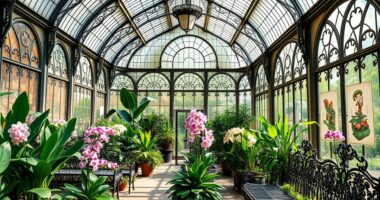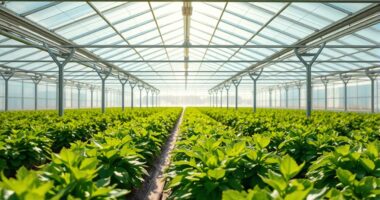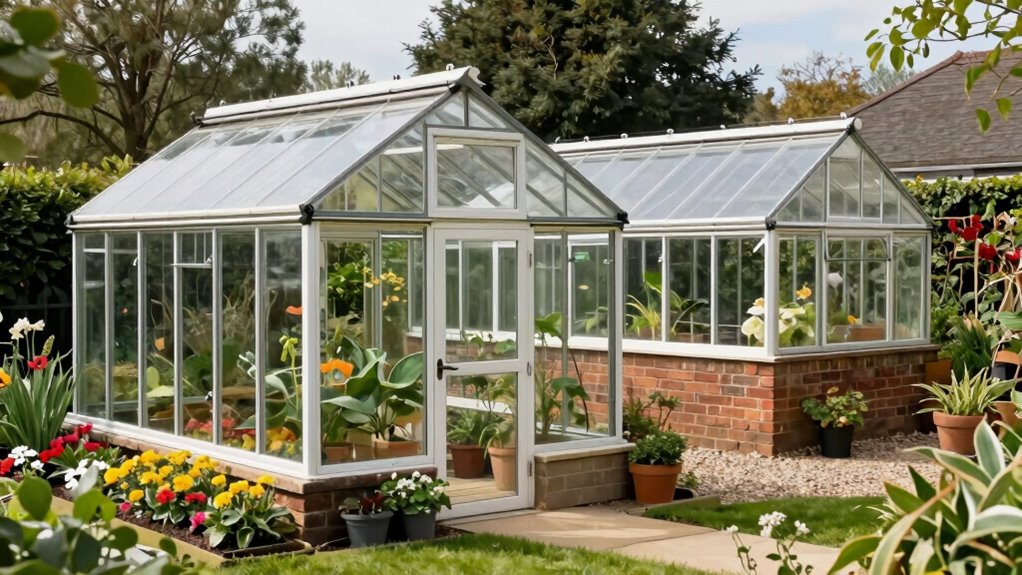

To decide between a freestanding and attached greenhouse, consider your garden space, climate, and future plans. If you want flexibility and ease of relocation, a freestanding model suits you best, especially for limited yards. An attached greenhouse offers better insulation and lower costs but may limit your garden layout. Think about your long-term gardening goals and budget. Exploring these factors more deeply will help you choose the best option for your needs.

Get garden gear delivered free with Prime
- Fast, free delivery on millions of items
- Prime Video, Amazon Music and more included
- Member-only deals all year
Key Takeaways
- Consider available space and landscape layout for optimal placement and accessibility.
- Evaluate climate conditions to determine insulation and heating benefits of each type.
- Assess budget constraints and maintenance requirements for long-term cost-effectiveness.
- Think about future expansion plans and how each option accommodates growth.
- Match your flexibility needs and gardening preferences with the ease of relocation or integration.
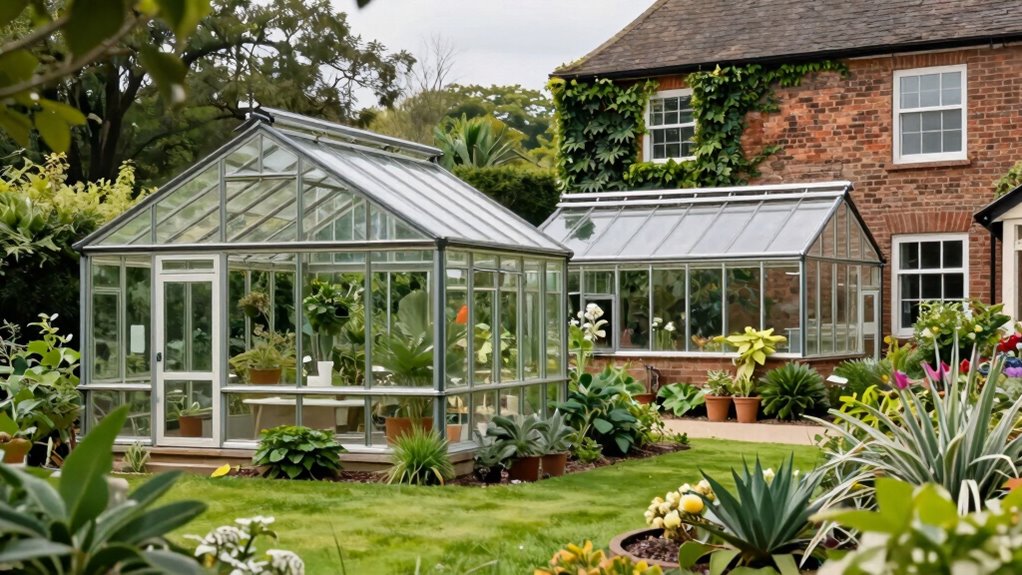
Are you unsure whether a freestanding or attached greenhouse suits your gardening needs? Deciding between the two depends on several factors, and understanding these can help you make the best choice. One of the key considerations is plant placement. With a freestanding greenhouse, you gain flexibility—you can position it anywhere in your yard, maximizing sunlight exposure and creating ideal conditions for your plants. This setup allows you to rotate your greenhouse if sunlight shifts or if you want to optimize garden layout. On the other hand, an attached greenhouse connects directly to your home, making it easier to access and tend to your plants frequently. If you’re looking for convenience and want to incorporate your greenhouse into your existing space, an attached structure might be the better option.
Insulation considerations also play an essential role. Attached greenhouses often benefit from the thermal mass of your house, helping them stay warmer during cold months. Since they share a wall with your home, they can leverage your house’s insulation, reducing heating costs and maintaining a stable environment for your plants. Since the location of your greenhouse can significantly influence its insulation needs and overall performance, it’s important to consider your climate. The choice hinges on how much effort you’re willing to put into climate control and whether your local climate demands extra insulation. Additionally, the climate zone in which you live can greatly impact the effectiveness of your greenhouse setup. When planning your greenhouse, understanding climate considerations can help you optimize its design and functionality.
Size and space are other vital factors. If you have limited space or want a dedicated gardening area, a freestanding greenhouse allows you to allocate a specific spot in your yard without impacting your home’s structure. Conversely, if your yard is spacious and you prefer a seamless integration with your living space, attaching the greenhouse to your house takes up less overall yard space and simplifies access. Think about how much room you have and how the greenhouse will fit into your overall landscape design.
Lastly, consider your budget and long-term maintenance. Freestanding greenhouses often require more foundation work and potentially higher initial costs, but they give you the freedom to relocate or redesign later. Attached greenhouses might be less expensive upfront and easier to maintain since they’re part of your house structure, but they could involve more complex modifications to your home. Additionally, planning for future expansion is an important aspect to consider when choosing the right greenhouse type. Weighing these factors—plant placement, insulation considerations, space, and budget—will help you determine the best fit for your gardening ambitions.
As an affiliate, we earn on qualifying purchases.
Frequently Asked Questions
What Is the Typical Cost Difference Between Freestanding and Attached Greenhouses?
The cost comparison between freestanding and attached greenhouses varies, but generally, attached greenhouses tend to be less expensive upfront because they utilize existing structures, reducing materials and labor costs. Freestanding greenhouses usually cost more due to additional foundation work and standalone framing. Pricing factors include size, materials, and design complexity. You should consider these elements carefully, as they considerably influence overall costs and your long-term investment.
How Much Space Is Required for Each Greenhouse Type?
Like a true pioneer, you need about 8-10 feet of space for a freestanding greenhouse, providing ample room for design flexibility and ventilation options. For attached greenhouses, you’ll want to allocate space along your existing structure—typically 4-6 feet—making it easier to integrate with your home. Both types benefit from thoughtful planning, ensuring you maximize airflow and layout to suit your gardening needs.
Which Greenhouse Type Offers Better Insulation in Winter?
A freestanding greenhouse typically offers better insulation in winter because you can optimize its thermal efficiency with better insulation materials. Since it’s independent, you can add insulation panels or double-glazing to improve heat retention. Attached greenhouses, however, lose heat through shared walls, making them slightly less efficient. So, if winter insulation is your priority, a freestanding design gives you more control over thermal efficiency.
Are There Specific Climate Considerations for Each Type?
You need to take into account climate zones and ventilation needs when choosing between a freestanding or attached greenhouse. In colder zones, a freestanding greenhouse offers better insulation, while attached ones can benefit from existing structure warmth. For warmer climates, guarantee proper ventilation to prevent overheating, especially in attached greenhouses where airflow may be restricted. Assess your local climate and ventilation requirements to select the best greenhouse type for your conditions.
How Easy Is It to Expand or Modify Each Greenhouse?
Expanding or modifying your greenhouse is like remodeling a sturdy house—each type offers different levels of structural flexibility and design adaptability. Freestanding greenhouses usually make modifications easier because they stand alone, allowing you to add or change sections without impacting the structure. Attached greenhouses might be more complex to modify, but they often integrate seamlessly with existing structures, making expansions more straightforward if planned carefully.
Conclusion
Ultimately, choosing between a freestanding and attached greenhouse is like planting a seed—each grows into a different shape of your gardening dreams. A freestanding greenhouse offers independence, like a bold sapling reaching for the sky, while an attached one is a cozy branch, blending seamlessly with your home. Whichever you choose, remember it’s your garden’s heart—nurturing growth, beauty, and your passion for nature. Your decision shapes the future of your green sanctuary.
Fall Picks
fall essentials
As an affiliate, we earn on qualifying purchases.