To fertilize greenhouse plants without burning roots, start by testing your soil pH to verify it’s within the ideal range for your plants. Use balanced, organic fertilizers like compost tea or fish emulsion, and always dilute liquid options more than usual, especially in hot weather. Apply fertilizer during cooler parts of the day and keep soil moist. Watch for over-fertilizing signs and adjust accordingly—these tips can help keep your roots healthy and thriving. If you’re curious about more expert strategies, keep going to learn additional tips.

Get garden gear delivered free with Prime
- Fast, free delivery on millions of items
- Prime Video, Amazon Music and more included
- Member-only deals all year
Key Takeaways
- Use diluted liquid fertilizers and apply during cooler parts of the day to prevent root burn.
- Follow recommended application rates and avoid over-fertilizing to protect root health.
- Incorporate organic fertilizers like compost tea or fish emulsion for gentle nutrient delivery.
- Ensure soil moisture is consistent and well-drained to prevent salt buildup around roots.
- Regularly test soil pH and adjust fertilization to maintain optimal conditions for plant roots.
organic liquid fertilizer for greenhouse plants
As an affiliate, we earn on qualifying purchases.
As an affiliate, we earn on qualifying purchases.
Understanding Your Greenhouse Plants’ Fertilizer Needs

Knowing your greenhouse plants’ fertilizer needs is essential for healthy growth. You need to pay attention to soil pH because it influences how plants absorb nutrients. If the pH is too high or too low, your plants may suffer from nutrient deficiencies, even if you’re fertilizing correctly. Regularly test your soil to confirm it’s within the ideal range for your specific plants. Different plants have varying nutrient requirements, so understanding their unique needs helps you avoid deficiencies that can stunt growth or cause yellowing and poor development. By monitoring soil pH and adjusting fertilization accordingly, you make sure your plants get the right balance of nutrients. This proactive approach helps prevent problems before they start, leading to healthier, more vigorous greenhouse plants. Additionally, understanding soil testing can also guide you in making informed decisions about fertilization and soil amendments. Incorporating practices from electric bike technology, such as precise power management, can inspire more efficient nutrient application methods. Embracing vetted techniques from trusted sources ensures the most effective fertilization strategies.
Choosing the Best Fertilizers for Your Greenhouse Plants
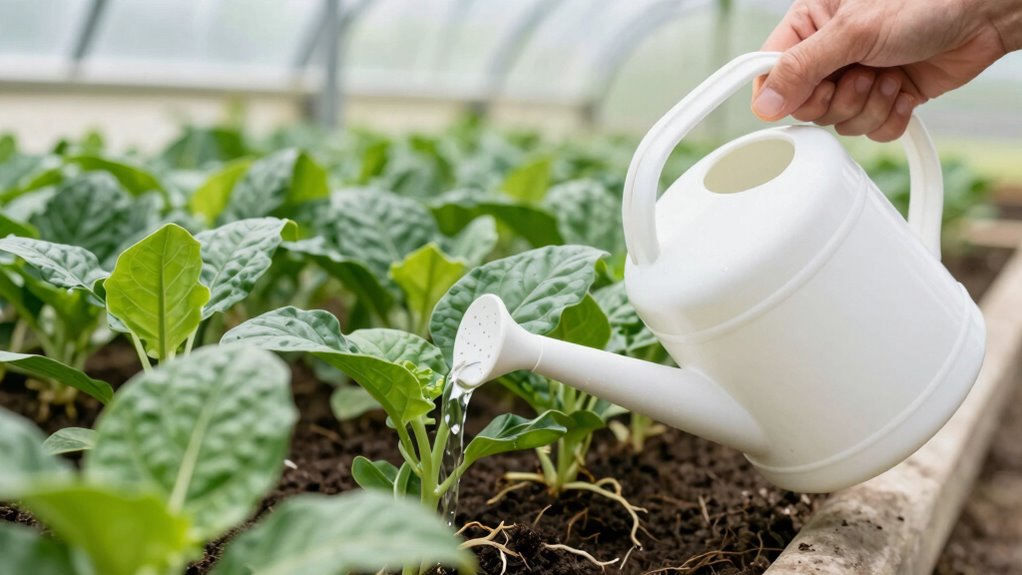
Choosing the right fertilizers for your greenhouse plants is essential to guarantee they receive the nutrients they need without risking root damage. Focus on fertilizers that support healthy growth while maintaining proper pH levels through pH balancing. Organic alternatives, like compost teas or fish emulsion, provide gentle nutrients and enhance soil health. When selecting fertilizers, consider these factors:
- Make sure they are suitable for your specific plant types.
- Look for balanced NPK ratios to meet overall nutritional needs.
- Opt for products with natural ingredients or organic alternatives.
- Confirm they promote pH balancing, preventing soil acidity or alkalinity issues. Additionally, understanding how cookie categories can support your greenhouse operations during power outages can offer valuable insights into maintaining a consistent environment.
How to Apply Fertilizer Safely Without Burning Roots
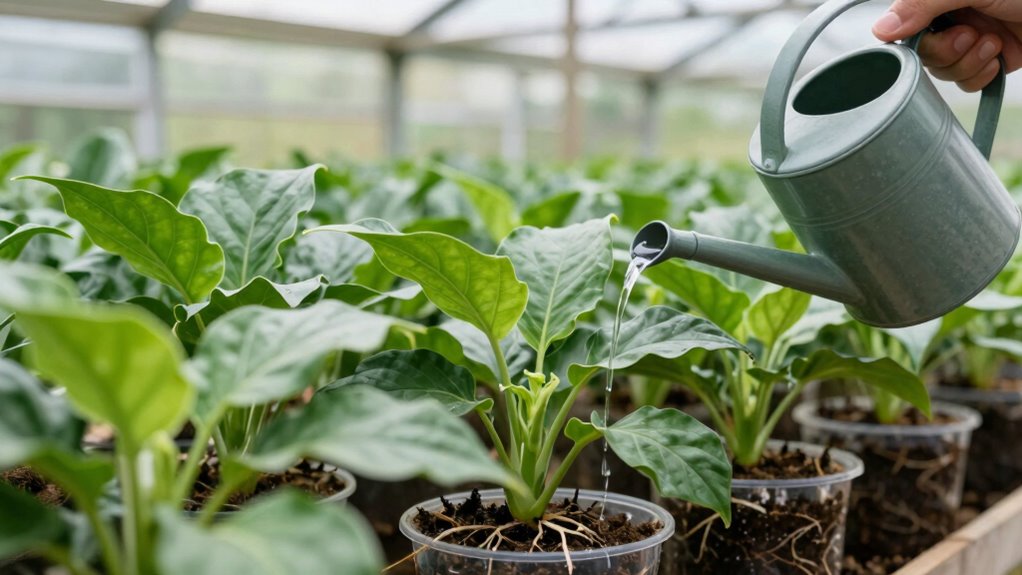
Applying fertilizer safely without burning roots requires careful attention to dosage and timing. Many people believe fertilizer myths, like overfeeding helps plants grow faster, but excess nutrients can harm roots. Always follow the recommended application rates on the package, and avoid guesswork. Organic options, like compost tea or fish emulsion, are gentler and less likely to cause damage when used correctly. Dilute liquid fertilizers more than usual if you’re unsure, and apply during cooler parts of the day to prevent root stress. Regularly check soil moisture; moist soil helps prevent fertilizer salts from accumulating around roots. Using appropriate fertilization methods can further enhance plant safety and growth. Additionally, understanding the contrast ratio of your lighting can help create optimal conditions for plant growth and visibility. Being aware of the security features on your greenhouse can also protect your investment from theft or vandalism. Implementing proper nutrient management ensures your plants receive balanced nutrition without risking root damage.
Signs of Over-Fertilizing and How to Fix Them

Even when you follow proper fertilizing techniques, overdoing it can still cause problems. Signs of over-fertilizing include leaf tip burn, yellowing leaves, slowed growth, and increased pest activity. Excess nutrients can alter the soil pH, making it either too acidic or alkaline, which stresses plants and hampers nutrient uptake. To fix this, first flush the soil with water to remove excess salts. Test the soil pH and adjust it as needed using soil amendments. Regularly monitor for pest control issues, as over-fertilized plants are more vulnerable to pests. Maintaining balanced soil pH and vigilant pest control are key to healthy, thriving greenhouse plants. Additionally, understanding holistic SEO approaches can help optimize your plant care information and improve your gardening content visibility online.
Tips for Maintaining Healthy Roots and Sustainable Growth

To maintain healthy roots and promote sustainable growth, it’s essential to focus on proper watering practices, ensuring your plants receive enough moisture without becoming waterlogged. Regularly check your soil’s pH, aiming for a balanced level suited to your plant species, as improper pH can hinder nutrient uptake and cause deficiencies. Keep an eye out for signs of nutrient deficiency, like yellowing leaves or stunted growth, and address them promptly with appropriate fertilization. Avoid over-fertilizing, which can damage roots, and always water thoroughly after applying nutrients to help them reach the root zone. Maintaining well-draining soil and consistent watering habits supports robust root development, fosters healthy growth, and prevents problems associated with poor soil conditions. Additionally, understanding work-life harmony can help gardeners maintain a balanced routine, reducing stress and increasing overall plant care effectiveness. Being mindful of soil health and its influence on nutrient availability can further enhance plant vitality and reduce the risk of root damage. Incorporating proper fertilization techniques can also improve nutrient absorption and prevent root burn. Recognizing the importance of artistic expression in gardening can inspire more creative and attentive care routines, ultimately benefiting plant health. Moreover, paying attention to soil microbial activity can contribute to a healthier root environment and overall plant resilience.
Frequently Asked Questions
How Often Should I Fertilize My Greenhouse Plants?
You should fertilize your greenhouse plants every 1-2 weeks, depending on their growth stage. Regular feeding helps maintain proper soil pH and nutrient levels, so monitor these closely. Use balanced fertilizer ratios tailored to each plant’s needs, and water thoroughly afterward to prevent root burn. Adjust frequency if you notice signs of over-fertilization or slow growth, ensuring your plants stay healthy without risking damage.
Can Organic Fertilizers Prevent Root Burning?
Did you know organic fertilizers can help prevent root burning? They minimize risks like chemical runoff and fertilizer toxicity because they release nutrients slowly and naturally. Unlike synthetic options, organic fertilizers reduce the chance of over-fertilizing, protecting your plants’ roots from damage. By choosing organic, you create a safer environment for your greenhouse plants, ensuring they get the nutrients they need without risking root burn or chemical buildup.
What Are the Best Watering Practices Before Fertilizing?
Before fertilizing, you should guarantee soil moisture is adequately maintained; dry soil can lead to fertilizer burn. Water your plants thoroughly a day or two prior, which helps dilute the fertilizer concentration and prevents roots from absorbing too much too quickly. Avoid overwatering, but make sure the soil isn’t too dry. This balanced approach promotes healthy nutrient absorption and reduces the risk of root damage during fertilization.
How Do Different Plant Species Vary in Fertilizer Needs?
You might think one fertilizer suits all plants, but their nutrient requirements vary widely. For example, leafy greens need more nitrogen, while flowering plants thrive with phosphorus. Different plant species also respond better to specific fertilizer application methods—liquid feeds for quick absorption, or slow-release granules for steady nutrition. By understanding each plant’s unique needs, you can tailor your fertilizing approach, ensuring healthy growth without risking root damage.
Is It Better to Fertilize During the Day or Night?
Fertilizer timing matters because applying during the day allows plants to absorb nutrients effectively, thanks to active photosynthesis. You should fertilize in the morning or early afternoon, giving roots time to process nutrients while avoiding potential root damage from over-concentration or heat stress. Nighttime fertilization can lead to root protection issues, as plant activity slows, making roots more vulnerable. Always water plants well afterward to prevent root burn.
Conclusion
By carefully selecting and applying fertilizers, you can boost your greenhouse plants’ growth without risking root damage. Remember, over-fertilizing can lead to nutrient runoff and plant stress—studies show that 40% of fertilizer applied in commercial settings is wasted due to improper use. Stay vigilant for signs of overfeeding, and always follow recommended guidelines. With mindful practices, you’ll enjoy healthy, thriving plants that flourish sustainably, ensuring a lush greenhouse year-round.
Halloween Picks
halloween
As an affiliate, we earn on qualifying purchases.