Most greenhouse buyers overlook the importance of proper gutter design and maintenance, which are crucial for water management, structural health, and pest control. Often, they focus on size or materials, but forget that poorly installed or neglected gutters can lead to water damage, mold, and costly repairs over time. Ensuring your gutters are effectively set up and properly maintained can save you money and protect your investment. If you want to learn how to optimize your gutters, keep exploring these key tips.
Key Takeaways
- Proper gutter slope is often overlooked, risking overflow and water pooling that can damage the greenhouse foundation.
- Gutter guard quality and effectiveness are frequently neglected, leading to clogs and increased maintenance.
- The importance of secure, appropriately spaced brackets for stability is often underestimated.
- Positioning gutters correctly below the roofline for maximum water collection is frequently ignored.
- Regular inspection and maintenance routines are commonly overlooked, risking long-term system failure.
Why Greenhouse Rain Gutters Are a Must-Have
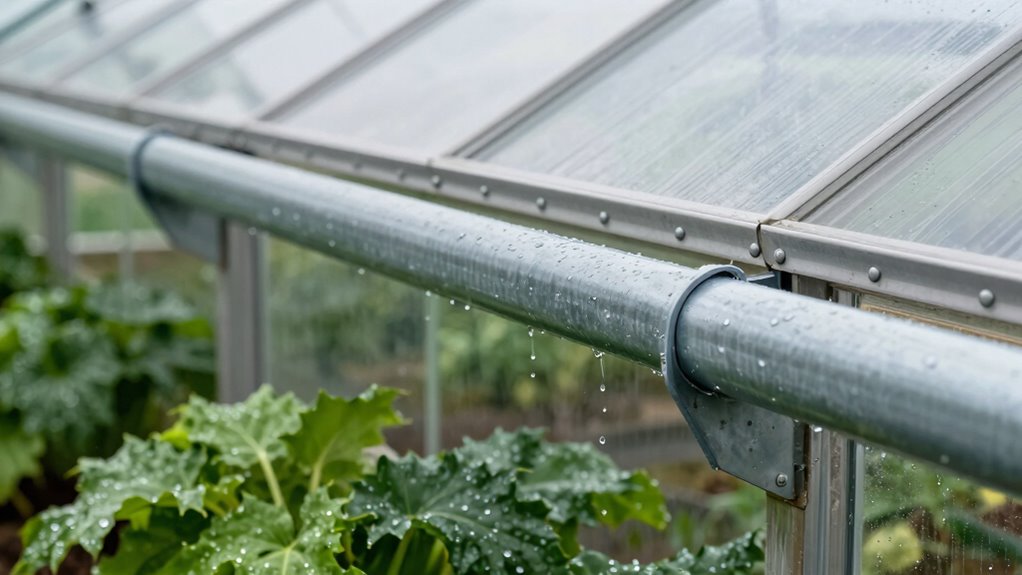
While many greenhouse buyers focus on the structure and insulation, they often overlook the importance of rain gutters. Proper gutters enable effective water harvesting, providing a sustainable way to collect and reuse rainwater for your plants. This practice can also help you better manage water runoff, preventing erosion around your greenhouse. Installing gutters can also help to reduce maintenance costs by minimizing water damage to the foundation and structure over time. Additionally, gutters help prevent pest problems by directing water away from the greenhouse’s foundation, stopping puddles and damp areas that attract insects and rodents. Keeping water flowing smoothly through gutters minimizes moisture buildup, which can lead to mold or plant diseases. Installing rain gutters also supports water conservation, making your greenhouse more environmentally friendly. Well-designed gutter systems can improve overall climate control inside your greenhouse by regulating humidity levels. Properly installed gutters can also assist in preventing structural damage, ensuring the longevity of your greenhouse. Overall, installing rain gutters isn’t just about managing water—it’s a smart step toward maintaining a healthier, more efficient greenhouse environment.
What Features to Look for in a Greenhouse Gutter System

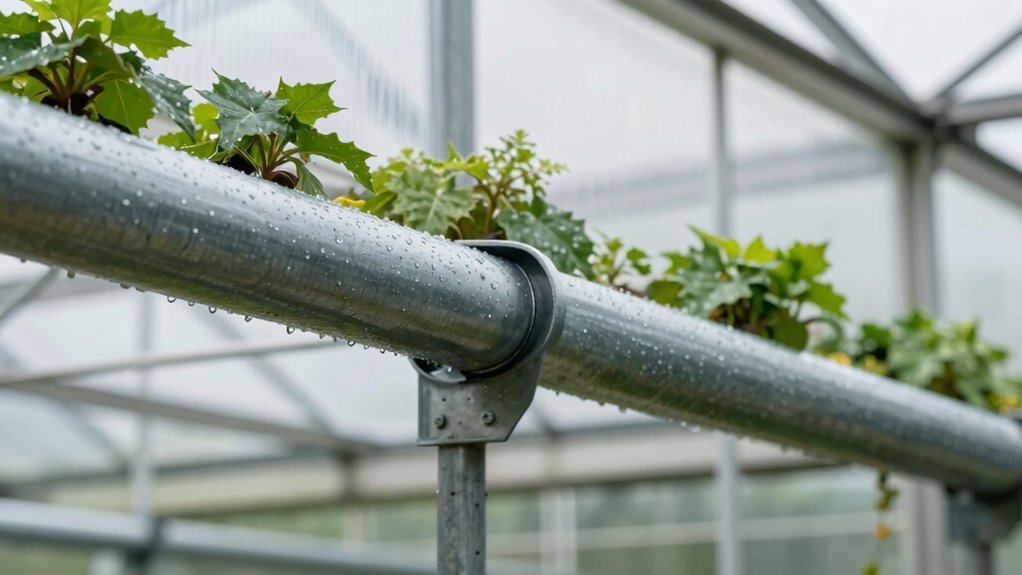
Choosing the right features for your greenhouse gutter system can make a significant difference in its performance and longevity. A key feature to take into account is rainwater harvesting capability, which allows you to collect and reuse water efficiently. Look for gutters with smooth interiors and minimal seams to prevent leaks and debris buildup. Gutter material options vary; aluminum is lightweight and durable, while vinyl offers affordability and easy maintenance. Copper and galvanized steel are more robust but may require more upkeep. Make certain the gutters have sturdy brackets and proper slope for effective water flow. Also, think about features like gutter guards or screens to reduce clogging. Proper installation techniques are essential for ensuring your gutter system functions optimally and lasts longer. Regular inspection and maintenance can further enhance the durability and efficiency of your gutter system over time. Understanding the importance of material durability can help you choose the best options for long-term performance and reduced upkeep costs. Additionally, selecting eco-friendly disposal methods for old or damaged gutters can contribute to environmental conservation efforts.
How to Install Greenhouse Rain Gutters Correctly
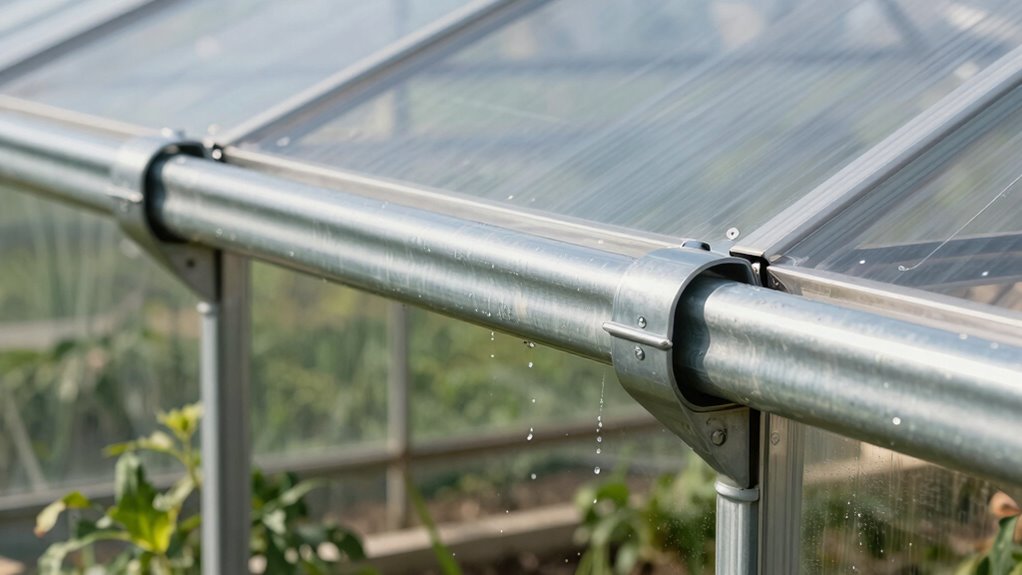
Installing greenhouse rain gutters correctly is essential to guarantee efficient water collection and prevent leaks. Start by selecting the right gutter material—aluminum, vinyl, or galvanized steel—to suit your climate and budget. Confirm the gutters are sloped at least 1/4 inch per 10 feet for proper rainwater harvesting. Attach brackets securely, spacing them about 24 inches apart, and position the gutters below the roofline to maximize flow. Use downspouts to direct water away from the greenhouse foundation. Check connections for tightness to avoid leaks. Proper installation ensures your system captures rainwater effectively and prolongs gutter lifespan. Incorporating work-life harmony into your gardening routine can also help you stay motivated and prevent burnout. Here’s a quick guide:
| Step | Key Point |
|---|---|
| Material selection | Choose durable, corrosion-resistant materials |
| Proper slope | Ensure at least 1/4 inch per 10 ft |
| Secure attachment | Use brackets spaced 24 inches apart, and verify material durability for longevity. Additionally, considering climate factors can help you select the most suitable gutter material for your environment. Proper installation also involves checking that all connection points are sealed tightly to prevent leaks. Incorporating proper installation techniques can significantly improve the longevity and effectiveness of your rain gutter system. |
Prevent Water Damage With Proper Gutter Setup

To prevent water damage around your greenhouse, setting up your gutters properly is essential. Correct gutter installation guarantees rainwater is directed away from your structure, protecting foundations and walls. Incorporate rainwater harvesting systems to collect runoff for later use, reducing water waste and easing drainage. Properly angled gutters prevent overflow and pooling, which can cause structural issues over time. Pay attention to gutter aesthetics; neat, well-maintained gutters blend seamlessly with your greenhouse design, boosting curb appeal. Use high-quality materials to withstand weather and avoid leaks. Regular inspections and cleaning keep gutters free of debris, ensuring peak performance. Additionally, understanding the importance of proper drainage can help you optimize your gutter system for long-term durability. Incorporating smart security features can also help protect your greenhouse from vandalism and theft, especially if it’s located in a vulnerable area. A thoughtful gutter setup safeguards your greenhouse, minimizes water damage risks, and enhances overall efficiency and appearance. Ensuring your gutters are properly installed can also prevent costly repairs in the future. Paying attention to sound healing science principles in your setup, such as installing noise-reducing features, can further improve the environment around your greenhouse. Proper gutter maintenance is vital for maintaining system performance and preventing unforeseen issues.
Maintaining Your Greenhouse Gutters for Long-Term Efficiency
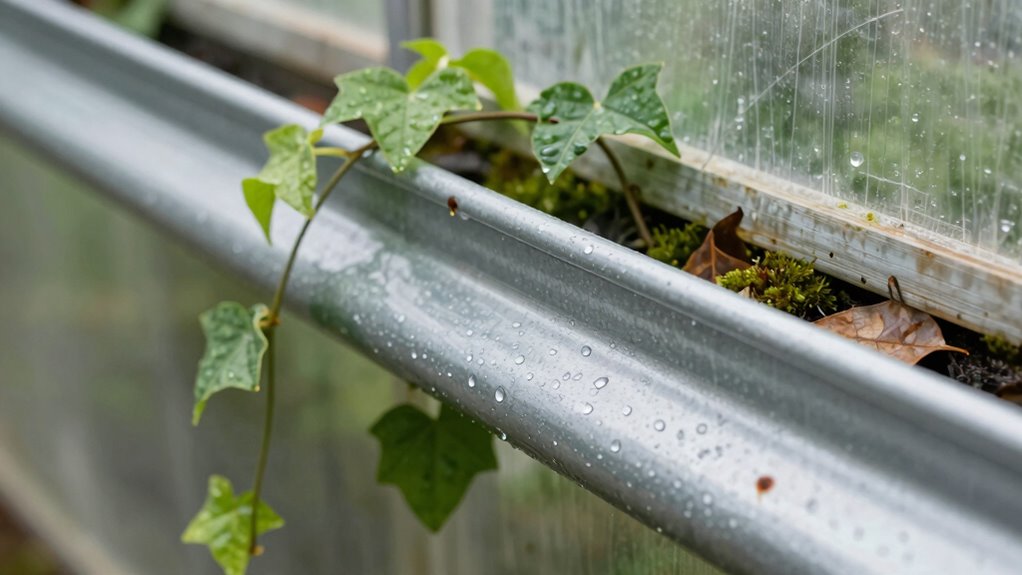
Maintaining your greenhouse gutters is essential for ensuring they function effectively over time. Regular gutter cleaning prevents debris buildup, which can block water flow and cause overflow. This is especially important if you’re using gutters for rainwater harvesting, as clean gutters maximize water collection efficiency. Inspect your gutters at least twice a year and after heavy storms to remove leaves, dirt, and twigs. Check for signs of damage or leaks, and repair them promptly to prevent water damage to your structure. Proper maintenance keeps your gutters free-flowing, ensuring rainwater is directed away from your greenhouse. Consistent upkeep boosts long-term efficiency, reduces costly repairs, and supports sustainable rainwater harvesting efforts. Stay vigilant, and your gutters will serve you well for years to come. Regularly cleaning and drying gutters helps prevent mold and water damage, ensuring your greenhouse remains in optimal condition. By understanding the importance of gutter maintenance, you can extend the lifespan of your gutters and maintain the overall health of your greenhouse. Additionally, debris removal is key to preventing blockages that can lead to structural issues. Incorporating routine inspections into your maintenance schedule can further help detect early signs of damage, saving you time and money in the long run.
Frequently Asked Questions
How Do Rain Gutters Impact Greenhouse Insulation?
Rain gutters influence greenhouse insulation by managing water runoff, preventing moisture buildup that can lead to heat loss. Proper gutters help control temperature regulation by directing water away from the structure, reducing dampness that hampers insulation efficiency. When you install quality rain gutters, you protect your greenhouse from unnecessary cooling and maintain a stable environment, ensuring your plants stay warm and healthy, especially during heavy rains.
Are There Eco-Friendly Gutter Material Options?
Yes, eco-friendly gutter materials do exist. Think of them as the backbone of sustainable practices—you’re helping nature while harvesting rainwater. You can opt for options like recycled aluminum, copper, or even bamboo, which are all environmentally conscious choices. These sustainable materials not only reduce your carbon footprint but also promote rainwater harvesting, making your greenhouse a model of eco-efficiency. Making smart choices today benefits tomorrow’s planet.
Can Gutters Be Customized for Different Greenhouse Shapes?
Yes, gutters can be customized for different greenhouse shapes. You can choose gutter aesthetics that complement your greenhouse’s design, whether it’s curved, angular, or irregular. Custom installation options allow you to adapt gutters precisely to your structure, ensuring ideal water management. This flexibility not only enhances functionality but also maintains the overall aesthetic appeal of your greenhouse, making it both practical and visually harmonious.
What Are Common Signs of Gutter System Failure?
You’ll notice gutter system failure through signs like gutter clogging and water overflow. When gutters get clogged with leaves or debris, water can’t flow properly, leading to overflow that damages your greenhouse structure or foundation. Regular inspections and cleaning help prevent these issues. If you see pooled water or overflowing gutters after rain, it’s time to clear out debris and make certain your gutter system functions effectively, protecting your greenhouse.
How Do Gutters Influence Pest Control in Greenhouses?
Gutters play a crucial role in pest control by preventing water accumulation that creates pest habitats. When gutters are clogged with debris, standing water attracts insects like mosquitoes and pests that can damage your plants. Regularly cleaning your gutters guarantees that debris doesn’t build up, reducing pest habitat and keeping your greenhouse environment healthier. Proper gutter maintenance is necessary for minimizing pest problems and maintaining a pest-free greenhouse space.
Conclusion
Don’t underestimate the power of well-installed gutters—they’re your greenhouse’s ultimate shield against water damage and chaos. When you pay attention to the details, your greenhouse stays healthier, more efficient, and ready to thrive through any weather. Think of gutters as the silent guardians of your green oasis, quietly working to protect your investment. Get them right, and you’ll transform your greenhouse into a fortress of lush, thriving life—more resilient than you ever imagined.