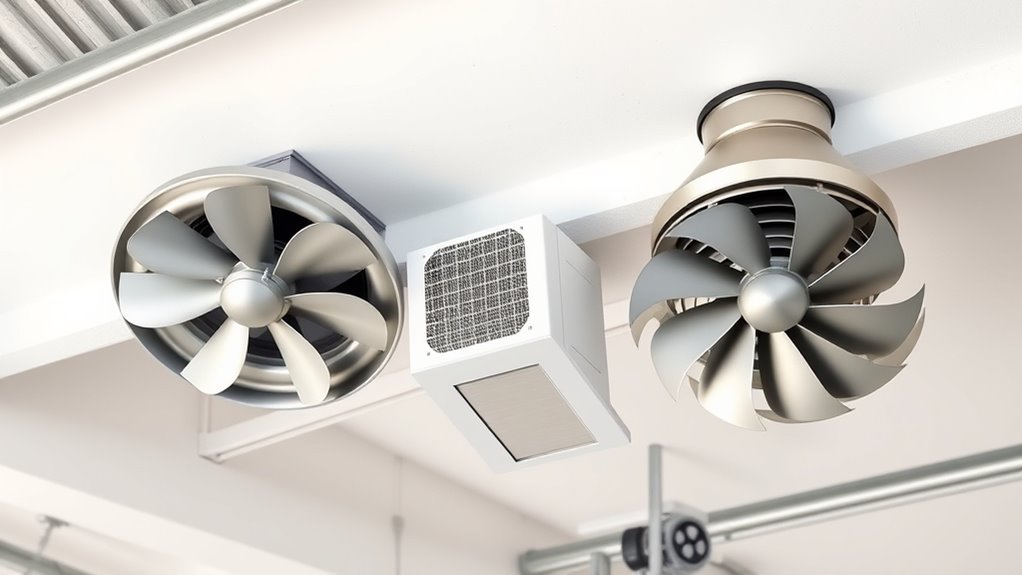

There are several types of vent fans, each designed for specific spaces and purposes. Bathroom exhaust fans remove humidity and odors to prevent mold, while kitchen exhaust fans handle grease, smoke, and strong smells. Inline duct fans are great for larger or complex systems within ductwork, and attic exhaust fans vent hot air to improve home ventilation. Fans with noise-reduction features operate quietly, ensuring comfort. Keep exploring to discover which vent fan best suits your needs and how they work.

Get garden gear delivered free — and shop member deals
- Fast, free delivery on millions of items
- Access to Prime Big Deal Days deals on October 6–7
- Prime Video, Amazon Music and more included
Key Takeaways
- Bathroom exhaust fans remove humidity and odors to prevent mold and improve air quality in small spaces.
- Kitchen exhaust fans handle grease, smoke, and strong odors, often featuring powerful motors for heavy-duty ventilation.
- Inline duct fans are installed within ductwork to serve larger or complex ventilation systems efficiently.
- Attic exhaust fans vent hot air and improve overall home ventilation, often with adjustable speeds for optimal performance.
- Fans designed for noise control operate quietly, suitable for residential or work environments requiring minimal disturbance.
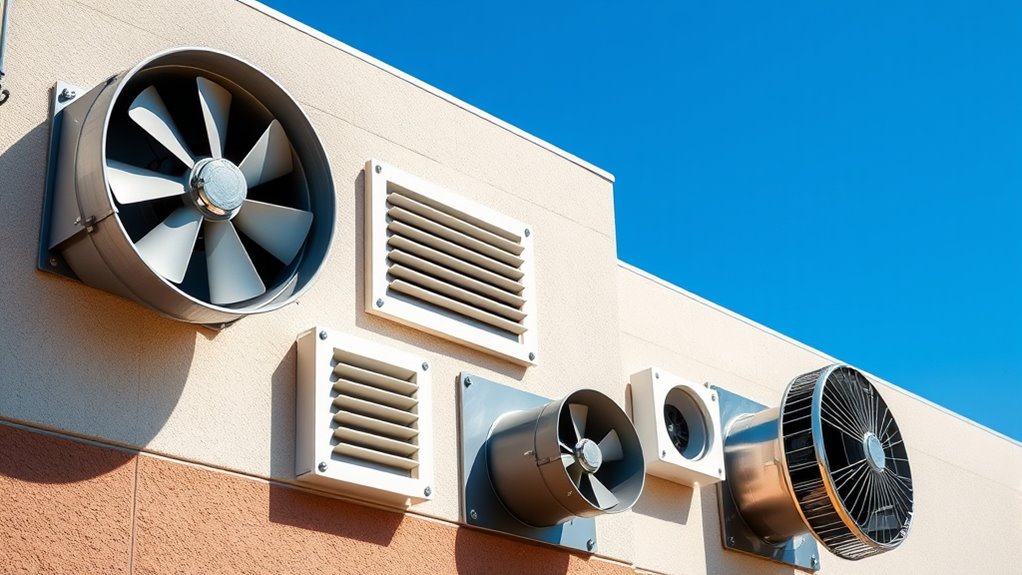
Vent fans are essential components in many systems for maintaining proper airflow and indoor air quality. They help remove excess moisture, odors, and airborne contaminants, creating a healthier environment. When choosing the right vent fan, you’ll want to consider airflow efficiency, which determines how effectively the fan moves air through a space. A high-efficiency fan ensures you get the desired ventilation without wasting energy, saving you money on electricity bills. Additionally, noise reduction is a critical factor, especially in residential or quiet work environments. No one wants a loud, disruptive fan, so selecting models designed for quieter operation can make a significant difference in comfort.
Vent fans improve air quality by efficiently removing moisture and odors while minimizing noise and energy use.
Different types of vent fans serve various purposes, depending on your specific needs. For example, bathroom exhaust fans are designed to swiftly remove humidity and odors from small spaces, preventing mold growth and maintaining air freshness. These fans typically focus on high airflow efficiency to quickly clear damp air but also incorporate noise reduction features so they don’t disturb your daily activities or sleep. Kitchen exhaust fans, on the other hand, are built to handle grease, smoke, and strong odors. They often feature more powerful motors and larger ducts to ensure effective removal, but modern models also prioritize noise control to keep your kitchen environment comfortable.
Inline duct fans are versatile options that can be installed within ductwork, making them suitable for larger or more complex ventilation systems. They deliver robust airflow efficiency across longer distances, which is especially useful in commercial settings or extensive residential systems. These fans are usually quieter than external industrial fans because they’re enclosed within ducts, helping to minimize noise transmission. Attic exhaust fans are another type, designed to vent hot air out of your attic space and improve overall home ventilation. They’re often equipped with adjustable speed settings and noise-reducing features, ensuring they operate efficiently without creating excess noise that might disturb your household.
In choosing the right vent fan, look for models featuring energy-efficient motors and sound-dampening technologies. Many modern fans come with adjustable speeds, allowing you to balance airflow efficiency and noise levels based on your preferences. Proper installation is also key—correct duct sizing and sealing can maximize airflow and reduce noise transmission. Whether you need a small bathroom fan, a powerful kitchen exhaust, or a large inline system, understanding the importance of airflow efficiency and noise reduction will guide you to the best choice for your space. This way, you ensure effective ventilation while maintaining a quiet, comfortable environment. Additionally, considering vent fan compatibility with various systems can help ensure your chosen fan integrates seamlessly with your existing setup.
Bathroom exhaust fan with noise reduction
As an affiliate, we earn on qualifying purchases.
As an affiliate, we earn on qualifying purchases.
Frequently Asked Questions
How Do I Choose the Right Vent Fan for My Space?
To choose the right vent fan for your space, consider fan placement to guarantee effective airflow and exhaust. Think about noise levels, especially if you’ll be in quiet areas like bedrooms or offices; look for models designed for low noise. Measure the size of your space to select a fan with appropriate CFM (cubic feet per minute). This helps you maintain good air quality without unnecessary noise or energy use.
What Maintenance Is Required for Different Vent Fan Types?
Imagine your bathroom vent fan, regularly used, needs upkeep. You should check the filter and replace it every 6-12 months to maintain airflow. Additionally, if your fan has a motor, lubricate it annually to prevent squeaking and guarantee smooth operation. Regular maintenance like cleaning vents, inspecting for debris, and tightening connections keeps your vent fan working efficiently, prolonging its lifespan and maintaining good air quality in your space.
Are There Energy-Efficient Vent Fan Options Available?
Yes, you can find energy-efficient vent fan options that incorporate energy saving technologies and eco-friendly ventilation. These fans use features like variable speed controls, high-efficiency motors, and smart sensors to reduce power consumption while maintaining ideal airflow. By choosing these eco-conscious models, you not only lower your energy bills but also contribute to a greener environment, ensuring effective ventilation without unnecessary energy waste.
How Loud Are Various Vent Fan Models During Operation?
You’ll find that noise levels vary depending on the vent fan model, with decibel ratings helping you gauge loudness. Most residential fans operate between 40 to 60 decibels, which is comparable to a quiet conversation or background music. Higher-powered models may reach 70 decibels or more, producing noticeable sound. When choosing a fan, consider your noise preferences, and look for models with lower decibel ratings for quieter operation.
Can Vent Fans Be Installed in Outdoor or Humid Environments?
Yes, you can install vent fans outdoors or in humid environments if they have outdoor durability and humidity resistance. Look for models specifically designed for these conditions, featuring corrosion-resistant materials and sealed motors. Proper installation guarantees they withstand weather elements and high moisture levels, maintaining performance and longevity. Always check the manufacturer’s specifications to confirm suitability for outdoor or humid use before installation.
Conclusion
So, now you know about all these vent fan types—surely, your home will stay fresh and odor-free. Ironically, the very fans that keep the air clean might be the ones you forget to clean or maintain. But hey, it’s a small price to pay for breathing easier, right? Just don’t let your newfound knowledge go to waste—because in the end, a well-ventilated space is only as good as the fan you forget to turn on.
Fall yard work Picks
leaf blowers
As an affiliate, we earn on qualifying purchases.