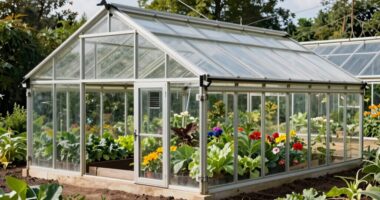

To make sense of greenhouse roof vents, focus on proper placement at the highest point for natural hot air escape and cross-ventilation with side vents for better airflow. Use durable materials like aluminum or galvanized steel, and consider automatic openers for hands-free control. Regular maintenance guarantees they function well, while automation helps keep temperature and humidity balanced. Keep exploring to discover how to optimize your vent setup for healthier plants and a thriving greenhouse.

Get garden gear delivered free with Prime
- Fast, free delivery on millions of items
- Prime Video, Amazon Music and more included
- Member-only deals all year
Key Takeaways
- Place roof vents at the highest point for natural hot air escape and effective airflow.
- Use durable materials like aluminum or galvanized steel for weather resistance and minimal maintenance.
- Automate vents with automatic openers to maintain consistent temperature and humidity levels.
- Combine roof vents with sidewall vents or exhaust fans for optimal cross-ventilation.
- Regularly inspect and maintain vents to ensure reliable operation and optimal greenhouse conditions.
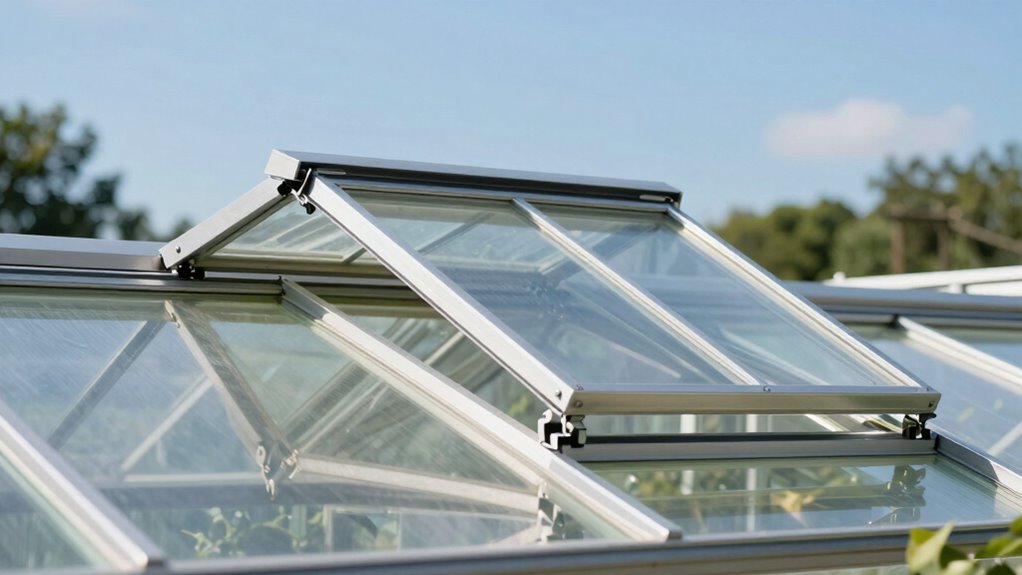
Are you wondering how to keep your greenhouse properly ventilated and maintain ideal growing conditions? Proper ventilation is vital for controlling plant humidity, preventing mold, and guaranteeing your plants thrive. One of the most effective ways to achieve this is by using roof vents, which allow hot, stale air to escape and fresh air to circulate. As you set up your greenhouse, understanding how to use roof vents correctly can make a big difference in your gardening success.
Effective greenhouse ventilation with roof vents keeps humidity in check and promotes healthy plant growth.
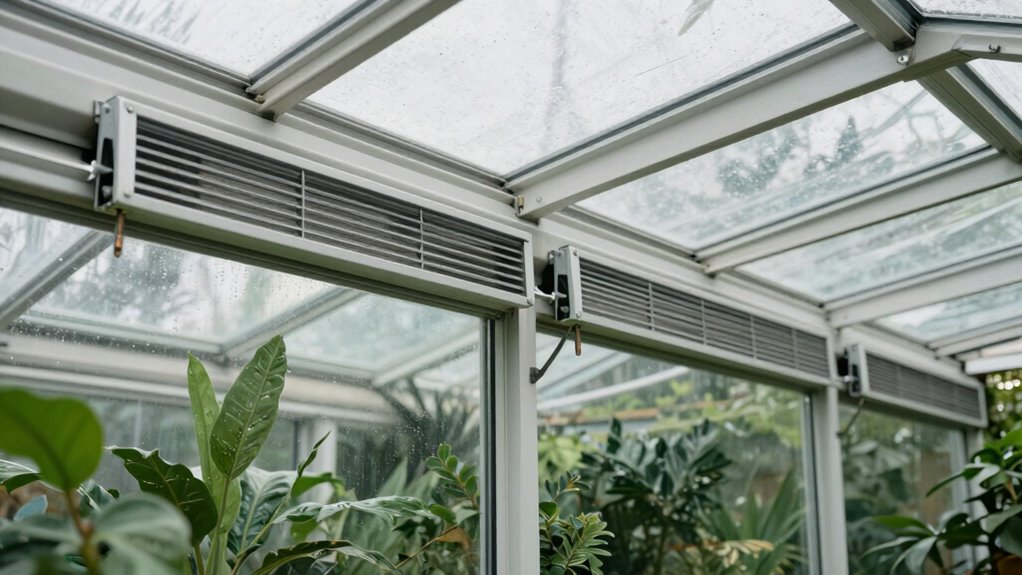
When managing plant humidity, it’s essential to keep the air inside your greenhouse at perfect levels. Too much moisture can promote fungal disease and slow down plant growth, while too little can cause dehydration. Roof vents help regulate this balance by releasing excess humidity and heat, especially during warm days. To maximize their efficiency, you need to choose the right ventilation materials—materials that are durable, weather-resistant, and easy to operate. Aluminum or galvanized steel vents are popular choices because they withstand the elements and require minimal maintenance. Some roof vents come with automatic openers, which activate as temperatures rise, providing hands-free ventilation without constant monitoring.
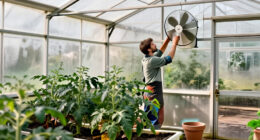
You’ll want to position your roof vents thoughtfully, ideally at the highest point of the greenhouse roof, to allow hot air to escape naturally. When the sun heats the greenhouse, warm air rises and flows out through these vents, pulling cooler, drier air inside. This natural convection creates a continuous air exchange that keeps humidity in check. To improve airflow further, consider combining roof vents with sidewall vents or exhaust fans, creating a cross-ventilation system that ensures fresh air reaches every corner of your greenhouse. Incorporating ventilation control devices can optimize airflow even more, especially during fluctuating weather conditions. Additionally, understanding airflow dynamics can help you design an effective ventilation system tailored to your specific environment. Properly designed vent placement is also crucial for maximizing efficiency and ensuring consistent airflow.
In addition to choosing the right ventilation materials, you should pay attention to how your roof vents open and close. Automatic openers are a smart investment because they respond to temperature changes, opening when it gets too hot and closing as temperatures drop. This automation helps maintain consistent conditions, reducing the risk of overheating or excessive humidity buildup. Manual vents are fine, but they require you to watch the weather and open or close them accordingly, which isn’t always practical.
Ultimately, using roof vents thoughtfully involves understanding your greenhouse’s size, typical weather conditions, and the specific needs of your plants. Regular maintenance and proper ventilation management are key to ensuring your system functions optimally throughout the seasons. With the right ventilation materials and proper placement, roof vents will become a reliable tool in keeping your greenhouse environment balanced. By doing so, you’ll create a healthier space for your plants to grow, ensuring they stay healthy, strong, and productive all season long.
greenhouse roof vents automatic openers
As an affiliate, we earn on qualifying purchases.
As an affiliate, we earn on qualifying purchases.
Frequently Asked Questions
How Do I Calculate the Right Size of Roof Vents for My Greenhouse?
To determine the right size of roof vents, start with airflow calculation based on your greenhouse’s square footage and desired ventilation rate. Typically, you’ll want to exchange the air every 1-2 minutes. Use this info to find vent sizing charts or formulas that match your needs. Accurate vent sizing guarantees proper airflow, preventing overheating and humidity buildup, keeping your plants healthy and your greenhouse climate controlled effectively.
Can Roof Vents Be Automated for Temperature Control?
Yes, roof vents can be automated to keep your greenhouse at the perfect temperature. Think of them as your green thumb’s best assistants, working behind the scenes to regulate humidity and optimize airflow. You can install automatic openers connected to thermostats or humidity sensors, ensuring vents open or close as needed. This hands-free approach helps maintain ideal conditions, making your greenhouse more efficient and your plants happier.
What Materials Are Best for Durable Greenhouse Roof Vents?
For durable greenhouse roof vents, you should prioritize vent material selection that withstands weather and UV exposure. Aluminum is a top choice due to its lightweight, corrosion resistance, and strength, making it highly durable. Polycarbonate is another excellent option, offering impact resistance and longevity. Consider durability considerations for your climate—stainless steel can be ideal in harsher environments, ensuring your vents last for years without warping or rusting.
How Often Should Roof Vents Be Cleaned and Maintained?
Your roof vents should be cleaned and maintained at least once every three to six months, or more often if you notice dirt buildup or reduced airflow. Regular vent cleaning frequency keeps your greenhouse running smoothly and prevents clogs. Follow simple maintenance tips like checking for debris, lubricating moving parts, and inspecting seals. This routine guarantees your vents stay as efficient as a well-oiled machine, protecting your plants and maximizing growth.
Are There Eco-Friendly Options for Greenhouse Roof Vent Systems?
Yes, eco-friendly options for greenhouse roof vent systems include solar shading and rain sensors. Solar shading helps regulate temperature without extra energy, reducing your carbon footprint. Rain sensors automatically close vents during rain, conserving water and energy. These features make your ventilation system more sustainable, efficient, and environmentally friendly, helping you maintain ideal conditions while minimizing environmental impact.
Conclusion
Now that you’ve uncovered the secret world of greenhouse roof vents, your plants are practically guaranteed to thrive like never before. With the right vents in place, you’ll turn your greenhouse into a lush paradise so vibrant it’ll make jungles jealous! Say goodbye to overheating disasters and hello to perfect, controlled climates—your plants will thank you with a never-ending display of beauty. Get ready to become the ultimate greenhouse hero, all thanks to vents that actually make sense!
Halloween Picks
halloween
As an affiliate, we earn on qualifying purchases.