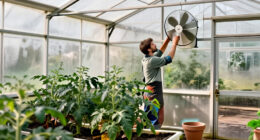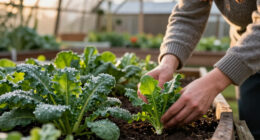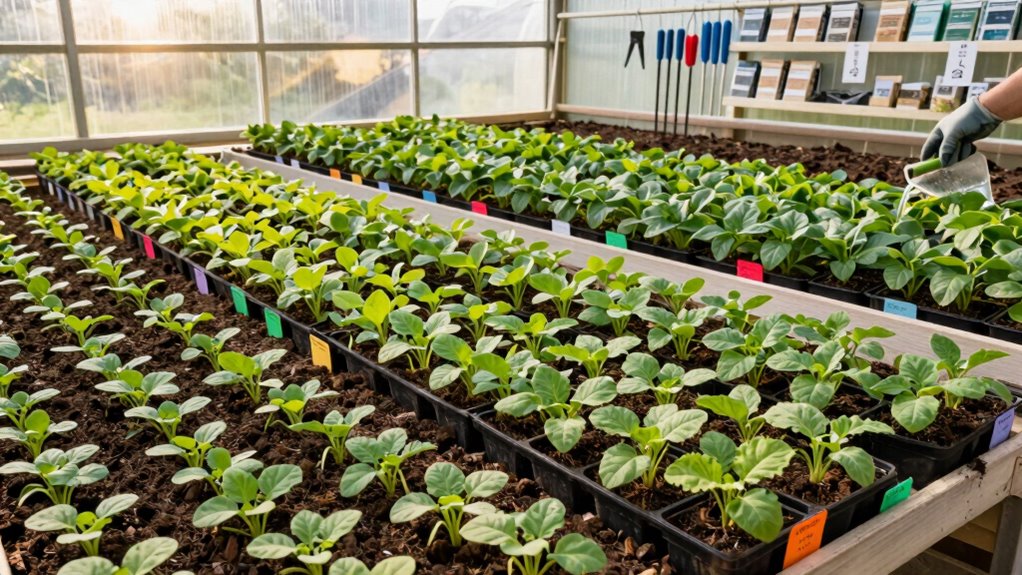
To keep your greenhouse from sitting empty, plan your seed starts around your local frost dates and growing season. Use a seed starting calendar to schedule different crops at staggered intervals, ensuring continuous growth. Adjust your timing based on weather forecasts and indoor conditions. Start early indoors and transplant once the weather is safe. Staying organized and aware of seasonal cues will help you maintain a steady supply of healthy seedlings—more tips await if you keep exploring.

Get garden gear delivered free with Prime
- Fast, free delivery on millions of items
- Prime Video, Amazon Music and more included
- Member-only deals all year
Key Takeaways
- Create a detailed seed starting calendar aligned with your region’s last frost date and growth cycles.
- Stagger seedings for different crops to ensure continuous harvest and prevent gaps in greenhouse occupancy.
- Start warm-season crops indoors early, transplanting when outdoor conditions are optimal.
- Use weather forecasts and soil temperature data to fine-tune sowing and transplanting times.
- Regularly monitor and adjust your schedule based on seedling development and environmental conditions.
As an affiliate, we earn on qualifying purchases.
Assess Your Climate and Growing Season for Seed Starting
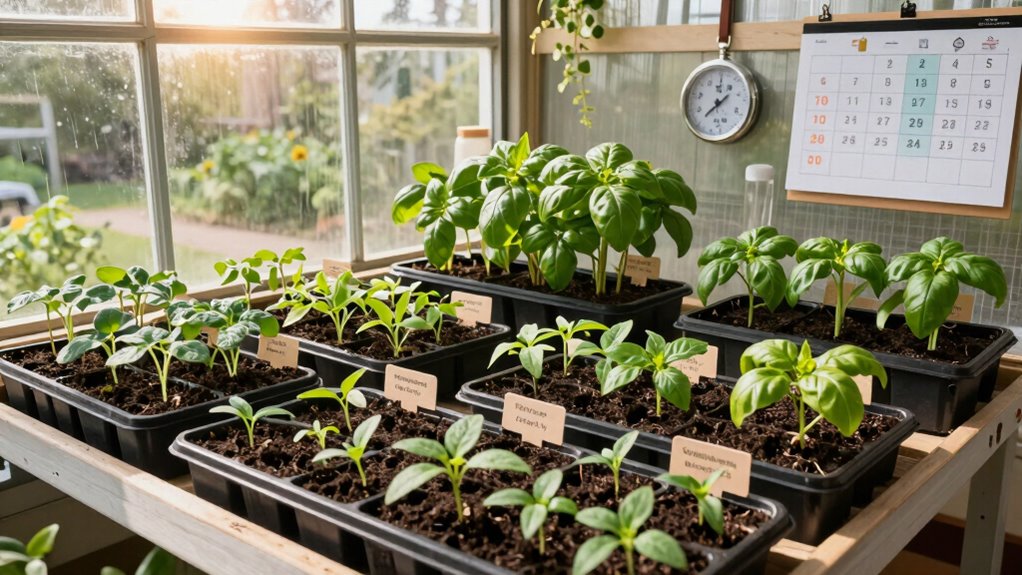
Before you begin seed starting, it’s essential to understand your local climate and growing season. Knowing your last frost date helps you plan when to start seeds indoors or outdoors. Proper soil preparation is vital; enrich your soil with compost to guarantee healthy seed germination and strong seedlings. Additionally, consider your region’s pest management needs—some pests are more active during specific times, so plan accordingly. Adjust your seed starting schedule based on temperature fluctuations and daylight hours, which directly impact germination and growth rates. By understanding these factors, you can optimize conditions from the start, reducing transplant shock and setting your plants up for success. Maintaining proper greenhouse conditions is also crucial for consistent growth and productivity throughout the season. Taking these steps helps you make informed decisions, assuring your greenhouse remains productive throughout the season. Being aware of seasonal variations can further refine your timing and management strategies, ensuring a thriving garden. Recognizing climate patterns aids in better planning and adapting your seed starting practices to seasonal changes.
Create a Monthly Seed Starting Calendar for Continuous Greenhouse Growth
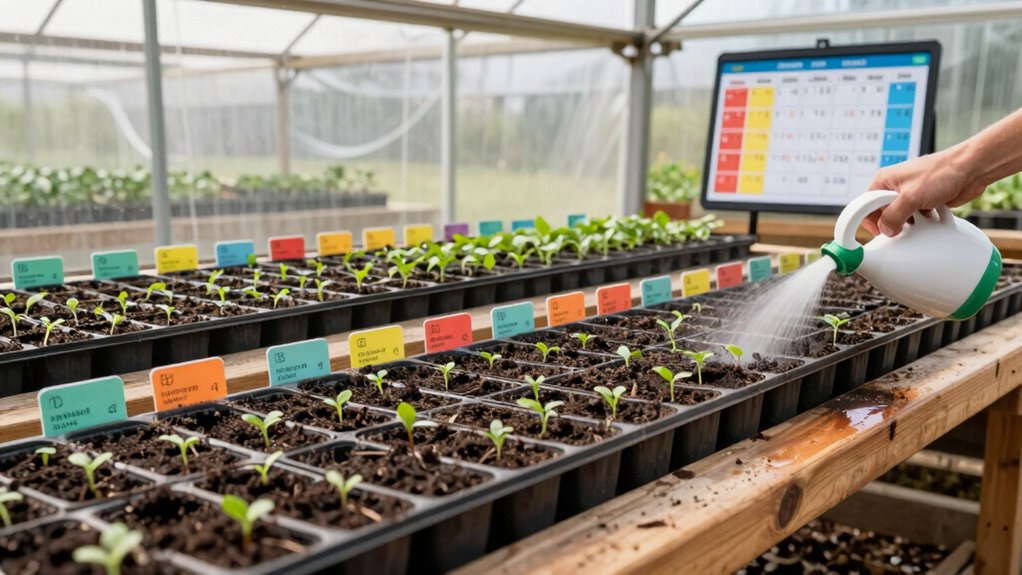
Creating a monthly seed starting calendar is essential for maintaining a steady supply of healthy seedlings and ensuring continuous growth in your greenhouse. By planning when to start seeds, you can manage seed dormancy and germination triggers effectively. This helps avoid gaps in your harvest and keeps your greenhouse productive year-round.
Use this simple table as a guide:
| Month | Seeds to Start | Notes |
|---|---|---|
| January | Early tomatoes, herbs | Maintain consistent moisture |
| February | Peppers, early flowers | Provide warmth for germination |
| March | Lettuce, carrots | Adjust light levels |
Adjust your calendar based on local climate, seed dormancy, and germination triggers, ensuring continuous growth.
Choose the Right Seeds and When to Start Them Indoors
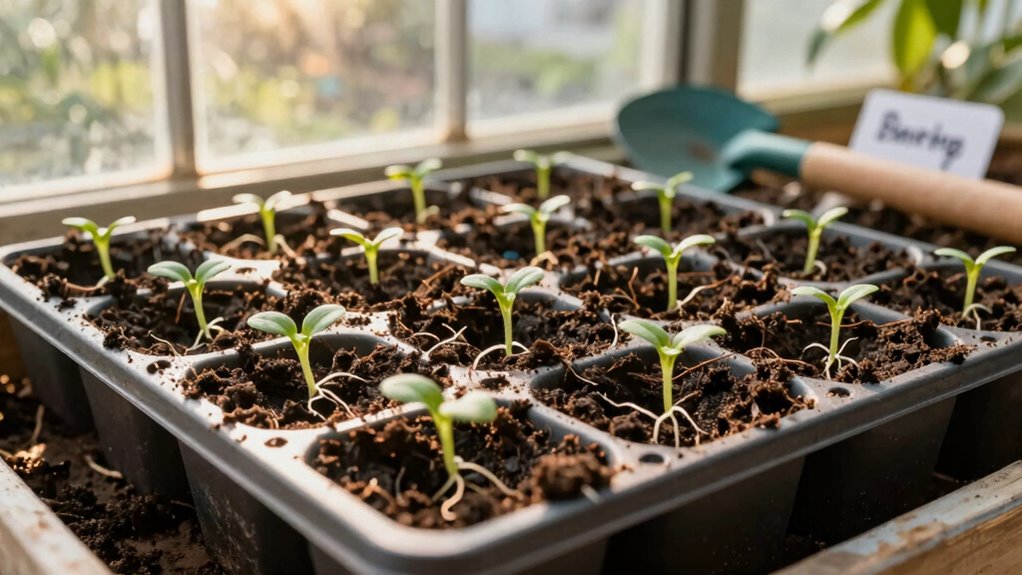
Choosing the right seeds is key to a successful start, so focus on varieties suited for your growing season and indoor conditions. Once you’ve selected your seeds, determine the best time to start them indoors so they have enough time to mature before outdoor planting. Proper lighting and temperature control are essential for healthy germination and growth, especially when considering projector technology, which can influence the environment inside your greenhouse. Additionally, understanding the growth requirements of each seed type ensures you provide optimal conditions from the beginning. By planning carefully, you’ll give your plants the ideal environment to thrive from the very beginning.
Ideal Seed Selection
How do you determine which seeds are best to start indoors? Start by reading seed packet labels carefully. They provide crucial information on whether a seed is suitable for indoor starting, along with ideal germination and transplanting times. Focus on seeds that grow well in containers and have a relatively short growing season, like tomatoes, peppers, or herbs. Proper soil preparation is essential—use a high-quality seed-starting mix that drains well and provides nutrients. Avoid heavy garden soil, which can hinder seedling growth. Select seeds that match your climate zone and your gardening goals. By choosing the right seeds and preparing your soil properly, you’ll set a strong foundation for healthy seedlings ready to thrive when moved outdoors. Additionally, understanding personality traits can help tailor your gardening strategies to your personal strengths, such as patience or attention to detail.
Optimal Indoor Start Time
Once you’ve selected the right seeds for indoor starting, timing becomes key to successful germination and healthy growth. To determine the ideal start time, consider your local last frost date and the recommended weeks before planting outdoors. Proper soil preparation is essential; use a lightweight, well-draining seed-starting mix to support sprouting. Make sure your lighting requirements are met—most seedlings need 12-16 hours of bright light daily, so supplement with grow lights if natural light is limited. Starting too early can lead to leggy seedlings or weak plants, while starting too late delays harvest. Keep a planting schedule based on seed packet instructions and your climate. Seed starting fundamentals can help you optimize your process and ensure healthy seedlings. This approach helps your greenhouse stay productive, with healthy seedlings ready at the perfect time.
Use Staggered Planting Techniques to Maximize Greenhouse Space
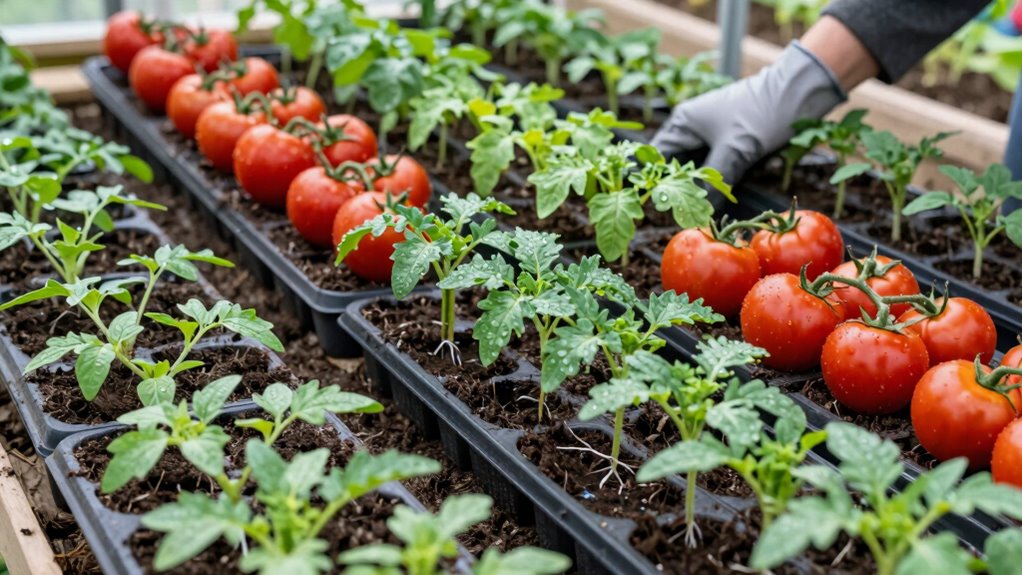
You can maximize your greenhouse space by using sequential planting schedules, which allow you to grow different crops at varying times. Staggering growth stages guarantees you make the most of available light and air circulation. This approach helps you harvest more efficiently and keeps your greenhouse productive throughout the season.
Sequential Planting Schedules
Staggered planting techniques allow you to make the most of your greenhouse space by scheduling seed starts at different intervals. With a strategic sequential planting schedule, you guarantee a continuous harvest without gaps. Start by planning your seed bed and soil preparation, so each batch is ready on time. Begin with early plantings, then follow with successive sowings every few weeks. This approach prevents overcrowding and maximizes space utilization. Incorporate roleplay etiquette principles to simulate a Victorian greenhouse environment, enhancing your experience. Use the table below to organize your schedule:
| Planting Date | Crop Type |
|---|---|
| Week 1 | Lettuce |
| Week 3 | Tomatoes |
| Week 5 | Peppers |
| Week 7 | Basil |
| Week 9 | Carrots |
Additionally, selecting innovative planters designed for optimal seedling growth can further improve your results. This method keeps your greenhouse active, productive, and always filled with thriving seedlings.
Staggered Growth Stages
By managing growth stages carefully, you can optimize your greenhouse space and guarantee a steady flow of harvests. Staggered planting allows you to grow plants at different stages simultaneously, maximizing efficiency. Start with proper soil preparation to assure healthy roots and vigorous growth. Consistently monitor pest management, as younger plants are more vulnerable and can quickly become infested if not protected. Timing seed starts so that some are ready for transplant while others are still maturing prevents overcrowding and keeps your greenhouse active year-round. This approach also enables you to allocate space effectively, avoiding bottlenecks. Additionally, understanding plant growth cycles helps you better plan your planting schedule for continuous yields. Regularly adjusting your planting schedule based on growth stages ensures that your greenhouse remains productive and minimizes downtime. By carefully planning your planting schedule and maintaining healthy soil and pest control, you’ll maintain a continuous harvest cycle and make the most of your greenhouse’s potential.
Time Your Seed Starts Using Weather and Frost Dates
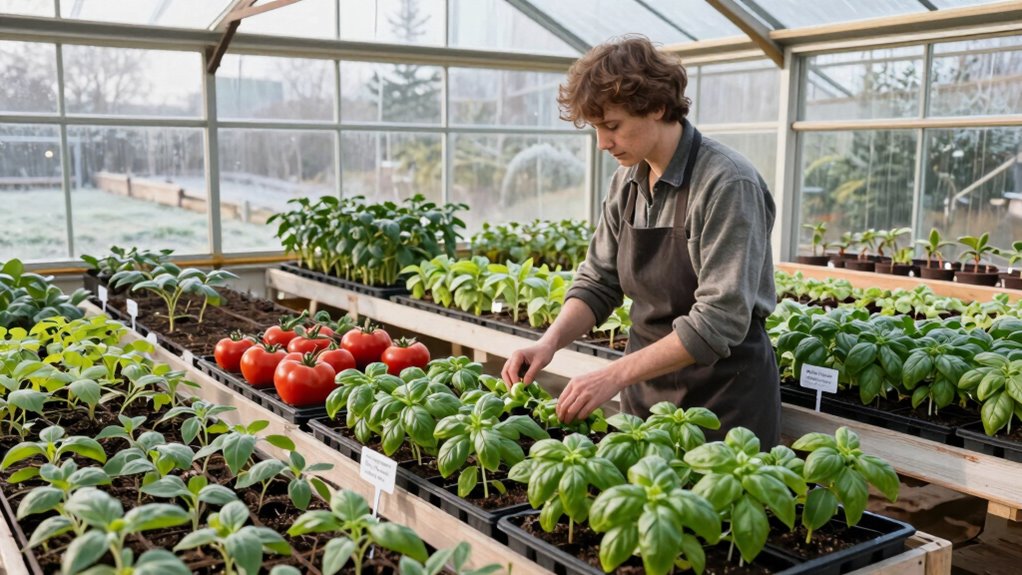
Understanding your local weather and frost dates is essential for timing seed starts effectively. By knowing the last frost date in spring and the first in fall, you can plan when to start seeds indoors or outdoors. This helps assure healthy soil preparation and minimizes pest management issues by giving plants enough time to establish before pests become active. For example, start warm-season crops indoors 6-8 weeks before the last frost, then transplant once conditions are safe. Keep an eye on weather forecasts to avoid unexpected cold snaps. Adjust your schedule accordingly to prevent seedling damage. Proper timing based on frost dates guarantees your greenhouse stays productive, reducing waste and maximizing growth potential throughout the season.
Track and Adjust Your Planting Schedule With Tools and Techniques
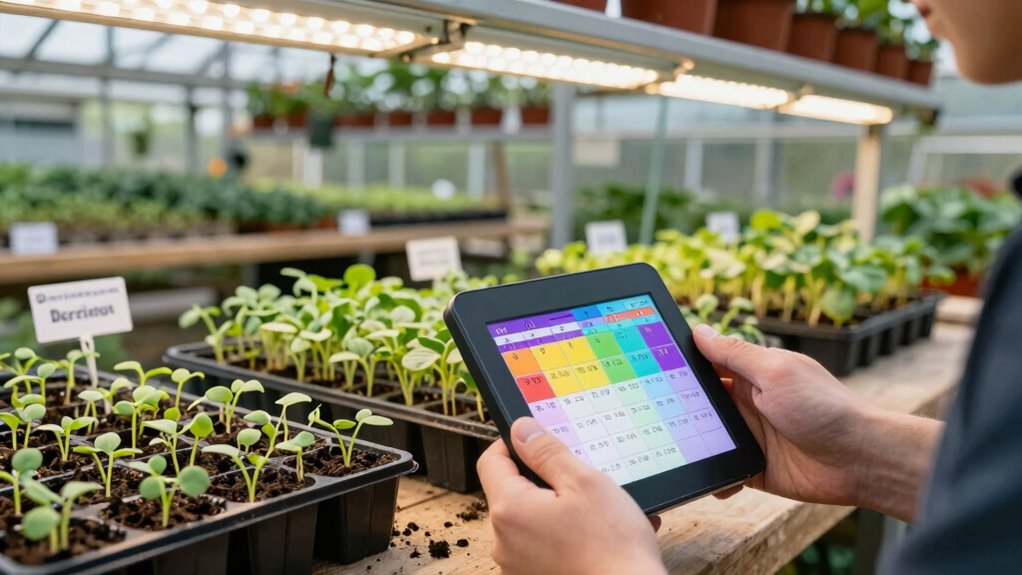
Tracking and adjusting your planting schedule with the right tools and techniques helps you stay on top of seasonal changes and unexpected weather shifts. Use a gardening journal or digital calendar to note planting dates, seedling nutrition needs, and soil preparation steps. Regularly monitor weather forecasts and soil conditions to refine your schedule. For instance:
Track and adjust planting schedules with tools and regular monitoring for optimal greenhouse productivity.
- Record seedling growth stages to time soil amendments and nutrition precisely.
- Adjust planting dates based on soil temperature and moisture levels.
- Use apps or spreadsheets to track germination success and optimize future seed starts.
- Incorporate seasonal planning to better anticipate changes in weather and light conditions. Understanding plant growth cycles can also help you align your schedule with natural plant development stages.
These tools help you fine-tune your schedule, ensuring your greenhouse remains productive. Consistent monitoring allows you to respond quickly, maintaining ideal conditions for seedling nutrition and soil health, so your greenhouse stays full year-round.
Avoid Common Mistakes When Timing Your Seed Starts for a Year-Round Greenhouse
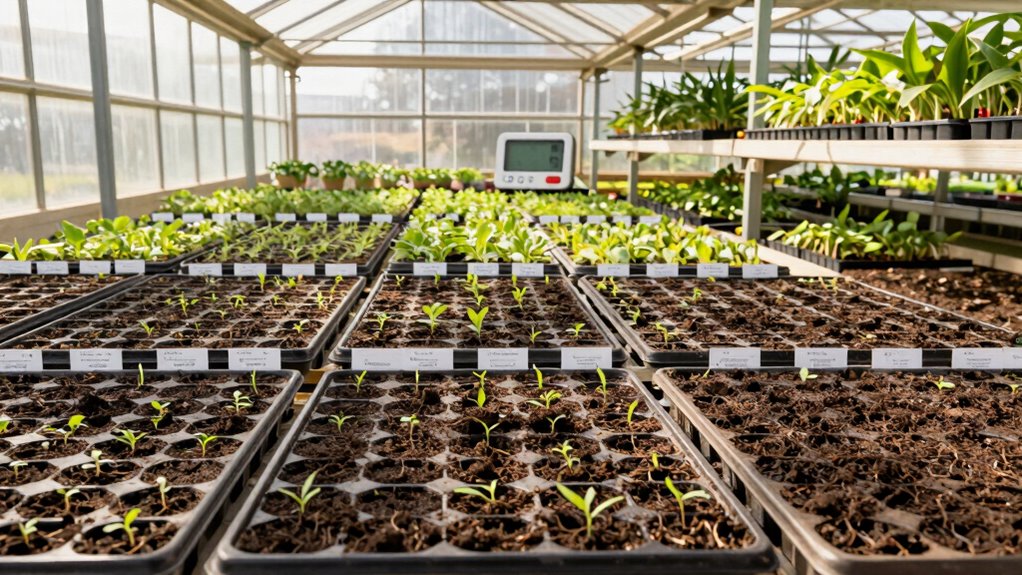
Timing your seed starts precisely is essential, but many gardeners make simple mistakes that can disrupt a year-round greenhouse setup. One common error is neglecting seedling nutrition; providing inadequate nutrients can stunt growth or cause weak plants. Always use balanced, appropriate fertilizers to guarantee healthy development. Another mistake is skipping soil sterilization, which can lead to disease and pest problems that delay or ruin your crop. Proper soil sterilization before starting seeds helps eliminate pathogens and pests, creating a clean environment for seedlings. Additionally, maintaining optimal germination conditions such as temperature and humidity is crucial, as inconsistent environments can hinder seedling development. Rushing to plant too early or delaying starts can leave your greenhouse empty or overcrowded, respectively. Ensuring proper soil preparation techniques can significantly reduce the risk of issues later on. Moreover, understanding the growth cycle of different plants can help you plan your seed starting schedule more effectively. Careful planning, combined with attention to seedling nutrition and soil sterilization, ensures your greenhouse remains productive and vibrant throughout the year.
Frequently Asked Questions
How Can I Extend My Growing Season Beyond My Local Climate?
To extend your growing season beyond your local climate, start seedlings early indoors using seedling nutrition to guarantee healthy growth. Use a greenhouse to protect plants from frost and pests, practicing pest management to prevent damage. You can also add supplemental lighting and heating to create a microclimate. Keep a close eye on weather forecasts and adjust your plans accordingly, so your greenhouse remains productive well into the off-season.
What Are the Best Indicators to Determine Seed Starting Readiness?
You wonder when your seeds are ready to sprout? Pay close attention to seed viability and germination timing. When the seed coat starts to crack or shows small roots, it’s a sign of readiness. Keep the soil moist and maintain the best warmth. If these indicators align, your seeds are primed for success. Acting at the right moment ensures strong seedlings, so don’t rush—wait for nature’s signal to begin.
How Do I Prioritize Which Seeds to Start First?
Start by prioritizing seed selection based on your growing season and harvest goals. Determine the ideal planting timing for each crop, considering their germination period and outdoor planting window. Begin with seeds that need the longest to mature or have specific start dates. This approach guarantees you stagger your planting schedule, keeps your greenhouse consistently productive, and prevents gaps in your harvest cycle.
What Are Signs of Over- or Under-Seeding in the Greenhouse?
Over- or under-seeding can turn your greenhouse into a chaotic jungle or a barren wasteland. Watch for signs like overcrowded seedlings with poor germination rates—these indicate over-seeding, while sparse, stretched-out plants suggest under-seeding. Too dense, and plants compete for nutrients; too sparse, you waste space. Adjust seed density accordingly, ensuring ideal germination rates and healthy growth, so your greenhouse stays lush and productive.
How Can I Automate or Simplify the Seed Starting Schedule?
You can automate your seedling management by setting up a timer for your grow lights and watering system. Use a programmable timer to guarantee consistent watering schedules, reducing manual effort. Keep a detailed seed starting calendar, noting germination times and transplant dates, to plan your schedule efficiently. Regularly check soil moisture levels and adjust watering times as needed, making your seed starting process smoother and more reliable.
Conclusion
By carefully planning your seed starting schedule, you’ll keep your greenhouse thriving year-round. Think of it like tuning a piano—you need to hit the right notes at the right time to create beautiful music. I once struggled with gaps in my harvest, but once I synchronized my planting calendar with the seasons, my greenhouse blossomed nonstop. With patience and precision, you’ll turn your gardening dreams into a continuous, lush reality.
Halloween Picks
halloween
As an affiliate, we earn on qualifying purchases.