
To prepare your greenhouse for summer heat waves, you should combine effective ventilation, shading, and proactive monitoring. Install automatic roof vents and exhaust fans to keep airflow steady, and use shade cloths with 50% density to block intense sunlight. Open vents early morning and late afternoon, and keep shade cloths in place during peak heat. Regularly check temperatures and humidity levels to make adjustments. If you want to make certain your plants stay healthy, there’s more to consider below.
Key Takeaways
- Install automatic or manual vents and exhaust fans to enhance airflow and remove excess heat efficiently.
- Use shade cloths (around 50%) on exterior windows to block sunlight before it enters the greenhouse.
- Maximize ventilation during peak heat hours by opening vents early morning and late afternoon.
- Combine shade cloths with oscillating fans to promote even air circulation and prevent hot spots.
- Regularly monitor temperature and humidity to fine-tune cooling measures and prevent heat stress on plants.
As summer heat waves approach, it’s essential to guarantee your greenhouse can handle the rising temperatures. High heat can stress plants, reduce growth, and even cause irreversible damage if not managed properly. To keep your greenhouse cool and your plants healthy, you’ll need to implement effective ventilation strategies and explore shade cloth options. These tools work together to regulate the internal climate and ensure your plants thrive during the hottest months.
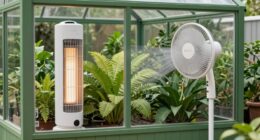
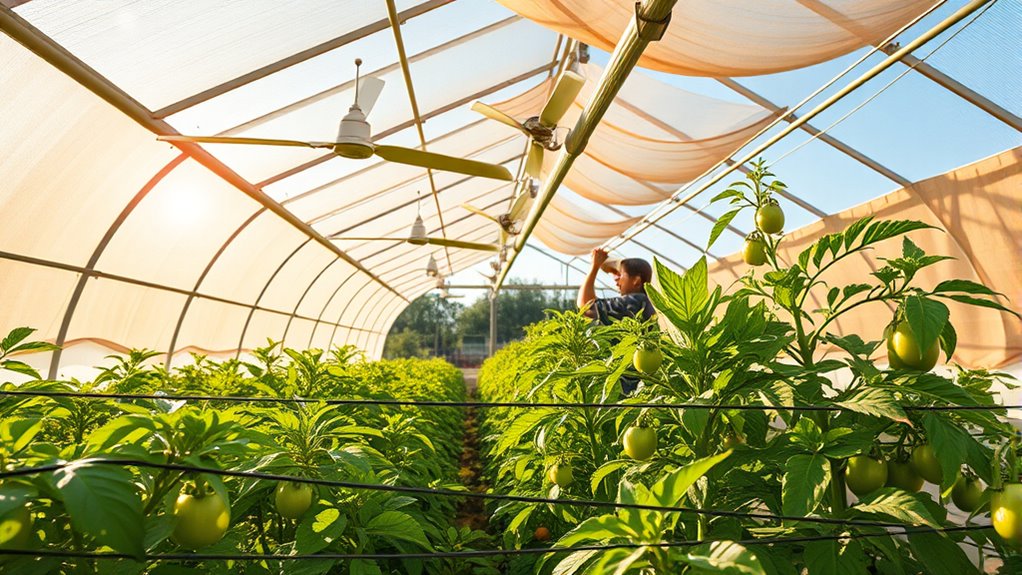
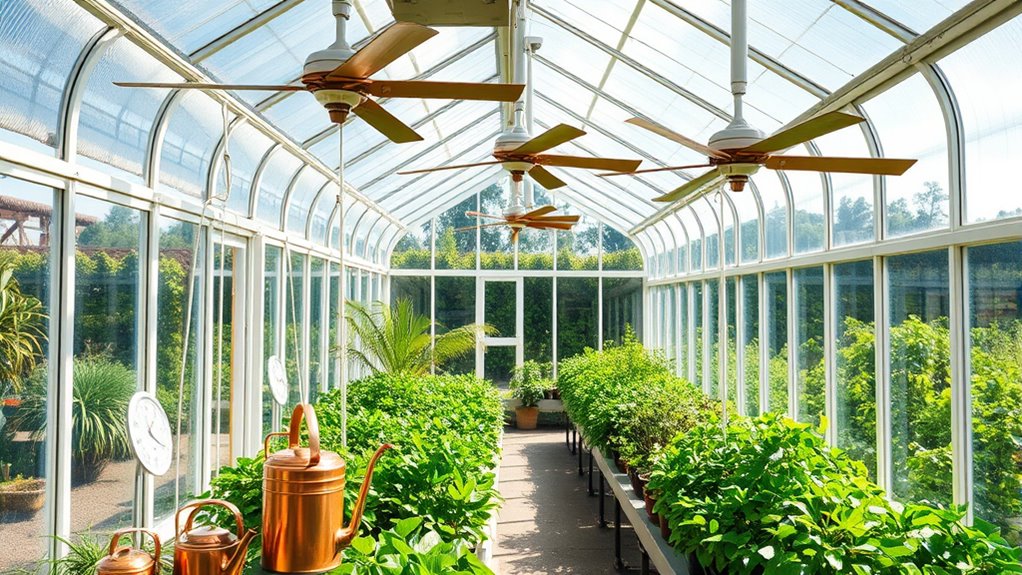
Start by assessing your current ventilation setup. Proper airflow is critical for dissipating heat and maintaining a stable environment. Consider installing exhaust fans or roof vents that automatically open when temperatures exceed a set point. These devices create a continuous flow of air, pulling in cooler outside air while pushing out hot, stagnant air. If you prefer a more manual approach, window vents or sidewall openings can be effective, provided you open them early in the day and close them during peak heat. Strategically placing oscillating fans inside the greenhouse can also help circulate air evenly, preventing hot spots and ensuring all plants get fresh airflow.
Next, think about shade cloth options. Shade cloths act as an additional layer of defense against the sun’s intense rays. They come in various densities, typically measured by the percentage of shade they provide—ranging from 30% to 70%. For most summer heat waves, a 50% shade cloth strikes a good balance by reducing sunlight intensity without overly darkening the environment. Installing these cloths on the exterior of your greenhouse allows you to block some of the heat before it enters, making your cooling efforts more effective. Some shade cloths are designed to be retractable or easily removable, giving you flexibility based on daily weather conditions. Combining shade cloths with ventilation strategies creates a comprehensive cooling system that substantially lowers internal temperatures.
You should also consider the timing of opening vents and adjusting shade cloths. Early morning and late afternoon are ideal periods to make these adjustments, as temperatures are cooler and plants are less stressed. During the hottest part of the day, maximize ventilation and keep shade cloths in place to prevent heat buildup. Regularly monitor temperature and humidity levels inside your greenhouse to fine-tune these measures. This proactive approach allows you to respond quickly to changing conditions, maintaining ideal growing conditions even during extreme heat. Additionally, understanding the importance of proper airflow can help optimize your cooling efforts, preventing stagnation and ensuring a healthy environment for your plants.
Ultimately, preparing your greenhouse for summer heat waves involves a combination of well-planned ventilation strategies and thoughtful shade cloth options. By implementing these measures, you create a cooler, more stable environment that protects your plants from heat stress and promotes healthy growth throughout the season. Staying proactive and adaptable ensures your greenhouse remains a productive haven, regardless of how intense the summer heat gets.
Frequently Asked Questions
How Can I Prevent My Greenhouse From Overheating Overnight?
To prevent your greenhouse from overheating overnight, you should incorporate effective ventilation strategies like exhaust fans or vents to promote airflow. Using shade cloths can also help reduce heat buildup during the day, keeping temperatures lower overnight. Make sure to open vents before sunset to let the heat escape and close them in the morning to maintain a stable environment. These steps guarantee your plants stay healthy and avoid heat stress.
What Materials Best Insulate Against Extreme Summer Temperatures?
Think of your greenhouse as a cozy fortress against summer’s sizzle. You should choose insulation materials like bubble wrap, foam boards, or reflective shields that act as thermal barriers, deflecting the sun’s relentless rays. These materials trap cool air inside and keep heat out, creating a microclimate that shields your plants from extreme temperatures. With the right insulation, your greenhouse becomes a cool oasis amid the summer blaze.
How Often Should I Monitor Humidity Levels During Heat Waves?
You should check humidity levels at least twice a day during heat waves to maintain proper humidity control. Fluctuating moisture levels can stress your plants or promote diseases, so consistent monitoring helps you respond quickly. Keep a hygrometer handy and record readings to track trends. Adjust ventilation, misting, or dehumidifiers as needed to keep moisture levels stable, ensuring your greenhouse stays healthy and productive despite the intense summer heat.
Are There Natural Cooling Methods Suitable for Small Greenhouses?
Did you know that over 60% of greenhouse cooling can be achieved naturally? You should definitely consider using shade cloths to block excess heat and improve airflow. Natural ventilation is also effective; opening vents or windows allows cool breezes to circulate, reducing temperature spikes. These methods are affordable, eco-friendly, and ideal for small greenhouses, helping you maintain a stable environment without relying on costly cooling systems.
How Can I Protect Delicate Plants From Sudden Temperature Spikes?
To protect delicate plants from sudden temperature spikes, you should use shade cloths to block excessive sunlight and keep temperatures stable. Additionally, set up misting systems to increase humidity and cool the air around your plants. These methods work together to prevent heat stress, ensuring your plants stay healthy during heat waves. Regularly monitor your greenhouse conditions to make timely adjustments and provide the best protection.
Conclusion
As summer heat waves become more frequent, it’s essential to prepare your greenhouse to protect your plants. Did you know that temperatures inside a greenhouse can rise up to 20°F higher than outside? By implementing shade cloths, proper ventilation, and monitoring temperatures, you can keep your plants healthy and thriving. Don’t wait until it’s too late—start these steps now to guarantee your greenhouse stays cool and your plants remain safe during the hottest days ahead.