
To succeed in summer greenhouse growing, focus on selecting heat-tolerant varieties like specialized tomatoes, peppers, and cucumbers. These strains are bred to withstand higher temperatures without sacrificing quality or yield. Speak with seed suppliers or local agricultural experts to find the best options suited for your climate. Using these resilient varieties along with proper environmental adjustments can help you maintain a productive and healthy greenhouse—continue exploring to discover more helpful tips and strategies.
Key Takeaways
- Select heat-tolerant fruit, vegetable, and herb varieties bred for high-temperature resilience, such as heat-tolerant tomatoes, peppers, and cucumbers.
- Prioritize strains with proven performance in hot climates, based on local recommendations and supplier insights.
- Choose varieties that maintain quality and yield during peak summer conditions to ensure successful greenhouse production.
- Opt for plants with characteristics like deep root systems and drought resistance to enhance heat tolerance.
- Incorporate organic and natural pest management strategies to protect heat-sensitive varieties from heat-induced stress.
As summer temperatures soar, growing plants in a greenhouse can become challenging. High heat puts stress on your crops, making pest management more difficult and disrupting nutrient optimization. To keep your plants healthy and productive, selecting heat-tolerant varieties is essential. These plants are bred to withstand the intense temperatures typical of summer, helping you maintain a thriving greenhouse despite the heat.
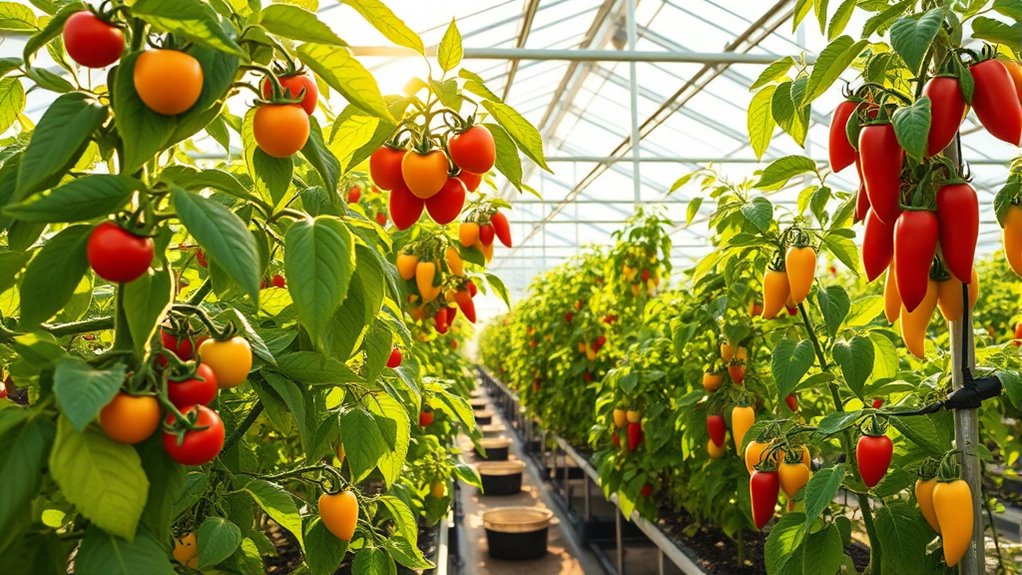
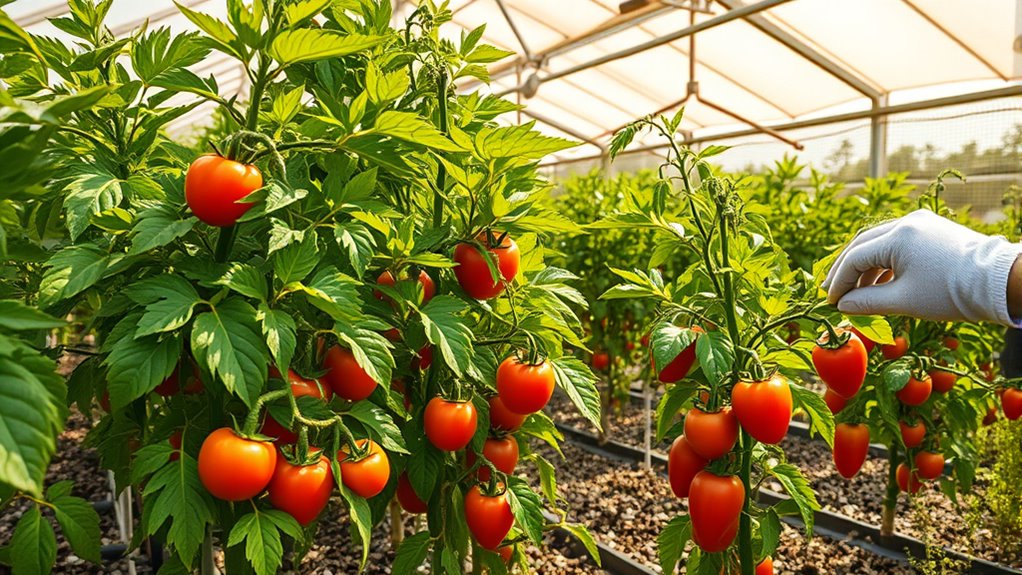
Start by choosing varieties known for their heat resilience. Many fruits, vegetables, and herbs now come in specially developed strains that can handle higher temperatures without compromising growth or yield. For example, heat-tolerant tomatoes, peppers, and cucumbers continue to produce well even during peak summer months. When selecting these varieties, look for recommendations from seed suppliers or local agricultural extensions, as they often have insights into which strains perform best in your climate.
Once you’ve chosen the right varieties, focus on optimizing your growing conditions to support their heat tolerance. Proper ventilation becomes even more critical in summer; ensure your greenhouse has adequate airflow to reduce temperature build-up and humidity. Using shade cloths during the hottest parts of the day can further protect your plants from excessive heat stress. Adequate watering is vital, so establish a consistent schedule that prevents drought stress while avoiding overwatering, which can lead to root problems. Implementing drip irrigation systems can help deliver water efficiently and keep soil moisture levels steady.
Managing pests becomes more complex in the heat, as elevated temperatures can accelerate pest life cycles and increase their populations. To stay ahead, integrate pest management strategies that include regular monitoring and early intervention. Beneficial insects, such as ladybugs and predatory mites, can help control common pests naturally. Keep your greenhouse clean and remove plant debris, as these serve as breeding grounds for pests. Additionally, avoid applying chemical pesticides during the hottest parts of the day to prevent stressing your plants further and to minimize chemical breakdown. Using organic pest control methods, like neem oil or insecticidal soaps, can be effective without adding undue stress.
Nutrient optimization is also critical during summer. As plants grow under increased heat, their nutrient demands rise. Ensure your fertilization regimen provides balanced nutrients, paying particular attention to potassium and calcium, which support stress tolerance and cell strength. Regularly test your soil and adjust fertilization accordingly to prevent deficiencies that can weaken plants’ resilience to heat and pests. Incorporating natural materials such as organic compost and mulch can also improve soil health and help regulate soil temperature, further supporting your plants’ ability to withstand heat stress.
Frequently Asked Questions
How Do Heat-Tolerant Varieties Impact Overall Crop Yield?
Heat-tolerant varieties boost your crop yield by improving overall crop yield and enhancing climate resilience. These varieties withstand higher temperatures, reducing stress on plants during summer, which leads to healthier growth and increased productivity. By choosing heat-tolerant options, you can maintain consistent harvests despite climate fluctuations, ensuring your greenhouse remains productive. This resilience helps you optimize crop yield improvement even during the hottest months, securing a more reliable and profitable harvest.
Are Heat-Tolerant Plants Suitable for Organic Greenhouse Practices?
Heat-tolerant plants are like sturdy ships sailing smoothly through summer storms, and they’re suitable for organic greenhouse practices. You can grow them with compost compatibility and still meet organic certification standards. These varieties often thrive in organic systems because they reduce the need for excessive cooling or chemical interventions. As long as you select certified organic seeds and follow organic practices, heat-tolerant plants are a great fit for your summer greenhouse.
What Are the Cost Differences Between Heat-Tolerant and Traditional Varieties?
You’ll find that heat-tolerant varieties generally cost more upfront due to specialized breeding and seed premiums. The cost comparison shows higher investment costs initially, but they can reduce cooling expenses and crop losses during hot weather. Over time, these savings might offset the higher investment costs. So, while the initial investment is greater, heat-tolerant plants can be a smarter choice for summer greenhouse growing.
How Do Heat-Tolerant Varieties Affect Pest and Disease Resistance?
Heat-tolerant varieties often enhance pest suppression and disease mitigation because they grow stronger under high temperatures, making plants less vulnerable. By maintaining healthier foliage and robust growth, you reduce the chances of pest infestations and disease outbreaks. These varieties can also be bred to resist specific pests and pathogens, helping you lower chemical use and improve overall plant health during hot summer months.
Can Heat-Tolerant Plants Be Grown Year-Round Indoors?
Sure, you can grow heat-tolerant plants indoors year-round, but don’t forget the indoor humidity and light optimization. Think of your space as a tropical paradise—constant care keeps plants happy. You’ll need to mimic summer’s warmth and sun, adjusting humidity levels and providing ample light. With some effort, your indoor garden can thrive even when the thermometer drops outside, turning your home into a lush, everlasting summer.
Conclusion
Think of these heat-tolerant varieties as your greenhouse’s loyal guardians, standing tall against the blazing sun like brave knights defending their castle. With their resilience, you can keep your summer oasis thriving, turning the harshest days into opportunities for growth. Embrace these champions, and your greenhouse becomes a vibrant, lush kingdom where every plant flourishes despite the heat. Together, you create a sanctuary of abundance, no matter how fierce the summer sun may blaze.