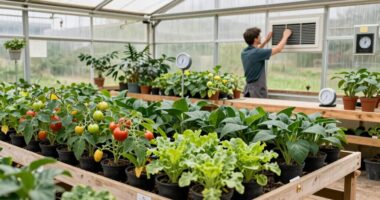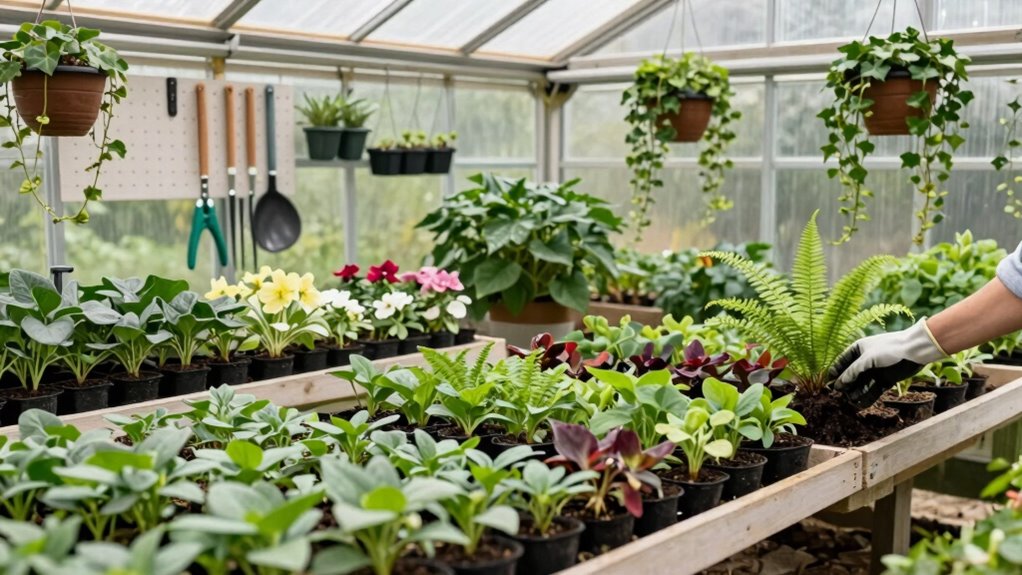

To prevent chaos in your spring greenhouse by June, stay organized by using shelves and vertical planting, and keep the space tidy by removing dead leaves and debris regularly. Practice companion planting to naturally deter pests, like placing basil near tomatoes or marigolds around your beds. Conduct frequent pest checks, use organic solutions, and maintain good airflow to minimize problems. Balancing environment conditions and supporting biodiversity help keep everything thriving—continue exploring these strategies to stay ahead of the chaos.

Get garden gear delivered free with Prime
- Fast, free delivery on millions of items
- Prime Video, Amazon Music and more included
- Member-only deals all year
Key Takeaways
- Establish a structured layout with shelves and vertical gardening to maximize space and airflow.
- Regularly prune, remove dead leaves, and tidy the greenhouse to prevent clutter and pest buildup.
- Implement companion planting to naturally deter pests and promote healthy plant growth.
- Conduct consistent pest monitoring and use organic control methods to prevent infestations from escalating.
- Maintain optimal environmental conditions with proper ventilation, humidity control, and biodiversity to support plant health.
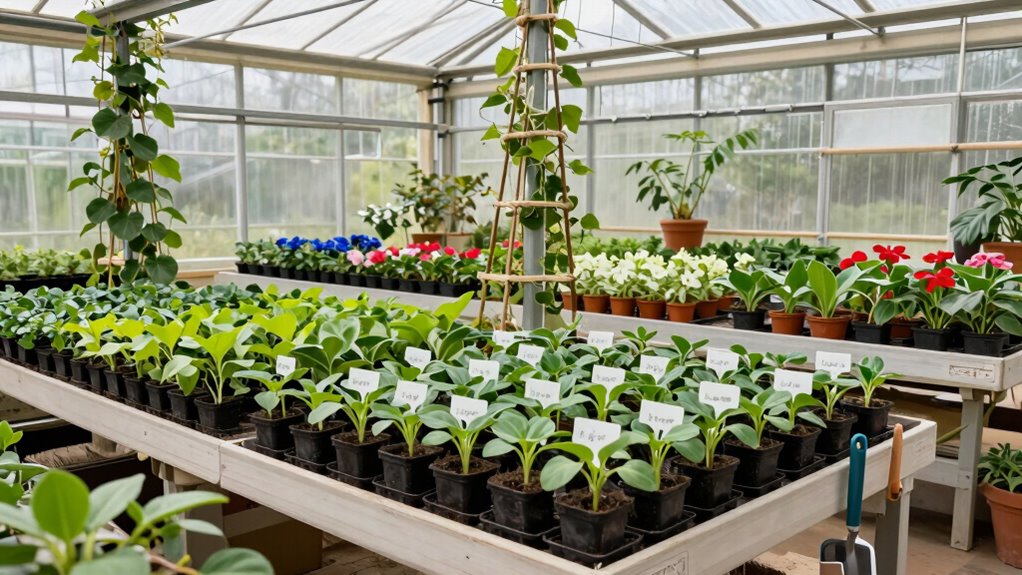
As spring progresses, your greenhouse can quickly become overwhelming if you don’t stay on top of maintenance and organization. The rapid growth of plants and the influx of new seedlings can lead to clutter, making it harder to care for everything properly. To keep chaos at bay, start by establishing a clear layout that maximizes space and promotes good airflow. Use shelves and vertical gardening techniques to give each plant enough room to grow without overcrowding. Regularly tidy up by removing dead leaves, spent flowers, and any debris, which can harbor pests and diseases.
Companion planting is a powerful strategy to keep your greenhouse healthier and more manageable. By pairing plants that benefit each other, you naturally reduce pest problems and improve growth. For example, plant basil near tomatoes to repel insects and enhance flavor. Marigolds can deter nematodes and aphids, so include them in your flower beds or around vegetable crops. This method not only simplifies pest management but also minimizes the need for chemical interventions, keeping your greenhouse environment more organic and less chaotic.
Effective pest management is essential to prevent infestations from spiraling out of control. Keep a close eye on your plants, inspecting leaves and stems regularly for signs of pests like aphids, whiteflies, or spider mites. Early detection is key—if you spot trouble, act quickly with targeted solutions such as insecticidal soap or introducing beneficial insects like ladybugs. Keep your greenhouse clean and well-ventilated, as pests thrive in damp, cluttered spaces. Quarantine new plants before introducing them into your main growing area to avoid bringing in unwanted pests or diseases. Maintaining a healthy biodiversity within your greenhouse can also naturally support pest control by encouraging beneficial insects and microorganisms. Additionally, proper plant placement can optimize airflow and reduce humidity levels, further discouraging pest proliferation. Incorporating integrated pest management techniques can also help you develop a comprehensive approach to pest control that minimizes chemical use and enhances ecosystem balance. Regularly monitoring and adjusting your pest control strategies ensures a sustainable and resilient greenhouse environment. Staying mindful of environmental conditions like humidity and temperature can further improve pest management effectiveness and plant health.
As an affiliate, we earn on qualifying purchases.
Frequently Asked Questions
How Often Should I Water Greenhouse Plants in Spring?
You should water your greenhouse plants every 2-3 days in spring, ensuring the soil stays moist but not waterlogged. Keep an eye on compost management; well-maintained compost helps retain moisture. Regular plant pruning also encourages healthy growth and prevents overwatering. Adjust watering frequency based on plant needs, weather, and soil moisture. Consistent watering, combined with proper pruning, keeps your greenhouse organized and thriving through spring.
What Are the Best Tools for Greenhouse Organization?
Investing in the right tools can truly transform your greenhouse organization. You should keep compost bins nearby to easily manage organic waste and maintain cleanliness. Seed trays are essential for seedlings, helping you organize different plant varieties efficiently. Use sturdy shelving and labeled containers to keep smaller tools and supplies in order. Regularly declutter and assign specific spots for each item, ensuring your greenhouse stays tidy and productive as spring progresses.
How Can I Prevent Pests Early in the Season?
You can prevent pests early in the season by planting pest-resistant plants and promoting healthy growth. Use organic pest control methods like neem oil, insecticidal soap, or introducing beneficial insects such as ladybugs. Regularly inspect your plants for signs of pests, and keep the greenhouse clean to eliminate hiding spots. These proactive steps help you reduce pest problems before they become overwhelming, keeping your greenhouse thriving and orderly.
When Should I Start Fertilizing My Spring Plants?
Think of your plants as a symphony waiting to be tuned. Start fertilizing as soon as you notice new growth, usually in early spring, to give them the nutrients they crave. Before fertilizing, perform soil testing to understand what’s needed. Incorporate plant pruning to promote healthy growth and better nutrient absorption. By timing these steps right, you’ll create a lush, harmonious greenhouse that flourishes all season long.
How Do I Control Humidity Levels Effectively?
To control humidity levels effectively, focus on ventilation management. You should regularly open vents or doors to promote airflow, preventing excess moisture buildup. Use a hygrometer to monitor humidity and aim for 50-60%. If humidity gets too high, consider installing exhaust fans or dehumidifiers. Proper humidity control reduces mold risks and keeps your plants healthy, ensuring your greenhouse remains organized and thriving as spring progresses.
Conclusion
By June, your greenhouse can bloom into a lovely, lively space rather than a wild jungle. With a little regular tending, thoughtful planning, and a gentle touch, you’ll keep chaos at bay and enjoy a thriving sanctuary. Remember, a well-tuned greenhouse is like a well-kept secret garden—full of surprises but always in harmony. Embrace the rhythm, and your spring oasis will flourish beautifully, inviting you to savor every moment of its vibrant charm.
Halloween Picks
halloween
As an affiliate, we earn on qualifying purchases.