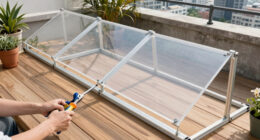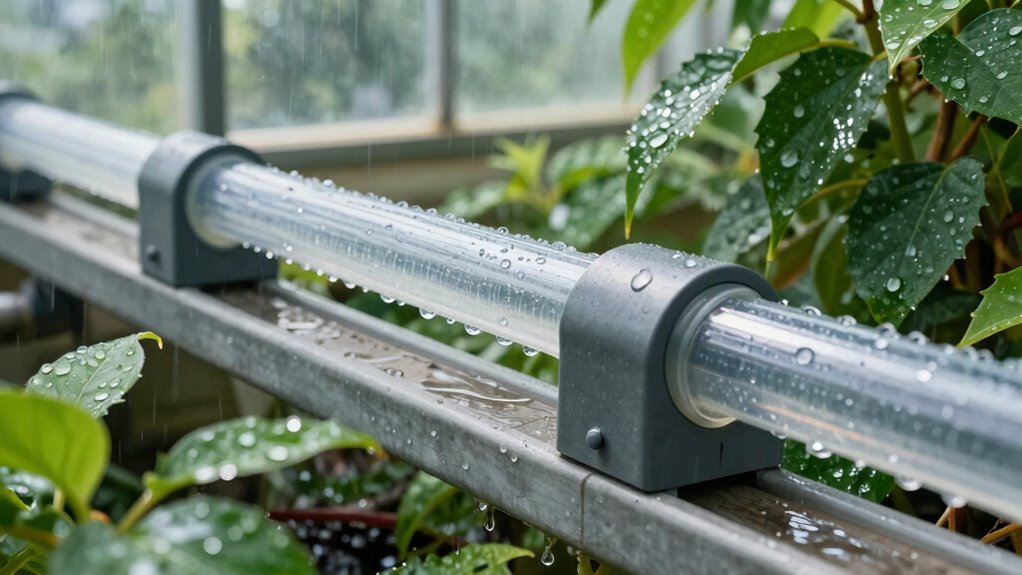

Adding a rainwater harvesting system to your greenhouse makes watering more resilient by providing a reliable, natural water source that reduces dependence on municipal supplies. It saves you money, cuts water bills, and helps your plants thrive with chemical-free rainwater. Plus, it boosts your sustainability efforts and protects your plants during dry spells. Keep going to discover simple ways to optimize your setup and guarantee your greenhouse stays well-watered no matter what.

Get garden gear delivered free — and shop member deals
- Fast, free delivery on millions of items
- Access to Prime Big Deal Days deals on October 6–7
- Prime Video, Amazon Music and more included
Key Takeaways
- Installing larger storage tanks ensures a reliable water supply during dry periods.
- Incorporating filtration systems improves water quality and reduces plant stress.
- Connecting multiple rainwater harvesting components increases system resilience and capacity.
- Regular maintenance prevents leaks and system failure, ensuring consistent water availability.
- Integrating backup pumps or overflow protections enhances system durability during heavy rains.
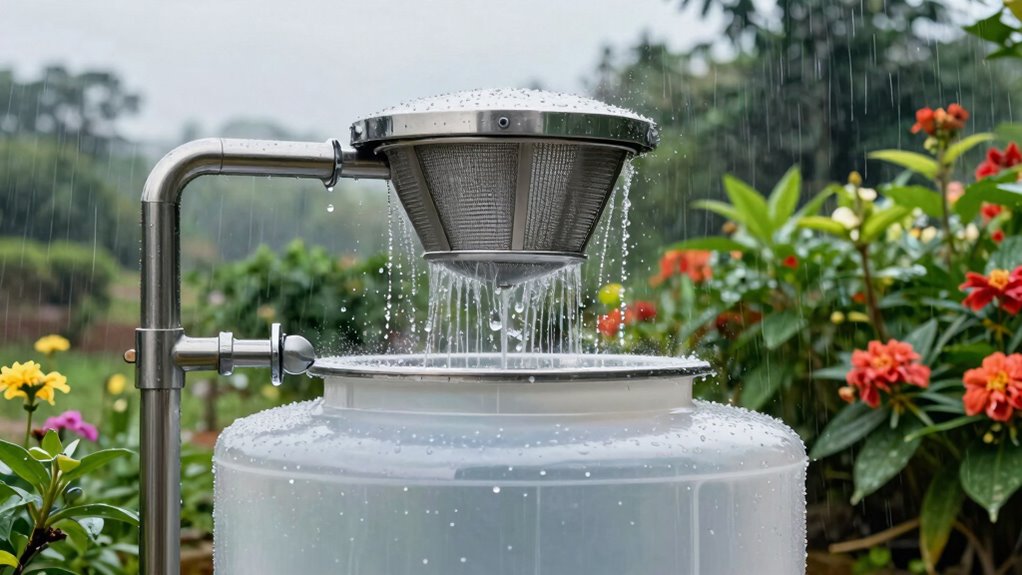
Harnessing rainwater for greenhouse watering is an eco-friendly way to reduce reliance on municipal supplies and cut costs. By implementing rainwater harvesting systems, you tap into a sustainable source that’s often overlooked. This approach not only conserves water but also enhances your greenhouse’s resilience, especially during dry or unpredictable weather. When you collect rainwater, you’re practicing effective water conservation techniques that contribute to your overall sustainability goals. It’s a straightforward method with significant benefits, making your watering routine more independent and environmentally responsible.
Once you set up a rainwater harvesting system, you’ll notice how it transforms your watering practices. Instead of relying solely on city supplies or other external sources, you create a backup water source rooted in nature’s own cycle. This is particularly useful during droughts or water restrictions, where access to municipal water may be limited. You can attach rain barrels or larger storage tanks to your gutter system, ensuring you capture as much water as possible during each rainfall. This stored water can then be used to irrigate your plants, giving you more control and reducing your water bills. Plus, you’re reducing the strain on local water infrastructure, which benefits everyone. Properly designed systems can also help prevent water waste and promote more efficient use of resources. Additionally, understanding the water cycle can help you optimize your collection and storage strategies for maximum efficiency. Consistent maintenance, such as inspecting gutters and tanks, is vital for preventing contamination and ensuring the longevity of your system.
Incorporating rainwater harvesting into your greenhouse isn’t complicated. It requires a bit of planning—such as selecting appropriate collection surfaces, filters, and storage containers—but once in place, it operates largely on its own. You’ll want to maintain your system periodically, checking for debris, ensuring filters are clean, and inspecting tanks for leaks. These simple water conservation techniques ensure your system remains efficient and reliable. When you use rainwater for your plants, you’re also providing them with water that’s free from many chemicals found in tap water, which can be better for sensitive plants and promote healthier growth. Additionally, biodiversity can benefit from using natural water sources, supporting local ecosystems. Using rainwater also helps to reduce environmental impact, aligning your gardening practices with ecological sustainability.
rainwater harvesting system for greenhouse
As an affiliate, we earn on qualifying purchases.
As an affiliate, we earn on qualifying purchases.
Frequently Asked Questions
How Much Does the Rainwater Upgrade Typically Cost?
The rainwater upgrade usually costs between $500 and $2,500, depending on your setup. You should do a cost comparison based on installation options like simple barrel systems or more complex filtration and pumping setups. Factors influencing the price include materials, size, and whether you handle installation yourself or hire professionals. Investing wisely guarantees you get a resilient, eco-friendly watering system that fits your greenhouse’s needs and budget.
What Maintenance Is Required for the Rainwater System?
Think of your rainwater system as a garden trellis—needing regular support to stay strong. You’ll want to check the rainwater filtration periodically, clearing any debris that could clog it. Inspect hoses and connections for leaks or wear, guaranteeing system durability. Routine cleaning and occasional component replacements keep everything flowing smoothly. By giving your system this care, you ensure resilient watering, much like a sturdy trellis sustains vibrant climbing plants.
Can the Upgrade Be Installed DIY or Need Professional Help?
You can attempt a DIY installation if you’re comfortable with basic plumbing and electrical work, but for best results and safety, professional assistance is recommended. Professionals ensure the upgrade is installed correctly and efficiently, minimizing potential issues. If you have experience and follow detailed instructions, a DIY approach might work. However, consulting a specialist can save you time and prevent costly mistakes, especially for complex setups.
Will the Upgrade Work in All Climate Zones?
Did you know that climate adaptability is key to successful greenhouse watering? The rainwater upgrade works across many regions, but regional variations can impact its effectiveness. In areas with heavy rainfall or drought, adjustments might be needed. While it’s designed for broad compatibility, you should consider your specific climate zone to guarantee maximum performance. With some tweaks, you can make your watering system resilient no matter where you are.
How Does the Upgrade Affect Water Quality for Plants?
The upgrade improves water quality by incorporating effective water filtration, which removes debris and contaminants, ensuring cleaner water for your plants. It also helps maintain pH balance, preventing issues like nutrient lockout or imbalance that can harm plant health. As a result, your plants receive nutrient-rich, well-balanced water, leading to healthier growth and more resilient greenhouse conditions. You’ll notice less disease and better overall plant performance with this upgrade.
Conclusion
By upgrading your rainwater system, you’re planting seeds for a more resilient greenhouse. You’ll not only save money and reduce reliance on city water, but you’ll also nurture healthier plants. This change helps you weather any storm, turning challenges into opportunities for growth. Embrace this shift, and you’ll find that your greenhouse becomes a thriving oasis, standing strong against the elements. When it rains, it pays to be prepared—your plants will thank you!
Fall Picks
fall essentials
As an affiliate, we earn on qualifying purchases.