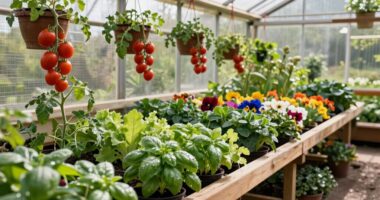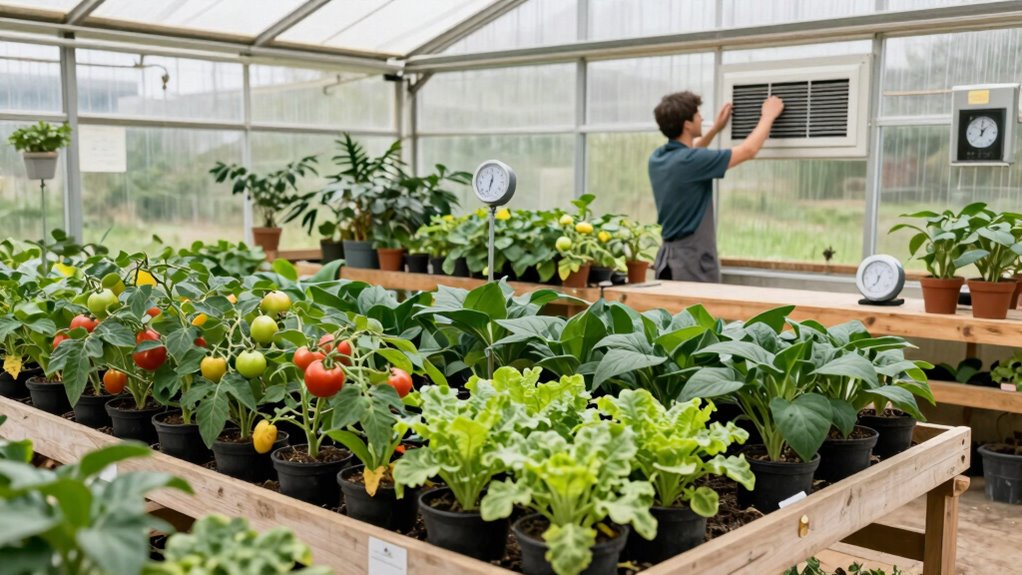

As seasonal changes approach, use this time to assess your greenhouse conditions and gradually adjust temperature, humidity, airflow, and lighting to suit upcoming crops. Introduce plants slowly to new environments to prevent shock, and thoroughly inspect for pests before cleaning and resetting systems. Deep clean surfaces and remove old debris to reduce disease risk. By combining careful planning with environmental tweaks, you set the stage for healthy growth—continue to discover how to optimize your greenhouse during this shift.

Get garden gear delivered free with Prime
- Fast, free delivery on millions of items
- Prime Video, Amazon Music and more included
- Member-only deals all year
Key Takeaways
- Gradually adjust temperature and humidity to prevent plant shock during seasonal changes.
- Conduct thorough cleaning and disinfect surfaces to eliminate pests and disease spores.
- Inspect and remove debris, dead leaves, and damaged plants before system reset.
- Review and update planting schedules and select resilient varieties for the upcoming season.
- Enhance pest management by implementing preventative strategies and maintaining proper environmental conditions.
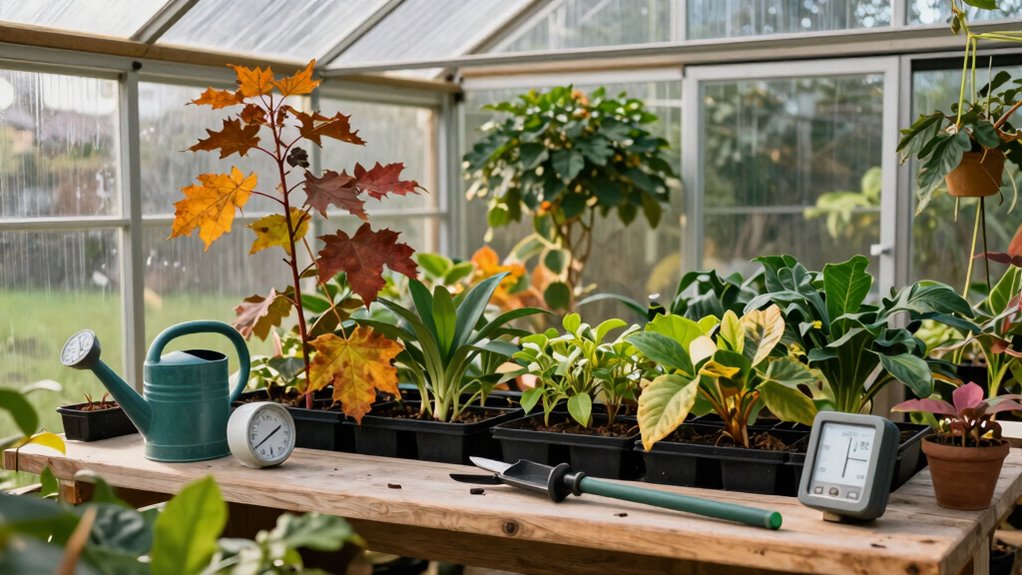
As the seasons change, it’s the perfect opportunity to reset your greenhouse system and prepare it for the upcoming growing period. Shifting between seasons provides a natural point to evaluate and adjust your environment, ensuring your plants thrive. A key part of this process involves managing plant acclimation. You want to gradually introduce your plants to new conditions, especially if you’re moving from cooler to warmer temperatures or vice versa. Sudden changes can stress plants, making them susceptible to pests and diseases. To prevent this, slowly increase or decrease temperature and humidity levels over several days. This gentle adjustment helps your plants adapt without shock, promoting healthier growth and reducing the risk of pest infestations that often follow plant stress. Monitoring environmental conditions closely during seasonal transitions helps you identify and address potential issues early.
Seasonal changes are ideal for gradually adjusting your greenhouse environment to promote healthy plant adaptation.
Pest management becomes increasingly important during seasonal shifts. As your greenhouse environment changes, so do the conditions that pests find appealing. Warm, humid environments can become breeding grounds for insects or fungi, so it’s essential to inspect plants thoroughly as you reset the system. Remove any debris, dead leaves, or diseased plant material that could harbor pests. Consider implementing a preventative pest control plan, such as introducing beneficial insects or applying organic sprays, before pests become a problem. Keep your greenhouse well-ventilated and maintain proper humidity levels to discourage pest proliferation. Monitoring plants closely during this time helps catch issues early, saving you trouble down the line. Additionally, understanding the importance of environmental control can significantly improve pest management success. A comprehensive approach to pest prevention can further safeguard your plants during this vulnerable period.
Cleaning your greenhouse thoroughly is another critical step in this reset process. Remove old soil, clean benches, and disinfect surfaces to eliminate residual pests, spores, or disease-causing pathogens. This deep cleaning creates a fresh environment that supports plant health and reduces pest risks. When setting up your system again, pay attention to airflow, lighting, and watering schedules, adjusting them to the needs of the upcoming crop cycle. Properly balancing these factors facilitates plant acclimation and minimizes stress. Incorporating preventative measures during cleaning can further reduce the likelihood of pest outbreaks and disease spread. Regularly updating your cleaning routines based on seasonal needs will help maintain a healthy and resilient greenhouse environment.
Finally, take this opportunity to review your planting schedule and select resilient plant varieties suited for the upcoming season. By combining careful plant acclimation, thorough pest management, and a clean, well-adjusted environment, you set the stage for a productive growing season. Seasonal shifts aren’t just about changing temperatures; they’re about actively resetting your greenhouse to optimize plant health and prevent pest problems, ensuring a successful and sustainable crop cycle.
greenhouse environmental control system
As an affiliate, we earn on qualifying purchases.
As an affiliate, we earn on qualifying purchases.
Frequently Asked Questions
How Often Should I Perform Seasonal Resets in My Greenhouse?
You should perform seasonal resets in your greenhouse at least twice a year, ideally during spring and fall. This helps with plant acclimation and pest management, preventing issues from lingering. Regular resets allow you to clean and adjust environmental controls, remove old debris, and introduce fresh soil or plants. Keeping a schedule guarantees your greenhouse stays healthy, productive, and pest-free, supporting ideal plant growth year-round.
What Signs Indicate My Greenhouse Needs a Reset?
A stitch in time saves nine, so watch for signs your greenhouse needs a reset. If you notice persistent pests, declining plant health, or soil that feels exhausted, it’s time to act. Pest management becomes harder, and soil rejuvenation is needed to restore nutrients. These signs indicate your greenhouse needs a reset to refresh the environment, improve plant growth, and maintain pest control effectively.
Can I Automate the Transition Process?
Yes, you can automate the shift process using automated systems. These systems manage climate adjustment by controlling vents, fans, and heaters to gradually shift the temperature and humidity levels, aligning with seasonal changes. By setting specific parameters, you guarantee a smooth change without manual intervention. Automation not only saves time but also promotes ideal plant health, making seasonal resets more efficient and less stressful for your greenhouse environment.
Are There Specific Tools Recommended for Resetting?
Ever wondered which tools make resetting your greenhouse easier? For this task, you’ll want a reliable maintenance checklist and specific tools like a hygrometer, thermometer, pruning shears, and cleaning brushes. Tool recommendations include a digital thermometer for accurate temperature readings and a soil test kit. These tools help guarantee you’re thorough during seasonal resets, keeping your system in top shape. Are you ready to get your greenhouse perfectly prepared for the new season?
How Do Resets Affect Plant Health Long-Term?
Resets can positively impact your plant health long-term by promoting soil rejuvenation and effective pest management. When you reset your greenhouse, you give the soil a chance to recover, reducing disease buildup and restoring nutrients. It also helps break pest cycles, preventing infestations from becoming severe. Over time, this process leads to healthier plants, improved yields, and a more resilient greenhouse environment.
Conclusion
As the seasons shift like a gentle tide, use these shifts to breathe new life into your greenhouse. Think of it as a fresh start, a reset button pressed with care and intention. Embrace the changing rhythm, clearing out the old and welcoming the new growth. With each seasonal turn, you orchestrate a symphony of renewal, nurturing your green sanctuary into a vibrant, thriving oasis that flourishes with every passing season.
Fall Picks
fall essentials
As an affiliate, we earn on qualifying purchases.