
Seasonal light changes profoundly impact your greenhouse routines by affecting plant growth, flowering, and health. During shorter winter days, you’ll need to adjust lighting schedules, often using supplemental lights to mimic natural cycles and prevent plants from stretching or becoming stressed. Extending or reducing daylight hours carefully supports your plants’ development stages. To maintain consistent growth year-round, you must monitor conditions closely and make ongoing adjustments—discover how to optimize your routines throughout the seasons.

Get garden gear delivered free with Prime
- Fast, free delivery on millions of items
- Prime Video, Amazon Music and more included
- Member-only deals all year
Key Takeaways
- Seasonal light variations require adjusting photoperiods to maintain optimal plant growth and prevent stress.
- Shorter winter days often necessitate supplemental lighting to ensure consistent light exposure.
- Greenhouse routines must incorporate timing controls, like blackout curtains and programmable lights, to mimic natural conditions.
- Monitoring plant responses helps fine-tune lighting schedules and avoid issues like legginess or delayed flowering.
- Seasonal changes demand ongoing management to align artificial lighting with natural daylight shifts for healthy development.
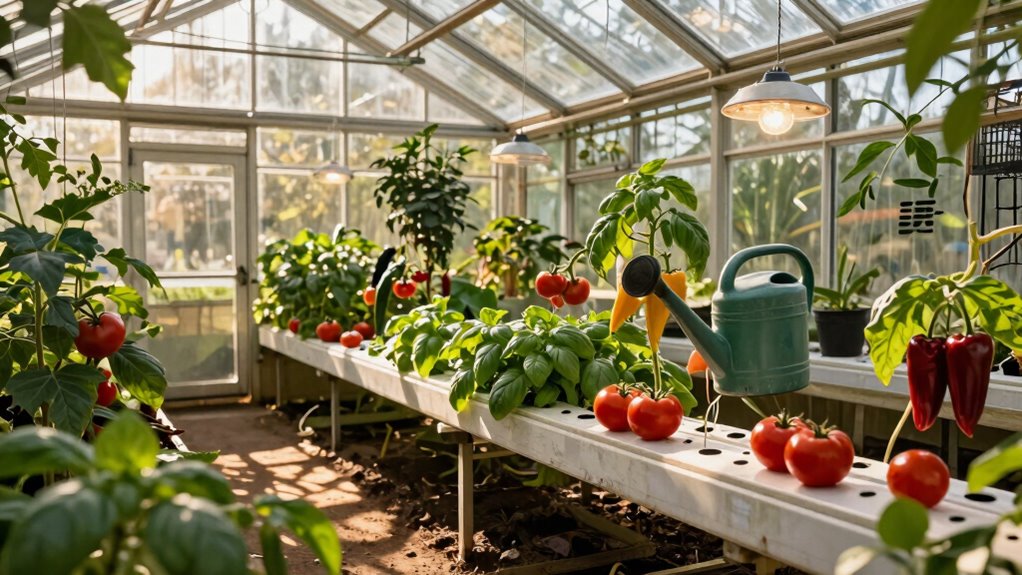
As the seasons shift, understanding how light changes affect your greenhouse routines becomes essential for healthy plant growth. The natural variation in daylight hours influences how your plants develop, making it necessary to adapt your practices accordingly. During shorter winter days, you might notice your plants aren’t receiving enough light naturally, which can slow growth or trigger stress responses. To counter this, you’ll need to implement photoperiod adjustments, guaranteeing your plants get consistent light exposure regardless of outdoor conditions. This involves controlling the length of light and dark periods within your greenhouse, so plants experience a stable environment that mimics ideal conditions for their growth cycle.
Adapting your greenhouse lighting ensures healthy plant growth through seasonal daylight changes.
Incorporating supplemental lighting strategies becomes a key part of these adjustments. When natural daylight diminishes, artificial lights help maintain the necessary photoperiods for your plants. You may opt for LED grow lights or high-intensity discharge lamps, which can be programmed to turn on and off at specific times. This guarantees your plants receive a precise amount of light each day, promoting healthy photosynthesis and consistent development. Depending on the plant species, you might need to extend daylight hours or simulate dawn and dusk to maximize their growth stages.
Adjusting your lighting schedule isn’t just about adding more light; it’s about timing it right. For example, some plants require a specific period of darkness to trigger flowering or fruiting. During seasons with extended daylight, you may need to use blackout curtains or other shading techniques to prevent overexposure. Conversely, during the darker months, supplemental lighting becomes indispensable to prevent legginess, weak stems, or delays in flowering. The goal is to create a stable, controlled photoperiod that aligns with each plant’s natural growth requirements.
Monitoring your plants closely during seasonal transitions is paramount. Watch for signs of light deficiency, like stretched stems or pale leaves, and adjust your supplemental lighting accordingly. Use timers and light meters to maintain consistency, ensuring that your greenhouse routines support healthy growth regardless of external conditions. By thoughtfully managing photoperiod adjustments and supplemental lighting strategies, you help your plants thrive through seasonal changes, keeping your greenhouse productive and vibrant year-round. Understanding the importance of biodiversity in plant adaptation can guide you in creating a resilient environment that supports diverse species through seasonal variations. Additionally, recognizing the natural light cycle helps optimize your lighting schedules for better plant health.
As an affiliate, we earn on qualifying purchases.
Frequently Asked Questions
How Do Plants Adapt to Sudden Light Changes in a Greenhouse?
When plants face sudden light changes in a greenhouse, they undergo light acclimation, adjusting their leaves and pigments to prevent damage. You can support this by gradually increasing light exposure, allowing for photosynthesis adjustment. This helps prevent stress and promotes healthy growth. By monitoring and managing light levels, you guarantee your plants adapt smoothly, maintaining ideal photosynthesis and overall robustness despite abrupt lighting shifts.
What Are the Best Artificial Lighting Options for Winter Months?
During winter, think of artificial lighting as your greenhouse’s guiding stars. LED grow lights shine brightly, mimicking natural sunlight with energy-efficient precision. For maximum growth, focus on light spectrum enhancement, tailoring the wavelengths to your plants’ needs. These lights penetrate the darkness like dawn’s first light, ensuring your plants stay healthy and vibrant, even when the days grow short and gray.
How Can I Prevent Light Stress on Sensitive Plants?
To prevent light stress on sensitive plants, you should practice photoperiod management by controlling light exposure and using light deprivation techniques when needed. Cover plants with shade cloths or blackout curtains during excessive light periods, especially in summer. Maintain consistent light schedules to avoid stress caused by fluctuating photoperiods. This approach helps protect your plants from light stress, ensuring healthier growth and better resilience throughout seasonal changes.
Are There Specific Tools to Measure Daily Light Levels Accurately?
Yes, you can use light sensors and daylight meters to measure daily light levels accurately. Light sensors, like photodiodes or phototransistors, provide real-time data on light intensity, while handheld daylight meters offer precise readings of sunlight exposure. These tools help you monitor and adjust your greenhouse lighting, ensuring your sensitive plants get ideal light without stress. Regular use of these devices keeps your light management consistent and effective.
How Do Seasonal Light Changes Affect Greenhouse Pest Control?
Seasonal light changes influence pest control by affecting pest migration patterns and increasing light pollution. As days grow shorter or longer, pests may migrate into your greenhouse seeking ideal conditions, making infestations more likely. Additionally, artificial lighting during darker months can attract pests, compounding issues. You need to adjust your pest management routines accordingly, monitoring migration trends and reducing unnecessary light pollution to keep pests at bay year-round.
Conclusion
As you adapt your greenhouse routines to seasonal light changes, you might wonder if these adjustments truly boost plant health. Research suggests that aligning your practices with natural light cycles can enhance growth and reduce stress. While some believe artificial lighting can fully compensate, evidence indicates that mimicking the season’s light patterns often yields better results. So, next time you tweak your schedule, trust that working with nature’s rhythm genuinely makes a difference.
Fall Picks
fall essentials
As an affiliate, we earn on qualifying purchases.