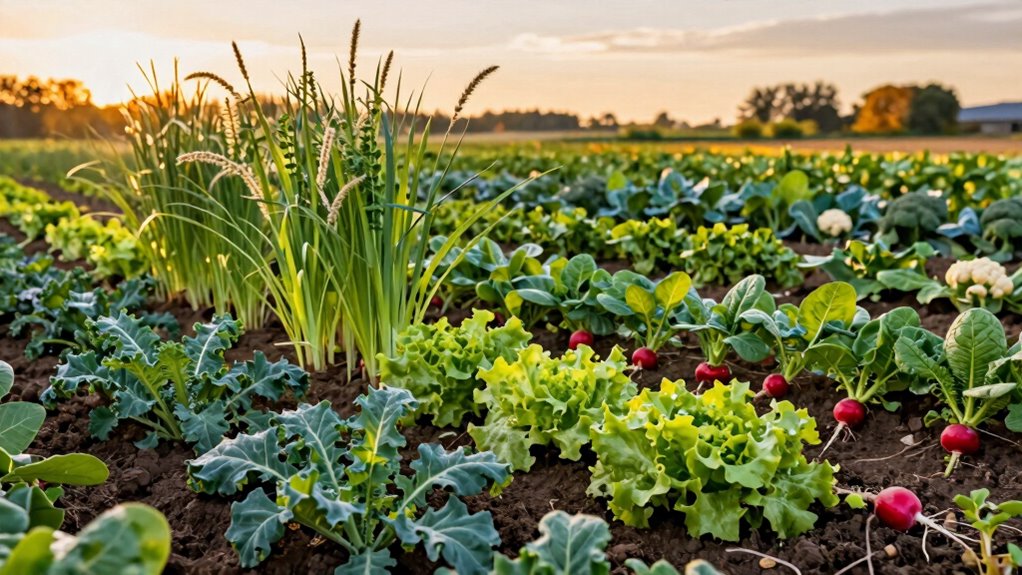

Many growers overlook profitable shoulder season crops like leafy greens (spinach, lettuce, kale), root vegetables (carrots, radishes), and hardy vegetables (Brussels sprouts). These crops extend your harvest window, diversify income, and boost farm resilience. By selecting climate-appropriate varieties and using season extension techniques such as cold frames and row covers, you can maximize yields. Keep exploring to discover which crops and strategies will help you capitalize on these underused opportunities and improve your farm’s sustainability.

Get garden gear delivered free with Prime
- Fast, free delivery on millions of items
- Prime Video, Amazon Music and more included
- Member-only deals all year
Key Takeaways
- Root crops like radishes, turnips, and parsnips are often underused but thrive in shoulder seasons with proper protection.
- Hardy leafy greens such as Swiss chard and collards can extend harvest windows when grown in cold frames.
- Leguminous cover crops like clover and vetch improve soil fertility during off-peak seasons, supporting subsequent crops.
- Brassicas such as Brussels sprouts and cauliflower are resilient and can be harvested well into cooler shoulder periods.
- Overwintering herbs like rosemary and thyme can be cultivated in season extension setups for year-round yields.
cold frame for vegetable gardening
As an affiliate, we earn on qualifying purchases.
As an affiliate, we earn on qualifying purchases.
Why Shoulder Seasons Are a Hidden Opportunity for Growers
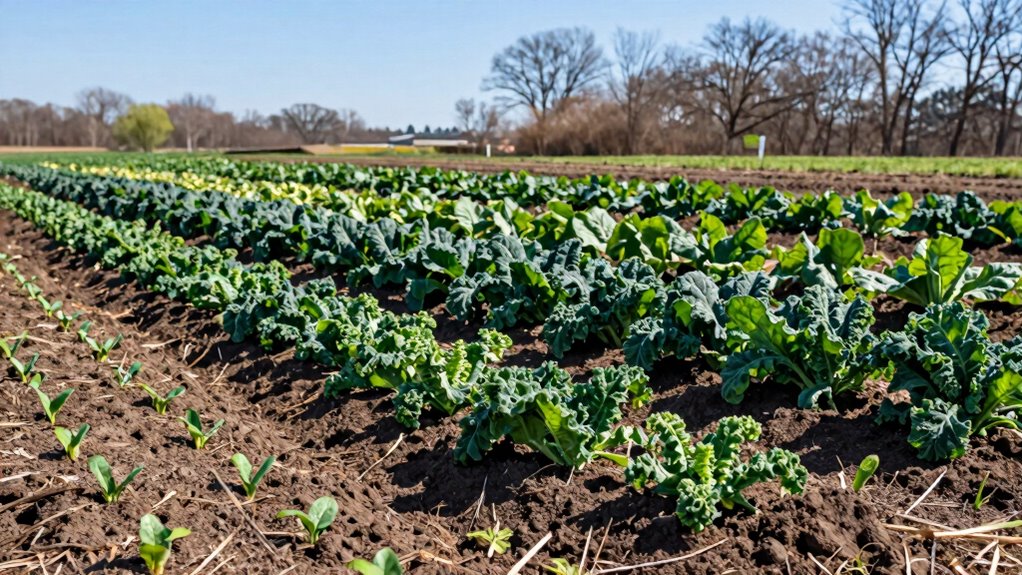
Shoulder seasons—those periods between main planting and harvesting times—offer a unique advantage for growers willing to adapt. During this time, you can optimize your land through strategic crop rotation, which helps break pest cycles and improves soil health. This practice keeps your soil fertile and reduces the need for chemical inputs. Proper soil management becomes vital, as it prepares your land for the next crop cycle, ensuring nutrients are replenished and soil structure remains healthy. Additionally, leveraging soil health during shoulder seasons can lead to more sustainable farming practices and long-term productivity. By leveraging shoulder seasons, you extend your growing window, reduce downtime, and increase productivity. This period is an underused opportunity for maximizing land use, improving soil conditions, and setting the stage for successful main crops. Recognizing soil management techniques during this time ensures that your soil remains resilient and productive for future planting cycles. Incorporating cover crops during shoulder seasons further enhances soil fertility, promoting microbial activity and preventing erosion. Emphasizing soil resilience during these periods can lead to healthier crops and more consistent yields over time.
The Best Crops to Grow in Spring and Fall for Profit
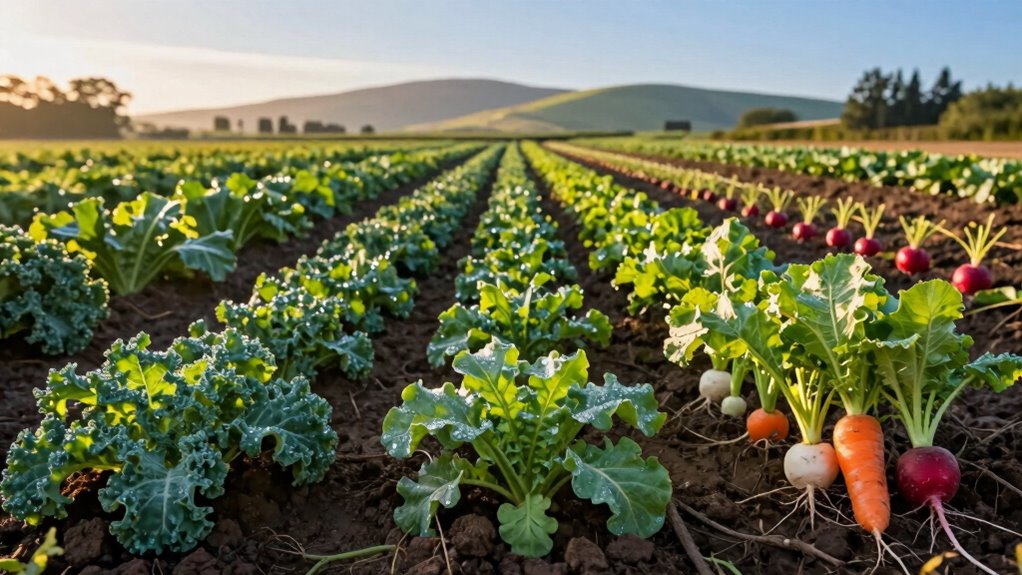
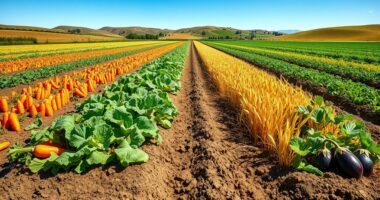
Growing profitable crops in spring and fall requires selecting varieties that thrive in cooler temperatures and shorter days. Leafy greens like spinach, lettuce, and kale excel during these seasons, providing quick harvests and high market value. Root crops such as carrots, radishes, and beets also perform well, especially when integrated into a strategic crop rotation that minimizes soil depletion. To maximize profit, implement effective pest management methods, like row covers or organic controls, to reduce losses from pests common in shoulder seasons. Crop rotation not only maintains soil health but also helps prevent pest and disease buildup, ensuring consistent yields year after year. Choosing the right crops and managing pests diligently can turn shoulder season planting into a lucrative opportunity.
How to Choose the Right Shoulder Season Crops for Your Farm?
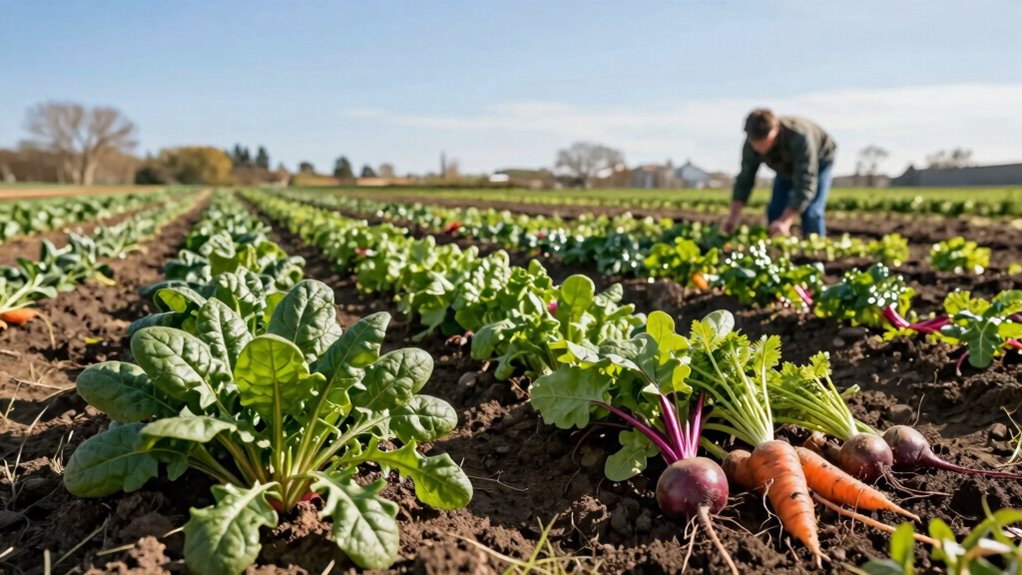
To choose the right shoulder season crops, you need to take into account your local climate and how well different plants can tolerate temperature changes. Market demand also plays a key role, so focus on crops that consumers are actively seeking during these periods. Balancing these factors helps you select crops that will thrive and sell well on your farm. Understanding seasonal planting techniques can also improve your success during these transitional periods. Additionally, choosing crops with appropriate ventilation requirements can help manage temperature fluctuations and promote healthy growth. Recognizing the importance of climate adaptability ensures you select crops suited to your specific shoulder season conditions. Being aware of best crop choices for floating on water can further expand your options in regions with unique moisture or flooding challenges. Considering crop resilience to temperature swings can also enhance your ability to maintain productivity in unpredictable weather patterns.
Climate Compatibility Factors
Choosing the right shoulder season crops depends heavily on understanding your local climate conditions. You need to evaluate how well your chosen crops’ climate adaptability matches your area’s temperature ranges, sunlight, and humidity levels. Additionally, soil compatibility is vital—certain crops thrive in specific soil types and pH levels. Consider these factors:
- Temperature tolerance during transitional seasons
- Frost risk and cold hardiness
- Sunlight duration and intensity
- Soil pH and drainage capacity
Understanding the importance of climate compatibility factors can significantly improve your crop success rate. Being aware of growth cycle timing can help you plan planting and harvesting schedules more effectively, ensuring your crops mature during optimal conditions.
Matching these elements guarantees your crops will grow successfully without extra stress or intervention. By paying close attention to climate compatibility factors, you maximize yield potential and reduce crop failure risks, making your shoulder season planting more efficient and profitable.
Market Demand Considerations
Understanding your local market demand is key to selecting the right shoulder season crops. Conducting market trend analysis helps you identify what consumers currently seek and anticipate future shifts. Pay attention to consumer preference shifts, as they can influence which crops will sell well. For example, if organic or locally grown produce gains popularity, incorporating those options can boost sales. Stay connected with farmers’ markets, grocery stores, and wholesale buyers to gauge demand trends. Diversifying your crop choices based on these insights reduces risk and maximizes profit during shoulder seasons. By aligning your planting decisions with market needs, you assure a steady income and avoid overproduction of less desirable crops. Accurate market demand considerations enable you to make informed, strategic decisions for your farm’s success.
Tips for Extending Your Growing Season Successfully
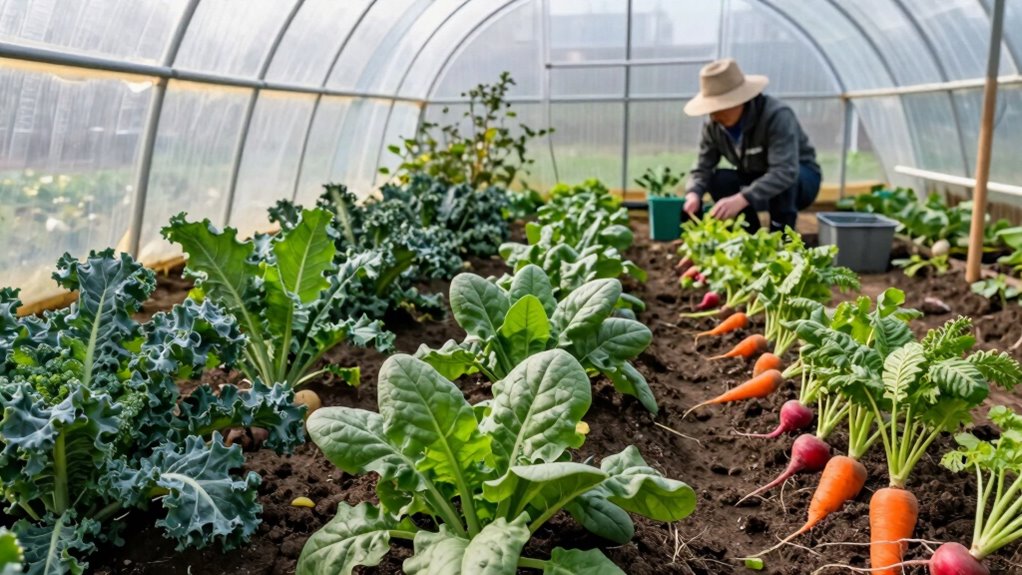
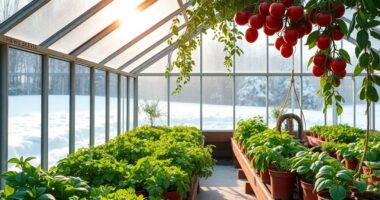
Using cold frames can protect your crops from early frosts and extend your growing window. Focus on selecting hardy, versatile crops that can withstand cooler temperatures and still produce well. These strategies help you maximize your harvest during shoulder seasons with less effort. Incorporating season extension techniques like row covers or protective mulches can further improve your success.
Utilize Cold Frames Effectively
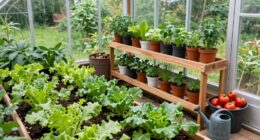
Cold frames are a simple yet effective way to extend your growing season into shoulder months. To maximize their benefit, focus on cold frame design that provides ideal insulation and ventilation. Regularly adjust the cover to regulate temperature and prevent overheating. When planning, practice crop rotation inside the cold frame, which helps prevent soil depletion and disease buildup. Here are four tips to use cold frames effectively:
- Use durable, insulated materials for better heat retention.
- Place the cold frame in a sunny, south-facing spot for maximum warmth.
- Keep a record of planting dates and temperature variations.
- Rotate crops seasonally to maintain soil health and reduce pests.
Implementing these strategies will help you grow more resilient crops and extend your growing window.
Choose Hardy, Versatile Crops
To extend your growing season successfully, focus on selecting hardy, versatile crops that can withstand fluctuating temperatures and shorter daylight hours. These crops, such as kale, spinach, and Brussels sprouts, are resilient and adapt well to unpredictable weather. Prioritize crop diversity to reduce risks and improve soil health, ensuring your garden remains productive throughout shoulder seasons. Incorporate strategic crop rotation to prevent soil depletion and manage pests naturally. Choosing hardy crops also means they’re more likely to survive unexpected frosts, giving you a longer harvest window. By mixing different varieties and rotating crops each season, you build a resilient garden that’s better prepared for weather shifts. Additionally, understanding season extension techniques can help you maximize your harvest time and protect your crops from early or late-season weather changes. Utilizing seasonal climate awareness can further optimize your planting schedule and enhance your garden’s resilience, ensuring a more consistent yield. This approach maximizes your yield and extends your growing season with fewer setbacks.
Overcoming Common Challenges in Shoulder Season Farming
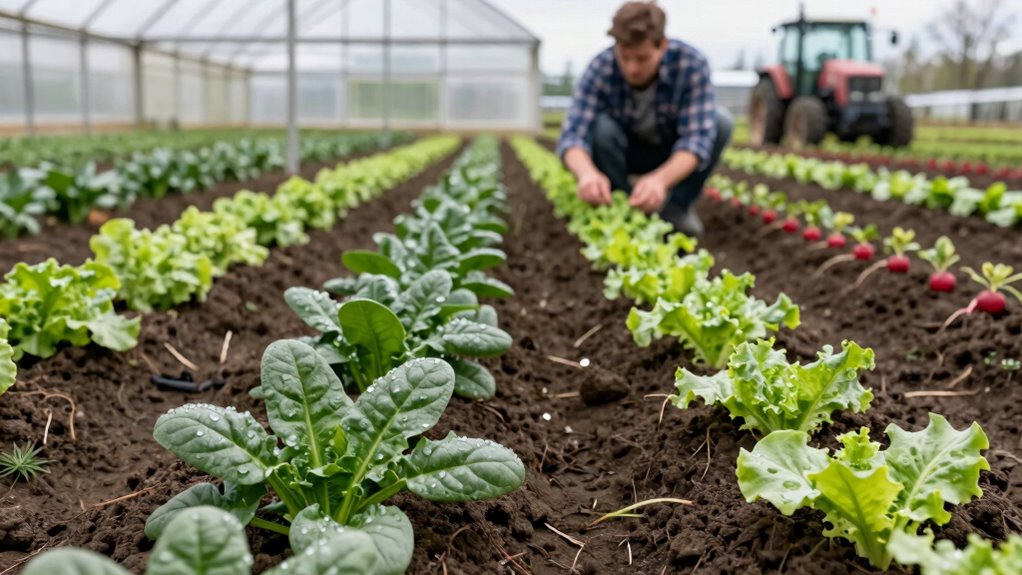
Handling the challenges of shoulder season farming requires careful planning and adaptability. You’ll need to address issues like unpredictable weather, pest pressure, and soil health. To succeed, consider these steps:
Effective shoulder season farming demands planning, adaptability, and pest, weather, and soil management.
- Rotate crops regularly to improve soil fertility and reduce pest buildup.
- Use cover crops to protect soil and extend growing seasons.
- Implement integrated pest management to control pests without over-reliance on chemicals.
- Monitor weather forecasts closely to time planting and harvesting most effectively.
Maximize Your Farm’s Resilience and Profits With Shoulder Season Crops
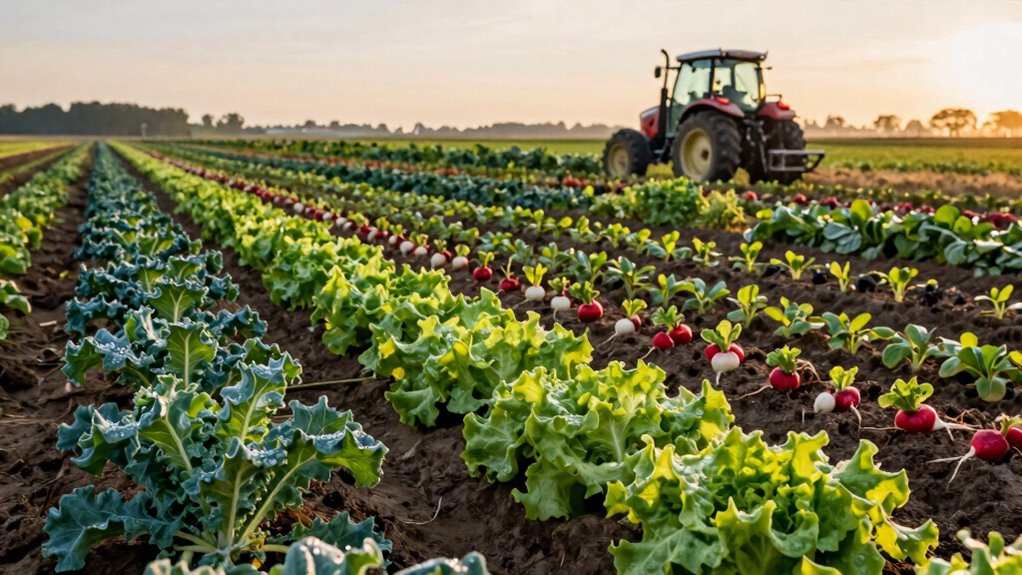
Maximizing your farm’s resilience and profits during shoulder seasons hinges on selecting the right crops that thrive in variable weather. Incorporate strategic crop rotation to break pest cycles and reduce soil depletion, ensuring healthier plants and higher yields. Shoulder season crops often require specific conditions, so choosing hardy varieties improves success rates. Additionally, crops that enrich the soil, like legumes, boost soil fertility naturally, reducing the need for synthetic inputs. By diversifying your planting schedule with these crops, you extend your growing season and generate income during periods when main crops are out of season. This approach not only safeguards your farm against market fluctuations but also builds a more resilient, sustainable operation. Proper crop selection and soil management are key to maximizing both resilience and profitability.
Frequently Asked Questions
How Do Shoulder Season Crops Impact Overall Farm Biodiversity?
You can boost your farm’s biodiversity by planting shoulder season crops, which promote crop diversification. These crops create varied habitats, attracting beneficial insects and reducing pest populations naturally. By including shoulder season crops, you strengthen pest management strategies and enhance ecological balance. This approach not only preserves soil health but also makes your farm more resilient to pests and climate fluctuations, ultimately leading to a more sustainable and diverse farming system.
Are There Specific Pests Unique to Shoulder Season Crops?
Like a detective tracking elusive clues, you’ll notice that shoulder season crops attract pests specific to their growth period. While not entirely unique, seasonal pest patterns differ, and pests such as root maggots or aphids may become more prominent. Choosing pest-resistant varieties helps alleviate issues, but staying vigilant is key, as these pests can adapt quickly. Tailoring your pest management to the season ensures healthier crops and minimizes damage.
What Are the Best Storage Methods for Shoulder Season Harvests?
You should use cold storage with precise temperature control to keep shoulder season harvests fresh. Store crops at ideal temperatures—usually between 32-55°F, depending on the produce—to slow down ripening and spoilage. Use ventilated containers for proper airflow, and maintain consistent humidity levels. Regularly monitor and adjust the environment to guarantee your crops stay fresh longer, reducing waste and maximizing shelf life during these periods of change.
How Do Shoulder Season Crops Influence Soil Health Long-Term?
Think of shoulder season crops as nature’s caretakers, quietly enriching your soil with vibrant nutrients. By planting these crops, you boost soil nutrient enrichment and strengthen the earth’s resilience. They act as shields, preventing erosion and maintaining soil structure through their roots. Over time, your fields become a fertile canvas, ready for future planting, with healthier, more sustainable soil that supports robust growth long-term.
Can Shoulder Season Crops Be Integrated Into Existing Crop Rotation Plans?
Yes, you can integrate shoulder season crops into your existing crop rotation plans. Adjust your planting schedules to include diverse crop varieties that thrive during shoulder seasons, helping to break pest cycles and improve soil health. By strategically selecting crop variety and timing, you optimize land use and maintain productivity year-round. This approach guarantees continuous growth and enhances soil sustainability, making your rotation more resilient and beneficial long-term.
Conclusion
By embracing shoulder season crops, you reveal hidden profits and extend your farm’s productivity. Imagine planting fall broccoli that sells at premium prices, just like a successful farm in Vermont did last year. With the right crop choices and strategies, you can boost resilience and profitability year-round. Don’t let these opportunities slip by—start planning now to make the most of every season and watch your farm thrive beyond the busy months.
Halloween Picks
halloween
As an affiliate, we earn on qualifying purchases.