
To maintain airflow during summer without losing humidity, open windows and vents during cooler parts of the day, like mornings and evenings, to let in fresh, moist air. Use fans strategically to circulate air without creating excessive dryness—ceiling or oscillating fans help promote airflow. Pair these with a dehumidifier to prevent humidity from dropping too low, and monitor levels with a hygrometer. For more tips on balancing airflow and humidity, keep exploring ways to keep your home comfortable.
Key Takeaways
- Use adjustable vents and open windows during cooler times to promote airflow without excessively drying indoor humidity.
- Install ceiling or oscillating fans to circulate air gently, maintaining freshness without removing moisture.
- Monitor humidity levels with hygrometers and balance ventilation and dehumidification to keep humidity within 40-60%.
- Employ dehumidifiers alongside ventilation to remove excess moisture while allowing fresh air circulation.
- Avoid fully sealing vents or windows; keep some openings open to let moist air escape while maintaining overall airflow.
As summer heat intensifies, maintaining proper airflow becomes essential for keeping your home comfortable and energy-efficient. When the temperatures soar, you want to ensure that fresh air circulates without letting humidity levels get out of control. Implementing effective ventilation strategies can help you achieve this balance. You might consider using exhaust fans in the kitchen and bathroom to remove moist air directly from those high-humidity spaces. These fans help draw in cooler, drier air from outside through vents or open windows, creating a steady airflow that reduces indoor moisture buildup. Keep in mind that ventilation isn’t just about pushing air in and out; it’s about controlling the quality and humidity of that air to prevent mold growth and musty odors.
Proper ventilation balances airflow and humidity to keep your home comfortable and mold-free during summer heat.
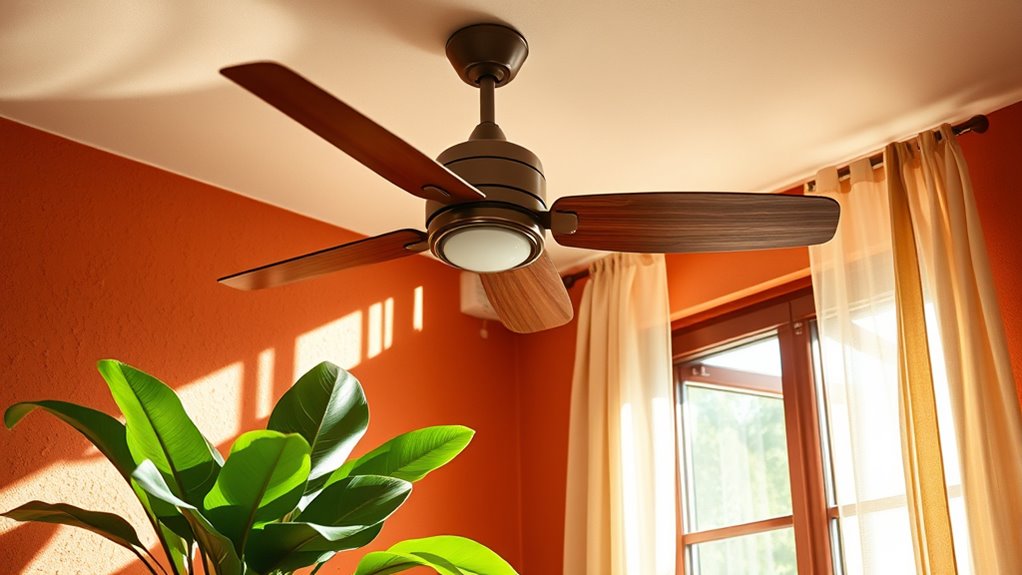
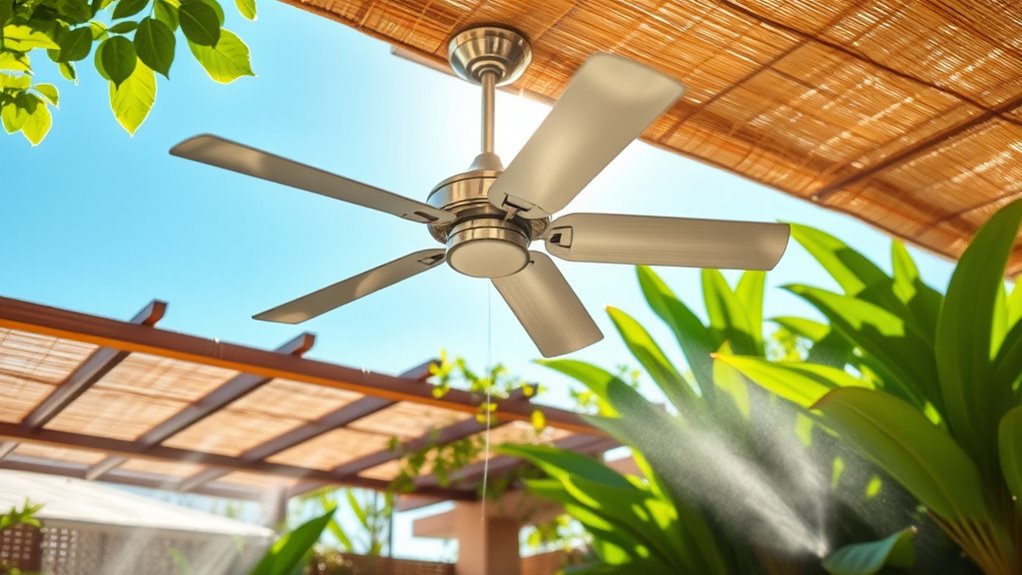
To optimize humidity control while maintaining airflow, think about using adjustable vents or windows that you can open during cooler parts of the day—early mornings or evenings—and close during peak heat. This way, you get fresh air without letting in excessive humidity or heat. Installing ceiling fans or oscillating fans can also promote air circulation within rooms, helping to distribute cooled air evenly and prevent stagnant spots where humidity might settle. When using fans, set them to rotate counterclockwise in summer to create a breeze that cools the room and enhances airflow without increasing moisture levels.
Another effective ventilation strategy involves air purifiers with humidity control features. These devices can help regulate indoor moisture, keeping humidity levels ideally between 40-60%, which is comfortable for most people. When indoor humidity is properly managed, you’ll notice less condensation on windows and fewer issues with mold or dust mites. During particularly humid days, consider running dehumidifiers in combination with your ventilation efforts to remove excess moisture from the air. Just ensure your windows or vents are open enough to allow the moist air to escape while the dehumidifier works to dry the air inside.
Additionally, understanding the importance of projector technology can help you create the perfect home environment that is both comfortable and visually optimized, especially if you want to enjoy your entertainment setup without moisture issues affecting equipment or viewing conditions. Finally, it’s wise to monitor indoor humidity with a hygrometer so you can adjust your ventilation strategies accordingly. If humidity levels rise above your target range, increase ventilation or use dehumidifiers. If it drops too low, you might need to slightly open windows or turn off fans temporarily to avoid overly dry air. Maintaining a balance between airflow and humidity control ensures that your home stays cool, fresh, and comfortable all summer long without sacrificing the moisture that makes your space feel welcoming and healthy.
Frequently Asked Questions
How Can I Improve Airflow Without Opening Windows?
To improve airflow without opening windows, use fans strategically to boost airflow efficiency. Place oscillating fans near vents or doorways to circulate air effectively, ensuring you maintain a humidity balance. Consider using exhaust fans in kitchens and bathrooms to remove stale air and bring in fresh air without losing moisture. Keep doors open between rooms to promote better airflow, and use ceiling fans to enhance overall air circulation without compromising humidity levels.
What Are the Best Ceiling Fans for Summer?
You should choose ceiling fans with versatile styles like modern, rustic, or traditional to match your decor. Opt for fans with durable fan blade materials such as wood or composite, which efficiently move air and withstand summer heat. Look for models with adjustable speeds and reversible motors to customize airflow. A good-quality ceiling fan can keep your space cool and comfortable without sacrificing humidity, making your summer days more bearable.
Does Increasing Airflow Reduce Indoor Humidity?
Did you know that increasing airflow can reduce indoor humidity by improving air circulation? When you crank up your fans, you help moisture evaporate faster, which aids humidity control. However, if the airflow is too strong, it might dry out the air too much. To keep humidity levels balanced, adjust your fans carefully, ensuring good air circulation without overly reducing moisture, especially during the hot summer months.
How Does Airflow Affect Energy Consumption?
Increasing airflow improves ventilation efficiency, which can mitigate your energy consumption by allowing your system to work more effectively. When you boost airflow, your HVAC system doesn’t have to run as long or as hard, leading to energy savings. However, be mindful that excessive airflow may increase fan power use. Striking the right balance ensures you maximize ventilation efficiency while minimizing energy costs during summer.
Can Airflow Strategies Prevent Indoor Mold Growth?
Yes, airflow strategies can prevent indoor mold growth. By carefully placing dehumidifiers and upgrading your ventilation system, you control moisture levels and reduce damp spots where mold thrives. Proper airflow keeps humidity in check without creating stagnant air. Thoughtful placement and system improvements assure continuous, fresh circulation, making your home less inviting to mold. Don’t overlook these steps—they’re your best defense against hidden mold threats.
Conclusion
Remember, keeping your home cool and humid doesn’t mean sacrificing comfort. Think of your airflow as a gentle breeze through a summer garden—refreshing yet steady. When I installed a simple ceiling fan, I noticed my space stayed comfortably humid even on the hottest days, much like a shaded oasis. With mindful ventilation, you can enjoy a cool, moist environment all summer long—just like that cool breeze that keeps a garden thriving.