To inspect anchor points and footings effectively, regularly check for signs of corrosion like rust or discoloration, and look for cracks or shifts in the foundation. Use a flashlight and mirror to see hard-to-reach spots. Tighten loose fasteners and monitor soil conditions around the foundation for erosion or water pooling. Address issues promptly to make certain safety and stability. Keep going, and you’ll discover more tips to keep your structure secure.
Key Takeaways
- Regularly check anchor points and footings for signs of corrosion, such as rust, pitting, or discoloration.
- Use a flashlight and mirror to inspect hard-to-see areas around fasteners and beneath protective coatings.
- Look for cracks, tilting, or movement in footings and structural walls indicating potential foundation issues.
- Monitor soil conditions for erosion, water pooling, or shifting that could impact foundation stability.
- Consult geotechnical experts if signs of soil instability or deterioration are detected for appropriate remediation.
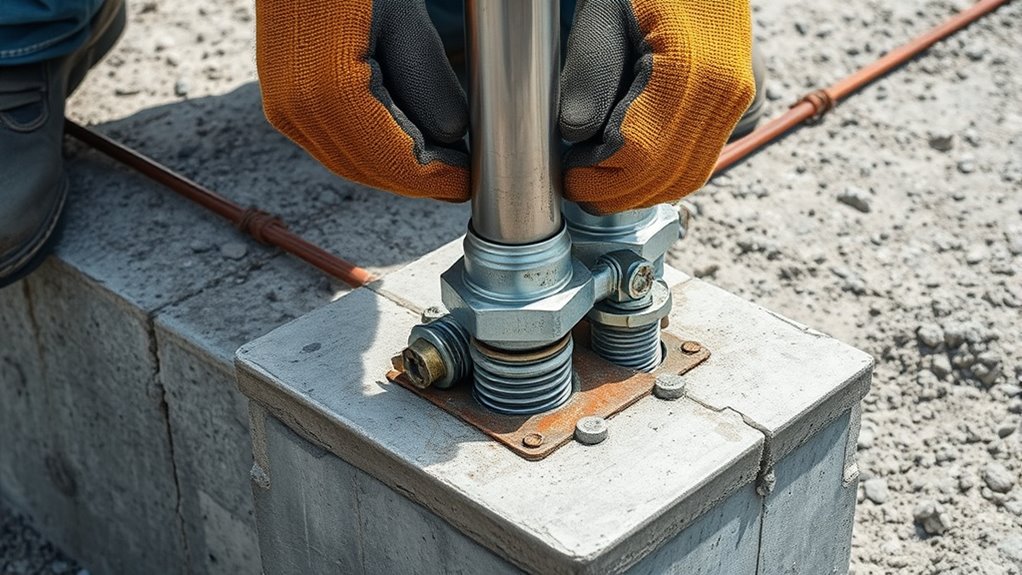
Inspecting anchor points and footings is a critical step in ensuring the safety and stability of a structure. These foundational elements bear the weight and stress of the entire build, so it’s essential to evaluate their condition regularly. When inspecting, you need to pay close attention to signs of material corrosion, which can compromise the integrity of metal components like anchor bolts and fasteners. Corrosion often appears as rust, pitting, or discoloration, and if left unchecked, it can weaken the connection points, leading to potential failure. Using a flashlight and a mirror can help you spot corrosion in hard-to-see areas, especially in joints and beneath protective coatings. If you notice significant corrosion, it’s imperative to replace or treat affected parts promptly to prevent further deterioration. Additionally, incorporating simple tests such as surface inspections and checking for loosened fasteners can help identify early signs of wear before more serious issues develop.
In addition, the soil stability beneath your footings plays a fundamental role in maintaining overall structural integrity. Soil can shift, settle, or erode over time due to weather conditions, water runoff, or nearby construction activity. When inspecting, look for signs of uneven settling, such as cracks or tilting in the footing or nearby walls. Moisture accumulation around the base of the footing can also weaken soil stability, causing it to lose its bearing capacity. Conducting a simple moisture test or observing water pooling around the foundation can give you clues about potential issues. If the soil seems unstable or signs of erosion are evident, it may be necessary to consult a geotechnical engineer to evaluate the site and recommend corrective measures like soil stabilization or underpinning. Regularly monitoring soil conditions and understanding how external factors impact foundation stability will help maintain your structure’s safety over time.
Regular inspections are your best defense against hidden problems that can escalate into costly repairs or safety hazards. Keep an eye out for visible cracks, rust, or any movement around the anchor points and footings. Addressing material corrosion early can save you from more significant structural failures later on. Likewise, understanding and monitoring soil stability ensures that your foundation remains secure, especially after extreme weather events or changes in land use nearby. Remember, proactive maintenance and timely intervention can extend the lifespan of your structure, providing peace of mind and safeguarding your investment. Ultimately, thorough inspections that focus on corrosion and soil conditions make a substantial difference in maintaining a safe, durable building.
Frequently Asked Questions
How Often Should Anchor Points and Footings Be Inspected?
You should inspect anchor points and footings at least annually to guarantee safety and integrity. Follow your maintenance schedule closely, especially after severe weather or any incident that could compromise their stability. Regular inspections help catch issues early, preventing accidents or costly repairs. Keep detailed records of each inspection, and be proactive in addressing any signs of wear, corrosion, or damage to maintain a safe working environment.
What Signs Indicate a Compromised Anchor Point or Footing?
You’ll know an anchor point or footing is compromised if you notice corrosion signs like rust or deterioration, which weaken the structure. Movement indicators such as shifts, cracks, or tilting also suggest instability. If these signs appear, stop work immediately, assess the extent of damage, and consult a structural engineer to prevent potential failure or accidents. Regular inspections help catch these issues early before they become serious problems.
Are There Specific Safety Standards for Inspecting These Structures?
Yes, there are specific safety standards and inspection protocols you must follow when inspecting anchor points and footings. You should adhere to OSHA regulations and industry best practices to guarantee safety. These standards guide you on proper inspection procedures, required documentation, and necessary maintenance checks. By following these safety standards and inspection protocols, you help prevent accidents, identify issues early, and ensure the structural integrity of the anchoring and footing systems.
Can Minor Cracks in Footings Affect Structural Integrity?
Sure, minor cracks in footings might seem harmless, but don’t be fooled—crack severity and footing material matter. Even small cracks can hide underlying issues that compromise structural integrity over time. You might think they’re just surface imperfections, but ignoring them risks future failure. Regular inspections catch these subtle signs early, ensuring the footing’s strength remains intact. Remember, what looks minor today could become a major problem tomorrow.
What Tools Are Recommended for Inspecting Anchor Points and Footings?
You should use inspection equipment like a level, plumb bob, and a flashlight to carefully examine anchor points and footings. A visual inspection is essential, but you can also employ techniques such as tapping to check for soundness or using a drone for hard-to-reach areas. These inspection techniques help detect cracks, shifts, or signs of deterioration early, ensuring the structural integrity remains sound.
Conclusion
Regularly inspecting anchor points and footings is vital for your safety on the job site. Did you know that improper footing inspections contribute to over 30% of construction-related accidents? By staying vigilant and maintaining these essential elements, you reduce risks and guarantee a safer environment for everyone. Remember, a quick check now can prevent costly accidents later. Stay proactive, and prioritize inspections—your safety depends on it.