Condensation inside your greenhouse is a key warning sign that something’s off with humidity or temperature control. If you notice droplets on glass or plastic, it’s your cue to check airflow and ventilation. Ignoring these clues can lead to mold, plant stress, and pest issues. By addressing condensation early, you can prevent bigger problems down the line. Keep going to discover more about what these signs mean and how to fix them effectively.

Get garden gear delivered free with Prime
- Fast, free delivery on millions of items
- Prime Video, Amazon Music and more included
- Member-only deals all year
Key Takeaways
- Condensation indicates imbalances in humidity and temperature, serving as an early warning sign of environmental issues.
- Persistent condensation can lead to mold, mildew, and fungal growth, threatening plant health.
- Excess moisture attracts pests like mites and aphids, increasing the risk of infestations.
- Regular detection of condensation helps identify ventilation or climate control problems early.
- Addressing condensation promptly prevents larger issues like plant stress, disease spread, and pest outbreaks.
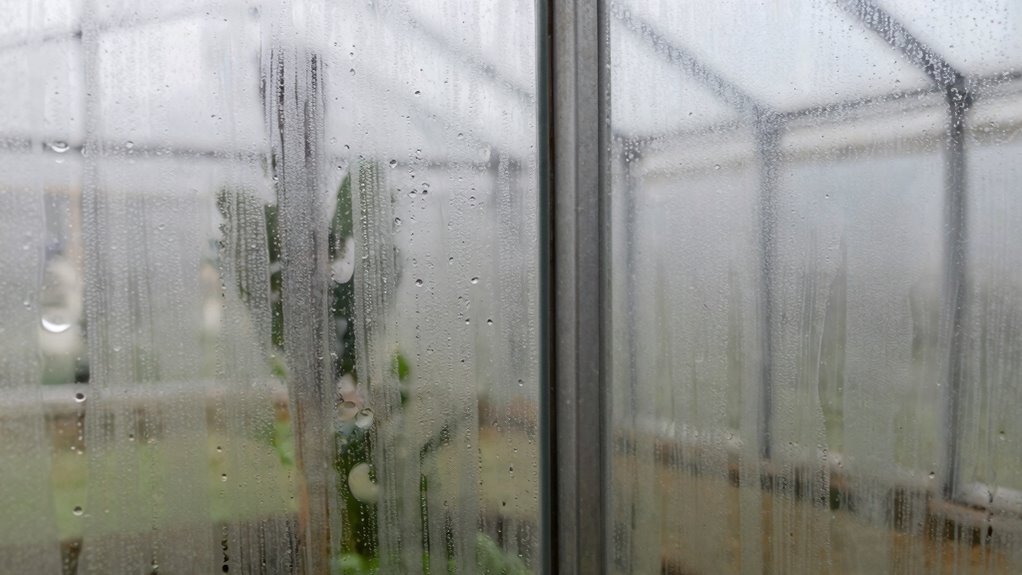
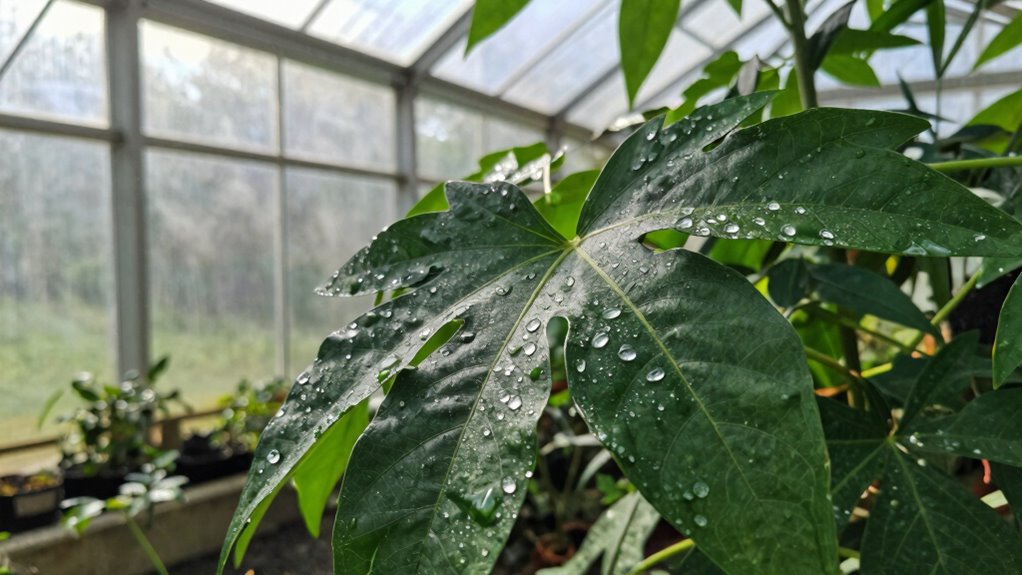
Condensation inside your greenhouse can be be a telltale sign of underlying issues that could harm your plants. When you notice droplets forming on the glass or plastic, it’s a clear indicator that something isn’t quite right with the environment inside. This isn’t just a minor inconvenience; it’s a warning sign that your greenhouse’s conditions might be off-balance, potentially affecting plant health and inviting pests. Addressing these clues early can save you headaches down the line and keep your plants thriving.
Condensation signals environmental imbalances that can harm plants and attract pests—address it early for healthier greenhouse conditions.
Excess moisture creates a perfect breeding ground for mold, mildew, and fungi, all of which threaten your plants’ health. When humidity levels are too high, plants become stressed, making them more vulnerable to diseases and pests. You might see leaves yellowing or rotting, which signals that the environment needs adjusting. By monitoring condensation, you gain insight into the humidity and temperature balance inside your greenhouse. If you ignore these signs, pests like spider mites or aphids could find it easier to settle in, further compromising plant health.
Preventing pest infestations starts with controlling the environment. When condensation is persistent, it suggests that ventilation might be inadequate or that heating and cooling systems aren’t working effectively. Improving airflow helps reduce moisture buildup, making it less inviting for pests and less conducive to disease. Proper ventilation also helps regulate temperature swings that stress plants, strengthening their natural defenses. In addition, understanding greenhouse climate control is essential for maintaining optimal growing conditions. As part of this, understanding the importance of humidity regulation can significantly impact overall plant health. Maintaining optimal humidity levels is also critical for preventing pest attraction, which can be exacerbated by high moisture levels. In turn, healthier plants are less likely to become targets for pests, creating a resilient environment that minimizes the need for chemical interventions.
You can take practical steps to address condensation issues before they escalate. Installing exhaust fans, opening vents, or adding dehumidifiers can greatly reduce excess moisture. Keep an eye on your interior conditions daily, adjusting your ventilation and temperature controls as needed. Regularly checking environmental conditions helps you stay ahead of problems before they develop further. Additionally, understanding ventilation systems can help you optimize airflow to prevent condensation buildup. Maintaining consistent humidity levels not only supports plant health but also acts as a proactive measure against pest problems. When your plants are healthy and the environment is stable, pests find fewer reasons to invade, reducing your workload and the risk of disease spread.
In essence, the presence of condensation inside your greenhouse isn’t just a minor detail—it’s a crucial clue that alerts you to potential problems. Recognizing these signs early allows you to fine-tune your environment, promoting plant health and pest prevention simultaneously. Taking prompt action keeps your greenhouse conditions ideal, ensuring your plants stay robust and free from the threats that high humidity and poor ventilation can bring.
As an affiliate, we earn on qualifying purchases.
Frequently Asked Questions
How Can I Prevent Condensation From Damaging My Plants?
To prevent condensation from damaging your plants, focus on humidity control and ventilation strategies. You should regularly monitor humidity levels and keep them balanced to avoid excess moisture. Use fans or vents to improve airflow, especially during peak condensation times. Maintaining proper temperature and humidity helps prevent mold and rot, ensuring your plants stay healthy. Effective ventilation strategies are key to reducing condensation and protecting your greenhouse environment.
Are Certain Plants More Prone to Issues From Condensation?
Yes, some plants are more prone to issues from condensation due to their susceptibility. Plants with delicate leaves or those sensitive to excess moisture, like ferns or orchids, need careful humidity control. You should monitor condensation levels regularly and adjust ventilation or humidity to protect these plants. Recognizing their susceptibility helps you prevent problems like mold, rot, or fungal infections, keeping your greenhouse healthier overall.
What Tools Can Help Monitor Condensation Levels?
Think of humidity sensors and digital hygrometers as your greenhouse’s heartbeat monitors—they keep you in tune with condensation levels. These tools provide real-time readings, helping you detect excess moisture before it causes bigger problems. By monitoring humidity consistently, you can adjust ventilation or heating, preventing issues like mold or plant disease. Staying proactive with these devices is like having a guardian angel watching over your plants’ health.
How Often Should I Check for Condensation in My Greenhouse?
You should check for condensation daily, especially during early mornings and evenings when humidity tends to rise. By doing so, you can better manage humidity control and adjust your ventilation strategies promptly. Regular inspections help prevent excessive moisture buildup, which could lead to bigger greenhouse issues like mold or plant disease. Staying vigilant ensures ideal growing conditions and keeps your greenhouse healthy and productive.
Can Condensation Affect Greenhouse Structural Integrity?
A stitch in time saves nine—condensation accumulation can indeed impact your greenhouse’s structural integrity. Excess moisture can lead to rust, wood rot, and eventual structural deterioration if left unchecked. Over time, persistent condensation weakens framing and supports, risking collapse or costly repairs. Regularly monitoring and managing condensation helps prevent this, ensuring your greenhouse stays sturdy and productive for years to come.
Conclusion
By paying attention to condensation clues, you catch early signs of trouble, saving your greenhouse from costly damage. These tiny droplets contrast sharply with the bigger issues lurking beneath—moisture buildup, mold, or structural problems. Recognizing the small tells helps you act swiftly, preventing larger disasters. In this dance of droplets and danger, your vigilance becomes your best shield, turning subtle signs into powerful warnings. Stay alert, and your greenhouse will thrive, even when trouble’s just a hint.
Fall yard work Picks
leaf blowers
As an affiliate, we earn on qualifying purchases.