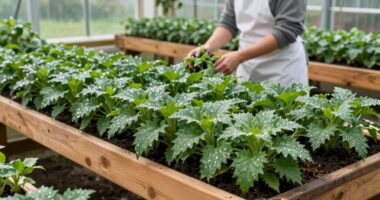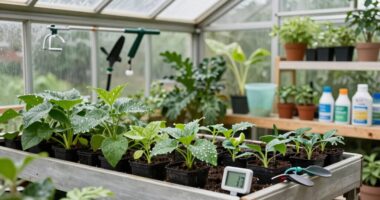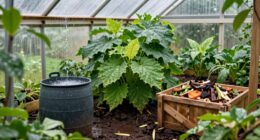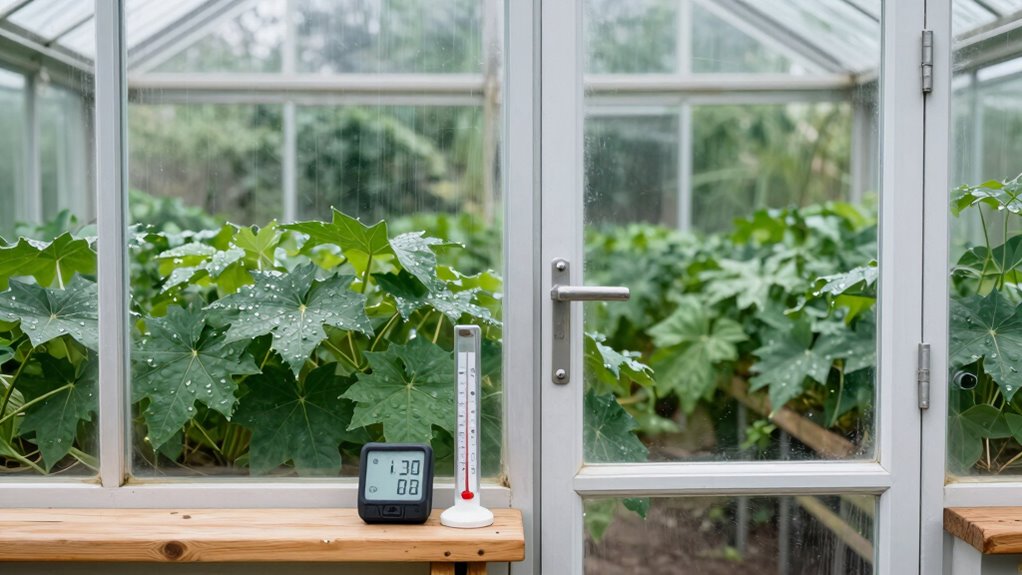

Before the first cold night, inspect your greenhouse’s ventilation to guarantee vents open smoothly, fans work properly, and automated controls function correctly. Check your heating systems, testing them beforehand to confirm they operate effectively and set to the right temperature. Seal any gaps around windows and doors, and cover glass or plastic with insulating materials. Regularly monitor temperature and humidity levels with functioning sensors for real-time adjustments. If you want to know how to prepare even better, keep exploring the details.

Get garden gear delivered free — and shop member deals
- Fast, free delivery on millions of items
- Access to Prime Big Deal Days deals on October 6–7
- Prime Video, Amazon Music and more included
Key Takeaways
- Verify that ventilation vents open and close smoothly to prevent cold drafts and maintain airflow.
- Inspect and test heating devices to ensure proper operation during cold nights.
- Seal any gaps or cracks around windows, doors, and vents to prevent cold air ingress.
- Check that thermometers and hygrometers are functional for accurate temperature and humidity monitoring.
- Confirm that automated controls and alarms are set and responsive for real-time environmental adjustments.
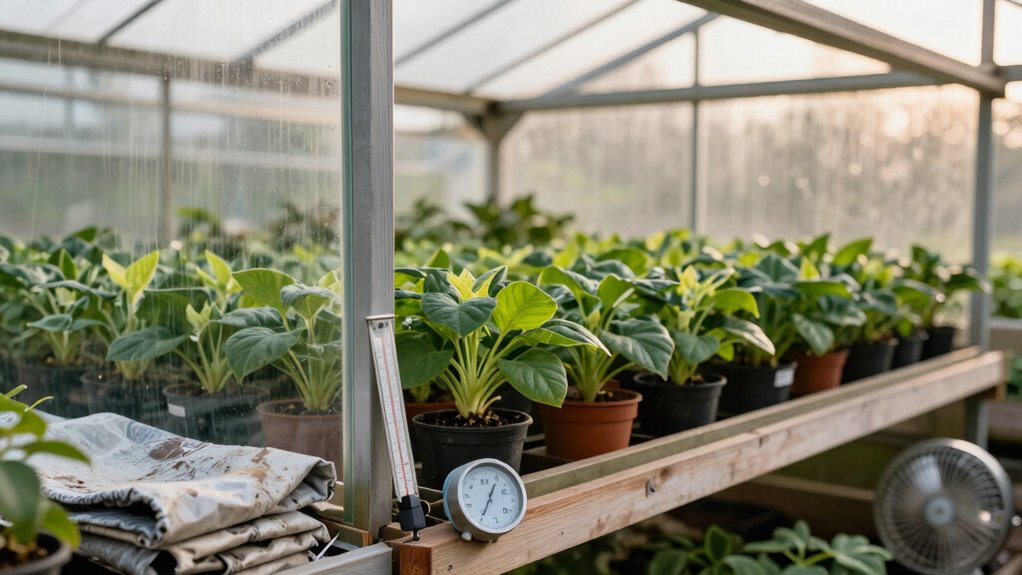
As the first cold night approaches, it’s essential to guarantee your greenhouse is prepared to protect your plants from the dropping temperatures. The last thing you want is to wake up to frost-damaged crops or plants struggling to survive. Before the night falls, take a thorough walk through your greenhouse and check key systems that influence temperature stability and plant health. One of the first priorities is inspecting your ventilation systems. Proper ventilation isn’t just for summer; it’s fundamental in winter too. Ensure vents open and close smoothly, and that fans are working correctly. Good airflow helps regulate temperature and humidity, preventing cold pockets or excess moisture that can lead to disease or frostbite. If you rely on automated ventilation, double-check the controls and timers to make sure they’ll activate as needed during the night.
Ensure proper ventilation and check controls before cold nights to protect your plants from frost damage.
Next, review your watering schedules. Overwatering can be just as damaging as underwatering, especially in colder weather when soil retains moisture longer and plants are less active. Too much water can lead to root rot or mold, while too little can stress plants further. Adjust your watering routine to suit the lower temperatures, making sure your plants aren’t sitting in soggy soil or drying out completely. Consider reducing watering frequency or volume, especially if your greenhouse has high humidity levels. Proper watering helps maintain plant vigor, making them more resilient against the cold. Soil moisture levels are especially important to monitor during this time to prevent issues related to overly wet or dry soil. Additionally, keeping an eye on plant health can help detect early signs of stress or disease, allowing for swift intervention. Regularly checking plant stress indicators can assist you in catching potential problems before they escalate. Being aware of environmental conditions within your greenhouse can also help you fine-tune your climate control strategies for winter.
Additionally, examine your insulation methods. Check for any gaps or cracks around windows, doors, and vents, and seal them promptly. Even small leaks can let in cold air, dropping the temperature inside your greenhouse and risking plant damage. Covering glass or plastic with insulating materials or bubble wrap can provide extra protection. If you use heating devices, test them beforehand to confirm they’re functioning properly and set at appropriate temperatures. Remember, sudden temperature drops can occur unexpectedly, so having a backup plan or emergency heat source is wise. Incorporating environmental controls can enhance your ability to maintain consistent conditions during cold snaps. Regularly inspecting these systems ensures they respond quickly to changing conditions and help avoid costly damage.
Lastly, guarantee your monitoring tools are in place and functioning. Thermometers and hygrometers give you real-time data on the internal environment, allowing you to make quick adjustments if needed. Set alarms if possible, so you’re alerted to any unexpected temperature drops during the night. Upgrading to digital sensors with remote monitoring can provide peace of mind and immediate alerts. By systematically inspecting ventilation, watering routines, insulation, and monitoring equipment, you prepare your greenhouse to withstand the cold night ahead. Taking these steps now helps ensure your plants stay healthy, vibrant, and protected from the harshness of winter’s first chill.
As an affiliate, we earn on qualifying purchases.
Frequently Asked Questions
How Can I Prevent Frost Damage Inside My Greenhouse?
To prevent frost damage inside your greenhouse, you should implement effective ventilation strategies to maintain warm air circulation and prevent cold spots. Additionally, control humidity levels to avoid excess moisture, which can cause frost buildup on plants. Using heaters or heat mats can help boost temperature, but guarantee proper airflow to prevent condensation. Regularly monitor temperature and humidity to keep conditions ideal and protect your plants from frost damage.
What Are the Best Emergency Heating Options for a Greenhouse?
For emergency heating in your greenhouse, you should consider portable propane or kerosene heaters, which provide quick warmth during power outages. Electric space heaters are also effective if you have backup power. Always guarantee proper ventilation to avoid dangerous fumes, and keep flammable materials away from heat sources. Having these heater options ready ensures you can protect your plants when unexpected cold snaps hit.
How Often Should I Check Insulation Effectiveness During Winter?
You should check insulation effectiveness at least once a week during winter to catch any sneaky drafts or wear. Regular temperature monitoring helps you spot chilly spots early, ensuring your insulation materials are doing their job. Think of it as giving your greenhouse a gentle check-up, keeping the environment cozy and stable for your plants. Consistent inspections help you stay ahead of the cold, safeguarding your lush green oasis.
What Are Signs of Pest Activity During Cold Weather?
During cold weather, watch for signs of pest activity like chewed leaves, webbing, or droppings. Pest hiding spots such as cracks, crevices, and under pots become hotspots for cold weather pests. You might also notice unusual plant damage or tiny insects clinging to plants despite the cold. Regularly inspect these areas, as pests seek shelter and food even in low temperatures, risking your greenhouse’s health.
How Do I Prepare My Greenhouse for Unexpected Power Outages?
To prepare for unexpected power outages, you should set up a solar backup system to maintain essential functions and prevent temperature drops. Additionally, install thermal curtains to insulate plants and retain heat during outages. Make sure your backup system is fully functional and test it regularly. Keep extra batteries and portable heaters on hand. These measures help protect your greenhouse and keep your plants safe when power unexpectedly goes out.
Conclusion
Just like a captain checks the ship before a storm, inspecting your greenhouse guarantees you’re ready for the cold night ahead. I once forgot to close a vent, and the next morning, I found my plants shivering—like passengers caught in a sudden squall. Taking the time now to review insulation, heating, and seals can make all the difference. When you prepare thoroughly, you’ll face the cold night confidently, knowing your greenhouse is as snug as a ship in port.
Fall yard work Picks
leaf blowers
As an affiliate, we earn on qualifying purchases.