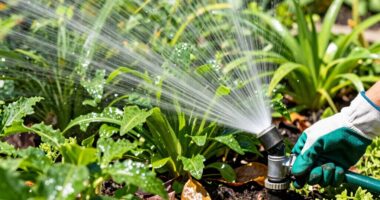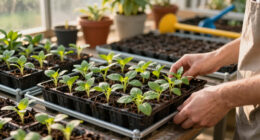
To keep your greenhouse functional during messy changeover months, focus on maintaining soil health by testing and amending with compost, and improving drainage. Use physical barriers and regularly inspect plants for pests, introducing beneficial insects if needed. Keep your greenhouse clean and well-ventilated to prevent mold and diseases, and rotate crops to reduce pests. Staying proactive in these areas guarantees productivity and resilience—continue exploring for more tips to keep your greenhouse thriving through seasonal changes.

Get garden gear delivered free with Prime
- Fast, free delivery on millions of items
- Prime Video, Amazon Music and more included
- Member-only deals all year
Key Takeaways
- Maintain thorough soil testing and organic amendments to promote plant health during seasonal changes.
- Install physical barriers like insect screens to prevent pest entry during vulnerable transition periods.
- Regularly clean the greenhouse, removing debris and dead material to minimize pest habitats and disease risk.
- Ensure proper ventilation and monitor humidity to reduce mold, fungi, and pest-friendly conditions.
- Develop and follow a proactive pest management plan with early detection and targeted control methods.
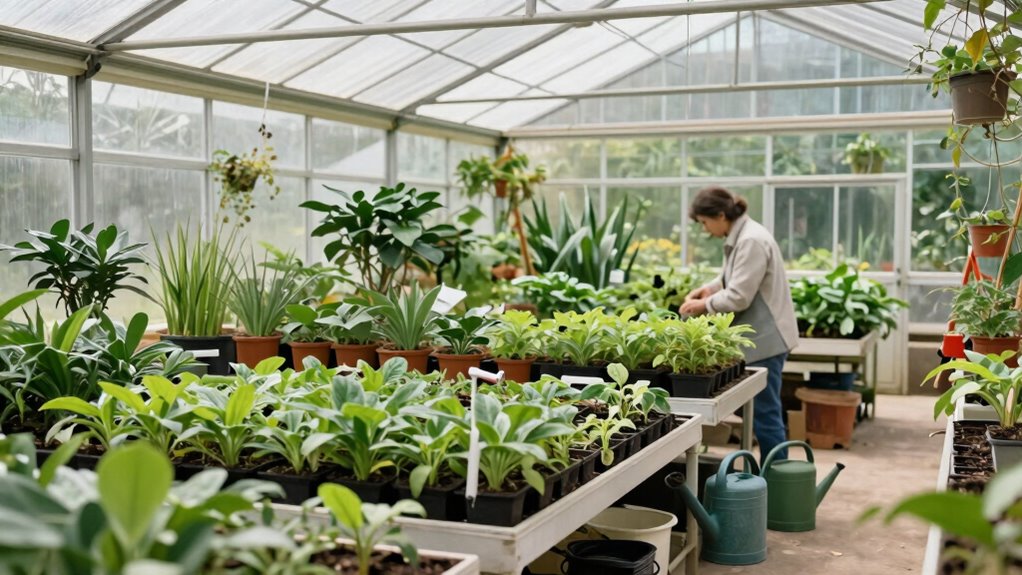
Change months can be challenging for maintaining a functional greenhouse, especially when unpredictable weather and seasonal shifts disrupt your usual routine. During these times, your plants are more vulnerable to pests and soil issues, so staying proactive is key. One of the first steps you should take is soil preparation. Before planting or replanting, test your soil’s pH and nutrient levels to identify deficiencies. If your soil is compacted or depleted, amend it with organic matter like compost or well-rotted manure. This not only improves drainage and aeration but also gives your plants a healthier foundation to grow. Remember, healthy soil is less attractive to pests and diseases, so investing time in soil prep pays off in the long run.
Proactively prepare your soil with testing and organic amendments to ensure healthy, pest-resistant plants during seasonal changeovers.
Pest control becomes even more vital during changeover months because fluctuating temperatures and humidity create ideal conditions for pests to thrive. Keep a close eye on your plants for signs of infestation, such as chewed leaves, sticky residue, or unusual spots. To prevent pests from taking hold, start with physical barriers like insect screens on vents and doorways. Regularly inspect and remove any weeds or debris near your greenhouse, as pests often hide in these areas. Utilizing natural pest control methods can be highly effective; introduce beneficial insects like ladybugs or predatory mites, which prey on common greenhouse pests. If you notice an infestation, act swiftly with targeted solutions like neem oil or insecticidal soap, making sure to follow application instructions carefully. Additionally, understanding soil health can help you create a more resilient environment and reduce pest problems over time. Developing a pest management plan tailored to your greenhouse conditions can further enhance your ability to keep pests at bay. A comprehensive approach that includes monitoring pest activity helps you catch issues early and prevent significant damage. Strengthening your knowledge of pest identification can further improve your control strategies.
Maintaining a clean environment is vital during these transitional months. Clear out fallen leaves and remove any dead or diseased plant material, which can harbor pests and pathogens. Keep your greenhouse well-ventilated to help regulate temperature and humidity, discouraging the growth of mold and fungi that pests often spread. Additionally, consider rotating crops to prevent soil-borne diseases and pest buildup. Proper soil preparation combined with vigilant pest control creates a resilient environment for your plants, even amidst unpredictable seasonal changes.
Ultimately, staying attentive to your soil’s health and pest presence helps you keep your greenhouse productive through messy changeover months. By investing a little effort upfront—amending soil, installing barriers, and maintaining cleanliness—you set your plants up for success. Your proactive approach ensures that your greenhouse remains a thriving space, regardless of outside weather quirks or seasonal shifts.
As an affiliate, we earn on qualifying purchases.
Frequently Asked Questions
How Do I Prevent Pests During Messy Transition Periods?
To prevent pests during messy change months, you should focus on pest control using organic methods. Regularly inspect your plants for signs of pests, and remove affected leaves promptly. Introduce natural predators like ladybugs, or use neem oil and insecticidal soaps to keep pests at bay. Keep the greenhouse clean and well-ventilated, and avoid overwatering, which attracts pests. These steps help maintain a healthy, pest-free environment naturally.
What Are the Best Cleaning Supplies for Greenhouse Maintenance?
You’ll want to use effective cleaning tools like brushes, scrapers, and disinfectants for greenhouse maintenance, ensuring surfaces are spotless. Pair these with soil sterilization methods to prevent pests and diseases from lingering. While cleaning tools handle debris and grime, sterilizing soil helps break pest cycles underground. This combination creates a clean, healthy environment, keeping your greenhouse thriving despite messy handover months. Regular maintenance with the right supplies makes all the difference.
How Can I Monitor Temperature Fluctuations Effectively?
You can monitor temperature fluctuations effectively by installing a reliable thermometer and tracking soil moisture levels regularly. Use ventilation control to adjust airflow, preventing overheating or chilling during unpredictable weather changes. Keep an eye on soil moisture to guarantee plants aren’t stressed by extreme temperatures, and make quick adjustments to vents or fans as needed. This proactive approach helps maintain a stable environment, keeping your greenhouse healthy year-round.
Should I Rotate Crops During the Transition Months?
Yes, rotating crops during changeover months helps maintain soil health and reduces pests. Use soil testing to assess nutrient levels and adjust accordingly. Incorporate companion planting to naturally deter pests and improve plant growth. By rotating crops, you prevent soil depletion and break pest cycles, making your greenhouse more resilient. This approach guarantees a smoother shift and keeps your greenhouse productive even during messy months.
How Do I Protect Delicate Plants From Sudden Weather Changes?
Suddenly, a cold snap hits just as your delicate plants are thriving. To protect them, shield them with row covers or temporary glass panels to regulate soil moisture and shield from harsh sunlight exposure. Elevate containers to prevent waterlogging and insulate roots. Keep an eye on weather forecasts, and adjust coverings as needed, ensuring your plants stay warm and stable despite unpredictable weather changes.
Conclusion
So, during those chaotic shift months, embrace the mess, laugh at the chaos, and remember that even greenhouses need a little patience—and perhaps a dash of humor. Keep the doors open, the vents clear, and your spirits high. After all, what’s a little dirt and disorder compared to the promise of lush, thriving plants? Stay resilient, stay sarcastic, and watch your greenhouse bloom amid the madness. It’s all part of the wonderfully messy journey.
Halloween Picks
halloween
As an affiliate, we earn on qualifying purchases.