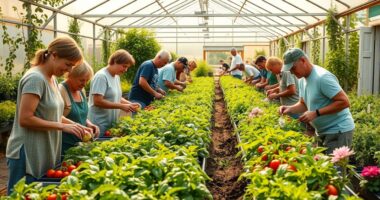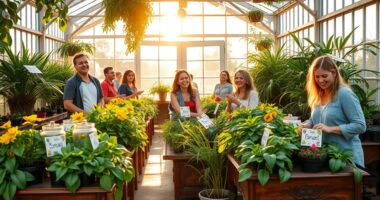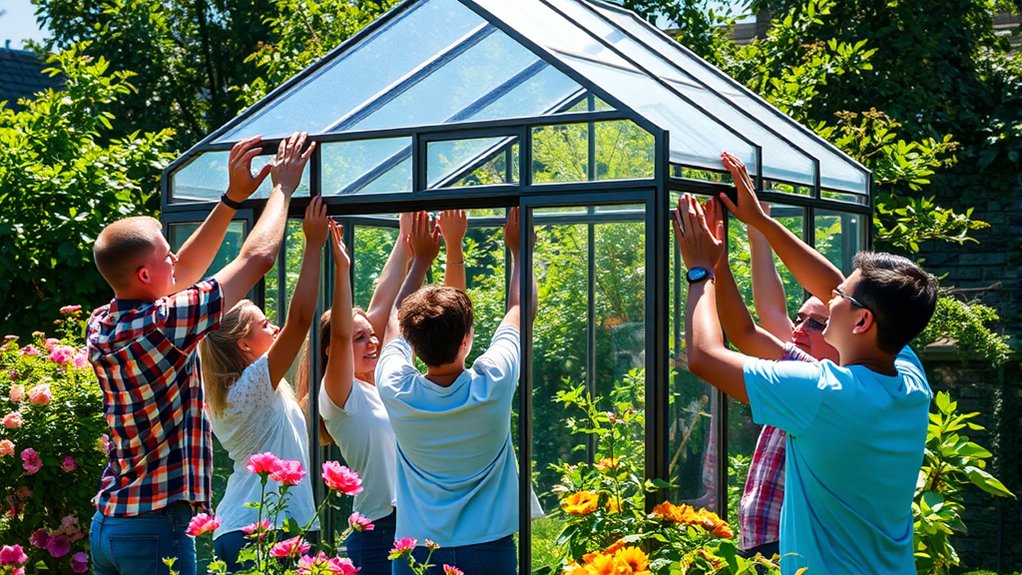

Building a greenhouse together boosts teamwork and creates a shared space for growth and learning. As you plan and select sustainable materials, you’ll strengthen communication and collaboration. Engaging everyone in tasks like measuring, cutting, and assembling fosters ownership and pride. Using gardening techniques such as vertical gardening and hydroponics makes the project more productive and educational. By maintaining the greenhouse over time, you’ll develop skills and bonds that last, revealing more ways to succeed along the way.
Key Takeaways
- Collaborate on planning, material selection, and construction to foster teamwork and shared ownership of the greenhouse project.
- Use sustainable, eco-friendly materials to promote environmental responsibility and long-term durability.
- Engage in gardening techniques like vertical gardening and hydroponics to enhance learning and productivity.
- Communicate openly about goals and tasks to strengthen bonds and ensure everyone’s involvement.
- Maintain and adapt the greenhouse seasonally, building skills and memories through ongoing teamwork and shared care.

Have you ever thought about creating a space where you can grow plants year-round? Building a greenhouse together is more than just a project; it’s an opportunity to bond while crafting a sustainable oasis. As you plan this project, consider the importance of using sustainable materials. Opting for recycled wood, reclaimed metal, or eco-friendly plastics not only benefits the environment but also sets a strong foundation for your greenhouse. These materials often come with the added bonus of durability and charm, making your project both eco-conscious and aesthetically pleasing. Incorporating sustainable materials from the start encourages everyone involved to think about long-term impacts and fosters a shared commitment to environmental responsibility.
Once you’ve selected your materials, it’s time to focus on gardening techniques that will maximize your greenhouse’s productivity. Efficient gardening techniques can make a significant difference in how well your plants thrive throughout the year. Companion planting, vertical gardening, and hydroponics are effective methods that you can implement easily. These techniques not only save space but also improve plant health and yield. When everyone pitches in to learn and apply these methods, it creates a collaborative environment where knowledge is shared, and successes are celebrated together. As you experiment with different planting strategies, you’ll discover what works best for your climate and space, making the project both educational and rewarding.
Maximize greenhouse productivity with companion planting, vertical gardening, and hydroponics for space-saving, healthy, and rewarding growth.
Building the greenhouse involves more than just assembling parts; it’s about working together and sharing skills. Whether you’re measuring, cutting, or sealing, each task becomes a chance to teach or learn from one another. This teamwork strengthens your bond and transforms the process into a memorable experience. Remember to communicate openly about your goals and expectations, so everyone feels involved and valued. As you progress, you’ll notice how your collective effort turns into a sense of ownership and pride in the final structure. The act of co-creating a space for growth and sustainability means everyone has a stake in its success, fostering a stronger connection among team members. Additionally, understanding how sound vibrations influence cellular health can inspire innovative ways to enhance your greenhouse environment and plant growth.
Finally, once your greenhouse is built, the real fun begins. With a shared vision and a solid foundation, you’ll be able to implement gardening techniques that ensure year-round success. Regular maintenance, seasonal adjustments, and continuous learning will keep your greenhouse thriving. This project isn’t just about the plants; it’s about building memories, developing skills, and strengthening relationships. Together, you’ll create a sustainable sanctuary that brings joy and fresh produce into your lives, proving that teamwork and shared purpose can turn a simple idea into a flourishing reality.
Frequently Asked Questions
What Are the Best Plants to Grow in a Beginner Greenhouse?
You should start with easy-to-grow plants like succulent varieties and herbs for your beginner greenhouse. Succulents thrive in dry, sunny conditions and require minimal watering, making them perfect for beginners. Herb gardening, including basil, mint, and parsley, is also simple and rewarding, offering fresh flavors for cooking. These plants are resilient, grow quickly, and help build your confidence as you learn to manage your greenhouse effectively.
How Can I Ensure Proper Ventilation in My Greenhouse?
To guarantee proper ventilation in your greenhouse, you should install effective ventilation systems like exhaust fans and intake vents. Manage airflow by opening windows or vents during different weather conditions, allowing fresh air to circulate. Use fans to promote consistent airflow, which helps regulate temperature and humidity. Regularly inspect and clean ventilation equipment to keep airflow management at its best, creating a healthy environment for your plants and preventing issues like mold or pests.
What Safety Precautions Are Recommended During Greenhouse Construction?
Imagine the thrill of creating your greenhouse, but don’t forget safety. Always wear safety gear like gloves, goggles, and sturdy footwear to protect yourself. Clearly mark emergency exits for quick escape if needed. Keep tools organized and handle sharp objects carefully. Regularly inspect equipment and work in well-lit, ventilated areas. These precautions guarantee your build is safe, so you can focus on the joy of growing your green sanctuary.
How Do I Maintain Consistent Temperature and Humidity Levels?
To maintain consistent temperature and humidity, you should monitor these levels regularly with a reliable thermometer and hygrometer. Adjust your watering schedule to prevent excess moisture, which can affect humidity. Use fans or vents to regulate airflow and temperature. Keep pest control measures in place to prevent infestations that could disrupt the environment. Consistent monitoring and adjustments help create a stable, healthy greenhouse environment for your plants.
What Are Cost-Effective Materials for Building a Greenhouse?
Did you know that using recycled polycarbonate panels can cut greenhouse costs by up to 50%? For cost-effective materials, consider polycarbonate or PVC panels—they’re affordable and durable. Incorporate solar panels to offset energy costs and rainwater harvesting systems to reduce water expenses. These eco-friendly options help you build a sustainable greenhouse without breaking the bank, making your project both economical and environmentally responsible.
Conclusion
Building a greenhouse together shows that teamwork turns a simple idea into a thriving space. As you collaborate, you realize that shared effort and trust create something stronger than individual work. The theory that “many hands make light work” proves true, reminding you that unity not only builds structures but also bonds. When you work together, your collective spirit grows, making future projects even more meaningful and rewarding.