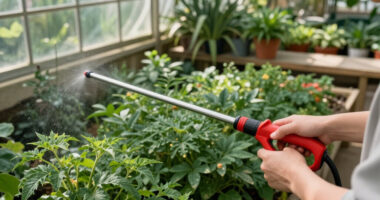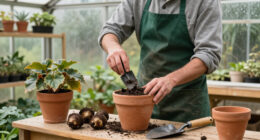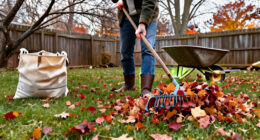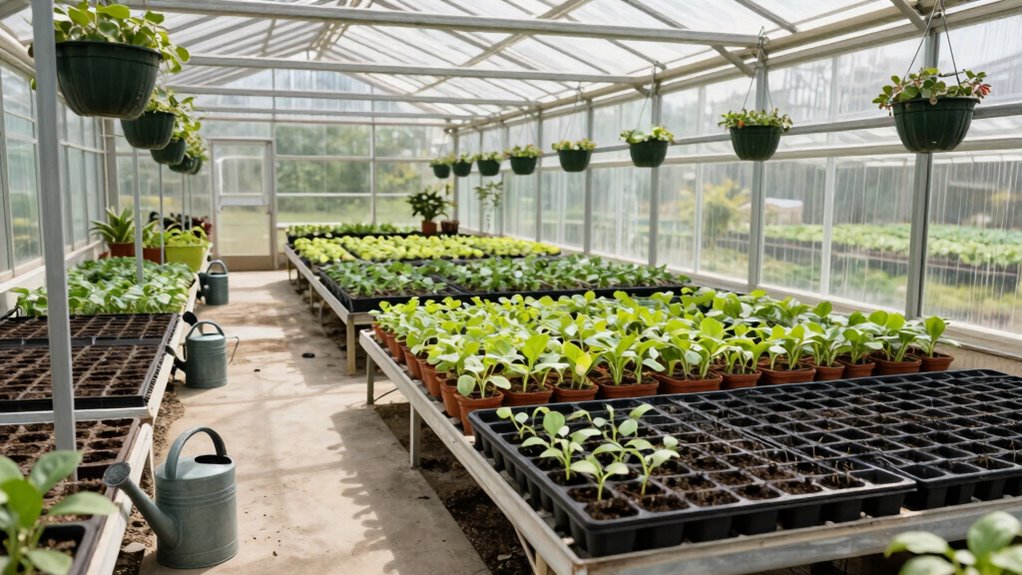

Regularly cleaning your greenhouse helps prevent pests, diseases, and debris from carrying over to next season. Inspect plants thoroughly and remove any unhealthy ones immediately to stop the spread. Clean tools, surfaces, and containers with disinfectant, and make certain compost heats enough to kill pathogens. Clear away old debris and manage humidity to create a healthier environment. Staying proactive with sanitation and maintenance reduces risks and sets the stage for a successful planting season. Keep exploring to learn more essential steps.
Key Takeaways
- Proper removal and disposal of diseased plants prevent the spread of pathogens to future crops.
- Regular cleaning and sanitizing of tools and surfaces reduce disease transmission.
- Maintaining optimal environmental conditions minimizes fungal and bacterial growth.
- Composting healthy plant material at high temperatures eliminates weed seeds and pathogens.
- Crop rotation and sanitation practices create a resilient, disease-resistant greenhouse environment.
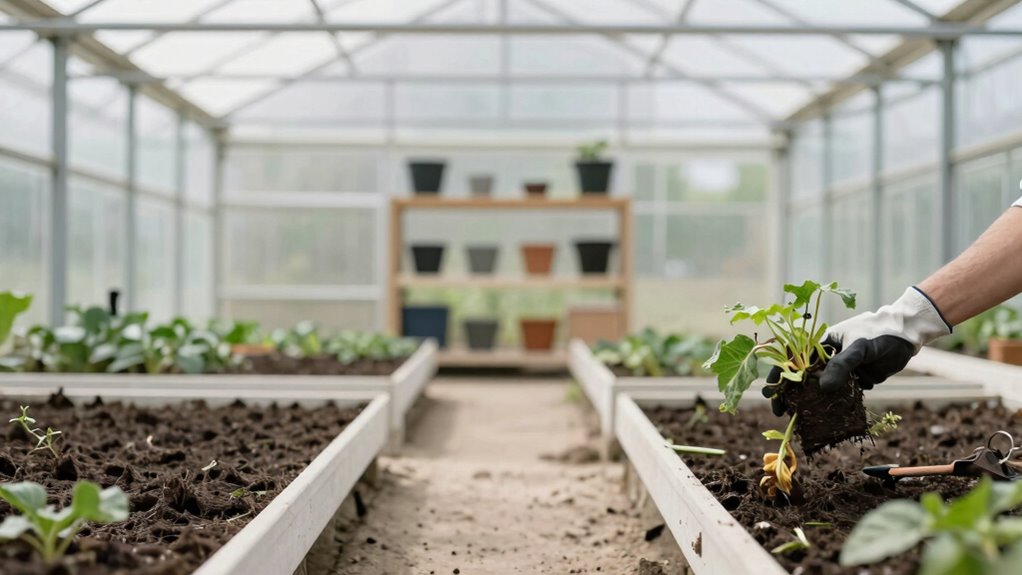
Are you ready to give your greenhouse a fresh start? The first step in a successful cleanup is to focus on plant disease prevention. If you neglect this, you risk carrying over pests and pathogens into the next growing season, which can lead to stubborn problems and reduced yields. To prevent this, start by thoroughly inspecting all plants and removing any that show signs of disease or distress. Discard these plants immediately—do not compost them, as this can spread spores or bacteria. Instead, bag them tightly and dispose of them far from your greenhouse. After clearing out unhealthy plants, clean all surfaces, tools, and containers with a mild disinfectant. This reduces the chance of lingering pathogens contaminating new plants.
Start your greenhouse cleanup by inspecting plants and removing any showing signs of disease to prevent future problems.
Next, pay close attention to your composting techniques. Proper composting is essential to prevent disease and create a rich soil base for your future crops. Make sure your compost pile heats up enough to kill weed seeds and pathogens; aim for a temperature of around 135-160°F (57-71°C) and turn it regularly. Avoid composting diseased plant material, as this can spread problems later on. Instead, set aside such waste for disposal and focus on composting healthy organic matter. This way, you produce a nutrient-dense soil amendment that supports healthy plant growth while minimizing disease risks. Incorporating effective composting practices can significantly reduce the chance of disease transmission and improve soil health. Additionally, maintaining a balanced carbon-to-nitrogen ratio in your compost helps promote efficient decomposition and suppresses disease development.
As part of your cleanup, remove all old plant debris, fallen leaves, and any clutter that can harbor pests or disease spores. This not only tidies your space but also creates an environment less inviting to problem organisms. Consider replacing or sterilizing pots and trays before reuse, especially if they’ve held diseased plants. Ventilate your greenhouse well to reduce humidity, which can promote fungal growth. Regularly monitor and adjust watering practices, since overwatering can create perfect conditions for root rot and other diseases. Maintaining good hygiene practices, such as sanitizing tools, is also crucial to prevent the spread of pathogens. Developing a routine of regular sanitation can further help keep your greenhouse pathogen-free. Additionally, maintaining optimal airflow helps to lower humidity levels and reduces the chances of fungal problems developing.
Finally, plan ahead for the next season by implementing good hygiene practices consistently. Keep tools sanitized, rotate crops to prevent soil-borne issues, and stay vigilant for early signs of trouble. The most effective way to block next season’s problems is to be proactive during this cleanup phase. By diligently preventing plant diseases and refining your composting techniques, you set the stage for a healthier, more productive growing season. Your efforts now will pay off in fewer setbacks, stronger plants, and a thriving greenhouse all year round.
As an affiliate, we earn on qualifying purchases.
Frequently Asked Questions
How Often Should I Perform This Greenhouse Cleanup Step?
You should perform this greenhouse cleanup step at least once per season, aligning with your seasonal schedule. The cleanup frequency depends on your greenhouse’s conditions and plant types, but a thorough cleanup before each new season helps prevent pests and diseases. Regular maintenance, like removing debris and pruning, guarantees your greenhouse stays healthy year-round. Consistent cleanup not only keeps things tidy but also sets your plants up for a successful growing season.
Can This Method Be Used for All Types of Greenhouses?
About 80% of greenhouse managers find that a cleanup method like this works well across different types. You can adapt it for various greenhouse materials, whether glass, polycarbonate, or plastic. Seasonal adjustments are key; you’ll need to modify your cleaning and maintenance routines based on weather and crop cycles. This approach helps prevent pests and diseases, ensuring a healthier environment, no matter what kind of greenhouse you operate.
What Tools Are Necessary for This Cleanup Process?
You’ll need basic tools like a shovel, broom, and trash bags for the cleanup process. To guarantee effective soil sterilization, consider using a soil thermometer and sterilizing agents. Don’t forget gloves and masks for safety during waste disposal, especially if dealing with diseased plants. These tools help you thoroughly clean the greenhouse, prevent pests, and prepare it for a healthy next season. Proper waste disposal is essential to avoid spreading problems.
Is This Step Effective for Preventing Pest Infestations?
Yes, this step is effective for preventing pest infestations. By removing debris and sick plants, you reduce pest hiding spots. Incorporate chemical treatments carefully, following instructions to target pests effectively. Biological controls, like beneficial insects, can also be introduced to naturally manage pests. Together, these approaches create a healthier environment, preventing future infestations and ensuring your greenhouse remains pest-free for the upcoming season.
How Long Does the Cleanup Process Typically Take?
The cleanup process usually takes about a day or two, depending on the size of your greenhouse. To stay on top of seasonal maintenance, you should incorporate cleaning into your regular schedule, ideally at the end of each season. This guarantees you remove debris, diseased plants, and pests, which helps prevent problems later. A consistent cleaning schedule keeps your greenhouse healthy and ready for the next growing season.
Conclusion
As you finish your greenhouse cleanup, you might notice a stray seed or a forgotten tool—reminders that this small step today prevents big problems tomorrow. It’s funny how a simple tidying can unexpectedly save you time and effort later, almost like the universe aligning to reward your diligence. By taking this moment now, you set the stage for a smoother, healthier season ahead—proof that sometimes, the tiniest actions create the biggest ripple effects.