To prevent fungal diseases, you should carefully control humidity levels by maintaining them between 40-60%, ensuring proper ventilation, and using dehumidifiers if needed. Avoid overwatering, as excess moisture creates ideal conditions for fungi to thrive. Regularly monitor humidity with a hygrometer, and choose fungus-resistant materials for your setup. Consistently managing these factors helps protect your plants from infections—discovering more tips can help you stay ahead of fungal problems.
Key Takeaways
- Regularly monitor indoor humidity levels with hygrometers to maintain ideal moisture conditions.
- Improve ventilation by using exhaust fans and air circulation systems to reduce excess moisture.
- Use fungus-resistant materials for surfaces, containers, and greenhouse structures to prevent mold growth.
- Control watering practices by watering early in the day and avoiding overwatering to limit humidity buildup.
- Maintain consistent environmental conditions with dehumidifiers and fans to prevent fluctuations that promote fungi.
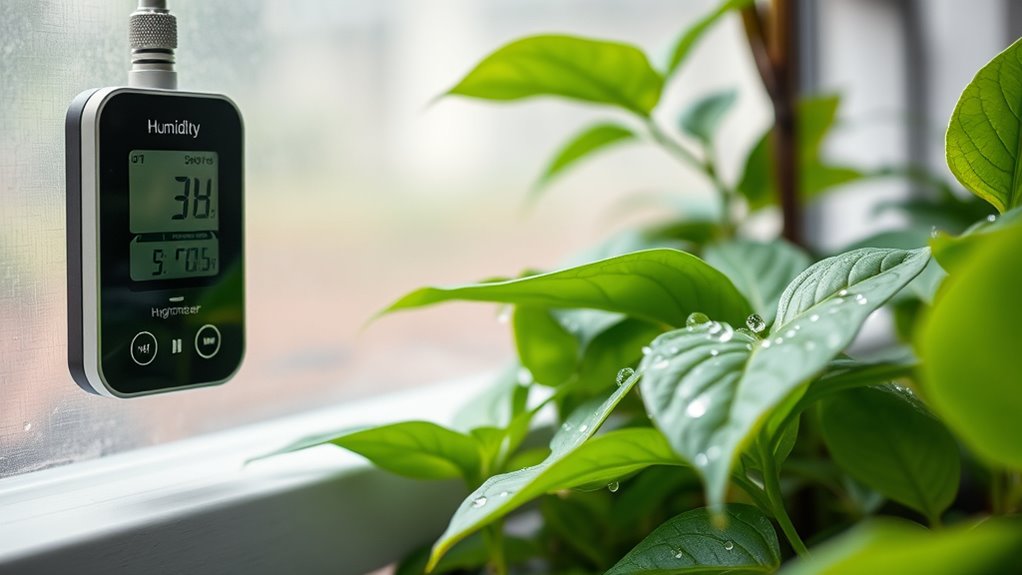
Maintaining proper humidity levels is essential for preventing fungal diseases in plants and crops. When humidity is too high, it creates the perfect environment for fungi to thrive, leading to infections that can devastate your plants. Managing indoor air quality plays a critical role here, especially if you’re cultivating plants indoors or in controlled environments. Good ventilation helps reduce excess moisture and keeps humidity at ideal levels, discouraging fungal growth. You should regularly monitor air humidity with a hygrometer, aiming for a range that supports healthy plant development without inviting mold or mildew. Additionally, using appropriate dehumidification systems can further help maintain consistent humidity levels and reduce the risk of fungal proliferation.
Maintaining proper humidity and ventilation prevents fungal diseases in plants.
One effective way to limit fungal issues is to choose materials that inherently resist fungus. Fungus resistant materials, such as certain plastics, treated wood, or specialized fabrics, can considerably reduce the chance of mold developing on surfaces where moisture tends to accumulate. These materials act as barriers, preventing fungi from taking hold and spreading. When setting up your indoor gardening space or greenhouse, opt for surfaces and containers made from these resistant materials to improve your defense against fungal diseases.
Controlling humidity isn’t just about reducing moisture; it also involves maintaining consistent conditions. Fluctuations in humidity levels can stress plants, making them more vulnerable to infections. Use dehumidifiers or fans to keep humidity steady, especially in enclosed spaces where air circulation may be limited. If you’re dealing with high humidity, consider installing exhaust systems that vent moist air outside. Proper air circulation not only prevents stagnant, damp pockets but also helps distribute dry, fresh air throughout the space, reducing the likelihood of fungal spores settling and multiplying.
In addition, implement watering practices that avoid excess moisture. Overwatering can quickly raise local humidity levels around the plant base, creating hotspots for fungi. Water plants early in the day so excess moisture evaporates before nightfall, when fungal spores are more active. Mulching with materials that don’t retain too much moisture can also help regulate soil humidity, making it less hospitable for fungi. Combining vigilant humidity control with selecting the right materials and good air quality management creates a thorough approach to fungal prevention.
Frequently Asked Questions
How Does Humidity Affect Fungal Growth Indoors?
Humidity levels directly impact fungal growth indoors, as higher humidity encourages mold prevention efforts. When humidity stays above 60%, mold spores thrive, leading to potential health issues. To keep fungal growth in check, you should control humidity by using dehumidifiers and proper ventilation. Maintaining a consistent indoor humidity between 30-50% helps prevent mold, ensuring a healthier environment and reducing the risk of fungal-related problems.
What Are the Best Tools to Measure Indoor Humidity Levels?
You need the best tools to measure indoor humidity levels, and nothing beats a reliable hygrometer or smart humidity sensor. These devices can detect tiny changes in moisture, helping you maintain ideal conditions and prevent fungal growth. Make sure your hygrometer calibration is accurate for precise readings. Smart sensors connect to your phone, offering real-time updates and alerts, so you always stay ahead of humidity issues and keep your space healthy.
Can Dehumidifiers Completely Eliminate Fungal Spores?
A dehumidifier can’t completely eliminate fungal spores because of their resilience and ability to survive in low moisture environments. While it considerably reduces humidity levels, some spores may persist in hidden areas or on surfaces, ready to grow if conditions become favorable. Its limitations mean you should combine dehumidification with good ventilation, cleaning, and moisture control to effectively prevent fungal growth.
How Often Should I Ventilate My Home to Prevent Fungi?
You should ventilate your home at least once a day, especially in high-humidity areas like kitchens and bathrooms, to support an effective ventilation schedule. Regular airflow helps reduce moisture and discourage mold growth. Incorporate mold prevention techniques such as opening windows, using exhaust fans, or running air purifiers. Consistent ventilation keeps humidity levels in check and prevents fungi from thriving, protecting your home’s health and your well-being.
Do Certain Materials Promote More Fungal Growth at Specific Humidity Levels?
Imagine a gentle warning in your home—certain materials, like wood and drywall, are more susceptible to fungal growth when humidity surpasses their thresholds. These materials, especially at higher humidity levels, create a cozy environment for fungi to thrive. To keep your space healthy, be mindful of humidity thresholds and consider choosing less susceptible materials or controlling moisture levels, ensuring your home remains a safe, comfortable haven.
Conclusion
By controlling humidity levels, you drastically reduce the risk of fungal diseases. Did you know that keeping humidity below 60% can cut fungal growth by over 50%? Staying vigilant and maintaining proper airflow can save your plants and crops from costly damage. Remember, small adjustments in humidity can make a huge difference. Take action today—your plants will thank you for it, and you’ll enjoy healthier, more resilient growth.