
TL;DR

Get garden gear delivered free with Prime
- Fast, free delivery on millions of items
- Prime Video, Amazon Music and more included
- Member-only deals all year
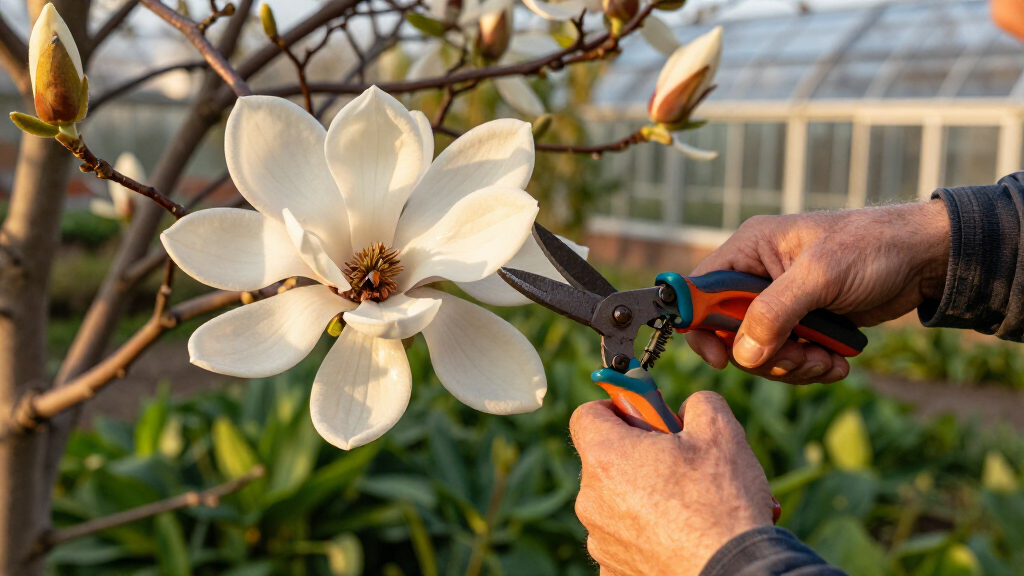
Scientists have confirmed that magnolia trees, some of the oldest flowering plants, are pollinated by beetles rather than bees. This discovery underscores their ancient evolutionary origins and unique pollination strategies.
Scientists have confirmed that magnolia trees, some of the oldest flowering plants on Earth, are pollinated by beetles rather than bees. This discovery highlights the ancient evolutionary history of magnolias and their specialized pollination methods, which differ from most modern flowering plants.
Research published in early 2024 indicates that magnolias, which date back more than 95 million years, rely primarily on beetles for pollination. This contrasts with the typical bee pollination seen in many flowering plants today, reflecting their status as some of the earliest angiosperms.
According to botanist Dr. Emily Carter of the University of California, Berkeley, “Magnolias evolved in a period when beetles were the dominant pollinators, and their floral structures have remained adapted to this ancient relationship.”
Studies involved analyzing pollen samples and observing pollination behavior in natural habitats, confirming beetle activity as the primary pollination method for magnolia species.
Why Beetle Pollination Matters for Magnolias
This discovery underscores the evolutionary resilience of magnolias, offering insight into how ancient plants adapted to their environments over millions of years. It also highlights the importance of preserving their natural habitats, as their specialized pollination relationships are vulnerable to environmental changes.
Understanding their reliance on beetles can inform conservation efforts, especially as many pollinator populations face decline. The unique pollination strategy of magnolias exemplifies the diversity of plant-pollinator relationships and their role in plant survival through geological time.
As an affiliate, we earn on qualifying purchases.
Evolutionary Roots of Magnolia Pollination Strategies
Magnolias are among the earliest flowering plants, appearing around 95 million years ago during the late Cretaceous period. Their reproductive structures are adapted to attract beetles, which were the dominant pollinators at that time.
Historically, most flowering plants evolved to attract bees and other insects, but magnolias have retained their ancient pollination method. Recent genetic and botanical studies have provided concrete evidence supporting beetle pollination, confirming long-held hypotheses about their ancient origins.
This research builds on prior fossil evidence and morphological studies that suggested their primitive floral features were suited for beetle activity.
“Magnolias’ floral structures are remarkably consistent with adaptations for beetle pollination, reflecting their ancient evolutionary history.”
— Dr. Emily Carter, University of California, Berkeley
Unresolved Questions About Magnolia Pollination Dynamics
While the research confirms beetles as the primary pollinators, it remains unclear how environmental changes may impact this relationship in the future. The specific beetle species involved and their current population status are still being studied.
Additionally, it is not yet known how resilient this ancient pollination strategy is to habitat loss or climate change, raising questions about the long-term survival of magnolias.
Future Research Directions on Magnolia-Pollinator Relationships
Researchers plan to further investigate the specific beetle species involved in magnolia pollination and assess how environmental factors influence this relationship. Conservation efforts may also focus on protecting these beetle populations and their habitats.
Long-term studies are expected to monitor changes in pollination dynamics, especially in regions where magnolias are native, to better understand their resilience and inform preservation strategies.
Key Questions
Why are magnolias pollinated by beetles instead of bees?
Magnolias are among the oldest flowering plants, evolved over 95 million years ago when beetles were the dominant pollinators. Their floral structures are adapted to attract beetles, which are less sensitive to the flowers’ scent and structure than bees.
Does this mean magnolias are endangered because of their pollination method?
Not necessarily. While their specialized pollination strategy makes them vulnerable to habitat loss and environmental changes, current conservation efforts aim to protect their natural habitats and pollinator relationships.
Are other ancient plants also pollinated by beetles?
Yes, some other primitive flowering plants share similar beetle pollination strategies, but magnolias are the most prominent example due to their ancient lineage and widespread presence.
How does understanding pollination help in conserving magnolias?
Knowing that beetles are their primary pollinators allows conservationists to focus on protecting these beetle species and their habitats, ensuring the continued reproduction of magnolia trees.
Will climate change affect the beetle-magnolia relationship?
It is possible. Changes in climate could impact beetle populations and their activity patterns, which in turn could affect magnolia pollination. Ongoing research aims to assess these risks.
Source: hn
Fall Picks
fall essentials
As an affiliate, we earn on qualifying purchases.