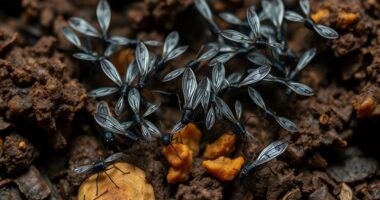
To manage whiteflies naturally, introduce beneficial insects like lady beetles, lacewing larvae, or parasitic wasps such as Encarsia formosa. Release them early in the season when whitefly numbers are low, and avoid using broad-spectrum insecticides that harm these predators. Confirm your plants provide a suitable habitat and monitor pest activity regularly. With patience and proper support, these natural predators can considerably reduce whitefly populations, and you’ll discover more effective tips along the way.
Key Takeaways
- Introduce beneficial insects like lady beetles, lacewing larvae, and parasitic wasps early to target whitefly populations effectively.
- Release natural predators regularly and monitor their activity to ensure sustained whitefly control.
- Avoid using broad-spectrum insecticides that can harm beneficial insects and disrupt biological control.
- Create a suitable habitat with proper moisture and shelter to support predator survival and reproduction.
- Maintain a healthy garden ecosystem through minimal chemical use and regular monitoring for whitefly and predator presence.
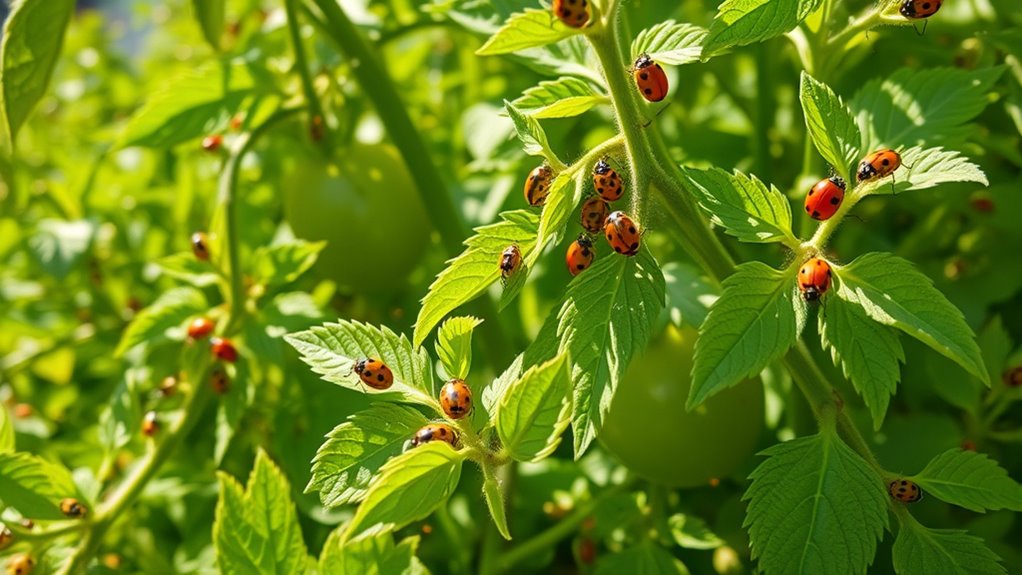
Whiteflies can quickly become a stubborn problem for gardeners and farmers alike, but using natural predators offers an effective and eco-friendly solution. Instead of relying solely on chemical pesticides, incorporating beneficial insects into your pest management strategy can help control whitefly populations naturally. These beneficial insects, such as lady beetles, lacewing larvae, and parasitic wasps, target whiteflies directly, reducing their numbers without harming your plants or the environment. By introducing these predators into your garden or farm, you take a proactive step toward sustainable pest control, aligning with integrated pest management principles that emphasize minimizing chemical use.
Using natural predators like lady beetles and parasitic wasps offers an eco-friendly way to control whiteflies naturally.
To get started, identify the most effective beneficial insects for whitefly control. Lady beetles, particularly the species Hippodamia convergens, are voracious predators of whiteflies and can be purchased from garden suppliers. Lacewing larvae also play a vital role; they’re aggressive eaters of whitefly eggs and nymphs. Parasitic wasps, such as Encarsia formosa, are specialized parasites that lay their eggs inside whitefly nymphs, ultimately killing them from within. These beneficial insects are commercially available and can be released into your garden, especially during early whitefly infestations when populations are just beginning to grow.
When introducing beneficial insects, timing and habitat are key. Release them early in the season or at the first signs of whitefly activity to maximize their impact. Ensure your plants provide suitable conditions—like adequate moisture and shelter—to support these predators’ survival and reproduction. Avoid broad-spectrum insecticides that can harm beneficial insects, as this will undermine your integrated pest management efforts. Instead, focus on creating a balanced ecosystem where natural predators and plants work together to keep whitefly populations in check.
Monitoring is essential; regularly inspect your plants for whitefly and beneficial insect activity. If you notice a decline in whiteflies and an increase in beneficial insects, you’re likely on the right track. Remember, patience is necessary because biological control methods often take time to show results. Consistency in releasing beneficial insects and maintaining healthy plant conditions will improve your chances of controlling whiteflies naturally. This approach not only reduces your dependence on chemicals but also fosters a resilient garden ecosystem, where beneficial insects thrive alongside your crops. By integrating these natural predators into your pest management plan, you create a sustainable, effective method to manage whiteflies and protect your plants now and in the future.
Frequently Asked Questions
Which Natural Predators Are Most Effective Against Whiteflies?
You should consider releasing beneficial insects like Encarsia formosa and Serangium parcesetosum, as they are highly effective predators against whiteflies. These predators target whitefly eggs and nymphs, reducing their populations naturally. Their predator effectiveness makes them a great eco-friendly solution. Regularly releasing these beneficial insects helps keep whitefly populations in check without harmful chemicals, making your garden healthier and more balanced.
How Long Does It Take to See Results Using Natural Predators?
Like planting a seed and waiting for it to bloom, you’ll see results from natural predators within 1 to 3 weeks. Timing expectations vary, but with consistent release and care, you should notice fewer whiteflies and healthier plants. Remember, observer patience is key—nature takes its course, and persistence pays off. Keep monitoring your plants regularly, and you’ll eventually witness the positive impact of your natural pest control efforts.
Can Natural Predators Harm Beneficial Insects in the Garden?
Natural predators are generally safe for your garden’s beneficial insect balance, as they target specific pests like whiteflies. While predator impact is usually minimal, it’s possible that a large number of predators could temporarily reduce beneficial insect populations. However, these predators typically do not harm pollinators or other helpful insects, making them a safe, eco-friendly option for pest control without disrupting your garden’s natural harmony.
Are There Specific Plants That Attract Whitefly Predators?
Yes, certain plants attract whitefly predators through companion planting. For example, marigolds, basil, and tansy attract beneficial insects like ladybugs and hoverflies, which are natural predators of whiteflies. You can create a predator habitat by planting these around your affected areas, encouraging natural pest control. This approach reduces the need for chemical treatments and supports a healthy garden ecosystem.
How Do Environmental Conditions Affect Predator Efficiency?
Environmental conditions markedly impact predator efficiency, with studies showing ideal predator activity at temperatures between 65-80°F. You’ll notice that temperature fluctuations can reduce their effectiveness, making whitefly control harder. Humidity levels also matter—high humidity promotes predator survival, while low humidity can cause decline. To maximize predator success, keep conditions stable, avoid extreme temperature swings, and maintain moderate humidity, ensuring your natural pest control methods work effectively.
Conclusion
So, you thought battling whiteflies meant spraying harmful chemicals, huh? Turns out, nature’s own predators can do the job better—and safer—for your plants. Ironically, by trusting these tiny allies, you might just find yourself enjoying a pest-free garden without the toxic mess. Sometimes, the best solution is the simplest one, proving that Mother Nature really does know best. Next time whiteflies invade, consider letting her natural predators handle the problem—you might be surprised how well they work.