To manage flowering and fruiting in tomatoes, guarantee good pollination by gently shaking plants or manually transferring pollen with a brush, especially in low-wind conditions. Prune suckers to improve airflow, light, and prevent stress. Maintain ideal environmental conditions like warmth, humidity, and proper watering. Keep plants healthy with balanced nutrients and monitor for issues like flower drop or overcrowding. For more tips on boosting your tomato harvest, keep exploring effective techniques.

Get garden gear delivered free with Prime
- Fast, free delivery on millions of items
- Prime Video, Amazon Music and more included
- Member-only deals all year
Key Takeaways
- Use manual pollination techniques like shaking plants or using a small brush during flowering for better fruit set.
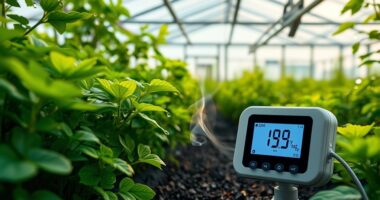
- Maintain optimal environmental conditions—warmth, humidity, and light—to support natural pollination and flowering.
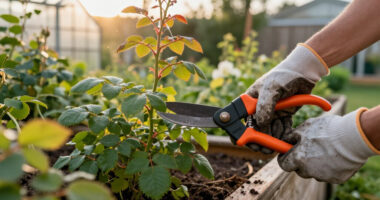
- Prune suckers regularly to improve airflow, reduce disease risk, and facilitate pollination and fruit development.
- Monitor plants closely, removing wilted flowers and preventing overcrowding to ensure healthy flowering and fruiting.
- Provide balanced nutrients, especially phosphorus and potassium, and keep plants well-watered to promote flowering and fruit maturation.
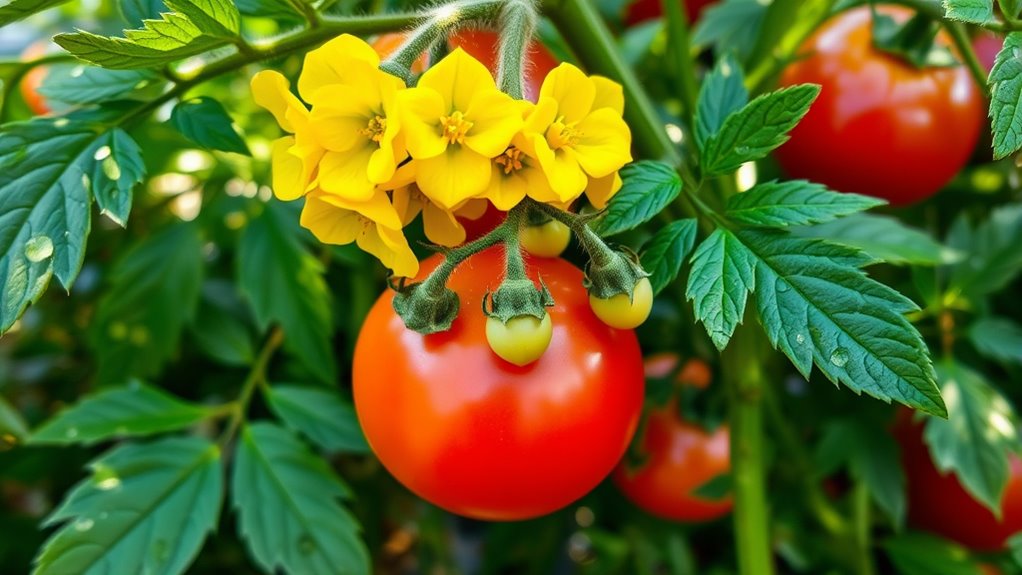
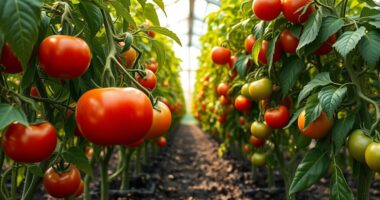
Managing tomato flowering and fruiting stages is pivotal for a successful harvest. During these critical phases, your goal is to ensure the plants develop robust flowers and produce high-quality fruit. One of the most effective ways to do this is by mastering pollination techniques. Tomatoes are mostly self-pollinating, but they benefit from some assistance to maximize fruit set. You can gently shake the plants or use a small brush or cotton swab to transfer pollen between flowers. This manual pollination helps increase fruit production, especially in environments with low wind or humidity that might hinder natural pollination. Additionally, maintaining optimal environmental conditions—like adequate warmth, humidity, and light—further supports natural pollination processes. By actively promoting pollination, you help ensure that fewer flowers drop off without setting fruit, which directly boosts your harvest.
Alongside pollination techniques, implementing effective pruning strategies is crucial. Pruning helps you manage the plant’s energy, directing it toward developing healthy flowers and fruit instead of excessive foliage or unnecessary suckers. You should regularly remove suckers—those small shoots that grow between the main stem and branches—to improve airflow and light penetration. This not only enhances pollination chances but also reduces the risk of diseases that thrive in dense foliage. When pruning, focus on maintaining a balanced, open plant structure, which makes it easier for pollinators, like bees, to access flowers and for you to monitor fruit development. Proper pruning also prevents the plant from becoming overly burdened, reducing stress and encouraging steady flowering and fruiting. Incorporating SQA best practices into your gardening routine can help you establish a consistent and effective management approach.
Timing your pruning and pollination efforts is essential. Early in the flowering stage, gentle pollination can help set the foundation for a good fruit load. As flowers bloom, continue supporting natural pollination by encouraging beneficial insects, or manually assist if needed. Regularly inspecting your plants allows you to catch any issues early—such as wilted flowers or overcrowding—that might hinder pollination and fruit development. Keep the plants well-watered and fed with balanced nutrients, especially phosphorus and potassium, to promote flowering and fruit formation. Remember, healthy, well-maintained plants are more likely to produce abundant, high-quality tomatoes.
As an affiliate, we earn on qualifying purchases.
Frequently Asked Questions
How Can I Prevent Blossom End Rot in Tomatoes?
To prevent blossom end rot in your tomatoes, guarantee you provide adequate calcium supplementation, as calcium deficiency causes the problem. Mulching techniques help retain soil moisture, preventing fluctuations that hinder calcium uptake. Water your plants consistently, avoiding drought stress, and consider adding calcium-rich amendments to your soil. By maintaining steady moisture and proper calcium levels, you can substantially reduce blossom end rot and promote healthy fruit development.
What Are Signs of Nutrient Deficiencies During Flowering?
During flowering, you’ll notice nutrient deficiencies if your tomato plants show pale or yellowing leaves, poor flower development, or uneven fruit growth. To catch these early, do soil testing to identify lacking nutrients. Foliar feeding can quickly supply essential elements like calcium and magnesium, helping your plants stay healthy. Address deficiencies promptly to promote strong flowering and bountiful fruit production, ensuring your tomato crop thrives.
How Does Pruning Affect Fruit Yield?
Pruning acts like a gardener’s magic wand, boosting your tomato plants’ fruit yield. By using pruning techniques and fruit thinning, you remove excess foliage and small, underdeveloped fruits, directing energy toward the best ones. This process enhances airflow, reduces disease risk, and encourages larger, healthier tomatoes. Regular pruning keeps your plants focused on producing quality fruit, making your harvest more abundant and satisfying.
When Is the Best Time to Harvest Ripe Tomatoes?
You should harvest ripe tomatoes when they show ripening indicators like full color, slight softness, and a uniform appearance. The best harvest timing is when tomatoes reach their peak ripeness, ensuring maximum flavor and nutrition. Check your tomatoes regularly, as ripening can vary based on variety and weather. Don’t wait too long, or fruit may overripe or crack. Picking at the right moment guarantees delicious, high-quality tomatoes.
How to Manage Pests During Flowering and Fruiting?
Like a vigilant guardian, you catch pests early by pest identification, recognizing their signs amidst the blossoms. You employ organic pest control methods—introducing beneficial insects, applying neem oil, or using insecticidal soaps—to safeguard your tomatoes without harm. Regularly monitor your plants during flowering and fruiting, acting swiftly to prevent pests from spreading. Your attentive care ensures healthy plants, abundant yields, and a thriving garden that blooms with life.
Conclusion
As you carefully manage each flowering and fruiting stage, remember that the next big harvest depends on your attention now. Will your efforts be enough to unleash the full potential of your tomatoes? The secret lies in your hands—every decision could lead to a bountiful yield or a missed opportunity. Stay vigilant, stay patient, and watch as your dedication transforms your garden into a thriving, fruitful paradise. The best is yet to come.
Columbus Day / Indigenous Peoples' Day Picks
long weekend sales
As an affiliate, we earn on qualifying purchases.