
TL;DR

Get garden gear delivered free — and shop member deals
- Fast, free delivery on millions of items
- Access to Prime Big Deal Days deals on October 6–7
- Prime Video, Amazon Music and more included
Lawn care experts recommend five key tasks to repair grass affected by summer heat. These steps aim to restore lawn health before the end of September, with some practices supported by industry advice and trends.
Homeowners seeking to restore their lawns after the intense summer heat are advised to undertake five specific lawn care tasks, according to landscape professionals. These practices are confirmed to help repair damage, improve grass health, and prepare lawns for the upcoming season, making timely action crucial as September nears its end.
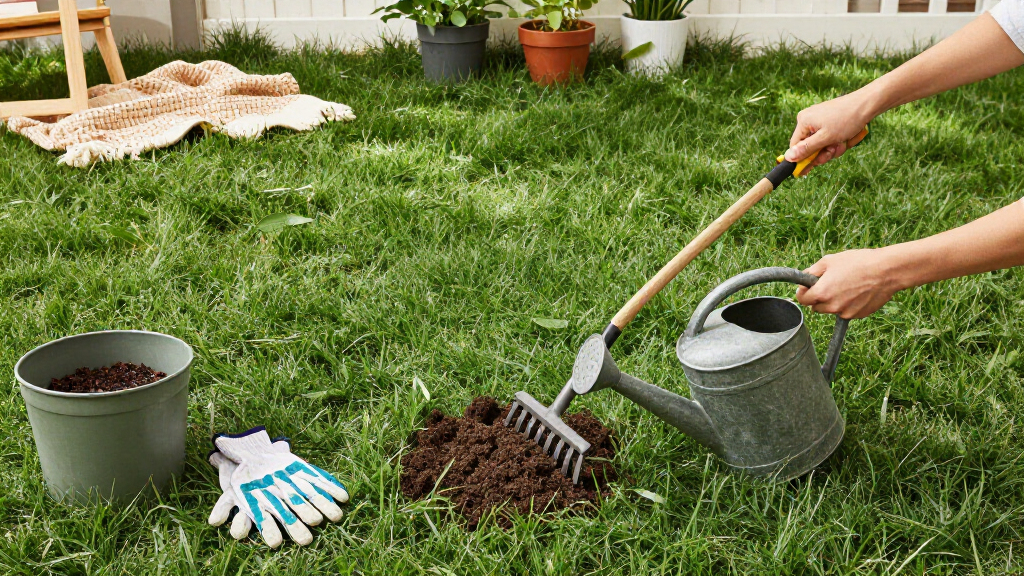
Experts recommend starting with aeration to relieve soil compaction caused by summer drought stress. Aeration involves perforating the soil to improve water, air, and nutrient penetration, which is confirmed to support grass recovery. Next, overseeding is advised to fill in bare or thinning patches, with industry sources noting that overseeding can significantly enhance lawn density and resilience.
Proper watering practices are also essential; lawn care specialists emphasize deep, infrequent watering to encourage deep root growth, especially after periods of drought. Additionally, fertilization with a balanced, slow-release fertilizer can supply vital nutrients that help grass repair and strengthen. Finally, removing dead or damaged grass through dethatching or raking can improve airflow and reduce disease risk, supporting overall lawn health.
Why Timely Lawn Care Matters for Grass Recovery
This matters because summer heat can cause lasting damage to lawns, leading to patchy, weak, or dead grass. Implementing these five tasks can significantly improve lawn recovery, saving homeowners money and effort in the long run. Proper lawn maintenance also enhances curb appeal and property value, especially as fall approaches. Industry experts highlight that neglecting these repairs can result in prolonged recovery times and increased vulnerability to pests and disease, making timely action essential.As an affiliate, we earn on qualifying purchases.
Summer Heat’s Impact on Lawns and Recovery Strategies
Summer droughts and high temperatures are known to stress lawns, causing grass to turn brown, thin out, and become more susceptible to pests and disease. While some damage may be temporary, prolonged heat can lead to root dieback and soil compaction. Lawn care trends indicate increased interest in repair strategies as homeowners notice the deterioration of their lawns, with search interest spiking in late August and early September. Although these practices are widely recommended, specific timing and effectiveness can vary depending on local climate and grass type.
Uncertain Factors in Lawn Recovery Effectiveness
While these five tasks are recommended by industry professionals, the exact timeline for visible recovery can vary based on grass species, soil conditions, and local climate. It is not yet clear how effective these methods will be in extreme cases of heat damage or in regions experiencing prolonged drought. Additionally, the impact of late-season weather patterns remains uncertain, which could influence recovery success.
Next Steps for Homeowners and Lawn Care Experts
Homeowners are advised to implement these five tasks promptly, ideally before September ends, to maximize recovery chances. Lawn care professionals will likely monitor lawn conditions into early fall and recommend additional treatments if necessary. Further research and field observations may refine best practices, especially as climate patterns evolve. Follow-up assessments will determine the success of these interventions and guide future lawn care strategies.
Key Questions
When is the best time to start lawn repair after summer heat?
Experts recommend beginning lawn repair tasks as soon as possible, ideally before the end of September, to allow sufficient recovery time before colder weather sets in.
Can overseeding alone restore a damaged lawn?
Overseeding is effective when combined with other practices like aeration, watering, and fertilization. It helps fill in bare patches and improve lawn density.
How often should I water my lawn during recovery?
Deep, infrequent watering—about once or twice a week—is recommended to encourage deep root growth, especially after drought stress.
Are there specific fertilizers best for post-summer lawn recovery?
Slow-release, balanced fertilizers with nitrogen, phosphorus, and potassium are advised to supply nutrients gradually and support healthy growth.
What signs indicate my lawn is recovering?
Look for new green growth, filling in of bare patches, and improved soil moisture retention. Full recovery may take several weeks depending on conditions.
Source: rss
Halloween Picks
halloween
As an affiliate, we earn on qualifying purchases.