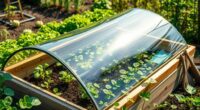
To care for tropical plants in a temperate greenhouse, focus on maintaining high humidity levels using humidifiers or misting systems, and keep a close eye on signs of dryness like browning edges. Regularly monitor environmental conditions and guarantee good airflow to prevent pests and fungal issues. Quarantine new plants and treat infestations early with eco-friendly solutions. Staying vigilant and proactive will help you create a healthy environment for your tropical plants to thrive—more tips await you.
Key Takeaways
- Maintain high humidity levels with humidifiers or misting to mimic tropical environments.
- Regularly monitor humidity and plant health, adjusting environmental controls as needed.
- Conduct frequent inspections for pests like spider mites, aphids, and mealybugs, and treat infestations promptly.
- Ensure good airflow and hygiene by cleaning debris and using vents or fans to prevent mold and pests.
- Quarantine new plants and act quickly on signs of stress or pest issues to promote healthy, lush growth.

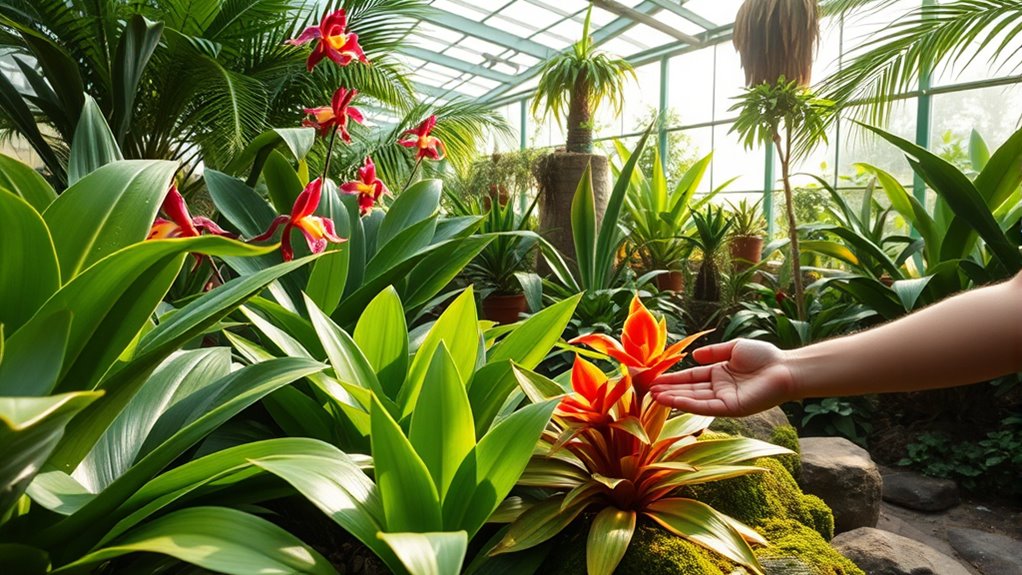
Tropical plants bring vibrant beauty and lush greenery to any space, but they require specific care to thrive. In a temperate greenhouse, you play an essential role in creating the right environment for these plants to flourish. One of the most important factors is maintaining proper humidity levels. Tropical plants naturally thrive in high-humidity environments, so you need to monitor and adjust the greenhouse’s humidity regularly. Using a humidifier or misting system can help sustain the moisture levels necessary for their health. Be attentive to signs of dryness, such as browning leaf edges or wilting, and act quickly to restore humidity. Proper humidity not only promotes vigorous growth but also prevents stress that can make plants more susceptible to pests and diseases.
Equally important is pest management. Tropical plants are particularly attractive to pests like spider mites, aphids, and mealybugs, which can quickly infest and damage your collection. To keep these pests at bay, you should conduct regular inspections, especially during warmer months when pest activity tends to increase. Quarantining new plants before introducing them to your greenhouse minimizes the risk of bringing in unwanted visitors. When you spot pests, promptly remove affected leaves and treat infestations with eco-friendly solutions like insecticidal soap or neem oil. Maintaining good hygiene is essential—clean up fallen leaves and debris that can harbor pests and pathogens. Additionally, ensure airflow circulation within the greenhouse to reduce stagnant air, which can encourage pest proliferation.
Controlling humidity and managing pests go hand in hand. High humidity can sometimes foster mold or fungal issues, which weaken plants and attract pests. To prevent this, you should balance humidity levels with proper ventilation. Installing exhaust fans or opening vents during warmer days helps regulate moisture and airflow, creating a less inviting environment for pests and pathogens. If you notice any fungal growth or pest signs, act swiftly to contain the problem before it spreads. Combining vigilant pest management with humidity control ensures your tropical plants stay healthy, vibrant, and resilient.
Being aware of plant health symptoms and responding promptly is crucial for maintaining a thriving collection. In your care routine, consistency is key. Regularly check humidity levels, inspect plants thoroughly, and implement preventive measures. This proactive approach minimizes problems and promotes thriving tropical plants in your greenhouse. By paying close attention to these details, you’ll create a hospitable environment where your tropical plants can grow lush and beautiful, bringing a slice of the tropics to your space all year round.
Frequently Asked Questions
What Are Common Pest Issues in Tropical Greenhouse Plants?
You often face pest issues like spider mites, aphids, and mealybugs in tropical greenhouse plants. To handle these, start with pest identification to accurately identify the problem. Use integrated pest management techniques, such as introducing beneficial insects, applying organic sprays, and maintaining good hygiene. Regular monitoring helps catch infestations early, preventing damage and ensuring your plants stay healthy and vibrant in your greenhouse environment.
How Do I Prevent Fungal Diseases in Tropical Plants?
An ounce of prevention is worth a pound of cure, so start by managing humidity levels carefully—keep the air circulating and avoid excess moisture. Use fungus-resistant varieties when possible, and guarantee proper watering practices to prevent fungal growth. Regularly inspect your plants for early signs of disease, and improve airflow around your tropical plants. These steps help keep fungal diseases at bay and your plants thriving.
Can Tropical Plants Survive Outside in Temperate Climates?
Tropical plants can survive outside in temperate climates if you understand their adaptations and provide proper greenhouse climate control. They thrive best when you mimic their native environment, maintaining warmth, humidity, and shade. Using outdoor shelters or heated, insulated greenhouses helps replicate tropical conditions. By adjusting these factors, you create a suitable microclimate, giving your tropical plants a good chance to survive and even flourish outside during milder seasons.
What Are the Best Fertilizers for Tropical Greenhouse Plants?
You should use balanced fertilizer types like liquid or slow-release formulas to meet tropical greenhouse plants’ nutrient requirements. Opt for a fertilizer with equal parts nitrogen, phosphorus, and potassium, and supplement with micronutrients like magnesium and iron. Regular feeding every 2-4 weeks guarantees healthy growth, especially during active seasons. Adjust the fertilizer strength based on plant response to avoid overfeeding and promote vibrant, lush foliage.
How Do I Propagate Tropical Plants Effectively Indoors?
Think of your tropical plants as delicate symphonies waiting to be played; propagation techniques are your instruments. To propagate indoors effectively, use stem cuttings or division, ensuring your cuttings have nodes for roots to sprout. Keep humidity high and soil moist, mimicking their natural habitat. Indoor propagation methods thrive with consistent warmth and indirect light, turning your green space into a lush oasis where new life blossoms effortlessly.
Conclusion
Ultimately, caring for tropical plants in temperate greenhouses requires patience, passion, and precise practices. By providing proper placement, consistent watering, and careful climate control, you’ll cultivate an enthralling collection full of vibrant vitality. Remember, your dedication deepens your delight, transforming your greenhouse into a lush, luminous sanctuary. So, stay steadfast, seek solutions, and savor the stunning results of your steadfast stewardship, turning temperate spaces into tropical treasures filled with life and lushness.