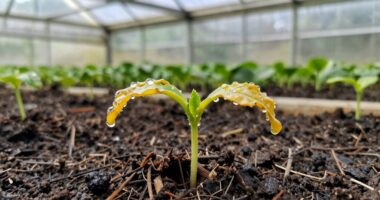
The key detail that matters most under cover is controlling environmental factors like temperature, humidity, and light to keep bees active and healthy. Without natural cues, you need to create ideal conditions to encourage reliable pollination. Monitoring and adjusting these factors ensure that bees perform their duties effectively, leading to better fertilization and crop yields. If you want to understand how to fine-tune these elements for perfect results, keep exploring the essential strategies for indoor pollination success.

Get garden gear delivered free with Prime
- Fast, free delivery on millions of items
- Prime Video, Amazon Music and more included
- Member-only deals all year
Key Takeaways
- Environmental control enhances bee activity by regulating temperature and humidity, critical for effective pollination indoors.
- Providing targeted floral resources stimulates natural foraging behaviors in confined environments.
- Monitoring and adjusting environmental factors optimize bee efficiency and pollination success under cover.
- Technological tools like sensors and robotic pollinators compensate for limited natural cues and outdoor conditions.
- Understanding indoor bee behavior is essential to design effective pollination strategies in controlled settings.

Have you ever wondered how plants get pollinated when they’re grown under cover, away from natural pollinators? It’s a common question for growers who rely on greenhouses or indoor farms. When bees and other insects can’t access the plants naturally, understanding indoor bee behavior becomes essential. While many think of bees solely in outdoor environments, they can be trained or encouraged to work inside controlled spaces. Their activity inside the enclosure isn’t just about pollination; it’s about mimicking natural behaviors as closely as possible to guarantee good fruit and seed production.
Indoor bee behavior differs from outdoor activity in several ways. Without the open environment and natural cues, bees may not instinctively visit flowers or transfer pollen efficiently. You need to create conditions that stimulate their natural foraging behaviors. This involves providing the right kind of flowers, suitable nesting areas, and consistent feeding routines. When you understand how bees behave indoors, you can better manage and optimize their pollination efforts, making sure that each flower gets the attention it needs to develop fully. Recognizing how indoor environments influence bee activity is crucial for effective pollination management. Additionally, understanding their behavioral adaptations helps in designing more effective indoor pollination strategies. It’s also important to consider how digital tools and sensors can be used to monitor and support bee activity, ensuring their efforts are maximized. Implementing these tools can also provide valuable data to improve overall pollination efficiency. Incorporating modern technology into management practices enables more precise control over the pollination process.
Indoor bee behavior requires creating conditions that mimic natural cues for effective pollination.
Pollination technology plays a pivotal role in supplementing or replacing natural pollinators inside covered growing spaces. Innovations like automated robotic pollinators or electric vibrators are increasingly popular, especially when indoor bee populations aren’t enough or aren’t performing consistently. These tools mimic the movement and vibration that bees apply to flowers, helping to shake loose pollen and ensure fertilization. Such technology can be precisely calibrated to match the needs of different crops, providing a reliable and efficient way to boost pollination when natural activity falls short.
The key to successful pollination under cover isn’t just about introducing bees or using machines; it’s about understanding the delicate dynamics at play. You need to monitor their activity levels, adjust environmental factors like temperature and humidity, and ensure that the plants are receptive to pollination. When you combine a good grasp of indoor bee behavior with advanced pollination technology, you create a symbiotic system that maximizes crop yields and quality. This approach minimizes reliance on unpredictable weather or external pollinator populations, giving you more control over your growing environment.
In essence, the most vital detail for pollination under cover is recognizing the importance of adapting natural processes through technology and behavioral insights. By doing so, you guarantee that your plants receive the pollination they need to thrive, regardless of external conditions. It’s about blending biology with innovation, making sure your indoor crops stay productive and healthy. Understanding pollination under cover as a comprehensive process helps growers develop more resilient and efficient systems for their indoor farms.
Products Worth Considering

EAGLE PEAK 8 × 6 ft Walk-In Pop-Up Greenhouse, Green and White

Orbit B-hyve XR 8-Zone Indoor/Outdoor Smart Sprinkler Controller

Orbit B-hyve Smart Indoor/Outdoor 12-Zone Sprinkler Controller
As an affiliate, we earn on qualifying purchases.
Frequently Asked Questions
How Do Indoor Pollinators Differ From Outdoor Ones?
Indoor pollinators differ from outdoor ones mainly in their pollination mechanisms and pollinator diversity. Inside, you rely more on controlled conditions, so hand pollination or specific insects like bumblebees are common. Outdoor environments offer a wider pollinator diversity, including bees, butterflies, and birds, which naturally adapt to various pollination mechanisms. This diversity enhances pollination efficiency outdoors, while indoors requires more manual intervention to guarantee successful pollination.
What Are the Best Plants for Under-Cover Pollination?
You should choose plants that thrive in shaded or sheltered environments, like begonias, impatiens, and ferns, as they suit under-cover pollination. Focus on pollination techniques that encourage movement of pollen, such as gentle shaking or hand pollination. Make certain plant compatibility by selecting species with similar blooming periods and pollination needs, making sure your indoor or shaded garden stays healthy and productive.
Can Pollination Succeed Without Sunlight Indoors?
Did you know that indoor bee activity can be surprisingly effective, even without sunlight? Pollination can succeed indoors through techniques like hand pollination or using tools that mimic natural pollinators. While sunlight boosts many plants, certain species thrive with artificial lighting or specific humidity levels. So, yes, pollination can definitely succeed indoors without sunlight—just choose the right plants and pollination techniques to guarantee healthy growth.
How Do Temperature and Humidity Affect Indoor Pollination?
Indoor temperature and humidity greatly influence pollination success. You should guarantee proper indoor air circulation to prevent stagnant air that can hinder pollination, and maintain ideal humidity levels through humidity control to keep plants healthy. Too high humidity can promote mold, while too low can dry out pollen. By managing these factors, you support effective pollination, leading to better plant growth and increased fruit or flower production indoors.
Are There Specific Tools to Enhance Pollination Under Cover?
Sure, you can buy fancy tools for artificial pollination or even try pollinator training, but let’s be honest—you’re probably better off with a tiny paintbrush or a gentle feather. These simple tools mimic nature’s work better than high-tech gadgets and keep your indoor garden happy. No need to overcomplicate; sometimes, a delicate touch does the trick, making your plants thrive without fancy contraptions.
Conclusion
So, next time you marvel at those perfectly pollinated plants under a glass roof, remember—sometimes, the tiniest, less obvious pollinators inside those covers matter more than the visible ones. It’s ironic how we often overlook the quiet, unseen work happening behind the scenes, thinking nature’s grand design is all about the spectacle. In the end, it’s the hidden details that truly keep the cycle alive—proof that even under cover, the smallest things make the biggest difference.