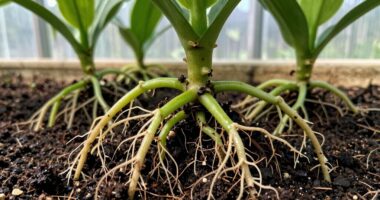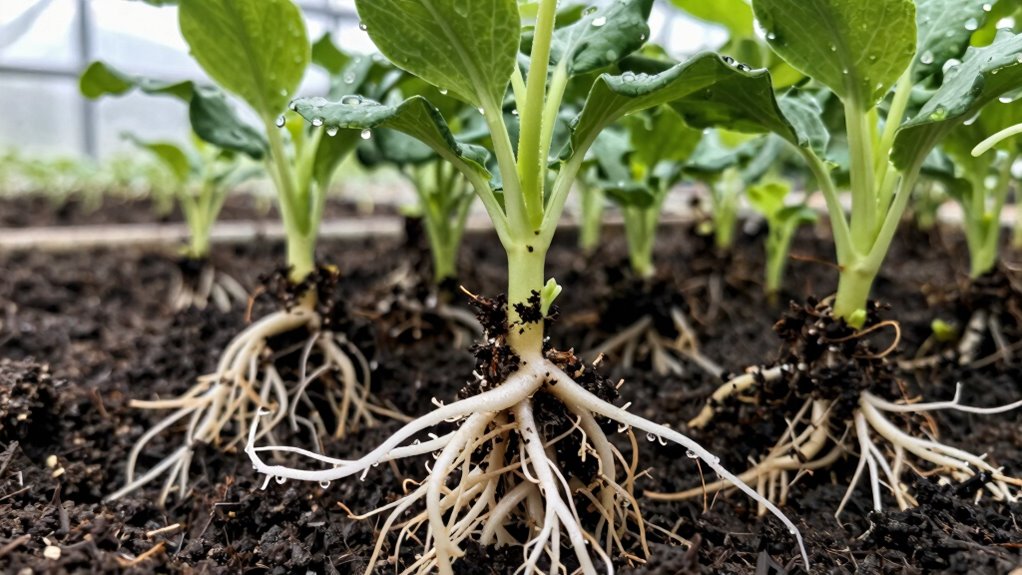

Healthy greenhouse roots are firm, white or light tan, and actively spread through the growing medium. They should be dense, fibrous, and support stable plant development. Roots that are healthy are flexible, avoiding mushiness or dark discoloration, which signals problems. Proper aeration and moisture guarantee your roots stay vibrant and strong. If you want to learn more about keeping your roots ideal, keep exploring how to maintain their health effectively.

Get garden gear delivered free with Prime
- Fast, free delivery on millions of items
- Prime Video, Amazon Music and more included
- Member-only deals all year
Key Takeaways
- Healthy roots are white or light tan, firm, and flexible, indicating active growth and good health.
- They have a dense, fibrous structure with a widespread network supporting nutrient absorption.
- Healthy roots are free of rot, mold, or foul odor, showing no signs of disease or decay.
- Proper aeration and moisture levels promote vibrant, well-developed roots without waterlogging.
- Well-maintained roots support strong plant growth, vibrant foliage, and productive flowering or fruiting.
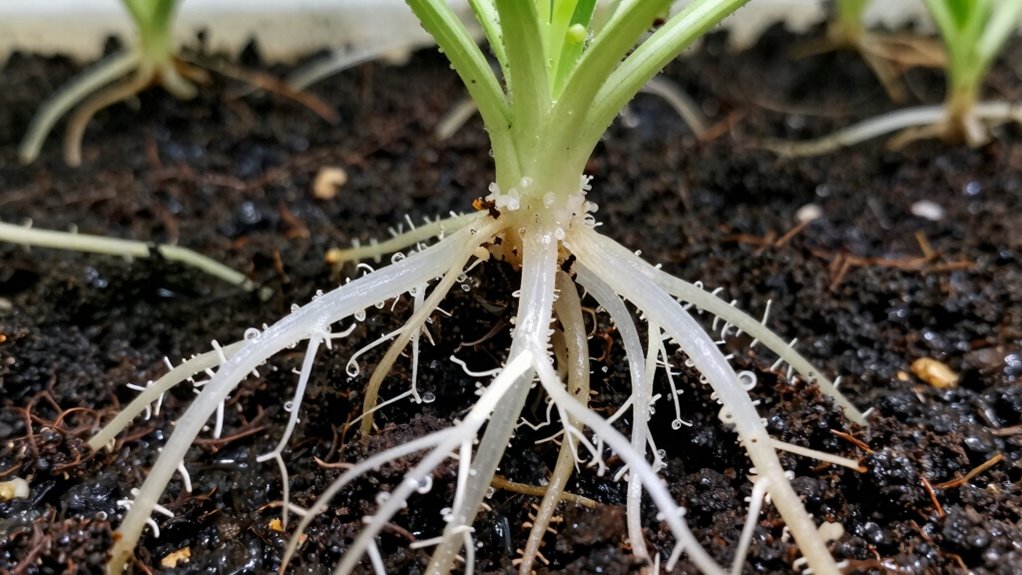
A healthy greenhouse root system is essential for strong plant growth and abundant yields. When your roots are in good shape, they support robust root development, which is the foundation for healthy plants. You’ll notice that vibrant, well-structured roots are usually white or light tan and feel firm yet flexible. These roots extend outward in a fibrous, dense mat, actively exploring the growing medium to access vital nutrients and water. Healthy roots don’t just grow deeper; they also spread laterally, creating a network that maximizes nutrient uptake. This expansive root system is key to ensuring your plants get everything they need to thrive.
You want to see roots that are free of rot, mold, or any signs of disease. Sick roots tend to appear brown, black, or mushy, and they often emit a foul odor. Such roots can’t support essential nutrient uptake, which leads to weak plant performance and poor yields. Instead, your healthy roots should be plump and resilient, capable of absorbing nutrients efficiently. When roots develop properly, they act like a conduit, transferring essential nutrients from the soil or growing medium directly to the plant’s stems and leaves. This process is indispensable since nutrient uptake is the lifeblood of healthy plant growth, impacting everything from leaf color to flowering and fruit production. Ensuring proper oxygen levels in the root zone is crucial, as roots need oxygen to breathe and stay healthy. Proper soil health also plays a vital role in supporting the development of strong roots. Maintaining a balanced watering schedule helps prevent issues like overwatering or underwatering that can compromise root health.
To maintain this healthy root development, you need to monitor your greenhouse environment carefully. Adequate oxygen levels are imperative—roots need oxygen to breathe, so proper aeration prevents compaction and promotes active growth. Regularly checking moisture levels is equally important; overwatering can drown roots, while underwatering can cause them to dry out and become fragile. Using appropriate watering techniques can help ensure your roots receive consistent moisture without waterlogging. Incorporating proper soil amendments can further enhance drainage and root growth, leading to healthier plants overall. Providing the right balance helps roots stay strong and functional. Additionally, using high-quality, well-draining growing media encourages roots to spread freely, avoiding the issues associated with poor drainage or waterlogging.
In essence, healthy greenhouse roots look like a vibrant, dense network of white or light-colored fibers, free from decay or disease. They’re actively growing, spreading out to maximize nutrient absorption and water uptake. Your job is to keep these roots in prime condition by ensuring proper watering, aeration, and soil health. When your roots are healthy, your plants will respond with vigorous growth, abundant yields, and overall resilience. Remember, strong roots are the backbone of thriving greenhouse plants, so paying close attention to their development will always pay off in the long run.
healthy plant root growth monitor
As an affiliate, we earn on qualifying purchases.
As an affiliate, we earn on qualifying purchases.
Frequently Asked Questions
How Often Should I Check My Greenhouse Roots for Health Issues?
You should check your greenhouse roots weekly to spot root moisture issues or signs of rot early. During inspections, gently lift containers and examine roots for healthy color and texture. If roots are overcrowded or circling, consider root pruning to promote better growth. Regular checks help maintain peak root health, prevent disease, and guarantee your plants stay strong and productive. Stay attentive, and your greenhouse will thrive.
Can Root Color Indicate Specific Nutrient Deficiencies?
Imagine your roots as a vibrant map of nutrient health—bright white or pale indicates healthy growth, while dark or reddish hues hint at possible deficiencies. Root pigmentation can reveal nutrient diagnosis, like yellowish roots signaling nitrogen deficiency or purple hues suggesting phosphorus issues. By observing color changes, you can promptly identify and address specific nutrient deficiencies, ensuring your greenhouse plants thrive with healthy, balanced roots.
What Are Signs of Root Rot in a Greenhouse?
You’ll notice root rot signs like slimy, brown, or black roots that smell foul. To prevent root rot, guarantee good drainage, avoid overwatering, and maintain proper airflow. Healthy root signs are firm, white, and free of slime or discoloration. Regularly inspect roots, and if you see any unhealthy changes, act promptly to prevent spreading. Proper root care and prevention techniques keep your greenhouse plants thriving.
How Does Soil pH Affect Root Health?
Soil pH profoundly impacts your plant’s root health. When soil acidity shifts, it disrupts nutrient absorption, causing chaos in root development. Maintaining a proper pH balance guarantees nutrients are accessible, promoting vigorous growth and vibrant vitality. If the soil leans too acidic or alkaline, roots may become weak, weary, or damaged. Regular testing and adjusting soil pH keeps roots resilient, guaranteeing your greenhouse greenery grows strong, healthy, and happy.
Are There Natural Remedies for Root Pests?
Yes, there are natural remedies for root pests that you can try for pest management. You might use beneficial nematodes, which naturally attack pests in the soil, or apply neem oil or garlic extracts to deter pests without chemicals. Introducing organic mulch can also help prevent pests from reaching roots. Consistent, natural pest management helps keep your roots healthy and promotes a thriving greenhouse environment.
Conclusion
Healthy greenhouse roots are essential for strong, thriving plants. When your roots are firm, white, and abundant with fine root hairs, you’re on the right track. Did you know that plants with healthy roots can grow up to 30% faster and produce higher yields? Keep an eye on your roots’ appearance, and you’ll guarantee your greenhouse thrives. With proper care, you’ll enjoy bountiful, robust plants that flourish throughout the season.
Halloween Picks
halloween
As an affiliate, we earn on qualifying purchases.